Record-strength El Niño forecast to push 2026–27 above 1.5C, with disasters hitting as Cop31 meets
Scientists describe this year's El Niño as possibly the strongest in a thousand years, projecting 2026 and 2027 above 1.5C of warming. The Guardian reports it is already driving disasters and adding pressure on climate finance at the Cop31 talks in Turkey.
1 / 2
The story, neutrally told
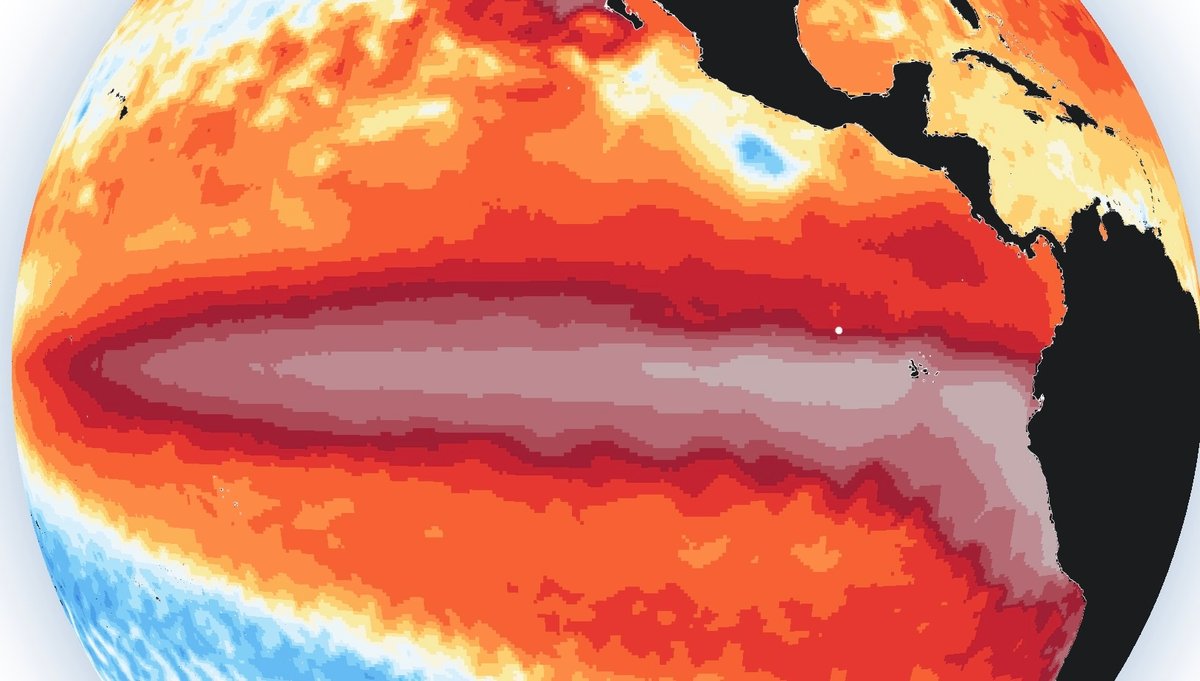
Left · 2This year's El Niño is being described by scientists as one of the strongest on record, and perhaps the strongest in at least 1,000 years. Scientific AmericanLC “In the midst of an El Niño likely to be the strongest in living memory—perhaps even in the past 1,000 years” Read at Scientific American ↗ The GuardianLC “the strongest El Niño event in at least 1,000 years” Read at The Guardian ↗ Left · 1Scientific American reported that sea surface temperatures in the El Niño core region passed a daily record set in November 2015 by September. Models project they could reach about 4C above normal at the peak, from roughly 3.4C (the article) or 3.5C (the podcast) now. Scientific AmericanLC “By September of this year, sea surface temperatures in the part of the Pacific that is El Niño’s epicenter had already passed a daily record set in November 2015”“could reach an astounding four degrees C above normal when the event reaches its zenith. They currently sit around a still jaw-dropping 3.4 degrees C above normal.” Read at Scientific American ↗ Scientific AmericanLC “Right now, temperatures in the, sort of, core part of the Pacific where we monitor El Niño are about 3.5 degrees Celsius above normal.” Read at Scientific American ↗ Left · 1The article says a peak in that range would break the direct-measurement record, set by an El Niño in 1877, and would also exceed coral- and tree-ring-based estimates back to about the year 1100. Scientific AmericanLC “they will absolutely smash the heat record from as long as we’ve had direct temperature measurements, which was set by an El Niño in 1877.”“going back to the year 1100” Read at Scientific American ↗
Left · 1Scientific American reported projected global averages of 1.52C above preindustrial for 2026 and 1.74C for 2027. It said 2027 is virtually certain to be the hottest year on record, and 2026 could also beat 2024. Scientific AmericanLC “projected global average temperature of 1.52 degrees C above preindustrial temperatures for 2026 and perhaps a truly eye-popping 1.74 degrees C above for 2027”“2027 is virtually certain to take the crown” Read at Scientific American ↗ Left · 1The Guardian said 2027 is almost certain, with the El Niño boost, to be the hottest year ever recorded. The GuardianLC “which is almost certain, with the boost from El Niño, to be the hottest ever recorded” Read at The Guardian ↗ Left · 1Scientific American said 2026 and 2027 would be the second and third years above 1.5C, after 2024. It framed the open question as whether temperatures will fall back below that Paris Agreement benchmark once El Niño fades. Scientific AmericanLC “this year and next will be the second and third years to surpass 1.5 degrees C above preindustrial levels (2024 being the first)” Read at Scientific American ↗
Left · 1Climate scientist Daniel Swain said a year that never dips below 1.5C may come eventually and "might be this year". He suggested feedbacks such as sea-ice loss, permafrost thaw and wildfire emissions could make part of the warming less temporary, but stressed considerable uncertainty. Scientific AmericanLC ““Eventually there’s going to be a year where we don’t dip below 1.5C [on average], and based on what I’m seeing here, it might be this year,””“But he does emphasize there is considerable uncertainty.” Read at Scientific American ↗ Left · 1Zeke Hausfather said he "would not be surprised at all" if temperatures returned below 1.5C. A strong La Niña could bring global temperatures down to about 1.45C. Scientific AmericanLC ““would not be surprised at all if we go back below it.””“If we get a strong La Niña, global temperatures might go down to 1.45 degrees C above preindustrial.” Read at Scientific American ↗ Left · 1On causes, Scientific American's podcast said new coral-based research suggests climate change may be pushing the climate toward very strong El Niños. It added that natural variability also plays a part and that the event would be outstanding even with baseline ocean warming removed. Scientific AmericanLC “There is some new research that indicates that climate change may be pushing us more toward these really strong El Niños.”“even, sort of, subtracting that from the ocean temperatures, this El Niño is still outstanding.” Read at Scientific American ↗
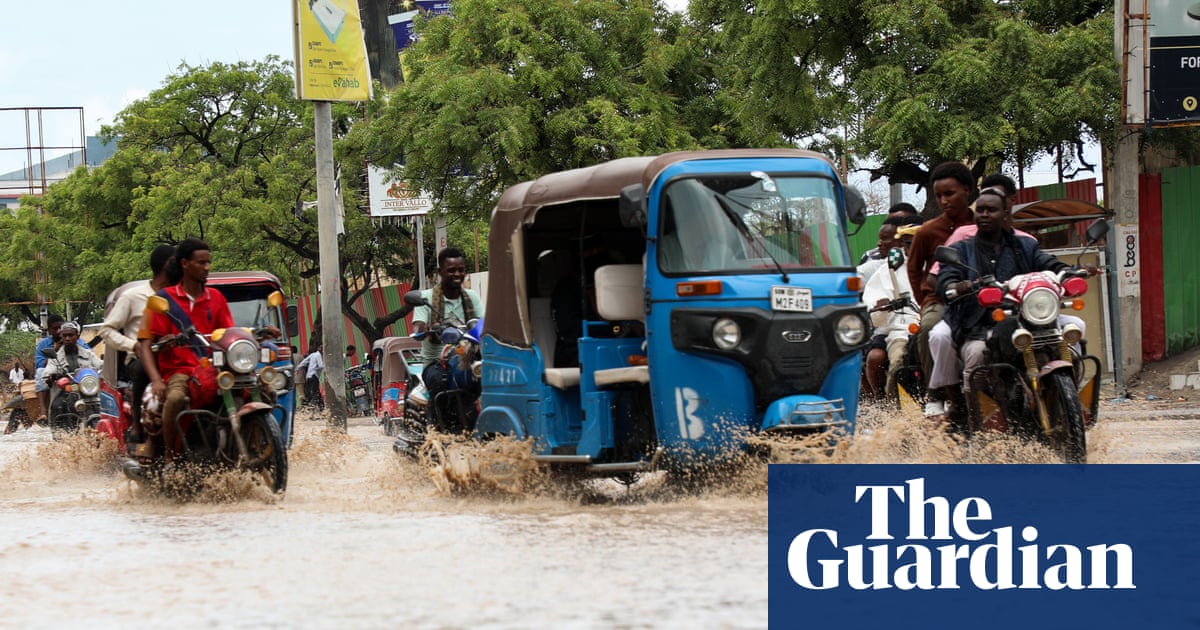
Left · 1Impacts already seen include almost no Atlantic hurricane activity, a flurry of Pacific storms, and drought and wildfires in Indonesia. Andrea Thompson also said California faces a risk of major coastal flooding this winter. Scientific AmericanLC “we’ve seen almost no hurricane activity in the Atlantic this year and a flurry of storms especially around Hawaii and the Pacific”“we have a lot of major coastal flooding in California this winter” Read at Scientific American ↗ Left · 1The Guardian, reporting from the Cop31 talks in Turkey, said El Niño has added urgency to negotiations over climate funding for vulnerable countries. It cited wildfires and crop failures in Indonesia, coastal inundation in the US, drought in Sudan, and flooding in Ecuador and Somalia. The GuardianLC “has provided added urgency to wrangling at the Cop31 summit over climate funding for vulnerable countries”“huge wildfires and crop failures in Indonesia, coastal inundation in the US, severe drought in Sudan and severe flooding in countries including Ecuador and Somalia” Read at The Guardian ↗ Left · 1Celeste Saulo, secretary-general of the World Meteorological Organization, said El Niño "will be a risk multiplier". The Guardian said the event peaks in December and its effects will continue through next year, with heatwaves, crop shortages and coral bleaching expected. The GuardianLC ““We are supercharging our weather and El Niño will be a risk multiplier,” said Celeste Saulo”“as the El Niño peaks in December and then reverberates throughout next year” Read at The Guardian ↗
Left · 1Kathy Jetn̄il-Kijiner, climate envoy for the Marshall Islands, said drought there is compounding sea-level threats. The country has declared a state of emergency, and she called for much more money for adaptation and for loss and damage. The GuardianLC “which has declared a state of emergency”“We need a lot more money for adaptation and for loss and damage, billions more than we are getting right now.” Read at The Guardian ↗ Left · 1The Guardian said wealthy countries agreed last year to triple adaptation finance, but only a fraction of the $305bn a year needed by 2035 is being delivered. The GuardianLC “Yet just a fraction of the $305bn a year needed by 2035 is being delivered” Read at The Guardian ↗ Left · 1The UN refugee agency UNHCR predicts as many as 3m displacements across Kenya, Somalia, South Sudan and Uganda because of this El Niño. Its assistant high commissioner, Antón Leis García, said Kenya's maize production is already down 40%. The GuardianLC “as many as 3m displacements across just four countries – Kenya, Somalia, South Sudan and Uganda”“The maize crop production in Kenya is already dropping by 40%” Read at The Guardian ↗
Left · 1Climate Analytics chief executive Bill Hare said it "will feel like accelerated global warming" and that the scale of the threat is not properly recognised. Mohamed Adow of Power Shift Africa said pledges alone cannot protect harvests. The GuardianLC ““It’s won’t be any joke, it will feel like accelerated global warming,””““You cannot protect a harvest with a pledge. People need resources on the ground.”” Read at The Guardian ↗
Every sentence links to the reporting it rests on. The pill in front of each says where its sources sit: Left, Centre or Right when one side supplies at least half of them, Mixed when they are evenly split. The number is how many outlets it cites.
Left2 outlets
- Framing
- Scientific American treats it as a science explainer on record-breaking ocean heat and whether the 1.5C threshold is permanently breached. The Guardian treats it as a climate-justice and finance story at Cop31, with El Niño as a 'risk multiplier' for vulnerable countries.
- Emphasis
- Scientific American stresses record sea surface temperatures, projections and uncertainty. The Guardian stresses humanitarian impacts, displacement figures, the adaptation-finance shortfall and calls for money from wealthy nations.
- Leaves out or plays down
- Neither outlet gives a dissenting view on the forecasts. The Guardian does not cover temperature projections in detail, and Scientific American says little about policy or finance.
- Charged language
- “jaw-dropping”“astonishing strength”“uncharted territory”“risk multiplier”“supercharging our weather”
- For example
-
“The astonishing strength of this El Niño could mean we surpass an important climate threshold—possibly for good” — Scientific American
““We are supercharging our weather and El Niño will be a risk multiplier,”” — The Guardian
Centre0 outlets
No centre outlet in our sources has covered this story yet.
Right0 outlets
No right outlet in our sources has covered this story yet.
What every side reports
- This El Niño is extraordinarily strong, possibly the strongest in about 1,000 years.
- 2027 is expected to be the hottest year on record.
- El Niño is already linked to drought and wildfires in Indonesia.
Where accounts differ
-
Whether temperatures will stay above 1.5C permanently after this El Niño
- Left
- Scientific American quotes Swain saying this could be the first year that never dips below 1.5C, while Hausfather would not be surprised if temperatures fell back below it. Both stress uncertainty, and a strong La Niña could bring about 1.45C.
El Niño topic
Scientific American presents it as a record-setting event that is unlike any other, whose causes are partly climate change and partly natural chaos. The Guardian presents it as a global disaster multiplier.
“this year’s event is shaping up to be an El Niño unlike any we’ve ever seen” — Scientific American
“the “jaw-dropping” El Niño” — The Guardian
Paris Agreement 1.5C limit topic
Scientific American says 2026 and 2027 will almost certainly exceed the Paris Agreement's 1.5C aim, and that UN agencies already acknowledge the goal will be passed eventually.
“Both 2026 and 2027 will almost certainly come in at more than 1.5 degrees Celsius above average temperatures in preindustrial times” — Scientific American
COP31 event
The Guardian reports that the El Niño has added urgency to Cop31 talks on funding for vulnerable countries. Campaigners say pledges are not enough.
“Campaigners at Cop31 said this unfolding emergency means countries should quickly act.” — The Guardian
North America1 outlet
Scientific American focuses on the science and the 1.5C threshold, with US impacts such as California flooding.
“Will we ever come back down?” — Scientific American
“we have a lot of major coastal flooding in California this winter” — Scientific American
Scientific American
UK and Ireland1 outlet
The Guardian focuses on global-south impacts and the Cop31 finance debate.
“vulnerable countries face ‘compounding’ crises” — The Guardian
The Guardian
Left3 articles
-
What an exceptionally powerful El Niño could mean for hurricanes, drought and flooding
Alarmist A podcast transcript explaining El Niño's mechanics and expected impacts, from hurricanes to Californian flooding, presenting scientists as 'aghast'.
-
El Niño will push temperatures above 1.5 degrees C. Will we ever come back down?
Alarmist Explains how the El Niño will push 2026–27 above 1.5C and asks whether the breach could become permanent, while noting scientific uncertainty.
-
‘Risk multiplier’: super El Niño looms over Cop31 as climate pattern fuels global disasters
Sympathetic A Cop31 dispatch focused on vulnerable countries' suffering and the shortfall in adaptation finance, led by affected officials and campaigners.
Centre0 articles
No coverage yet.
Right0 articles
No coverage yet.
- 11 Nov 11:00 First Scientific AmericanLC What an exceptionally powerful El Niño could mean for hurricanes, drought and flooding
- 11 Nov 11:30 +30m Scientific AmericanLC El Niño will push temperatures above 1.5 degrees C. Will we ever come back down?
- 15 Nov 09:00 +94h The GuardianLC ‘Risk multiplier’: super El Niño looms over Cop31 as climate pattern fuels global disasters
Times are when each article was published, or when we first saw it if the outlet gave no time.
Ask about this story
Loading…