Fighting resumes in Tigray as government forces reported to take Alamata
Fighting between Ethiopian federal forces and Tigrayan forces has resumed in northern Ethiopia, with civilian deaths reported around Alamata and communications cut. Each side blames the other for starting it.
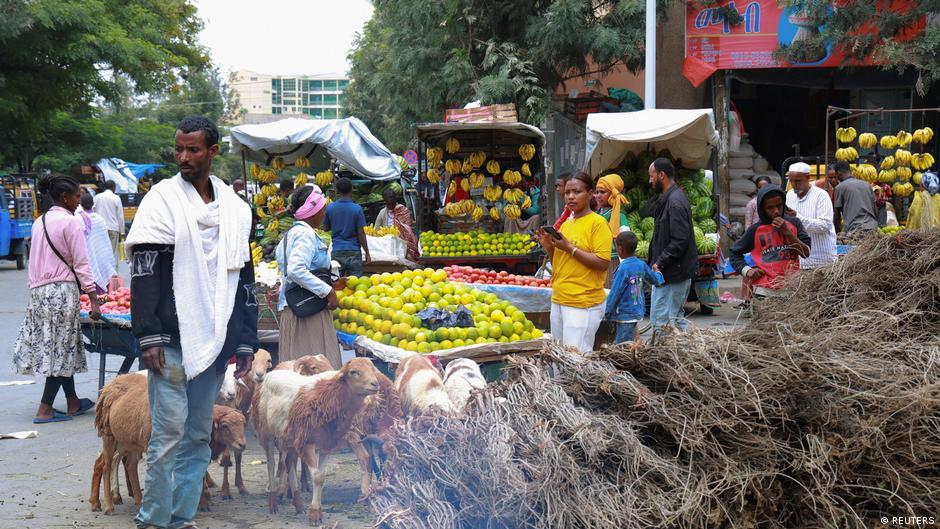


1 / 3
The story, neutrally told
Fighting has returned to northern Ethiopia, ending a fragile peace between federal forces and Tigrayan forces. Deutsche WelleN “Fighting has returned to northern Ethiopia, shattering a fragile peace in the region.” Read at Deutsche Welle ↗ BBC NewsN “Clashes broke out last week after months of tension between the government and the party that controls Tigray” Read at BBC News ↗ Hospital sources told the BBC that at least 52 civilians were killed in three days of heavy fighting around Alamata, with a doctor saying 12 people died in one strike on the market. BBC NewsN “At least 52 civilians have been killed during three days of heavy fighting around Alamata”“Twelve people had died in a single strike on the town's marketplace, the medic said.” Read at BBC News ↗ DW's residents put the market toll at 11 killed and 15 wounded, and said these accounts could not be independently verified. Deutsche WelleN “At the Saturday market in Alamata, 11 people were killed and 15 others were wounded”“It's important to note that these claims could not be independently verified.” Read at Deutsche Welle ↗
Government troops appear to have taken Alamata, which pro-government sources said happened on 27 September and which the monitor ACLED also recorded. Deutsche WelleN “The purported takeover was also recorded by the US-based conflict-monitoring organization ACLED” Read at Deutsche Welle ↗ BBC NewsN “Social media clips show army tanks on Alamata's streets.” Read at BBC News ↗ The BBC says the army seems to intend to push on towards the regional capital Mekelle, while a DW source said Tigrayan forces are defending towns such as Mekoni and Maychew. BBC NewsN “intend to push north towards Mekelle, the region's main city” Read at BBC News ↗ Deutsche WelleN “Tigrayan forces are reportedly fighting to defend other towns, including Mekoni and Maychew in southern Tigray” Read at Deutsche Welle ↗ The two sides disagree over who started it: the TPLF says it responded to a federal offensive including drone strikes, while the government says Tigrayan forces attacked first after seizing airports. BBC NewsN “the government says Tigrayan forces attacked first after seizing control of airports in the region” Read at BBC News ↗ Deutsche WelleN “both sides portraying their military actions as defensive in nature” Read at Deutsche Welle ↗
Earlier in September the TPLF and six other armed groups, including the Amhara Fano National Movement, formed an alliance aimed at overthrowing Prime Minister Abiy Ahmed's government. Deutsche WelleN “the Tigray People's Liberation Front (TPLF) and six other armed groups had announced a new alliance aimed at overthrowing Prime Minister Abiy Ahmed's government” Read at Deutsche Welle ↗ BBC NewsN “a seven-member alliance with the stated intention of removing the government in the capital, Addis Ababa” Read at BBC News ↗ The fighting has spread to Amhara, where 33 tourists were stranded in Lalibela, and to Afar, a strategic area linking Ethiopia to Djibouti's ports. BBC NewsN “33 tourists stranded for the last week in Lalibela” Read at BBC News ↗ Deutsche WelleN “Tigrayan forces have advanced into the Afar region” Read at Deutsche Welle ↗ Internet and communications are cut and banking in Tigray has been suspended; MSF reported more than 700 wounded admitted to hospitals it supports, and the ICRC has evacuated only about 160 people. BBC NewsN “more than 700 wounded people had been admitted to hospitals it supports in Tigray” Read at BBC News ↗ Deutsche WelleN “the global NGO got to evacuate only around 160 individuals from Tigray” Read at Deutsche Welle ↗
The conflict follows the 2022 Pretoria Agreement, which ended a 2020-2022 war, though key provisions were never implemented, and there are fears that Eritrea, which denies backing the armed groups, could be drawn in. Deutsche WelleN “key provisions remained unimplemented and major disputes unresolved” Read at Deutsche Welle ↗ BBC NewsN “the government accuses Asmara of supporting the armed groups, something it denies” Read at BBC News ↗
Every sentence links to the reporting it rests on.
Left0 outlets
No left outlet in our sources has covered this story yet.
Centre3 outlets
- Framing
- Both outlets lead with civilian harm and the communications blackout: DW with eyewitness accounts and background on the collapse of the Pretoria deal, the BBC with a medic's casualty figure and the knock-on effect on stranded tourists in Lalibela.
- Emphasis
- Civilian casualties, the information blackout, humanitarian and banking disruption, and the risk of regional spread.
- Leaves out or plays down
- Neither has a comment from the federal government or army on the civilian deaths; DW says an ENDF spokesperson did not respond. The BBC gives less background on the Pretoria deal's collapse. DW does not cite the 52 figure or the tourists.
- Charged language
- “shattering a fragile peace”“No regard for civilians”
- For example
-
“DW spoke to civilians caught in the crossfire amid communication blackouts” — Deutsche Welle
“The BBC is unable to report from Tigray and surrounding areas” — BBC News
Right0 outlets
No right outlet in our sources has covered this story yet.
What every side reports
- Fighting has resumed between federal and Tigrayan forces, ending the peace that followed the 2022 deal.
- Government forces appear to have taken Alamata.
- Each side blames the other for starting the fighting.
- Communications to Tigray are largely cut, which makes verification hard.
- Tigrayan forces are also fighting in Afar, and the alliance includes Amhara armed groups.
Where accounts differ
-
Who started the latest fighting
- Centre
- BBC: the TPLF says it responded to a federal offensive including drone strikes; the government says Tigrayan forces attacked first after seizing airports. DW: both sides call their actions defensive.
-
Civilian toll and market strike in Alamata
- Centre
- BBC: hospital sources say at least 52 civilians died and 12 in one market strike. DW: residents say 11 died and 15 were hurt at the market, unverified, and locals blame government artillery per militia accounts.
Tigray place
Tigray's ruling TPLF says it was responding to a federal offensive, including drone strikes; its forces are reported to be defending towns and advancing into Afar.
“says it was responding to a federal offensive, including drone strikes” — BBC News
Ethiopia place
The federal government says Tigrayan forces attacked first after seizing airports, and accuses Eritrea of backing armed groups, which Asmara denies. It has not commented on civilian deaths in the coverage.
“the government says Tigrayan forces attacked first after seizing control of airports in the region” — BBC News
“the spokesperson had not responded to the request” — Deutsche Welle
Left0 articles
No coverage yet.
Centre4 articles
-
Ethiopia: No regard for civilians as fighting in Ethiopia's Tigray region continues
Critical Civilian-focused account built on anonymous eyewitnesses, with background on the war and the Pretoria deal, and caveats that claims are unverified.
-
Ethiopia: Fighting continues in Tigray with no regard for civilians
Critical Same DW report under a different headline, stressing civilians caught in the crossfire amid blackouts.
-
Ethiopia fighting escalates in Tigray killing 52 civilians, medic tells the BBC
Neutral Leads with a medic-sourced death toll, then covers the Alamata takeover, stranded tourists and the blackout, noting the BBC cannot report from the region.
-
Right0 articles
No coverage yet.
- 29 Sep 17:14 First Deutsche WelleN Ethiopia: Fighting continues in Tigray with no regard for civilians
- 29 Sep 17:14 First Deutsche WelleN Ethiopia: No regard for civilians as fighting in Ethiopia's Tigray region continues
- 30 Sep 16:04 +22h 51m BBC NewsN Ethiopia fighting escalates in Tigray killing 52 civilians, medic tells the BBC
- 30 Sep 20:04 +26h 50m France 24N Ethiopia back to civil war? Horn of Africa fears spillover effect of renewed fighting
Times are when each article was published, or when we first saw it if the outlet gave no time.