Former attorney general Mandelblit testifies as defense witness at Netanyahu trial
Avichai Mandelblit began testifying on Sunday as a defense witness in Benjamin Netanyahu's corruption trial. The questioning centres on whether police stayed within the investigation approvals he gave.
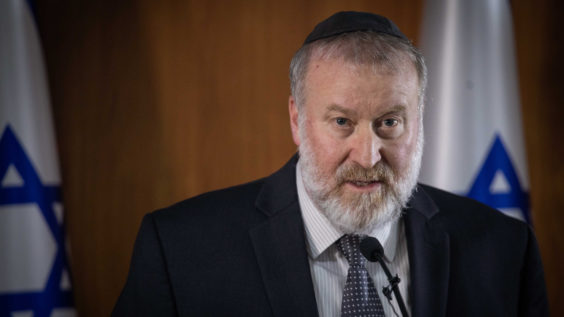

1 / 2
The story, neutrally told
Mixed · 2Former attorney general Avichai Mandelblit began testifying on Sunday 11 October as a defense witness in Prime Minister Benjamin Netanyahu's criminal trial at Jerusalem District Court. The Media LineN “Netanyahu’s attorneys called Mandelblit, who filed the indictments against the prime minister in November 2019, as a defense witness at Jerusalem District Court.” Read at The Media Line ↗ The Jerusalem PostRC “Former attorney-general Avichai Mandelblit began testifying as a defense witness in Prime Minister Benjamin Netanyahu's criminal trial on Sunday” Read at The Jerusalem Post ↗ Mixed · 2Netanyahu, who rarely attends other witnesses' hearings, was in the courtroom, as was Foreign Minister Gideon Sa'ar, for whom it was a first appearance at a hearing in the trial; The Media Line also reported that Knesset Speaker Amir Ohana and Likud lawmaker Tally Gotliv attended. The Jerusalem PostRC “Netanyahu has rarely attended other witnesses' hearings, and this was Sa'ar's first time attending a hearing in the trial.” Read at The Jerusalem Post ↗ The Media LineN “Knesset Speaker Amir Ohana, Foreign Minister Gideon Sa’ar and Likud lawmaker Tally Gotliv attended the proceedings.” Read at The Media Line ↗ Mixed · 2The defense argues that some investigative steps were taken without the attorney general's required authorization or beyond what he approved, and has challenged evidence obtained through those steps; prosecutors dispute this and say Mandelblit approved the investigations, including inquiries into gifts to Netanyahu. The Media LineN “The defense argues that some investigative steps were taken either without the attorney general’s required authorization or beyond the scope of what he had approved.” Read at The Media Line ↗ The Jerusalem PostRC “Prosecutors dispute the defense's account, saying Mandelblit approved the investigations, including inquiries into gifts to Netanyahu.” Read at The Jerusalem Post ↗
Mixed · 2Under Basic Law: The Government, a criminal investigation of a sitting prime minister requires the attorney general's consent. Mandelblit gave his approvals orally in meetings with police officials, and Justice Ministry minutes documented them rather than separate written authorizations; the judges have previously criticized that procedure. The Jerusalem PostRC “Under Basic Law: The Government, a criminal investigation against a sitting prime minister requires the attorney-general's consent.” Read at The Jerusalem Post ↗ The Media LineN “The judges have previously criticized Mandelblit and prosecutors over how the approval was handled, citing the sensitivity of investigating a sitting prime minister.” Read at The Media Line ↗ Centre · 1Netanyahu attorney Amit Hadad said the defense would question Mandelblit "professionally and without inflammatory rhetoric", and told him there were "large parts of the truth that you don’t know and that were hidden from you." The defense is also expected to ask about an affidavit he submitted to the High Court of Justice and an investigative tactic used against state witness Nir Hefetz. The Media LineN ““There are large parts of the truth that you don’t know and that were hidden from you. There are also statements of yours about that,” Hadad told him.”“The defense is also expected to question Mandelblit about an affidavit he submitted to the High Court of Justice on the investigative authorizations and about an investigative tactic used against state witness Nir Hefetz.” Read at The Media Line ↗ Centre · 1Before the hearing, Mandelblit complained that a journalist had confronted him outside the courtroom, and Gotliv shouted at him, "How did you sign the indictment? What did you do to us?" The Media LineN “Gotliv shouted at Mandelblit before the hearing: “How did you sign the indictment? What did you do to us?”” Read at The Media Line ↗
Right · 1The trial, which began in May 2020, combines Cases 1000 (gifts from wealthy businessmen), 2000 (alleged coverage-for-legislation exchange with Yediot Aharonot publisher Arnon Mozes) and 4000 (alleged regulatory favours for Bezeq in return for favorable Walla coverage); Netanyahu denies wrongdoing. The Jerusalem PostRC “Netanyahu's trial, which began in May 2020, combines three cases.”“He denies wrongdoing.” Read at The Jerusalem Post ↗ Mixed · 2The defense requested seven sessions, on 11 and 12 October and 18-22 October, with the last just days before the 27 October election; the judges may limit the questioning and may not need all seven days. The Jerusalem PostRC “The defense requested seven days of testimony: October 11 and 12, followed by October 18-22, in the final stretch before the October 27 election.” Read at The Jerusalem Post ↗ The Media LineN “with the final one currently scheduled for Oct. 22, five days before the election.” Read at The Media Line ↗
Every sentence links to the reporting it rests on. The pill in front of each says where its sources sit: Left, Centre or Right when one side supplies at least half of them, Mixed when they are evenly split. The number is how many outlets it cites.
Left0 outlets
No left outlet in our sources has covered this story yet.
Centre1 outlet
- Framing
- Frames the testimony as a defense challenge to the investigation approval, with courtroom colour: confrontations and politicians attending.
- Emphasis
- Hadad's remarks, Gotliv's shouting, Mandelblit's complaint about a journalist, and the schedule ending before the election.
- Leaves out or plays down
- Does not set out the three cases or the prosecution's response.
- For example
-
“The defense argues that some investigative steps were taken either without the attorney general’s required authorization or beyond the scope of what he had approved.” — The Media Line
Right1 outlet
- Framing
- Explanatory account of the legal dispute over the scope of Mandelblit's approvals, set within the three cases.
- Emphasis
- Basic Law requirement, oral approvals, the prosecution's position, case descriptions and charges.
- Leaves out or plays down
- Does not mention Gotliv's outburst, the journalist incident, Hadad's remarks or the Hefetz and High Court affidavit topics.
- For example
-
“His testimony is expected to focus on whether police investigators stayed within the scope of the approvals he gave, a question the defense has raised throughout the trial” — The Jerusalem Post
What every side reports
- Mandelblit began testifying on 11 October as a defense witness
- Netanyahu and Foreign Minister Gideon Sa'ar attended
- Mandelblit's approvals were oral and judges have criticized the procedure
- The defense requested seven sessions ending before the 27 October election
Where accounts differ
-
Whether investigators stayed within Mandelblit's approvals
- Centre
- The defense argues some steps lacked authorization or exceeded what he approved.
- Right
- Defense lawyers say investigators exceeded the consent; prosecutors say Mandelblit approved the investigations.
Benjamin Netanyahu person
Netanyahu denies wrongdoing; his lawyers contend investigators exceeded Mandelblit's consent.
“Netanyahu's lawyers argue that investigators went beyond the scope of Mandelblit's consent and have challenged evidence obtained through those steps.” — The Jerusalem Post
Avichai Mandelblit person
Mandelblit approved the investigations orally and later indicted Netanyahu; he complained of being confronted by a journalist before testifying.
“Mandelblit authorized investigations into Netanyahu and later decided to indict him in Cases 1000, 2000, and 4000.” — The Jerusalem Post
“Before the hearing, Mandelblit complained that a journalist had confronted him outside the courtroom” — The Media Line
Left0 articles
No coverage yet.
Centre1 article
-
Mandelblit Takes Stand in Netanyahu Trial as Defense Challenges Investigation Approval
Neutral Reports the hearing with a defense-challenge angle and courtroom incidents.
Right1 article
-
Former A-G Avichai Mandelblit begins testimony in Netanyahu trial over investigations authorization
Neutral Explains the legal question and case background, including the prosecution's rebuttal.
- 11 Oct 08:27 First The Media LineN Mandelblit Takes Stand in Netanyahu Trial as Defense Challenges Investigation Approval
- 11 Oct 10:08 +1h 40m The Jerusalem PostRC Former A-G Avichai Mandelblit begins testimony in Netanyahu trial over investigations authorization
Times are when each article was published, or when we first saw it if the outlet gave no time.