Fourteen economies join US in statement to counter industrial overcapacity
Fourteen economies signed a joint ministerial statement with the United States on 7 October, pledging coordinated work on government-backed excess industrial capacity in five sectors. China did not sign, and the statement does not name it.
1 / 1
The story, neutrally told
Mixed · 2Fourteen economies joined the United States in a joint ministerial statement announced on Wednesday 7 October, pledging to work together against government-backed industrial overproduction. BreitbartR “Fourteen economies joined the United States in a joint ministerial statement announced Wednesday” Read at Breitbart ↗ Hindustan TimesN “The countries issued a joint statement on Wednesday after meeting on the sidelines of the Organisation for Economic Co-operation and Development Trade Committee deliberations in Washington.” Read at Hindustan Times ↗ Mixed · 2The signatories are Argentina, Australia, Canada, the European Union, France, Germany, India, Italy, Japan, South Korea, Mexico, Poland, Türkiye, the United Kingdom and the United States. Hindustan TimesN “The signatories include the trade ministers of Argentina, Australia, Canada, the European Union, France, Germany, India, Italy, Japan, South Korea, Mexico, Poland, Turkiye, the United Kingdom and the United States.” Read at Hindustan Times ↗ BreitbartR “The signatories include every Group of Seven country, the European Union, Mexico, South Korea, India, Australia, Argentina, Poland, and Türkiye.” Read at Breitbart ↗ Centre · 1G20 members China, Brazil, Indonesia, Russia, Saudi Arabia and South Africa did not sign. Hindustan TimesN “G20 members China, Brazil, Indonesia, Russia, Saudi Arabia and South Africa did not sign the joint statement.” Read at Hindustan Times ↗
Centre · 1The statement calls on all countries to eliminate structural excess capacity, including by ending non-market policies and practices that distort markets. Hindustan TimesN “"We call on all countries to take steps to eliminate structural excess capacity and production in their economies, including by ending the use of non-market policies and practices that distort markets and contribute to the problem,"” Read at Hindustan Times ↗ Right · 1Breitbart reports that the signatories will set up dedicated platforms for five initial sectors: automobiles and electric vehicles, batteries, chemicals, foundational semiconductors, and solar panels. BreitbartR “pledging to develop coordinated responses in automobiles and electric vehicles, batteries, chemicals, foundational semiconductors, and solar panels.”“The participating governments will establish dedicated platforms for the five initial sectors.” Read at Breitbart ↗ Right · 1According to Breitbart, technical officials are to meet before December to draw up terms of reference, exchange non-confidential information on excess capacity and identify data gaps. The signatories also agreed to explore complementary protective actions and invited other countries, including non-OECD members, to take part. BreitbartR “Technical officials are committed to meeting before December to develop terms of reference, exchange non-confidential information about excess capacity and its effects, and identify gaps in available data.”“Other countries, including those outside the OECD, are invited to participate.” Read at Breitbart ↗
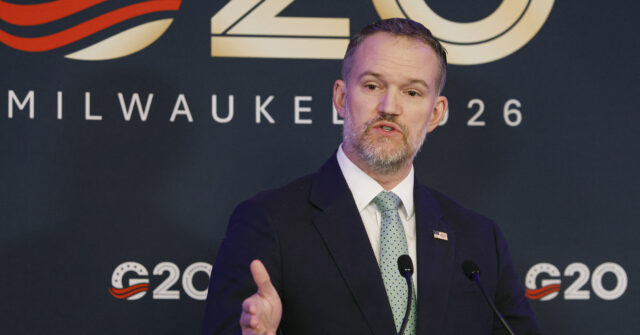
Right · 1The statement does not name China, but Breitbart says Beijing's industrial policies are the principal target. It also says the statement imposes no new tariffs and specifies no enforcement measures. BreitbartR “Although the statement does not name China, Beijing’s industrial policies are the principal target.”“While the announcement does not impose new tariffs or specify particular enforcement measures” Read at Breitbart ↗ Mixed · 2The initiative follows last week's G20 trade ministerial in Milwaukee, where ministers did not reach consensus on excess industrial capacity and forced labour. Hindustan TimesN “The G20 trade ministerial in Milwaukee had failed to reach a consensus on issues related to forced labour and excess industrial capacity.” Read at Hindustan Times ↗ BreitbartR “Ministers failed to reach a consensus on that issue, but the new statement establishes a coalition willing to pursue cooperation outside the full G20.” Read at Breitbart ↗ Mixed · 2US Trade Representative Jamieson Greer said that, unchecked, these issues will "cripple domestic industries, displace local production, and hinder our ability to raise the standard of living for workers and their families". He said the Trump administration would keep working with partners to defend US industries and workers from such distortions. Hindustan TimesN “"Left unchecked, these issues will continue to cripple domestic industries, displace local production, and hinder our ability to raise the standard of living for workers and their families," he said.” Read at Hindustan Times ↗ BreitbartR “Greer said the Trump administration would continue working with trading partners to defend American industries and workers against distortions created by non-market policies.” Read at Breitbart ↗
Right · 1The statement recalls a 2016 G20 agreement that subsidies could distort markets and cause overcapacity, which led to the Global Forum on Steel Excess Capacity. The signatories say the problem has since worsened. BreitbartR “The statement recalls that G20 ministers and leaders agreed in 2016 that government subsidies and other support could distort markets and contribute to industrial overcapacity.”“Despite those commitments, the signatories said, the problem has worsened and spread through domestic industries and their supply chains.” Read at Breitbart ↗
Every sentence links to the reporting it rests on. The pill in front of each says where its sources sit: Left, Centre or Right when one side supplies at least half of them, Mixed when they are evenly split. The number is how many outlets it cites.
Left0 outlets
No left outlet in our sources has covered this story yet.
Centre1 outlet
- Framing
- Hindustan Times, running a PTI agency report, presents the statement as a multilateral call for global action, with India in the headline and a plain list of who signed and who did not.
- Emphasis
- The signatory list, the G20 members that did not sign, and Greer's statement.
- Leaves out or plays down
- Does not mention the five named sectors, the December technical meetings, or China as the implied target.
- For example
-
“India, 13 other countries call for global action to curb excess industrial production” — Hindustan Times
“G20 members China, Brazil, Indonesia, Russia, Saudi Arabia and South Africa did not sign the joint statement.” — Hindustan Times
Right1 outlet
- Framing
- Breitbart treats the statement as a win for the Trump administration and USTR Jamieson Greer, and as growing allied backing against Chinese trade practices.
- Emphasis
- Sectors covered, China as the unnamed principal target, the follow-up work plan, and the lack of new tariffs.
- Leaves out or plays down
- Does not list the G20 members that stayed out, apart from implying the G20 split.
- Charged language
- “predatory trade practices”“predatory mercantilist practices”“major policy win”
What every side reports
- Fourteen economies joined the US in a joint ministerial statement on 7 October.
- The statement came from talks on the sidelines of the OECD Trade Committee.
- It builds on the G20 trade ministerial in Milwaukee, which did not reach consensus on excess capacity.
- USTR Jamieson Greer said unchecked overcapacity will cripple domestic industries and displace local production.
Where accounts differ
-
Whether China is the target
- Centre
- Hindustan Times does not link the statement to China beyond noting that China did not sign.
- Right
- Breitbart says the statement does not name China but that Beijing's industrial policies are the principal target.
Trump administration organisation
The Trump administration, through USTR Jamieson Greer, says it will keep engaging trading partners to defend US industries and workers from non-market distortions.
“Greer said the Trump Administration would continue to engage with US trading partners to defend its domestic industries, workers and economy from distortions resulting from such policies and practices.” — Hindustan Times
China place
China did not sign and is not named in the statement. Breitbart describes its industrial policies as the main target. No Chinese response is reported.
“Although the statement does not name China, Beijing’s industrial policies are the principal target.” — Breitbart
“G20 members China, Brazil, Indonesia, Russia, Saudi Arabia and South Africa did not sign the joint statement.” — Hindustan Times
Left0 articles
No coverage yet.
Centre1 article
-
India, 13 other countries call for global action to curb excess industrial production
Neutral Wire-style report of the joint statement, signatories and non-signatories, and Greer's comments, with India highlighted.
Right1 article
-
Major U.S. Trading Partners Agree to Confront Predatory Trade Practices
Celebratory Frames the pledge as a policy win for the Trump administration against China's industrial policies.
- 7 Oct 18:29 First BreitbartR Major U.S. Trading Partners Agree to Confront Predatory Trade Practices
- 8 Oct 06:44 +12h 14m Hindustan TimesN India, 13 other countries call for global action to curb excess industrial production
Times are when each article was published, or when we first saw it if the outlet gave no time.