Google makes Gemini and Search opt-in for schools; officials call AI-Search link coercion
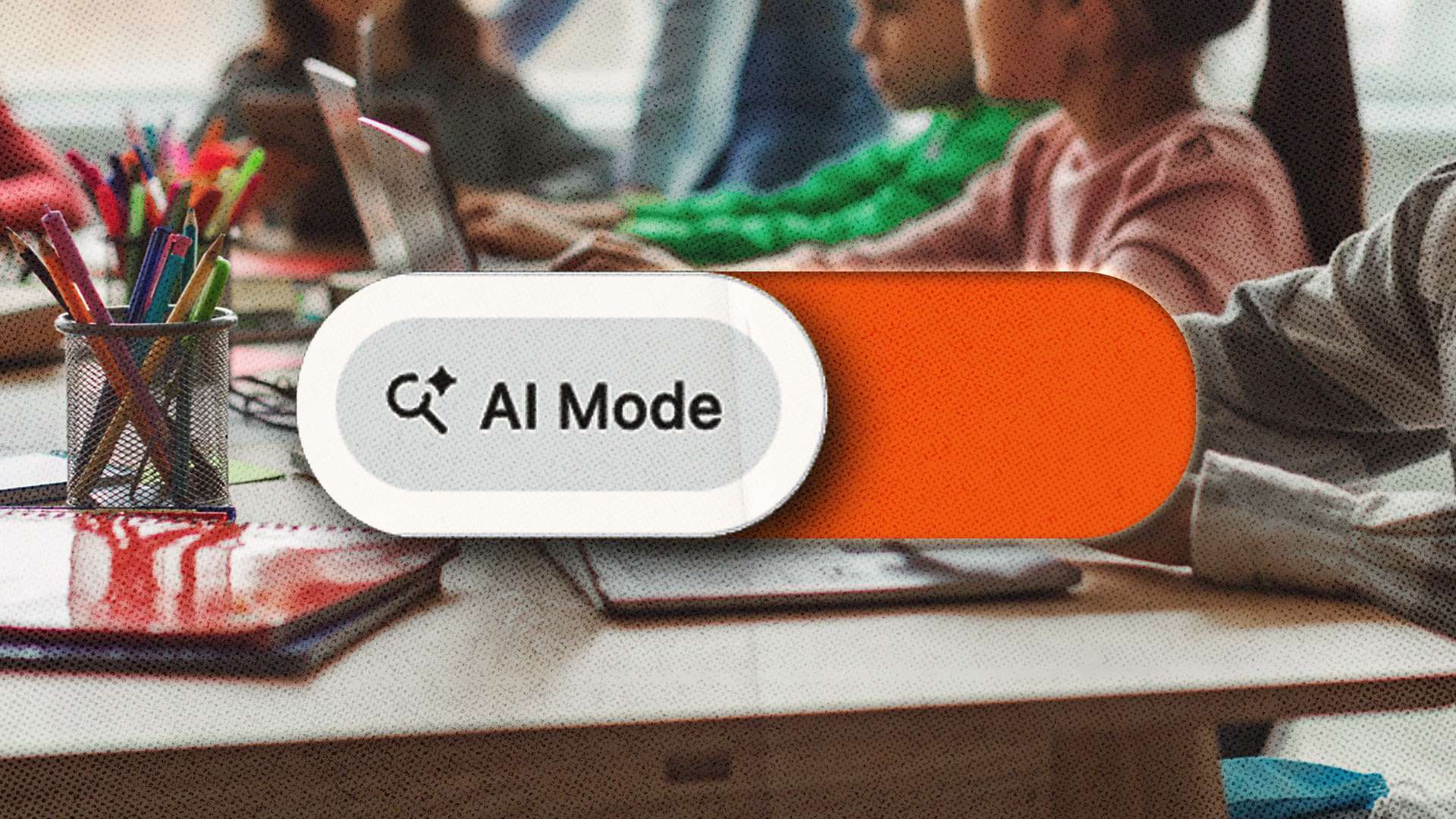
Google will turn off Gemini features and Search by default on K–12 student accounts, but will not let schools disable AI in Search without losing Search. Officials call this coercion; Reason argues it is lawful product design.

1 / 2
The story, neutrally told
Mixed · 2Google announced that Gemini, Gemini Notebook, Gemini in Classroom and Google Search will be off by default for K–12 student accounts until school administrators turn them on. ReasonRC “will be entirely off for K-12 student accounts until school administrators explicitly turn them on” Read at Reason ↗ The VergeLC “Gemini app, Gemini Notebook and Search will be off by default until schools decide which services to enable” Read at The Verge ↗ Mixed · 2Google will not let schools switch off AI features inside Search while keeping Search. Chris Phillips, Google's vice president of education, told The New York Times that "Search and AI are deeply integrated" and that schools that turn off the AI features "will not have access to Search"; The Verge says this applies starting next year. The VergeLC “Starting next year, schools will not have the option to disable Gemini-powered features without also disabling Search.” Read at The Verge ↗ ReasonRC “it will not allow educators to disable AI within Google Search because the two are "deeply integrated."” Read at Reason ↗ Right · 1The change followed a late-October letter to CEO Sundar Pichai from Sens. Richard Blumenthal (D–Conn.) and Josh Hawley (R–Mo.), who raised concerns about AI in Google Classroom and Chromebooks and about educators being unable to disable features such as AI Overviews. ReasonRC “a late-October letter to Google CEO Sundar Pichai coauthored by Sens. Richard Blumenthal (D–Conn.) and Josh Hawley (R–Mo.)” Read at Reason ↗
Mixed · 2Critics reacted strongly. Former FTC Chair Lina Khan accused Google of "using its search monopoly to coerce schools into adopting AI", and New York City Mayor Zohran Mamdani made a near-identical point. Blumenthal told Education Week that Google is blocking schools from Search unless they opt into AI Overviews. The Verge reports that Mamdani and Sen. Bernie Sanders called the behaviour "extortion". ReasonRC “using its search monopoly to coerce schools into adopting AI” Read at Reason ↗ The VergeLC “calling Google’s behavior “extortion.”” Read at The Verge ↗ Left · 1According to The New York Times as relayed by The Verge, New York, Los Angeles and Chicago schools are considering alternatives to Google. NYC schools chancellor Kamar H. Samuels said, "If Google doesn't reconsider their position, we will explore other search options", and Chicago's schools reportedly told Google they would look to other search solutions if it cannot offer Search without AI. The VergeLC ““If Google doesn’t reconsider their position, we will explore other search options.””““the district will look to other search solutions.”” Read at The Verge ↗ Left · 1Google spokesperson Laura Breen said the company hears concerns about students using AI to shortcut learning. She said Google is piloting Guided Learning in Search this month to walk students through complex problems step by step, and will update school controls next year. The VergeLC “we’re starting to pilot Guided Learning capabilities in Search this month” Read at The Verge ↗
Right · 1Reason argues the criticism confuses a preference for a different product with an antitrust violation. It cites University of Pennsylvania antitrust scholar Herb Hovenkamp, who said antitrust is not a tool for making firms redesign products to suit each buyer, and U.S. District Judge Amit Mehta's dismissal of Penske Media's tying claim, which found Search and AI Overviews plausibly share the same use case. ReasonRC “antitrust is not a tool for making firms redesign products in order to satisfy each buyer's wishes.”“the more plausible inference is that Google Search and AI Overviews have the same use case” Read at Reason ↗ Mixed · 2Reason also notes that schools can offer an AI-free search experience by leaving Google Search restricted and letting students use other browsers or search engines, including Brave and DuckDuckGo, which allow AI to be disabled. Chromebooks are used by 93 percent of U.S. school districts. The Verge counters that Google is deeply embedded in US classrooms through Classroom and Chromebooks, so going fully Google-free might prove difficult. ReasonRC “Brave, and Ecosia—the last three of which permit users to disable AI features” Read at Reason ↗ The VergeLC “going fully Google-free might prove difficult.” Read at The Verge ↗ Left · 1The Verge adds that educators worry about AI's effect on students' critical thinking, that some studies show students using AI generally perform worse on tests, and that there are concerns about children forming relationships with chatbots. Mamdani had recently barred AI in classrooms for grades 2-K-8 students. The VergeLC “Educators are wary of AI’s effect on students’ critical thinking skills”“Mamdani had recently announced a policy that barred 2-K-8 students from using AI in the classroom.” Read at The Verge ↗
Every sentence links to the reporting it rests on. The pill in front of each says where its sources sit: Left, Centre or Right when one side supplies at least half of them, Mixed when they are evenly split. The number is how many outlets it cites.
Left1 outlet
- Framing
- Backlash story: large districts consider dropping Google Search after it said opting out of AI means losing Search.
- Emphasis
- Official and district reactions, Google's statement, educator worries about AI and learning, and how embedded Google is in schools.
- Leaves out or plays down
- Does not discuss antitrust law, the Mehta ruling, or rival search engines.
- Charged language
- “extortion”
Centre0 outlets
No centre outlet in our sources has covered this story yet.
Right1 outlet
- Framing
- Rebuttal to critics: Google is not forcing AI on schools and antitrust law does not require product redesign.
- Emphasis
- Legal argument, the Mehta ruling, the Coca-Cola analogy, alternative browsers and search engines, and the learning benefits of Guided Learning.
- Leaves out or plays down
- Does not report the district-level threats to leave Google Search or the 'extortion' characterisation by Sanders and Mamdani.
- Charged language
- “critics are furious”“AI detractors”“democratizing access to expensive tutoring services”
What every side reports
- Google will make Gemini features and Search off by default for school accounts until administrators enable them.
- Google will not let schools disable AI in Search while keeping Search, saying the two are deeply integrated.
- NYC Mayor Zohran Mamdani criticised Google's approach.
Where accounts differ
-
Whether tying Search to AI amounts to coercion of schools
- Left
- The Verge relays officials, including Mamdani and Sanders, who call it "extortion", and reports districts weighing alternatives.
- Right
- Reason says it is a lawful product-design choice, not an antitrust violation, and that schools can use rival search engines.
Google organisation
Says Search and AI are deeply integrated, so schools that turn off AI lose Search. It says Gemini, Notebook and Search will be off by default, and cites Guided Learning and educator feedback.
““Search and AI are deeply integrated,” and that schools that turn off Google’s AI features “will not have access to Search.”” — The Verge
“we’re also updating our approach to controls for schools to address feedback we’ve heard from educators” — The Verge
Left1 article
-
The nation’s largest school districts consider ditching Google Search
Critical Reports the backlash and districts' consideration of alternatives, with Google's statement included.
Centre0 articles
No coverage yet.
Right1 article
-
ReasonRC ·
No, Google Is Not Forcing Schools To Adopt AI
Dismissive Opinion-style rebuttal arguing the coercion charge misreads antitrust law and that schools have alternatives.
- 18 Nov 18:30 First ReasonRC No, Google Is Not Forcing Schools To Adopt AI
- 18 Nov 23:18 +4h 48m The VergeLC The nation’s largest school districts consider ditching Google Search
Times are when each article was published, or when we first saw it if the outlet gave no time.
Ask about this story
Loading…