Updated Google imagery shows extent of destruction across Gaza
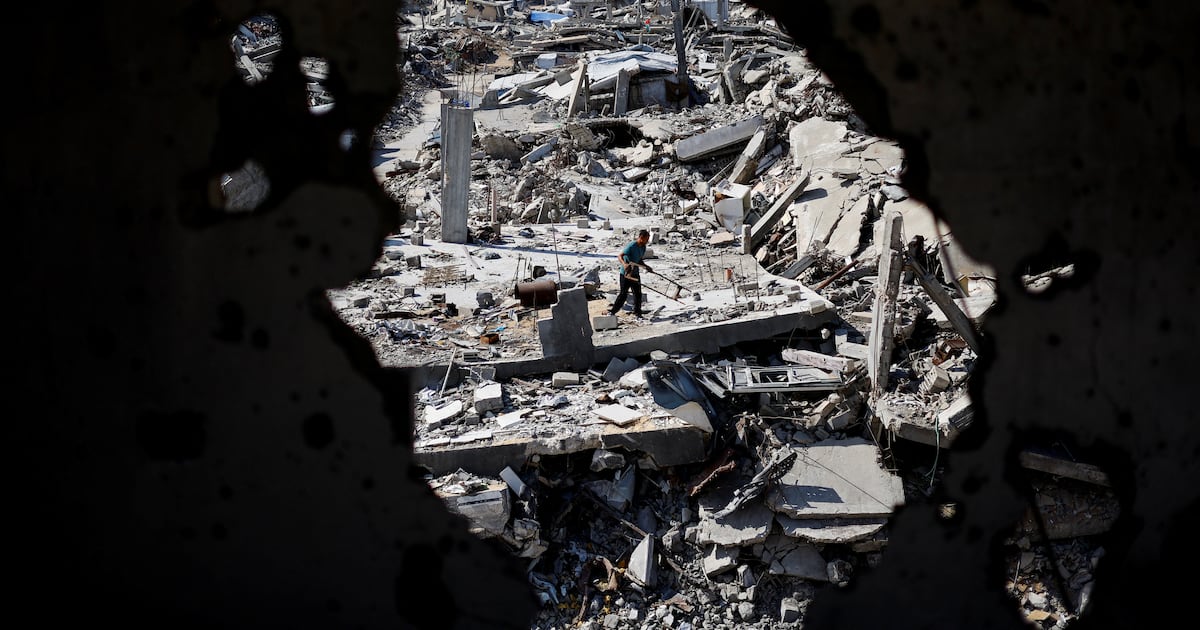
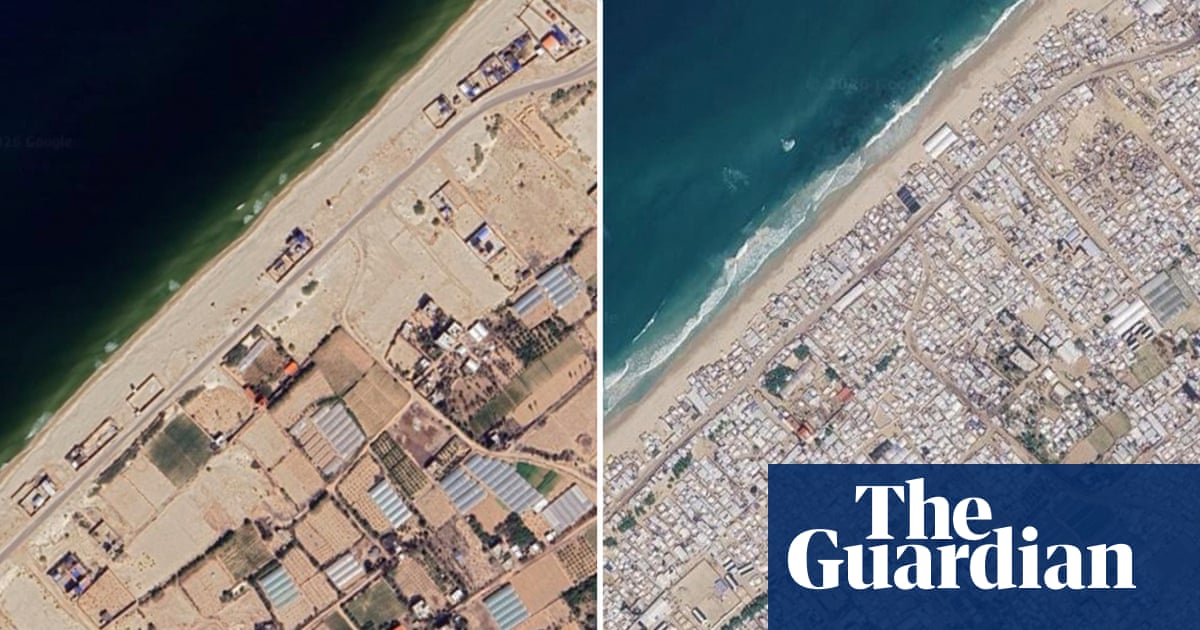
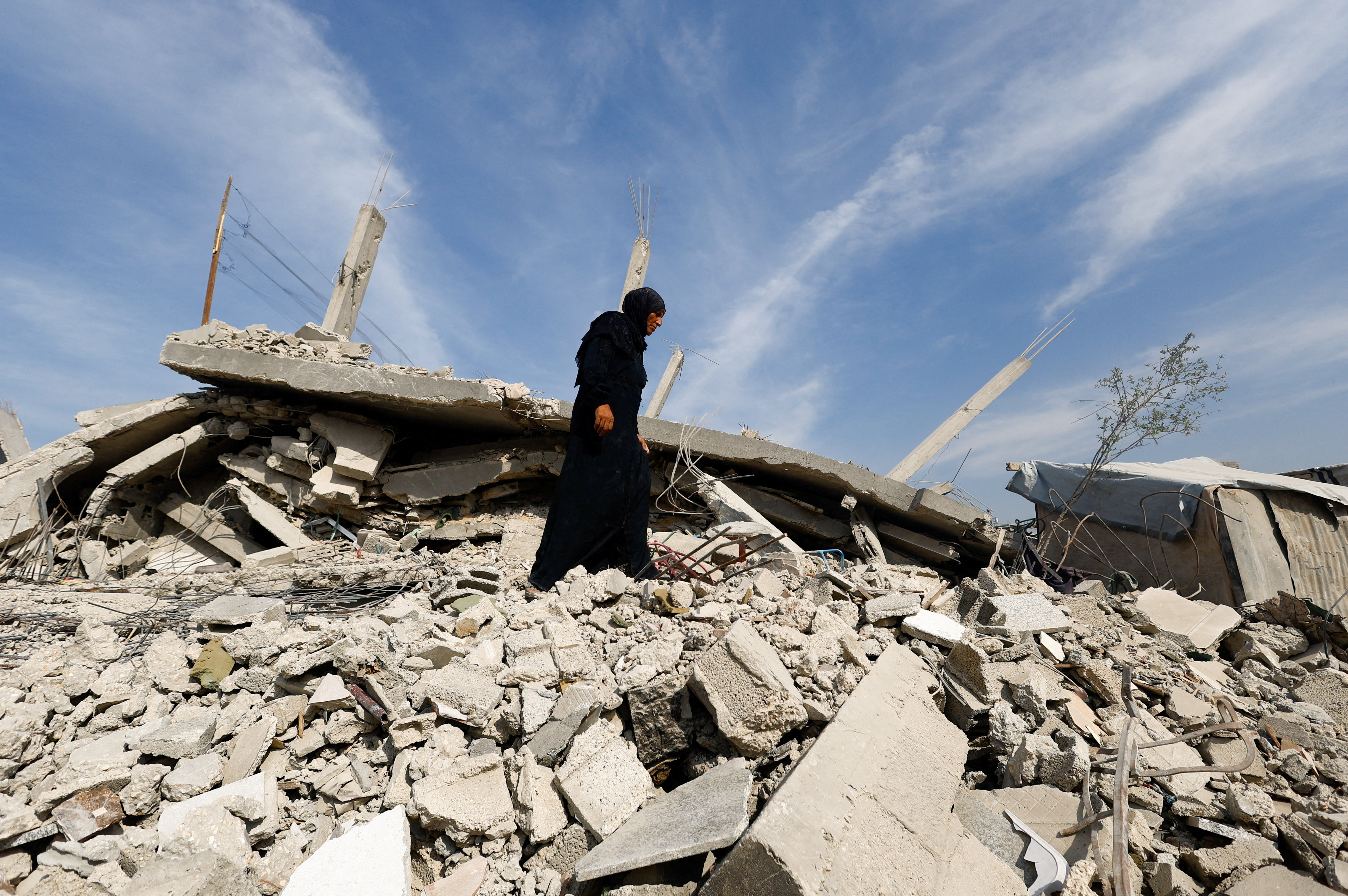
An update to Google's mapping imagery shows widespread destruction in Gaza after three years of war. The Guardian says the images were taken in June and show further damage since the ceasefire; France 24 adds rubble and humanitarian figures.
Updated (version 4). New coverage since the last version from Arab News, The National.


1 / 6
The story, neutrally told
Left · 3Google has updated its satellite imagery of Gaza, and the Daily Mirror, the Guardian and France 24 say the new images show the scale of destruction after three years of war. Daily MirrorL “New Google Earth satellite images have shown the full scale of the devastation in Gaza.” Read at Daily Mirror ↗ The GuardianLC “An update to Google Maps has revealed the extent of devastation during the three-year Gaza war” Read at The Guardian ↗ France 24N “New images posted this week by Google Maps show the utter destruction in Gaza.” Read at France 24 ↗ Left · 1The Guardian reports that the images were taken in June 2026 and show further destruction of homes, businesses, places of worship and infrastructure since a fragile ceasefire began almost 12 months ago. The GuardianLC “The images were taken in June this year and show further destruction of homes, businesses, places of worship and infrastructure since a fragile ceasefire came into effect almost 12 months ago.” Read at The Guardian ↗ Left · 2The Mirror and the Guardian both point to Gaza City's port, which is badly damaged and has lost many of its fishing boats. Daily MirrorL “Among the worst affected sites, include Gaza city's port, which was heavily damaged with many fishing boats having been destroyed.” Read at Daily Mirror ↗ The GuardianLC “Gaza’s once busy main port, now badly damaged and empty of fishing boats, is surrounded by makeshift accommodation.” Read at The Guardian ↗
Left · 1The Guardian adds that tented camps line much of the shoreline, that Rafah appears almost entirely reduced to rubble, and that a wide strip along the Egyptian border appears to have been cleared by Israeli forces. The GuardianLC “Swaths of rubble are visible in the south of Gaza, where a wide strip appears to have been cleared by Israeli forces along the border with Egypt.”“They show huge tented camps lining much of the shoreline, often within a few metres of the sea.” Read at The Guardian ↗ Mixed · 2Citing the UN agency Unrwa, the Guardian says about 82% of structures, roughly 200,000 buildings, have been damaged, and more than 2.1 million displaced people live in tents and temporary shelters. France 24's headline puts the share of destroyed infrastructure at 80 percent. The GuardianLC “More than 2.1 million displaced people are living in tents and temporary shelters in Gaza, where about 82% of structures – roughly 200,000 buildings – have been damaged” Read at The Guardian ↗ France 24N “Sheer devastation: '80 percent of Gazan infrastructure has been destroyed'” Read at France 24 ↗ Mixed · 2The Guardian quotes Jaco Cilliers of the UN Development Programme as estimating 61m tonnes of rubble in Gaza, about 20 times the rubble generated in all wars worldwide over the last 18 years; France 24 gives the same comparison, writing '61 tonnes', and says the ruins are estimated to contain up to 10,000 bodies. The GuardianLC ““The estimate of the total amount of rubble in Gaza is 61m tonnes. It is approximately 20 times the amount of rubble generated in all wars across the world over the last 18 years,”” Read at The Guardian ↗ France 24N “which are estimated to contain up to 10,000 bodies” Read at France 24 ↗
Right · 1Arab News, in a 6 October explainer, gives the UN figure as about 61 million tonnes of rubble (it says it could not verify this independently), with 82% of buildings damaged and at least two-thirds of those destroyed, and says only about 907,000 tonnes (1.5%) has been removed, a job the UN estimates could take seven to 14 years. Arab NewsRC “So far, about 907,000 tonnes of debris have been removed, about 1.5 percent of the total”“The figure could not be independently verified by Arab News, but the scale of destruction is undisputed.” Read at Arab News ↗ Right · 1Arab News also reports that Israel bars "dual-use" items it says could benefit Hamas, so heavy equipment has largely stayed out, and it quotes Palestinian analyst Ahmed Najar saying Israel's control of crossings makes rubble removal a political instrument and that unregulated clearance could erase evidence of war crimes. Arab NewsRC “Israel bars “dual-use” items that it says could benefit Hamas, so heavy and specialized equipment has largely stayed out.”“could erase evidence of war crimes and other atrocity crimes under the guise of reconstruction.” Read at Arab News ↗ Centre · 1France 24 also interviews Jean-François Corty of IRIS and Médecins du monde, who warns that most of the population lacks clean water, while civilians face food insecurity and a developing health crisis. France 24N “Corty warns that "the majority of the population has no access to clean water".” Read at France 24 ↗
Left · 2The Mirror and the Guardian both say more than 74,000 Palestinians have been killed. The Mirror attributes the injury figure of at least 175,098 to the Palestinian Ministry of Health, which it describes as run by Hamas. Daily MirrorL “At least 175,098 Palestinians have been injured since the war began, according to the Palestinian Ministry of Health, which is run by the terrorist organisation Hamas.” Read at Daily Mirror ↗ The GuardianLC “More than 74,000 Palestinians have been killed in Gaza since the start of the war, mostly civilians.” Read at The Guardian ↗ Left · 2The war followed the Hamas-led attack of 7 October 2023. The Mirror puts the death toll from that attack at 1,300 and the Guardian at about 1,200, with 251 hostages taken. Daily MirrorL “in which 1,300 people were killed and hundreds were abducted” Read at Daily Mirror ↗ The GuardianLC “in which militants killed about 1,200 people, mostly civilians, and took 251 others hostage.” Read at The Guardian ↗ Left · 1The Mirror also notes a June UN commission of inquiry report accusing Israel of genocide and crimes against humanity, and says criticism of Prime Minister Benjamin Netanyahu has grown. Daily MirrorL “Israel's conduct amid the Gaza War led a UN commission of inquiry to accuse the country's military of deliberately targeting Palestinian children, constituting a genocide and crimes against humanity.” Read at Daily Mirror ↗
Centre · 1The National (9 October) uses the Google Earth update, which it says allows prewar and recent comparisons in Rafah, Khan Younis, Gaza City and northern Gaza, to ask where people will live this winter; it says a ceasefire began on 10 October last year but more than 1,400 Palestinians have since been killed in near-daily Israeli attacks. The NationalN “More than 1,400 Palestinians have since been killed in near-daily Israeli attacks”“Google Earth comparisons between prewar and more recent imagery show how the loss of housing has reshaped Gaza’s urban landscape” Read at The National ↗ Centre · 1The National cites the Norwegian Refugee Council as saying 1.65 million people face another winter in tents and damaged buildings, that shelter aid is available for only about 52,200 of 284,250 families needing it, and that a $186.8 million funding gap exists; it says Israel classes tents, tarpaulins and cement as dual-use, and Israel says such limits are needed because civilian items can be diverted for military use. The NationalN “Existing stocks and supplies in the pipeline are enough to provide shelter and household assistance to only about 52,200 families, the NRC says.”“Israel says restrictions are necessary because items with civilian purposes can also be diverted for military use.” Read at The National ↗ Right · 1The Daily Mail, in a piece on the satellite imagery, says Benjamin Netanyahu's government pounded Gaza with devastating airstrikes in response to what it calls the indefensible attacks of 7 October 2023. Daily MailR “In response to the indefensible October 7, 2023 attacks, Benjamin Netanyahu's government pounded Gaza with devastating airstrikes.” Read at Daily Mail ↗
Every sentence links to the reporting it rests on. The pill in front of each says where its sources sit: Left, Centre or Right when one side supplies at least half of them, Mixed when they are evenly split. The number is how many outlets it cites.
Left2 outlets
- Framing
- Both outlets lead with the imagery as visual evidence of devastation. The Mirror's tone is more emotive and includes genocide accusations and criticism of Netanyahu. The Guardian stresses post-ceasefire damage, the humanitarian crisis and UN data.
- Emphasis
- The Mirror stresses rubble, destroyed religious buildings and the UN genocide finding; the Guardian stresses displacement, tented camps and UN rubble and damage estimates.
- Leaves out or plays down
- Neither quotes Israeli officials or Google. The Mirror does not date the images or mention the ceasefire; the Guardian does not mention genocide accusations.
- For example
-
“Gaza horror as Google Earth updates satellite photos showing full scale of devastation” — Daily Mirror
“An update to Google Maps has revealed the extent of devastation” — The Guardian
Centre2 outlets
- Framing
- France 24 uses the images for a short segment on reconstruction and humanitarian needs. The National (Middle East) uses the Google Earth update as a human-interest hook on winter shelter, with Gazans' testimony and NRC data.
- Emphasis
- Rubble and bodies, water and health (France 24); tents, collapsing buildings, shelter-aid gaps and Israeli dual-use limits (The National).
- Leaves out or plays down
- France 24 gives no detail on what the images show, dates or ceasefire context. The National gives no detail on the imagery itself beyond locations.
- For example
-
“New images posted this week by Google Maps show the utter destruction in Gaza.” — France 24
“For some, it is between a tent exposed to winter weather and a damaged building that may not be safe to occupy.” — The National
Right2 outlets
- Framing
- The Daily Mail presents the imagery as 'haunting' evidence of destruction, framing the war as a response to the 'indefensible' October 7 attacks. Arab News (Middle East) uses the imagery as a hook for an explainer on rubble, unexploded ordnance and the politics of reconstruction, quoting a Palestinian analyst critical of Israeli control.
- Emphasis
- Mail: cause and effect from 7 October to airstrikes. Arab News: rubble volume, slow clearance, Israeli restrictions on equipment, evidence preservation.
- Leaves out or plays down
- The Mail's text gives no detail on imagery date, casualty figures, UN estimates or ceasefire context. Arab News gives no Israeli official response beyond the dual-use rationale.
- Charged language
- “haunting”“indefensible”“crime scene”
- For example
-
“In response to the indefensible October 7, 2023 attacks, Benjamin Netanyahu's government pounded Gaza with devastating airstrikes.” — Daily Mail
“Clearing the rubble is therefore not only a logistical challenge; it is also a humanitarian, environmental, forensic and political one” — Arab News
What every side reports
- Google has updated its satellite imagery of Gaza and the new images show extensive destruction.
- Gaza City's port is badly damaged and has lost its fishing boats.
- More than 74,000 Palestinians have been killed since the war began.
Where accounts differ
-
Scale of the 7 October 2023 attack
- Left
- The Mirror says 1,300 people were killed; the Guardian says about 1,200 were killed and 251 taken hostage.
- Centre
- France 24 does not address the attack.
-
Rubble figure
- Left
- The Guardian quotes a UN official giving 61m tonnes.
- Centre
- France 24 writes '61 tonnes' of rubble, apparently omitting 'million'.
-
Newly released Google satellite imagery shows the scale of destruction across the Gaza Strip.
Supported- Supports 6
- Daily Mirror, The Guardian, France 24, The National, Arab News, Daily Mail
-
The large majority of Gaza's buildings and infrastructure has been destroyed or damaged.
Reported- Supports 1
- Daily Mirror
- Reports 4
- The Guardian, France 24, The National, Arab News
Google organisation
Google is the source of the imagery; none of the coverage quotes the company.
“An update to Google Maps has revealed the extent of devastation during the three-year Gaza war” — The Guardian
Middle East2 outlets
Arab News and The National move from the imagery to its consequences: reconstruction, rubble clearance and winter shelter. Both stress Israeli restrictions on equipment and materials, and give Palestinian voices; The National also notes Israel's security rationale.
“Israel’s control over crossings, territory and the entry of equipment gives it enormous power over both the pace and character of rubble removal” — Arab News
“Israel says restrictions are necessary because items with civilian purposes can also be diverted for military use.” — The National
Arab News, The National
UK and Ireland3 outlets
The Mirror, Guardian and Mail treat the imagery itself as the news; the Mirror and Mail place it against the 7 October attacks and the Israeli campaign.
“An update to Google Maps has revealed the extent of devastation” — The Guardian
“Benjamin Netanyahu's government pounded Gaza with devastating airstrikes.” — Daily Mail
Daily Mirror, The Guardian, Daily Mail
Left2 articles
-
Gaza horror as Google Earth updates satellite photos showing full scale of devastation
Alarmist Short gallery-style piece that presents the images as proof of devastation and adds the genocide accusation, the casualty figures and criticism of Netanyahu.
-
New Google Maps images reveal massive scale of devastation in Gaza
Sympathetic Describes the images in detail, supported by UN and Unrwa figures, and focuses on the continuing humanitarian crisis after the ceasefire.
Centre2 articles
-
Sheer devastation: '80 percent of Gazan infrastructure has been destroyed'
Sympathetic Brief segment using the new Google Maps images to highlight rubble, unrecovered bodies and the humanitarian crisis, with an aid-sector guest.
-
Google Earth shows a cold, hard fact: for many Gazans, there is no place to live
Sympathetic Human-interest piece on winter shelter built on Gazans' testimony and NRC data, with the Google Earth update as a hook.
Right2 articles
-
Haunting satellite imagery lays bare the scale of destruction in Gaza
Mixed Treats the imagery as haunting proof of destruction while condemning the October 7 attacks and blaming Netanyahu's government's airstrikes for the devastation.
-
What Gaza’s rubble reveals about the scale, dangers and politics of reconstruction
Mixed Explainer using the imagery as a hook for the scale, dangers and politics of rubble clearance, quoting a critical Palestinian analyst.
- 29 Sep 15:12 First Daily MirrorL Gaza horror as Google Earth updates satellite photos showing full scale of devastation
- 1 Oct 05:00 +37h 48m The GuardianLC New Google Maps images reveal massive scale of devastation in Gaza
- 1 Oct 15:16 +48h 5m France 24N Sheer devastation: '80 percent of Gazan infrastructure has been destroyed'
- 4 Oct 13:30 +118h 18m Daily MailR Haunting satellite imagery lays bare the scale of destruction in Gaza
- 6 Oct 22:29 +175h 18m Arab NewsRC What Gaza’s rubble reveals about the scale, dangers and politics of reconstruction
- 9 Oct 04:00 +228h 48m The NationalN Google Earth shows a cold, hard fact: for many Gazans, there is no place to live
Times are when each article was published, or when we first saw it if the outlet gave no time.
Ask about this story
Loading…