Google launches Project Suncatcher test of AI chips in orbit on a SpaceX rocket
Google's Project Suncatcher launched a small test satellite carrying four AI processors on a SpaceX rocket, a first step toward orbital AI data centers. Outlets stress the large technical and cost hurdles that remain.

1 / 2
The story, neutrally told
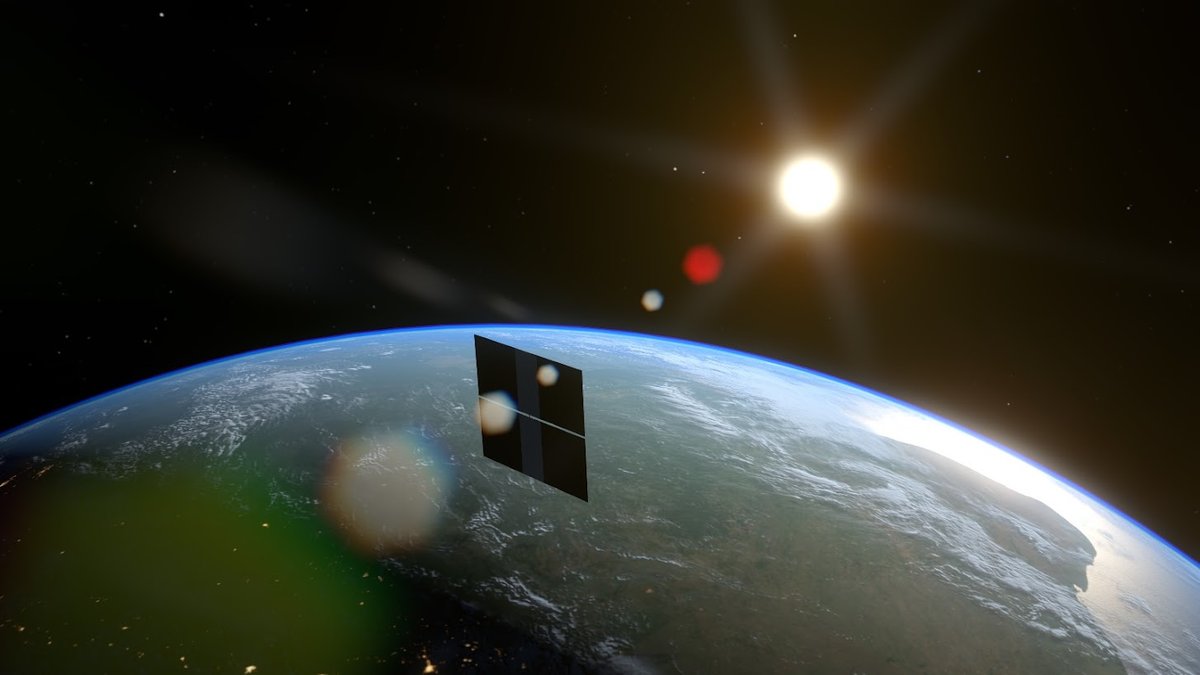
On 1 October 2026, Google's Project Suncatcher sent four AI processors into orbit on a SpaceX rocket to test whether the building blocks of a data center can survive in space. Scientific AmericanLC “Today Project Suncatcher is sending four AI processors into orbit on a SpaceX rocket to see whether the building blocks of a data center can survive space” Read at Scientific American ↗ NPR describes the payload as a fridge-size satellite with AI chips on board, part of what it calls Google's moonshot effort to put AI data centers in space and harness solar energy. NPRLC “The fridge-size satellite with AI chips on board is part of Project Suncatcher, the company's moonshot effort to put AI data centers in space and harness solar energy.” Read at NPR ↗ According to Scientific American, the test satellite's four processors will run Google's Gemini AI models for 15 minutes at a stretch before they need to shut down and cool off. Scientific AmericanLC “which will be used to run Google’s Gemini AI models for 15 minutes at a stretch before they need to shut down and cool off” Read at Scientific American ↗
The long-term goal is a full orbital data center built from constellations of thousands of satellites that share the work of running AI models and beam responses back to Earth. Scientific AmericanLC “built from constellations of thousands of satellites that will share the work of running AI models and beam their responses back to Earth” Read at Scientific American ↗ The motivation is energy: an International Energy Agency report projects data centers will use around 3 percent of the world's electricity by 2030, roughly double today's share, and Google says a solar panel in orbit generates up to eight times as much power as on the ground. Scientific AmericanLC “Data centers are projected to use around 3 percent of the world’s electricity by 2030, roughly double their share today, according to an International Energy Agency report.”“Google says a solar panel there generates up to eight times as much power as it would on the ground” Read at Scientific American ↗ Scientific American says the gap between the test and a working orbital data center shows how far off that future is. It notes the biggest AI data centers now being built draw up to a gigawatt, several thousand times the output of the International Space Station's solar arrays, and that Google readily admits scale is the main question. Scientific AmericanLC “But scale is the main question, Google readily admits.”“draw up to a gigawatt of power, several thousand times the output of the International Space Station’s solar arrays” Read at Scientific American ↗
Other hurdles cited include dissipating heat in a vacuum, space debris, cosmic radiation that can scramble calculations, and the difficulty of sending data back to Earth at scale. Scientific AmericanLC “Though space is cold, its vacuum is a lousy place to dissipate heat”“We don’t have the convenient, easy way to get that data back to the ground” Read at Scientific American ↗ Before launch, Google shook spacecraft to simulate the launch and bombarded its chips with proton beams to test their response to radiation. Travis Beals, a senior director at Google who worked on the project, said the aim is to see what works, identify points of failure and apply the findings to future missions. Scientific AmericanLC “shaking spacecraft to simulate the launch and bombarding its chips with proton beams to test their response to radiation”“It's about seeing what works, identifying points of failure and applying those findings to future missions” Read at Scientific American ↗ Beals said Google's engineers began by trying to find reasons it was impossible but gradually became convinced it might work. Outside experts quoted by Scientific American are more cautious; MIT's Kerri Cahoy said late entrants often end up succeeding, and the cost of launching and replacing satellites may eat up what free sunshine saves. Scientific AmericanLC “As a first step, we tried to find reasons that it was impossible,” Beals says, “but we gradually became convinced that it might actually work.”“It’s usually the late entrants who finally figured out how to do it effectively,” says Cahoy.” Read at Scientific American ↗
The article places the launch against SpaceX's June public listing, part of whose value proposition rested on promises of data centers in space, though it says Google's test does not mean that pitch will become reality soon. Scientific AmericanLC “When Elon Musk took SpaceX public in June, a big part of its value proposition came from promises of data centers in space.” Read at Scientific American ↗
Every sentence links to the reporting it rests on.
Left2 outlets
- Framing
- Both outlets present the launch as a first, small step toward Google's orbital data center idea. Scientific American adds a sceptical, explanatory tone on engineering and cost obstacles; NPR's headline calls it 'a step towards' such data centers.
- Emphasis
- Energy demand on Earth, the modest scale of the test (four processors), and expert doubts about heat, radiation, data return and cost.
- Leaves out or plays down
- NPR's body text is not reflected here. No right-leaning or centrist coverage exists to compare.
- Charged language
- “moonshot”“Google’s dream”
- For example
-
“Google’s dream of AI data centers in space gets its first off-world test” — Scientific American
“the company's moonshot effort to put AI data centers in space and harness solar energy” — NPR
Centre1 outlet
No centre outlet in our sources has covered this story yet.
Right0 outlets
No right outlet in our sources has covered this story yet.
What every side reports
- Google's Project Suncatcher launched a test satellite carrying AI chips into orbit.
- The project aims at AI data centers in space powered by solar energy.
Google organisation
Google presents the launch as a test of whether chips survive space and says solar power in orbit can be up to eight times as productive. It acknowledges scale is the main question.
“But scale is the main question, Google readily admits.” — Scientific American
“Google says a solar panel there generates up to eight times as much power as it would on the ground” — Scientific American
SpaceX organisation
SpaceX provides the launch vehicle; Scientific American notes it has pitched its own space data centers and went public in June.
“it will send artificial intelligence processors into orbit onboard—of all things—a SpaceX rocket” — Scientific American
Left2 articles
-
Google tests its plan for AI data centers in space with Project Suncatcher
Mixed Explanatory piece that treats the test as a modest first step and weighs expert scepticism about scale, heat, radiation, bandwidth and cost.
-
NPRLC ·
Google launches Project Suncatcher, a step towards AI data centers in space
Neutral Presents the launch as a step toward AI data centers in space, describing Suncatcher as a company moonshot.
Centre1 article
Right0 articles
No coverage yet.
- 1 Oct 16:55 First Scientific AmericanLC Google tests its plan for AI data centers in space with Project Suncatcher
- 1 Oct 19:41 +2h 46m NPRLC Google launches Project Suncatcher, a step towards AI data centers in space
- 1 Oct 20:18 +3h 23m TechCrunchN Google thinks SpaceX’s Starship has to launch 1,600 times before space data centers get off the ground
Times are when each article was published, or when we first saw it if the outlet gave no time.