Greenland fishers and conservationists clash over culling Greenland sharks
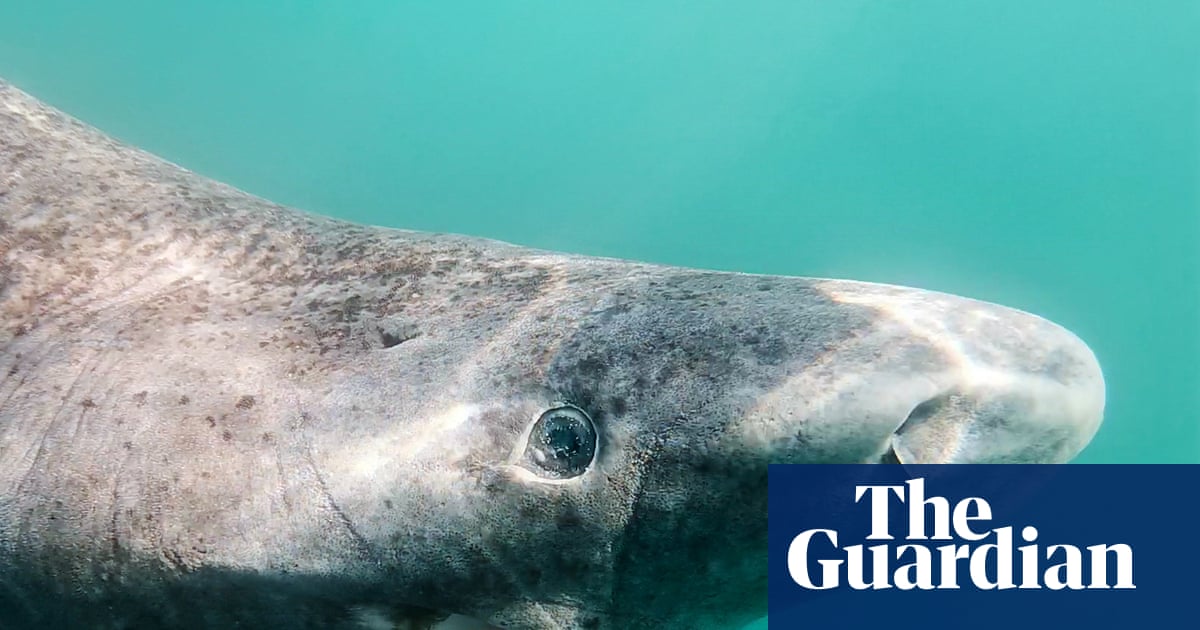
Avannaata municipality approved then dropped a plan to cull 1,000 Greenland sharks after fishers reported lost gear. Conservationists warn the slow-breeding species could not withstand a cull.

1 / 2
The story, neutrally told
Mixed · 2Fishers and conservationists in Greenland are in dispute over whether to cull Greenland sharks, which tangle in fishing gear and take fish from halibut and cod fishers. The GuardianLC “conservationists and fishers clash over what to do about misunderstood species” Read at The Guardian ↗ GB NewsR “fishers and conservationists clash over the growing number of slow-moving predators becoming entangled in fishing gear and poaching fish” Read at GB News ↗ Mixed · 2Earlier this year the Avannaata municipality, whose administrative seat is Ilulissat, approved a plan to cull 1,000 sharks, offering 300 Danish krone for each shark heart. The GuardianLC “approved a controversial plan to cull 1,000 sharks, offering 300 krone for every heart of a Greenland shark” Read at The Guardian ↗ GB NewsR “an earlier proposal to kill 1,000 sharks offered fishers 300 Danish krone (£34) for every shark heart” Read at GB News ↗ Mixed · 2The plan was dropped after the Greenland government questioned its legality, but conservationists fear a cull could return. The GuardianLC “The plan was eventually dropped after the government questioned its legality” Read at The Guardian ↗ GB NewsR “conservationists fear a cull could return” Read at GB News ↗
Left · 1The municipality's mayor, Lars Erik Gabrielsen, said the aim was to safeguard fishers' income and the catch so that people can keep eating foods they have relied on for generations. The GuardianLC “We need to safeguard the income of fishermen and the catch so that we can continue to eat the foods that we have relied on for generations.” Read at The Guardian ↗ Mixed · 2Henrik Jensen, a 27-year-old halibut fisher near Ilulissat, said he has lost about 6,000 hooks this year, sometimes losing 30,000 krone (£3,440) in a day, and that sharks cut his lines. The GuardianLC ““This year I’ve lost around 6,000 hooks in total. Sometimes we lose 30,000 Danish krone [£3,440] a day,” says Jensen.” Read at The Guardian ↗ GB NewsR “Mr Jensen said he has lost some 6,000 hooks this year alone” Read at GB News ↗ Mixed · 2Timotheus Petersen, chair of the fishing association in Kullorsuaq, said a longline costs 1,599 krone and that when sharks cut lines, fishers cannot finish fishing and must buy new gear. The GuardianLC “one costs 1,599 krone. When the sharks cut our lines, we cannot finish fishing.” Read at The Guardian ↗ GB NewsR “Timotheus Petersen, chair of the fishing association in Kullorsuaq, said” Read at GB News ↗
Left · 1The Guardian reports that Avannaata cited earlier bounty schemes: one in the former Aasiaat municipality in the early 2000s that paid 200 krone, and one in the former Uummannaq municipality from 1986 to 2001 that, according to a 2007 Danish Technical University report, brought in 19,697 hearts. The GuardianLC “According to a 2007 report from the Danish Technical University, another scheme between 1986 and 2001 in the former Uummannaq municipality brought in 19,697 hearts.” Read at The Guardian ↗ Mixed · 2The Greenland shark can reach six to seven metres and live more than 400 years. It is believed to mature at about 150, and is still recovering from targeted fishing for its liver oil, which ended in the 1960s. The GuardianLC “The Greenland shark is believed to become sexually mature at 150” Read at The Guardian ↗ GB NewsR “The species is still recovering from decades of targeted fishing for its liver oil, which ended in the 1960s.” Read at GB News ↗ Mixed · 2Prof Nick Dulvy of Simon Fraser University called a cull of a couple of thousand sharks "a disaster" and said the species is probably the most biologically sensitive in the ocean to overfishing. An estimated 3,500 are caught as bycatch globally each year, and the population is in decline. The GuardianLC ““If somebody says, ‘I’m going to cull a couple of thousand Greenland sharks’, that’s a disaster in my opinion,”” Read at The Guardian ↗ GB NewsR “An estimated 3,500 Greenland sharks are caught as bycatch globally each year, while the population remains in decline.” Read at GB News ↗
Mixed · 2Oceans North Kalaallit Nunaat (ONKN) argues a cull would not solve the problem because sharks migrate long distances and removed animals would be replaced by others from elsewhere. The GuardianLC ““Sharks removed in north-west Greenland would quickly be replaced by individuals arriving from other regions,” ONKN warned.” Read at The Guardian ↗ GB NewsR “killing sharks in Greenland would also fail to address the underlying problem, as the animals travel enormous distances” Read at GB News ↗ Mixed · 2ONKN director Jenseeraq Poulsen said the underlying pressures are structural, including too many boats on a pressured quota, rising costs and no alternative employment, in an industry that accounts for about a quarter of Greenland's GDP. The GuardianLC “If every Greenland shark in Baffin Bay vanished tomorrow, the inshore fishery in Avannaata would still face too many boats working a quota under pressure” Read at The Guardian ↗ GB NewsR “Fishing accounts for about a quarter of Greenland’s GDP” Read at GB News ↗ Mixed · 2Jensen also pointed to "ghost lines", lost or discarded gear that is too heavy to pull up, as a cause of gear damage, and blamed declining halibut size on offshore trawlers; the Guardian cites the Greenland Institute of Natural Resources as saying average halibut size is falling each year even as prices rise. The GuardianLC “the average size of the fish is decreasing annually” Read at The Guardian ↗ GB NewsR ““There are more and more ‘ghost lines’ and they are too heavy to pull up by the machine we use,” Mr Jensen said.” Read at GB News ↗
Mixed · 2Alternatives include ghost-gear clean-up, a gear-loss compensation scheme and funded trials of acoustic shark deterrents, which ONKN favours. Rebekka Nygård Bak, an adviser to Greenland's fisheries ministry, said bycatch-friendly equipment rules and better bycatch reporting could be next steps. The GuardianLC “Poulsen also proposes a gear-loss compensation scheme, as well as funded trials of acoustic shark deterrents.” Read at The Guardian ↗ GB NewsR “Greenland’s fisheries ministry is also considering improved bycatch reporting, and potentially new regulations requiring more bycatch-friendly fishing equipment.” Read at GB News ↗
Every sentence links to the reporting it rests on. The pill in front of each says where its sources sit: Left, Centre or Right when one side supplies at least half of them, Mixed when they are evenly split. The number is how many outlets it cites.
Left1 outlet
- Framing
- The Guardian's on-the-ground feature presents a nuanced conflict between inshore fishers' losses and a vulnerable species, tracing the pressures behind the dispute to the fishing industry.
- Emphasis
- Historical bounty schemes, the fishing industry's economic strain, falling halibut size, offshore trawlers, and the mayor's and ministry adviser's views.
- Leaves out or plays down
- Does not report any scientific evidence that sharks are depleting halibut stocks.
- Charged language
- “acrimonious coexistence”“misunderstood species”
- For example
-
“This acrimonious coexistence has been documented ever since targeted fishing for the sharks’ liver oil ceased in the 1960s” — The Guardian
“conservationists and fishers clash over what to do about misunderstood species” — The Guardian
Centre0 outlets
No centre outlet in our sources has covered this story yet.
Right1 outlet
- Framing
- GB News's shorter piece leads on the prospect of a "drastic cull" of the world's slowest sharks, then relays the fishers' and conservationists' arguments in condensed form.
- Emphasis
- The threat of a cull, fishers' losses, the shark's vulnerability, and conservationists' alternatives.
- Leaves out or plays down
- Omits the mayor's statement, the historical bounty schemes, and the halibut size decline and offshore trawler detail reported by the Guardian; presents the ministry's position more briefly.
- Charged language
- “drastic cull”“poaching fish”“bully me”
What every side reports
- Avannaata municipality approved a plan to cull 1,000 Greenland sharks with a 300 krone bounty per heart; it was dropped after the government questioned its legality.
- Fishers such as Henrik Jensen and Timotheus Petersen report costly lost hooks and lines to sharks.
- Conservationists, including ONKN and Prof Nick Dulvy, say a cull would harm a slow-maturing species and not fix structural problems.
- Alternatives include ghost-gear removal, compensation and acoustic deterrents, plus bycatch reporting and equipment rules.
Greenland place
Local and national officials are split in emphasis: Avannaata's mayor backed the cull to protect fishers' income, the government questioned its legality, and a fisheries ministry adviser suggests bycatch regulations and reporting.
“We need to safeguard the income of fishermen and the catch” — The Guardian
“suggests new bycatch-friendly equipment regulations could be a solution” — The Guardian
Greenland shark topic
The species is described as exceptionally vulnerable, slow to mature and still in decline, so a cull would be hard to recover from.
“The Greenland shark is an exceptionally vulnerable animal.” — GB News
“will not rebound from a cull quickly” — The Guardian
Left1 article
-
To cull or not to cull: Greenland debates fate of world’s slowest shark
Sympathetic Long-form feature weighing fishers' hardship against shark conservation, emphasising structural pressures behind the dispute.
Centre0 articles
No coverage yet.
Right1 article
-
GB NewsR ·
World’s slowest sharks could be culled as trawlers compete for cod and halibut
Neutral Condensed account that leads on the cull threat and relays the same fisher and conservationist quotes.
- 5 Oct 05:00 First The GuardianLC To cull or not to cull: Greenland debates fate of world’s slowest shark
- 5 Oct 18:13 +13h 12m GB NewsR World’s slowest sharks could be culled as trawlers compete for cod and halibut
Times are when each article was published, or when we first saw it if the outlet gave no time.