Greenpeace says golden week visitors damaged marine life at Hong Kong geopark
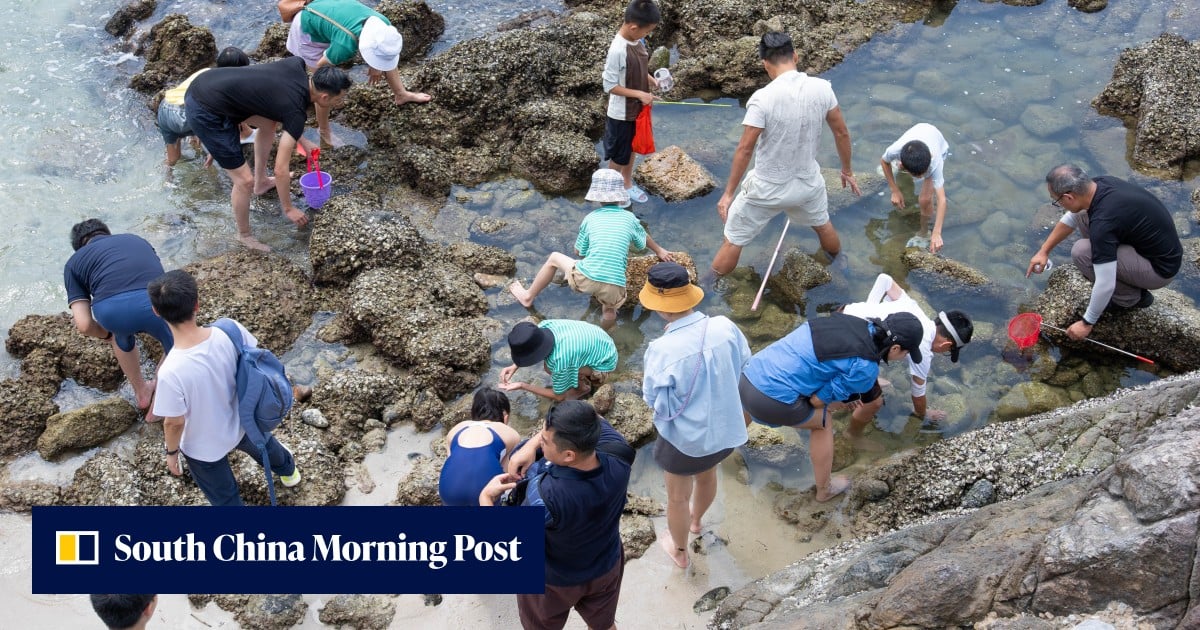
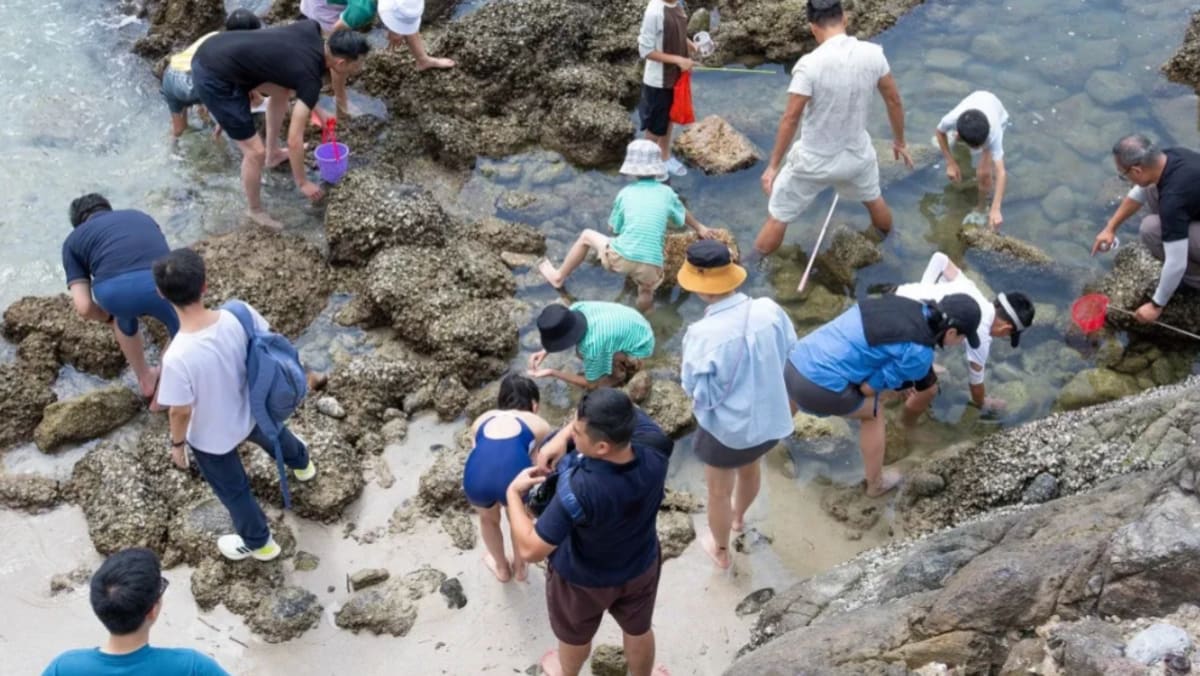
Greenpeace said it recorded about 100 incidents of visitors collecting sea creatures and coral remains at Hap Mun Bay in a single day of National Day golden week, and said government enforcement had failed to contain the damage. The AFCD had not yet commented.
1 / 2
The story, neutrally told
Centre · 2Greenpeace said on Tuesday 6 October that it recorded around 100 incidents in a single day of visitors catching sea cucumbers and digging up sea snails and clams at a popular spot in Hong Kong's Unesco-listed geopark during National Day "golden week". South China Morning PostN “Around 100 incidents of visitors catching sea cucumbers and digging up sea snails and clams were recorded in a single day at a popular spot” Read at South China Morning Post ↗ CNAN “Greenpeace said on Tuesday (Oct 6)” Read at CNA ↗ Centre · 2Between 1 and 5 October the group ran field surveys at Sai Kung hotspots, including Hap Mun Bay, the Po Pin Chau section near the East Dam and Long Ke, to count visitors and record damaging behaviour. South China Morning PostN “Between October 1 and 5, Greenpeace conducted field surveys at several Sai Kung hotspots” Read at South China Morning Post ↗ CNAN “Between Oct 1 and 5, Greenpeace conducted field surveys at several Sai Kung hotspots” Read at CNA ↗ Centre · 2An inspection on 4 October recorded 3,010 visitor arrivals at Hap Mun Bay, at the southern end of Sharp Island (also called Kiu Tsui Chau), and more than 100 incidents of visitors collecting marine life or coral remains, including catching live sea cucumbers, using metal tools to dig out sea snails and clams, and picking up coral skeletons. South China Morning PostN “A Greenpeace site inspection on October 4 recorded 3,010 visitor arrivals at Hap Mun Bay” Read at South China Morning Post ↗ CNAN “At Hap Mun Bay on Oct 4, the group recorded more than 100 incidents involving visitors collecting marine life or coral remains.” Read at CNA ↗
Centre · 1At 3pm that day as many as 23 visitors were digging at the same time, with no officers seen patrolling or intervening, the group said. South China Morning PostN “as many as 23 visitors were digging at the same time, with no officers seen patrolling or intervening” Read at South China Morning Post ↗ Centre · 2Greenpeace also said the Po Pin Chau section of the High Island Geo Trail was strewn with rubbish on a separate day, and that at nearby Long Ke Beach it recorded nearly 90 instances of damaging behaviour, including climbing trees, littering and disturbing wildlife. South China Morning PostN “At nearby Long Ke Beach, the group recorded nearly 90 instances of environmentally damaging behaviour” Read at South China Morning Post ↗ CNAN “strewn with rubbish on a separate day” Read at CNA ↗ Centre · 2Greenpeace campaigner Ha Shun-kuen said the extra funding and manpower for golden week had failed to contain the damage, calling enforcement that follows exposure of overcapacity at individual spots a piecemeal "painkiller" approach that does not tackle overtourism at its source. South China Morning PostN “strengthening enforcement only after overcapacity is exposed at individual tourist spots is merely a piecemeal ‘painkiller’ approach” Read at South China Morning Post ↗ CNAN “additional public funding and manpower allocated during golden week had failed to contain the damage” Read at CNA ↗
Centre · 2Those measures included deployment by the Agriculture, Fisheries and Conservation Department (AFCD) of more than 100 personnel to hiking and tourist hotspots, and a reservation system at Po Pin Chau; a real-name booking system for Po Pin Chau was launched in August. South China Morning PostN “the Agriculture, Fisheries and Conservation Department’s (AFCD) deployment of more than 100 personnel” Read at South China Morning Post ↗ CNAN “In August, a real-name booking system was launched to better manage crowds at Po Pin Chau.” Read at CNA ↗ Centre · 2Greenpeace noted that the government's proposed marine park boundaries cover only the eastern and western sides of Sharp Island, excluding Hap Mun Bay, whose waters support coral communities, and warned that concentrating enforcement inside the park could push crowds to the bay. South China Morning PostN “the government’s proposed marine park boundaries cover only the eastern and western sides of Sharp Island, excluding the bay” Read at South China Morning Post ↗ CNAN “could push crowds towards Hap Mun Bay, putting pressure on its coastal ecology” Read at CNA ↗ Centre · 2The group said only seasonal closures of the Po Pin Chau trail for restoration would effectively protect the environment, and urged the government to assess and cap visitor capacity at all countryside hotspots immediately and, longer term, adopt a conservation-first ecotourism policy with routine monitoring of visitor impact. South China Morning PostN “Greenpeace urged the government to immediately assess the visitor capacity of all countryside hotspots across Hong Kong and set a cap for each location.” Read at South China Morning Post ↗ CNAN “Ha said only seasonal closures of the Po Pin Chau trail for restoration work could effectively protect the natural environment.” Read at CNA ↗
Centre · 1The report follows similar findings last October, when Greenpeace documented tourists digging up sea stars, sea urchins, sea cucumbers, conches and clams on an overcrowded Sharp Island, along with littering, illegal cooking fires and trampling of coral; the AFCD has previously run golden week enforcement there, and the South China Morning Post said it had contacted the department for comment. South China Morning PostN “Last October, Greenpeace documented similar behaviour on an overcrowded Sharp Island”“The South China Morning Post has contacted the AFCD for comment.” Read at South China Morning Post ↗
Every sentence links to the reporting it rests on. The pill in front of each says where its sources sit: Left, Centre or Right when one side supplies at least half of them, Mixed when they are evenly split. The number is how many outlets it cites.
Left0 outlets
No left outlet in our sources has covered this story yet.
Centre2 outlets
- Framing
- Both outlets run the same SCMP report, led by Greenpeace's findings and its criticism of government enforcement; CNA's copy is republished from SCMP.
- Emphasis
- Greenpeace's counts and policy demands.
- Leaves out or plays down
- No AFCD or government response; all findings come from Greenpeace and are not independently verified.
- Charged language
- “painkiller”
- For example
-
“a green group has found, following similar incidents last year” — South China Morning Post
“This article was first published on SCMP.” — CNA
Right0 outlets
No right outlet in our sources has covered this story yet.
What every side reports
- Greenpeace recorded about 100 incidents of marine life collection at Hap Mun Bay on 4 October, with 3,010 visitor arrivals.
- Greenpeace says extra enforcement during golden week failed to contain the damage.
- The AFCD's response had not been reported.
Greenpeace organisation
Says its surveys show golden week enforcement failed to stop damage and calls for visitor caps, seasonal closures and an ecotourism policy.
“Ha said only seasonal closures of the Po Pin Chau trail for restoration work could effectively protect the natural environment.” — South China Morning Post
Left0 articles
No coverage yet.
Centre2 articles
-
Greenpeace catches Hong Kong geopark ‘golden week’ visitors damaging marine life
Neutral Reports Greenpeace's survey findings and demands, noting the AFCD has been asked for comment.
-
CNAN ·
Greenpeace catches Hong Kong geopark ‘golden week’ visitors damaging marine life
Neutral Republishes the SCMP report with a summary-style lede about the types of damage.
Right0 articles
No coverage yet.
- 6 Oct 12:39 First South China Morning PostN Greenpeace catches Hong Kong geopark ‘golden week’ visitors damaging marine life
- 7 Oct 10:40 +22h CNAN Greenpeace catches Hong Kong geopark ‘golden week’ visitors damaging marine life
Times are when each article was published, or when we first saw it if the outlet gave no time.