Guardian: South Korean fuel shipped to Russia, some on sanctioned tankers
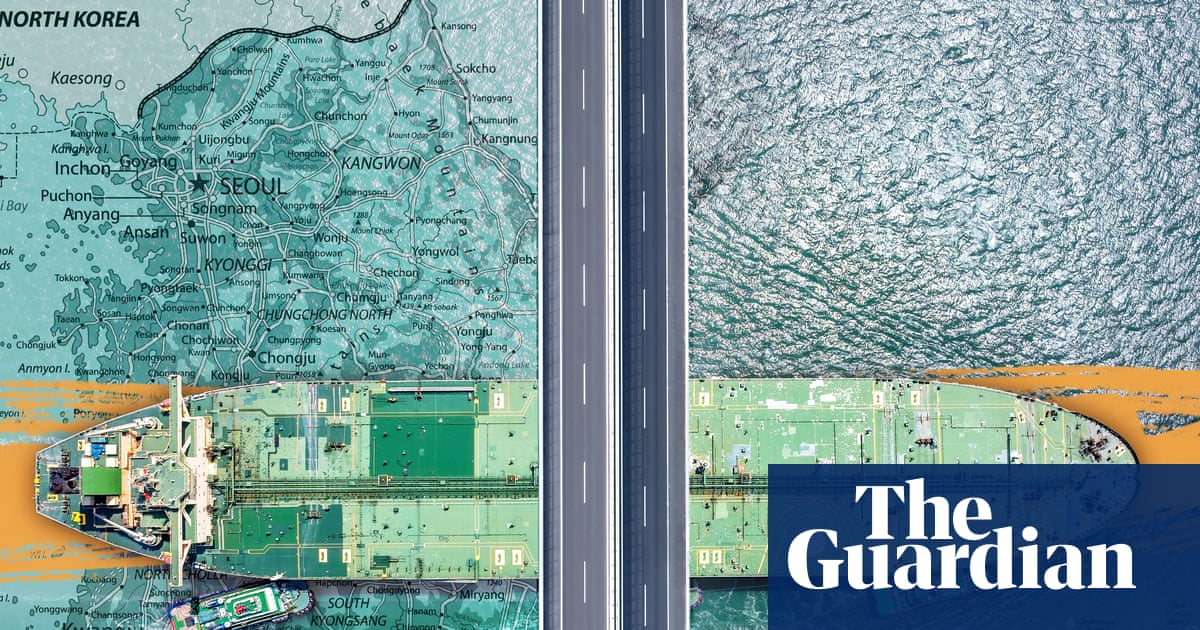
A Guardian analysis of port records and ship-tracking data found over 176,000 tonnes of fuel, mostly diesel, went from South Korean ports to Russia's far east in July and August, three of seven tankers being UK- and EU-sanctioned. Meduza relayed the findings; Seoul's foreign ministry did not address the shipments.
1 / 2
The story, neutrally told
Left · 2A Guardian analysis of port records and ship-tracking data found that in July and August more than 176,000 tonnes of fuel, mostly diesel, was loaded at several South Korean ports onto seven tankers that made 14 voyages to Russia's far east. The GuardianLC “over 176,000 tonnes of fuel, mostly diesel, was loaded at several South Korean ports on to seven tankers that made 14 voyages to Russia’s far east.” Read at The Guardian ↗ MeduzaLC “Tankers made 14 voyages from several South Korean ports to Russia’s Far East in July and August, carrying 176,000 tons of fuel, mostly diesel” Read at Meduza ↗ Left · 2Three of the vessels were under UK and EU sanctions, and one of them, the Chongchon, never berthed: it took about 26,000 tonnes from an unsanctioned tanker, the Celeste I, at an anchorage off Yeosu, a ship-to-ship method that can obscure a cargo's origin. The GuardianLC “It took on about 26,000 tonnes of fuel from an unsanctioned tanker, the Celeste I, at an anchorage off the southern South Korean port of Yeosu in early August” Read at The Guardian ↗ MeduzaLC “One, the tanker Chongchon, did not even enter South Korean ports: its fuel was transferred from another vessel at sea” Read at Meduza ↗ Left · 2The Guardian said the largest carrier, the sanctioned Layla, made two voyages from Ulsan to Vladivostok carrying 57,000 tonnes of diesel in total, declaring Vladivostok as its destination the first time and Niigata, Japan, the second. The Russian-flagged Astoria, also under Australian sanctions, loaded nearly 11,000 tonnes at Ulsan on 1 August, declaring Japan before sailing to Vladivostok. The GuardianLC “The largest carrier, the sanctioned Layla, made two voyages from the south-eastern port of Ulsan to Vladivostok leaving on 19 July and 10 August and carrying 57,000 tonnes of diesel in total.” Read at The Guardian ↗ MeduzaLC “In at least two more cases, sanctioned tankers loading at South Korean ports officially listed Japan as their destination but instead headed for Vladivostok.” Read at Meduza ↗
Left · 1It is unclear who owned or sold the fuel, which South Korean port records do not show; the owners and managers of four tankers did not respond to requests for comment. Citing Kpler data, the Guardian said buyers included Rosneft and NNK, both under UK sanctions. The GuardianLC “It is unclear who owned or sold the fuel, which South Korean port records do not show.”“the buyers included Rosneft, Russia’s state-controlled oil company” Read at The Guardian ↗ Left · 2In August Russia imported 368,000 tonnes of oil products by sea, the highest monthly total since the full-scale invasion, according to Kpler data analysed by CREA. South Korea supplied 112,000 tonnes, or 31%, second only to India. The GuardianLC “South Korea accounted for 112,000 tonnes, or 31%, of that amount, second only to India.” Read at The Guardian ↗ MeduzaLC “Russia imported 368,000 tons of petroleum products by sea in August, with 112,000 tons supplied by South Korea.” Read at Meduza ↗ Left · 1The shipments come as Ukrainian drone strikes have disrupted Russian refining: throughput fell in June to its lowest in over 20 years and diesel output is down nearly 30% on last year, according to the International Energy Agency. Ukraine's military intelligence agency HUR says Moscow has been forced to import fuel. The GuardianLC “Its refinery throughput fell in June to its lowest level in more than 20 years, and diesel output is down nearly 30% on last year, according to the International Energy Agency.” Read at The Guardian ↗
Left · 2Isaac Levi, an analyst at the Centre for Research on Energy and Clean Air (CREA), called it "shocking" and said it "undermines the sanctions regime and South Korea's support for Ukraine". The Guardian added that the trade does not appear to breach South Korean law, since Seoul's measures rely mainly on export controls, but risks making Seoul look like a "weak link" in western pressure on Russia. The GuardianLC ““This undermines the sanctions regime and South Korea’s support for Ukraine.””“it does not appear to breach South Korean law” Read at The Guardian ↗ MeduzaLC “could expose Seoul as a “weak link” in Western efforts to pressure the Kremlin” Read at Meduza ↗ Left · 1South Korea's foreign ministry did not address the shipments or the sanctioned tankers. It said Seoul supports and is actively taking part in international efforts to end the war, and that it has expanded export controls on Russia to 1,402 non-strategic items that it is "strictly enforcing". The UK Foreign Office did not answer questions on the UK-sanctioned tankers. The GuardianLC “When contacted, South Korea’s foreign ministry did not address the shipments or the sanctioned tankers.”“The UK Foreign Office did not answer questions about the UK-sanctioned tankers using South Korean ports” Read at The Guardian ↗ Left · 1Context in the Guardian's report: Seoul has given Ukraine humanitarian aid and non-lethal military supplies but rules out sending weapons, while seeking better ties with Moscow. Loadings surged in July as President Lee Jae Myung pledged $100m for Ukraine's reconstruction at a Nato summit. In March, during the Iran war and Hormuz closure, South Korea imported Russian naphtha under a US sanctions waiver. The GuardianLC “Loadings at South Korean ports began to surge in July, just as the country’s president, Lee Jae Myung, pledged $100m for Ukraine’s reconstruction at a Nato summit in Turkey.”“imported Russian naphtha under a US sanctions waiver” Read at The Guardian ↗
Left · 1The report coincides with a Seoul–Kyiv row over two North Korean prisoners of war transferred to South Korea. Meduza reported that Seoul accused Zelensky of breaching an agreement to keep the transfer secret, and that Foreign Minister Cho Hyun said Ukraine's apology fell short of what Seoul expected and that Seoul intends to "take firm measures". MeduzaLC “Seoul accused Zelensky of violating an agreement to keep the transfer secret”“its level was different “from the level we expect.” He said Seoul now intends to “take firm measures.”” Read at Meduza ↗
Every sentence links to the reporting it rests on. The pill in front of each says where its sources sit: Left, Centre or Right when one side supplies at least half of them, Mixed when they are evenly split. The number is how many outlets it cites.
Left2 outlets
- Framing
- The Guardian leads with an exclusive data investigation presenting South Korea as a possible weak link in sanctions on Russia; Meduza, a Russian-language outlet based in Europe, summarises it and adds the Seoul–Kyiv diplomatic row.
- Emphasis
- Sanctioned tankers, ship-to-ship transfer and false destinations, Russia's fuel shortage, expert criticism, and the foreign ministry's non-answer.
- Leaves out or plays down
- Meduza omits the Guardian's note that the trade does not appear to breach South Korean law, the Kpler buyer names and the CREA quote; neither reports comment from the tanker owners beyond their non-response.
- Charged language
- “weak link”“shocking”“Russian war machine”
- For example
-
“a move one expert said “undermines” Seoul’s public backing for Kyiv.” — The Guardian
“South Korea has become one of Russia’s biggest fuel suppliers.” — Meduza
Centre0 outlets
No centre outlet in our sources has covered this story yet.
Right0 outlets
No right outlet in our sources has covered this story yet.
What every side reports
- Fourteen voyages by seven tankers carried about 176,000 tonnes of mostly diesel fuel from South Korea to Russia's far east in July and August.
- Three of the tankers were under UK and EU sanctions.
- South Korea supplied 112,000 tonnes of Russia's 368,000 tonnes of August seaborne product imports, second to India.
- South Korea's foreign ministry did not address the shipments directly.
- The owners and sellers of the fuel are unclear.
Where accounts differ
-
Scale of the shipments
- Left
- The Guardian's lede says more than 150,000 tonnes while its body gives over 176,000 tonnes; Meduza reports 176,000 tons.
South Korea place
Its foreign ministry did not address the shipments, saying Seoul supports international efforts to end the war and strictly enforces expanded export controls on 1,402 items.
““a responsible member of the international community, the government supports, and is actively taking part in, international efforts to help end the war in Ukraine” — The Guardian
Russia place
Per the Guardian, Russia has had to import fuel after Ukrainian strikes on refineries, and has signalled interest in restoring relations and trade with Seoul; Russian buyers include sanctioned Rosneft.
“Moscow has signalled an interest in restoring relations with South Korea, including trade ties.” — The Guardian
Ukraine place
Ukraine's military intelligence says Moscow is importing fuel to feed its war machine; Kyiv is also in a row with Seoul over the prisoner transfer.
“Moscow has been forced to import fuel products to feed the “Russian war machine”.” — The Guardian
UK and Ireland1 outlet
The Guardian, reporting from Seoul, presents the original investigation with UK sanctions and Foreign Office response.
“The UK Foreign Office did not answer questions about the UK-sanctioned tankers using South Korean ports” — The Guardian
The Guardian
Europe1 outlet
Meduza relays the findings and ties them to the Seoul–Kyiv dispute over North Korean prisoners.
“The Guardian’s report on fuel shipments from South Korea to Russia came amid a diplomatic row between Seoul and Kyiv.” — Meduza
Meduza
Left2 articles
-
Fuel from South Korea being shipped to Russia as Ukraine war grinds on
Critical Investigative exclusive portraying South Korea as undermining sanctions while noting the trade appears legal.
-
MeduzaLC ·
Neutral Condensed relay of the Guardian findings, linked to the Seoul–Kyiv diplomatic row.
Centre0 articles
No coverage yet.
Right0 articles
No coverage yet.
- 6 Oct 00:50 First The GuardianLC Fuel from South Korea being shipped to Russia as Ukraine war grinds on
- 6 Oct 13:57 +13h 7m MeduzaLC South Korea has become one of Russia’s biggest fuel suppliers. Some shipments are arriving on sanctioned tankers.
Times are when each article was published, or when we first saw it if the outlet gave no time.