Gulf food producers and retailers adapt supply chains to longer shipping times
Gulf News and The National report that regional disruption, including the Iran war and the closure of the Strait of Hormuz, has stretched shipping times. Food producers and retailers are responding with new packaging, chartered vessels, advance orders and local sourcing.

1 / 2
The story, neutrally told
Centre · 1Longer shipping times caused by regional disruptions are forcing Gulf food and beverage producers to rethink how products are processed, packaged and distributed, Gulf News reported. Gulf NewsN “Longer shipping times caused by regional disruptions are forcing Gulf food and beverage producers to rethink how products are processed, packaged and distributed” Read at Gulf News ↗ Centre · 1According to Abdelghany Eladib of SIG Group, shipments that previously took around 35 days can now take closer to 55 days from some major ports, potentially eating up an additional 20 days of a product's commercial shelf life. Gulf NewsN “Shipments that previously took around 35 days to reach their destination can now take closer to 55 days from some major ports” Read at Gulf News ↗ Centre · 1Eladib said the consequences can include higher wastage and discounting, or products having to be frozen or repurposed before sale. He said rerouting through alternative ports and routes buys continuity but not time, and that producers are looking more closely at shelf-stable products and aseptic processing and packaging, which reduce dependence on refrigeration. Gulf NewsN ““Rerouting buys you continuity; it doesn’t necessarily buy you time. Every additional day still comes out of the product’s available shelf life,” he said.”“That is prompting food manufacturers to look more closely at shelf-stable products and aseptic processing and packaging” Read at Gulf News ↗
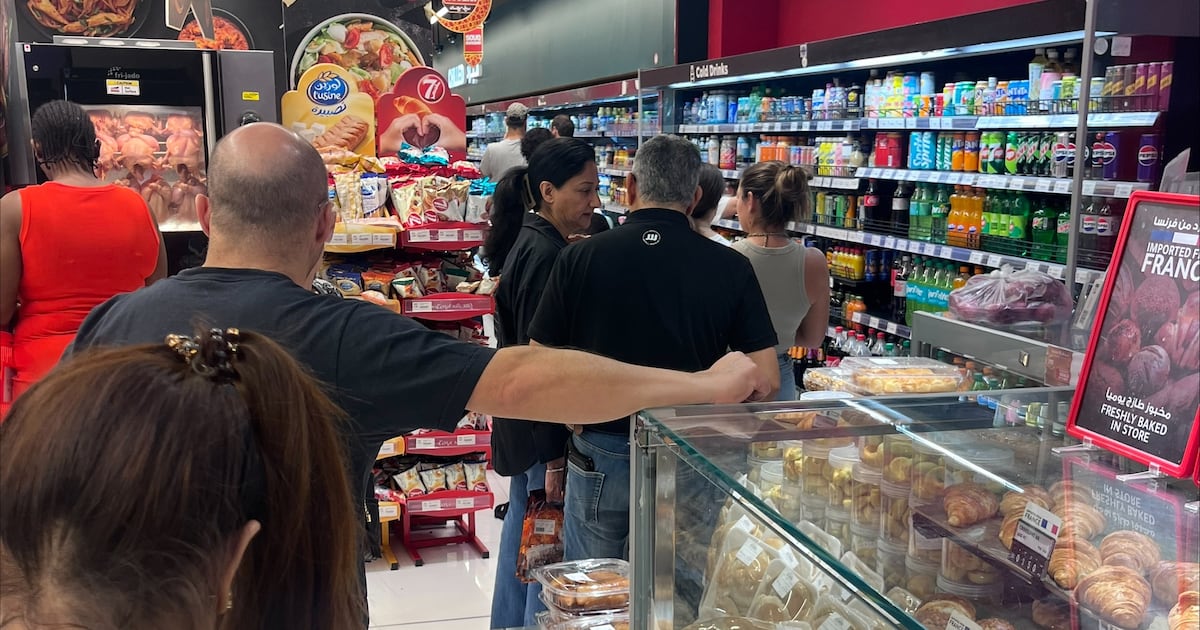
Centre · 1Eladib acknowledged that processing and filling equipment can require higher upfront investment, but argued the business case looks different once longer shelf life, reduced write-offs and no cold-chain requirement are counted. He also expects local food and beverage manufacturing in the Gulf to accelerate over the next two to three years. Gulf NewsN “Eladib acknowledged that processing and filling equipment can require higher upfront investment”“a trend Eladib expects to accelerate over the next two to three years” Read at Gulf News ↗ Centre · 1The National reported that the closure of the Strait of Hormuz during the Iran war forced UAE food firms to be creative, with products imported by sea taking up to 70 days, according to a senior figure at the Lulu supermarket group. About 80 per cent of food in the UAE is imported. The NationalN “The closure of the Strait of Hormuz meant firms had to be creative to ensure minimal disruption to food supplies.”“about 80 per cent of food in the UAE is imported”“products being imported by sea could take up to 70 days” Read at The National ↗ Centre · 1Lulu Group International's director of private labels, Shamin Sainulabdeen, said the company has shifted sourcing closer to home and towards Asian markets, charters entire vessels and flights rather than sharing shipments, and sources from India, Thailand, China, Indonesia, Spain, Turkey and Italy. The NationalN ““We are chartering vessels from India, from Thailand, China, Indonesia, from Spain, Turkey, Italy,” he said.”“The focus has shifted to finding similar products to those typically coming from Europe and North America in Asian markets.” Read at The National ↗
Centre · 1United Foods, which makes oils and ghee, placed maximum raw-material orders months in advance; its B2B senior manager Mohamad Ziad Al Najjar said bulk deliveries keep supply going for up to five months. Al Ain Farms Group chairman Tareq Al Hosani said the company is prioritising local manufacturing and the value of the 'made in the UAE' label. The NationalN “The company took a different approach by placing maximum orders for raw materials in advance.”“Al Ain Farms Group, on the other hand, doubled down on its home-grown products” Read at The National ↗ Centre · 1Companies told The National that UAE government support helped them through the period, and the Global Food Week spokeswoman Sumaya Al Marzooqi said the event's focus was moving from being agile to being ready, with an emphasis on resilience and using artificial intelligence to improve efficiency. The NationalN “Support from the UAE government has been a major factor in being able to navigate the difficult period, companies told”““Our focus this year is to move from being agile to being ready, focusing on readiness, future-forward thinking, as well as focusing on resilience” Read at The National ↗
Every sentence links to the reporting it rests on. The pill in front of each says where its sources sit: Left, Centre or Right when one side supplies at least half of them, Mixed when they are evenly split. The number is how many outlets it cites.
Left0 outlets
No left outlet in our sources has covered this story yet.
Centre2 outlets
- Framing
- Both outlets present the disruption as a manageable challenge that Gulf food businesses are adapting to. Gulf News stresses shelf-life and packaging technology through one industry executive; The National stresses retailer and producer logistics and government support.
- Emphasis
- Resilience, adaptation, local production and sourcing, and shelf-life pressure.
- Leaves out or plays down
- Neither outlet gives figures on cost increases, shortages or consumer prices, and both rely mainly on company executives, with no independent analysts. Gulf News does not name the cause of the disruption.
- Charged language
- “resilient supply chains”“We made our own supply chain”
- For example
-
“How Gulf food producers are building more resilient supply chains” — Gulf News
““We are not waiting for this [situation] to get corrected. We made our own supply chain,”” — The National
Right0 outlets
No right outlet in our sources has covered this story yet.
What every side reports
- Shipping times for food into the Gulf have lengthened because of regional disruption.
- Producers and retailers are responding by changing routes, sourcing, packaging or purchasing practices.
- Local production is part of the response.
Left0 articles
No coverage yet.
Centre2 articles
-
How Gulf food producers are building more resilient supply chains
Neutral Explainer built around one packaging executive's view that aseptic technology and local manufacturing can offset longer shipping times.
-
Sympathetic Reports how UAE retailers and producers coped with the Iran war's effects, using company executives' accounts and crediting government support.
Right0 articles
No coverage yet.
- 7 Oct 10:47 First Gulf NewsN How Gulf food producers are building more resilient supply chains
- 9 Oct 04:30 +41h 43m The NationalN 'We made our own supply chain': How UAE food retailers and producers adapted to absorb impact of Iran war
Times are when each article was published, or when we first saw it if the outlet gave no time.