Google, Samsung launch Android XR smart glasses with Warby Parker, Gentle Monster
Google and Samsung unveiled camera-equipped Gemini smart glasses made with Warby Parker and Gentle Monster, from $395, on preorder now and on sale December 10. Google is pitching privacy safeguards as its edge over Meta, while privacy advocates remain wary.

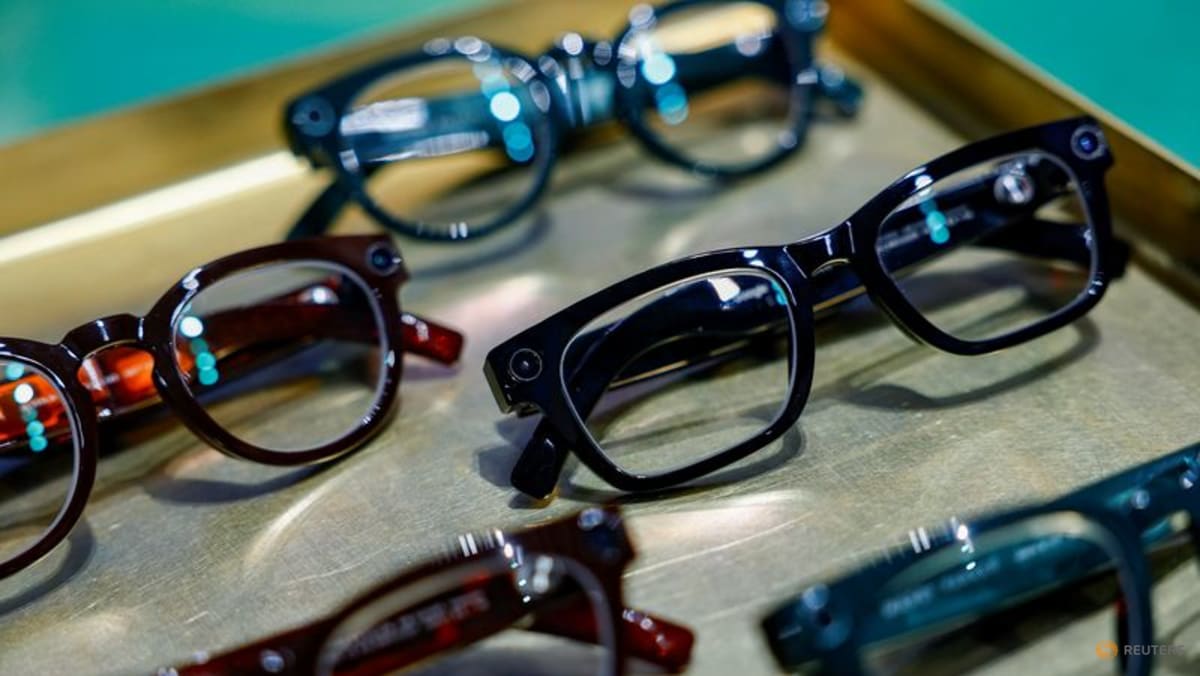

1 / 3
The story, neutrally told
Left · 2Google and Samsung launched their first Android XR "Intelligent Eyewear" smart glasses on 12 November, designed with eyewear brands Warby Parker and Gentle Monster; preorders opened that day and official sales start on December 10. WiredLC “The first models are available for preorder now, with official sales starting on December 10.” Read at Wired ↗ The VergeLC “You can preorder Gentle Monster and Warby Parker smart glasses starting today” Read at The Verge ↗ Left · 1Warby Parker frames start at $395 in three styles (Alden, Reid and Wren), and Gentle Monster frames start at $449 in six designs; the hardware is identical across both brands. WiredLC “Warby Parker's frames start at $395 and come in three styles—Alden, Reid, and Wren”“The hardware is identical across both brands.” Read at Wired ↗ Left · 2The glasses weigh about 41 grams, have an estimated nine-hour battery life with a case that recharges them up to seven times, and carry a 12-megapixel camera that records photos and 90-second videos. WiredLC “The glasses weigh around 41 grams (10 grams less than Meta's new Gen 3 glasses), have a nine-hour battery life” Read at Wired ↗ The VergeLC “the 12MP ultrawide camera takes decent photos and video with image stabilization” Read at The Verge ↗
Left · 1They are built around Google's Gemini assistant, with a "Hey Gemini" wake phrase, and handle messages, music, calls, Google Maps audio navigation, live translation and a Guided Vision feature that describes surroundings for low-vision users. WiredLC “They are the first devices to support the “Hey Gemini” hotword”“There's an accessibility feature called Guided Vision, which provides audio descriptions for people with impaired vision” Read at Wired ↗ Left · 1The glasses work only with certain phones: Pixel 7 or newer, recent Samsung Galaxy S or Z Fold models running One UI 9.0 or higher, and iPhone 13 Pro or newer; a Google spokesperson said more phone support would be shared in 2027. WiredLC “You'll need a Pixel 7 or newer, Galaxy S or Z Fold running Samsung's One UI 9.0 or higher, and the iPhone 13 Pro or newer.” Read at Wired ↗ Left · 1Display-equipped versions shown earlier by Google are still on the road map with no release date, and Warby Parker's co-CEO said a "robust pipeline" of further products, including audio-only glasses, is coming. WiredLC “they're currently being tested by “non-Googlers” and are still on the road map”“There's a pretty robust pipeline of additional products.” Read at Wired ↗
Left · 2Google is stressing privacy to separate the glasses from Meta's: an indicator light shows when recording, tamper detection stops recording if the light is covered, faces are redacted before Gemini processes images, and directional microphones pick up only the wearer's voice. WiredLC “the image-processing pipeline will redact faces in the background before Gemini processes the visuals”“The camera can detect in real time if a user is covering the indicator light” Read at Wired ↗ The VergeLC “The glasses will only process audio from the glasses-wearer using beam-forming mics.” Read at The Verge ↗ Mixed · 2Google says visual data from Gemini queries is not saved in Gemini History and will not be used to train AI models or target ads. WiredLC “Google does not save that visual data in your Gemini History” Read at Wired ↗ CNAN “Alphabet's Google will not use visuals captured with the glasses to train its AI.” Read at CNA ↗ Left · 1Google is also extending the policy to its platforms: Google Play will bar third-party apps from real-time face recognition, social livestreaming or altering the recording light, Google Shopping and Ads will ban products that hide the light, and users must agree not to record others without permission. WiredLC “The Google Play Store will prohibit apps from using the camera for real-time face recognition, social livestreaming, or changing the recording light's behavior.”“When users set up their glasses, they must agree not to record others without permission” Read at Wired ↗
Mixed · 2Juston Payne, Google's senior director of product management for XR, said "trust was lost" in the category and that Google wants to "raise the bar"; he conceded the tamper-detection algorithms are "not perfect". CNAN “"This is an area where, understandably, trust was lost," he told Reuters” Read at CNA ↗ WiredLC “while “it's not perfect,” the company is really happy with its performance so far” Read at Wired ↗ Mixed · 2Privacy advocates are not fully reassured: Fight for the Future's Reem Suleiman said camera glasses are a precursor to mass surveillance and that "People find ways around it", while EPIC's Calli Schroeder welcomed the no-training pledge but said footage of bystanders held by strangers remains a concern. WiredLC ““People find ways around it,” Suleiman says. “There's no actual aspect of consent.”” Read at Wired ↗ CNAN “But that still leaves open: a stranger has footage of my kid on their phone.” Read at CNA ↗ Centre · 1Meta faces regulatory scrutiny from Norway to Australia; a British pub chain has restricted the glasses, Norway plans a temporary ban in certain locations, and Australia is considering barring them from government workplaces, per Reuters via CNA. CNAN “One of Britain's biggest pub chains has restricted the use of the frames, Norway's government is planning a temporary ban on the use of AI glasses in certain locations” Read at CNA ↗
Centre · 1Meta's Ray-Ban glasses dominate with 81.3 per cent of AI glasses shipments in the first half of 2026, according to Omdia; Meta says its glasses also have a camera light and were shaped by safety experts. CNAN “Ray-Ban's Meta glasses still dominate, representing 81.3 per cent of AI glasses shipments in the first half of this year, according to tech research group Omdia.”“Meta's AI glasses also include a camera notification light on the front, a Meta spokesperson said” Read at CNA ↗ Centre · 1Warby Parker shares are up nearly 40 per cent this year, and the company expects the glasses to add several percentage points to fourth-quarter revenue growth. CNAN “helped its shares rally by nearly 40 per cent this year”“The company expects an addition of several percentage points to fourth-quarter revenue growth” Read at CNA ↗ Left · 1The Verge's reviewer, after a week of demos, judged Gemini on the glasses more capable than Meta AI on Ray-Bans and its translation better than Meta Ray-Ban Display's; whether the product succeeds, it said, depends on culture, privacy and usefulness rather than technology. The VergeLC “Gemini on the glasses is, so far, more capable than Meta AI on the Ray-Bans.”“technology isn’t currently the issue with smart glasses” Read at The Verge ↗
Every sentence links to the reporting it rests on. The pill in front of each says where its sources sit: Left, Centre or Right when one side supplies at least half of them, Mixed when they are evenly split. The number is how many outlets it cites.
Left2 outlets
- Framing
- Product-focused hands-on and explainer coverage that treats Google's privacy features as the main differentiator from Meta, with The Verge declaring Meta has 'real competition'.
- Emphasis
- Features, translation demos, privacy policy details, comparisons with Meta, and style.
- Leaves out or plays down
- Little on market share, regulatory bans and Warby Parker's financial stakes.
- Charged language
- “pervert glasses”“Meta Creep”“glassholes”
Centre1 outlet
- Framing
- Business-angle Reuters report on Warby Parker's growth bet, with privacy concerns and regulatory pushback as the counterweight.
- Emphasis
- Market share data, Warby Parker's shares and revenue outlook, regulation in Britain, Norway and Australia, and EPIC's concerns.
- Leaves out or plays down
- Hardware specs, prices and detailed feature set.
- Charged language
- “privacy fears still loom”
Right0 outlets
No right outlet in our sources has covered this story yet.
What every side reports
- The glasses are made by Samsung with Google's Gemini and Warby Parker and Gentle Monster designs.
- Warby Parker frames start at $395 and Gentle Monster at $449; sales start December 10.
- Google says faces are redacted before Gemini processes images and visuals are not used to train AI.
- Meta dominates the market and has faced privacy criticism.
Where accounts differ
-
Whether Google's privacy measures are enough
- Left
- Wired presents Google's measures as substantive but quotes experts who say bystander consent remains unresolved; The Verge calls them a bold departure from Meta's approach.
- Centre
- CNA/Reuters says it remains to be seen whether the measures ease surveillance concern, quoting EPIC's worry about bystander footage.
- Right
- No right-leaning outlet covered the story.
-
The glasses redact bystanders' faces before Gemini processes visual data.
Reported- Supports 1
- The Verge
- Reports 2
- Wired, CNA
-
Visuals captured by the glasses will not be used to train AI models or target ads.
Reported- Reports 3
- The Verge, Wired, CNA
Google organisation
Says the glasses are Gemini-forward and privacy-first, aiming to rebuild lost trust and push other companies to follow.
“"We are going to change this conversation," Payne said. "We are trying to raise the bar."” — CNA
Meta organisation
Says its own glasses also have a camera notification light and privacy features informed by safety experts.
“Meta's AI glasses also include a camera notification light on the front, a Meta spokesperson said” — CNA
Warby Parker organisation
Sees smart glasses as a growth driver and says its privacy framework is built in from the outset.
“The big difference from existing versions on the market is the privacy framework embedded in the glasses from the outset, Warby Parker Co-CEO Neil Blumenthal told Reuters.” — CNA
North America2 outlets
Wired and The Verge focus on the product, demos and Google's privacy pitch against Meta.
“serious competition for Meta is excellent for consumers” — The Verge
The Verge, Wired
East and Southeast Asia1 outlet
CNA's Reuters-based piece frames it as a business and regulatory story, noting bans and scrutiny abroad.
“Norway's government is planning a temporary ban on the use of AI glasses in certain locations” — CNA
CNA
Left3 articles
-
The VergeLC · · Opinion
I tried Google’s AI glasses and Meta’s finally got real competition
Sympathetic Hands-on opinion piece impressed by the demos and the privacy approach, casting Google as serious competition for Meta.
-
WiredLC ·
Here’s How Google Says It’s Making Its Smart Glasses More Private
Mixed Lists Google's privacy measures while balancing them with sceptical privacy experts.
-
WiredLC ·
Google and Samsung’s Android XR Smart Glasses Are Finally Here
Neutral Launch explainer covering specs, pricing, features and Google's privacy announcements.

Centre1 article
-
CNAN ·
Warby Parker bets on Google AI glasses for growth, but privacy fears still loom
Neutral Reuters business report weighing Warby Parker's growth bet against privacy fears and regulation.
Right0 articles
No coverage yet.
- 12 Nov 14:00 First The VergeLC I tried Google’s AI glasses and Meta’s finally got real competition Opinion
- 12 Nov 14:00 First WiredLC Google and Samsung’s Android XR Smart Glasses Are Finally Here
- 12 Nov 14:00 First WiredLC Here’s How Google Says It’s Making Its Smart Glasses More Private
- 12 Nov 14:15 +15m CNAN Warby Parker bets on Google AI glasses for growth, but privacy fears still loom
Times are when each article was published, or when we first saw it if the outlet gave no time.
Ask about this story
Loading…