Hobbyist finds 934 Roman silver coins from Hadrian's era near Wesseling, south of Cologne
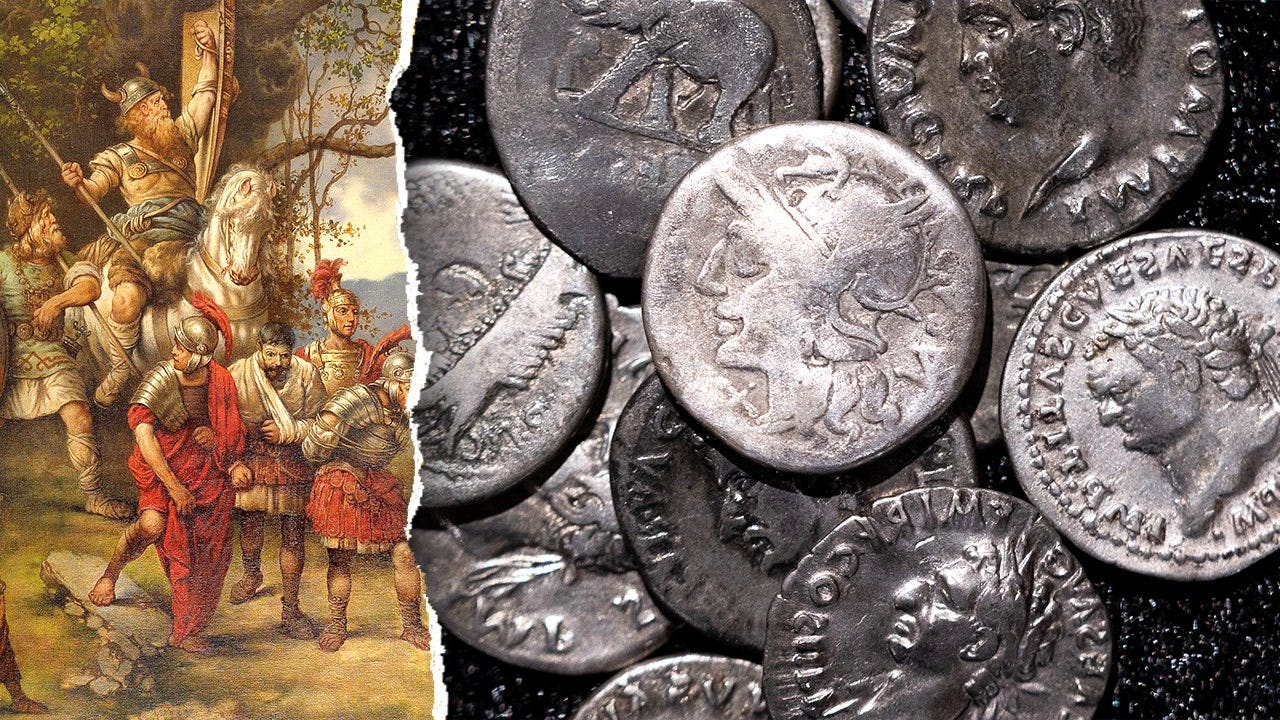
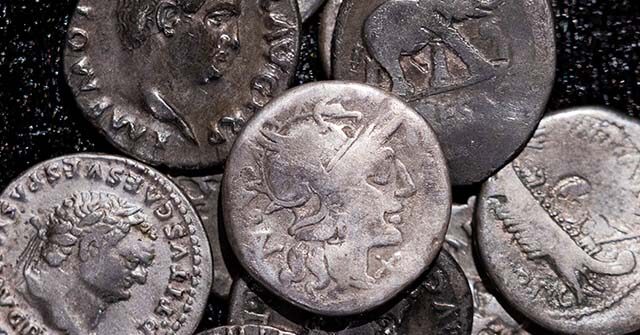
A licensed metal detectorist found 934 Roman silver denarii in a field near Wesseling in 2025; officials only recently announced it as the largest hoard from Hadrian's reign found in Germany. The coins are now on display in Bonn.
1 / 2
The story, neutrally told
Right · 2A licensed metal detectorist, Oliver Riedl, found 934 Roman silver denarii in a field near Wesseling, south of Cologne, Germany. Fox NewsR “The coins, found near Wesseling, south of Cologne, were uncovered by Oliver Riedl, according to The Associated Press (AP).” Read at Fox News ↗ BreitbartR “Oliver Riedl is a licensed metal detectorist who was using the device when he uncovered 934 Roman silver coins in a field near Wesseling, Germany” Read at Breitbart ↗ Right · 2The find was made in 2025, but officials announced it only recently. They called it the largest coin hoard from the reign of Emperor Hadrian ever found in Germany. Fox NewsR “Though the hoard was discovered last year, officials only recently announced the find, calling it the largest coin hoard from the reign of Roman Emperor Hadrian ever found in Germany.” Read at Fox News ↗ BreitbartR “Officials did not announce the discovery until recently and said it weighed over six pounds.” Read at Breitbart ↗ Right · 2Riedl told the AP that his detector kept signalling, so he suspected more coins lay beneath the surface and alerted the archaeological authorities. Fox NewsR “"It was clear to me there was something bigger buried here," he said.” Read at Fox News ↗ BreitbartR “He suspected there were more coins under the dirt when the device kept beeping, and Riedl wasted no time in alerting authorities to what he had found.” Read at Breitbart ↗
Right · 2The LVR Office for the Preservation of Archaeological Monuments in the Rhineland said the coins were probably buried deliberately between 125 and 150 A.D. The hoard weighs about 6.8 pounds and is on display at the LVR-LandesMuseum Bonn. Fox NewsR “The coins were likely buried intentionally between 125 and 150 A.D., according to the LVR Office for the Preservation of Archaeological Monuments in the Rhineland.” Read at Fox News ↗ BreitbartR “The historical treasure is now on display at the LVR-LandesMuseum Bonn.” Read at Breitbart ↗ Right · 1Breitbart, citing a Popular Mechanics report on the museum's findings, says the oldest coin was minted in 148 B.C.E. and most date to 69–96 C.E. The newest was minted in 124 or 125 C.E. Erich Classen, director of the LVR-State Service for Archaeological Heritage, called it the largest hoard of this period in Germany and the fifth-largest worldwide. BreitbartR “Most of the coins date to between 69 and 96 C.E. The most recent coin was minted in either 124 or 125 C.E., during the reign of Emperor Hadrian.”““This makes it the largest coin hoard from this period in Germany and the fifth-largest worldwide,” said Erich Classen” Read at Breitbart ↗ Right · 2Johannes Wienand, professor of ancient history at the Technical University of Braunschweig, was not involved in the find. He described it as a "time capsule" of everyday money and suggested it may have been one person's life savings, put in a pot and buried but never recovered. Fox NewsR “"It seems to have been the life savings of one person who put this treasure together and put it in a pot, buried it in the soil to save it for later,"” Read at Fox News ↗ BreitbartR “told Fox it was a “time capsule” of the money people used at that time” Read at Breitbart ↗
Right · 1Wienand estimated a Roman legionary earned about 300 denarii gross a year, so the hoard equalled roughly three years of a soldier's pay. He said the owner's identity is unknown, though the nearby Rhine frontier, Cologne and the Bonn legionary fortress make a military link possible. Fox NewsR “A Roman legionary would have earned a gross salary of around 300 denarii per year, Wienand said, meaning the hoard was roughly equivalent to three years of a soldier's gross salary.”“While a military connection is possible, Wienand said the identity of the hoard's owner remains unknown.” Read at Fox News ↗ Right · 1Wienand also said the case shows the value of responsible detecting: Riedl was licensed, had permission and reported the find immediately. Fox NewsR “"The metal detectorist was licensed. He had permission to look for finds like that. He immediately called the heritage officers."” Read at Fox News ↗
Every sentence links to the reporting it rests on. The pill in front of each says where its sources sit: Left, Centre or Right when one side supplies at least half of them, Mixed when they are evenly split. The number is how many outlets it cites.
Left0 outlets
No left outlet in our sources has covered this story yet.
Centre0 outlets
No centre outlet in our sources has covered this story yet.
Right2 outlets
- Framing
- Both outlets run a human-interest treasure-find story. Fox News leads with the mystery and the 'life savings' idea, and Breitbart is a photo-led rewrite of the Fox piece plus Popular Mechanics.
- Emphasis
- Fox stresses Wienand's comments on soldier pay and on responsible metal detecting. Breitbart adds the museum's coin dating and Classen's 'fifth-largest worldwide' ranking.
- Leaves out or plays down
- Fox does not give the oldest-coin date or the worldwide ranking. Breitbart omits the soldier-pay comparison and the licensed-detecting lesson.
- Charged language
- “Mysterious find”“massive treasure”“incredible discovery”
What every side reports
- Oliver Riedl, a licensed metal detectorist, found 934 Roman silver coins near Wesseling, south of Cologne.
- The find was made in 2025 and announced only recently.
- The hoard dates to the time of Emperor Hadrian and is on display at the LVR-LandesMuseum Bonn.
- Johannes Wienand, who was not involved in the find, called it a time capsule of everyday Roman money.
Where accounts differ
-
How the hoard's dating is presented
- Right
- Fox News gives the LVR's estimate that the coins were buried between 125 and 150 A.D. Breitbart instead gives coin-minting dates, from 148 B.C.E. to 124/125 C.E. The two are not necessarily in conflict.
Hadrian person
The hoard's latest coin was minted in 124 or 125 C.E. under Hadrian, so it is the largest Hadrian-era hoard found in Germany.
“The most recent coin was minted in either 124 or 125 C.E., during the reign of Emperor Hadrian.” — Breitbart
Cologne place
The hoard was found south of Cologne, near the Rhine frontier. The Roman city of Cologne and the Bonn fortress nearby raise the possibility of a military connection.
“The Roman city of Cologne and a legionary fortress in Bonn were also nearby — raising the possibility of a military connection.” — Fox News
Left0 articles
No coverage yet.
Centre0 articles
No coverage yet.
Right2 articles
-
Mysterious find beneath field leads man to massive treasure hidden for centuries
Sympathetic Feature-style account with an expert's commentary, presenting the find as a model of responsible detecting.
-
PHOTO: Man Uncovers 2,000-Year-Old Roman Treasure Hoard in German Field
Celebratory Short photo-led aggregation of Fox and Popular Mechanics that emphasises the hoard's age and rank.
- 11 Oct 15:00 First Fox NewsR Mysterious find beneath field leads man to massive treasure hidden for centuries
- 11 Oct 22:40 +7h 40m BreitbartR PHOTO: Man Uncovers 2,000-Year-Old Roman Treasure Hoard in German Field
Times are when each article was published, or when we first saw it if the outlet gave no time.