Taiz, Yemen: siege and shelling bring shortages, rising prices and civilian casualties
Taiz, Yemen's third-largest city, is cut off and under shelling. A rights monitor blames the Houthis for hundreds of civilian casualties, while Al Jazeera reports on doubled prices and fuel, water and medical shortages.
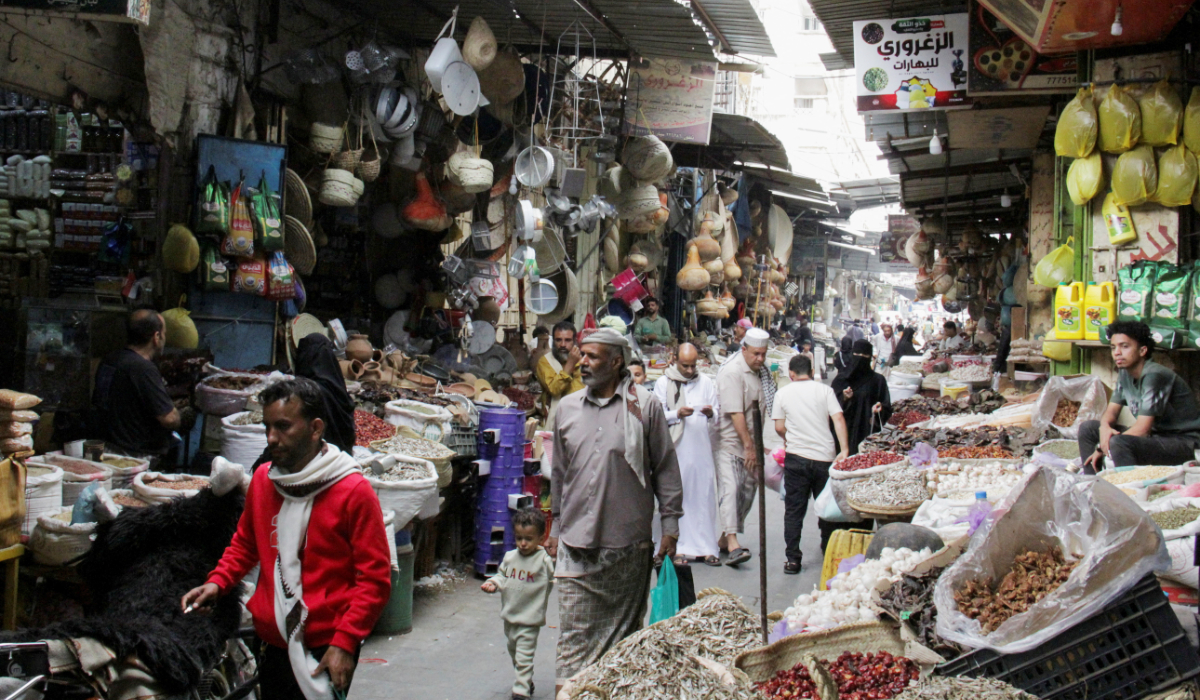

1 / 2
The story, neutrally told
Left · 1Taiz, Yemen's third-largest city, home to about 1 million of the country's roughly 43 million people, has been cut off since early October, when it lost both of its land routes. Al JazeeraLC “Taiz, Yemen’s third-largest city, is home to about 1 million of the country’s roughly 43 million people.”“The city has been cut off since early October, when it lost both of its land routes.” Read at Al Jazeera ↗ Left · 1According to Al Jazeera, the Houthis took the town of al-Turbah by October 4, severing the Taiz-Al-Turbah-Aden Road, the main route for goods. A day earlier, forces loyal to the internationally recognised government had closed the eastern al-Houban crossing into Houthi-held territory, citing attempted Houthi incursions. Al JazeeraLC “The Houthis took the town of al-Turbah by October 4, severing the Taiz-Al-Turbah-Aden Road, the main artery for goods.”“forces loyal to the internationally recognised government closed the eastern al-Houban crossing into Houthi-held territory, citing attempted Houthi incursions.” Read at Al Jazeera ↗ Right · 1The Yemeni Network for Rights and Freedoms, a monitor cited by Arab News, recorded 1,891 violations by the Houthi group against civilians and civilian objects in Taiz governorate from Sept. 1 to Oct. 22. It said they caused 212 civilian deaths, including 38 children and 27 women, and 319 injuries. Arab NewsRC “The Yemeni Network for Rights and Freedoms recorded 1,891 crimes and violations by the Houthi group against civilians and civilian objects in the governorate from Sept. 1 to Oct. 22.”“these violations caused the deaths of 212 civilians, including 38 children (seven of whom were infants) and 27 women, and injuries to 319 civilians” Read at Arab News ↗
Right · 1The network also reported 23 field executions, five massacres and 314 abductions or enforced disappearances, 516 homes raided, and 356 homes damaged, 98 of them destroyed. It said the Houthis fired around 9,876 projectiles, set up 26 illegal checkpoints and barriers, and turned five schools into operating rooms and detention centers. It said the escalation displaced around 280,000 people. These figures are the monitor's and are not independently verified in the coverage. Arab NewsRC “The report documented 23 field executions, five massacres, and 314 cases of abduction and enforced disappearance”“the Houthis fired around 9,876 projectiles during the reporting period, tightened the siege on the governorate since September 3, and set up 26 illegal checkpoints and barriers.”“the escalation has displaced around 280,000 people from the governorate” Read at Arab News ↗ Right · 1The network accused the Houthis of blocking food, medicine, fuel, oxygen cylinders, drinking water and relief convoys, and warned that a lack of fuel for generators threatens patients in hospitals, cancer centres and dialysis units. It called for Taiz to be declared a disaster city, for the siege to be lifted and for guaranteed access for aid. Arab NewsRC “The report accused the group of obstructing the entry of food, medicine, fuel, oxygen cylinders, and drinking water, and blocking relief convoys”“The network called for Taiz to be declared a disaster city” Read at Arab News ↗ Right · 1Arab News also reports that Yemeni government forces are stepping up counterattacks and air strikes on Houthi positions in the countryside and outskirts of Taiz. Armed forces spokesperson Majed Al-Nuzaili said they hit a command-and-control center and two tanks in the abandoned Sofitel Hotel, which he said the Houthis used as a launchpad to target civilians. Government forces are reported to have advanced in southern Taiz amid clashes in Al-Shaqb and Al-Kahlan. Arab NewsRC “Yemeni government forces are intensifying counterattacks and warplanes are expanding strikes on Houthi positions across Taiz's countryside and the besieged city's outskirts.”“The Houthis had used the building as a launchpad to target civilians in the city” Read at Arab News ↗
Left · 1On October 20 the United Nations warned that road closures and lack of security were blocking vital supplies. Food and fuel prices had more than doubled and water production had halved. Fuel stations have been closed since October 5. Al JazeeraLC “On October 20, the United Nations warned that road closures and lack of security were blocking vital supplies.”“Prices of the food and fuel still available had more than doubled, and Taiz’s water production had dropped by half.”“the city’s fuel stations have been closed since October 5.” Read at Al Jazeera ↗ Left · 1Prices gathered by Al Jazeera show a 20-litre container of petrol at 120,000 riyals ($77), against 30,000 last year. Diesel for 20 litres has risen from 46,000 to 90,000 riyals, a cooking gas cylinder from 11,400 to 40,000 riyals, and bus fares from 200 to 500 riyals. UN officials say tanker water costs have roughly tripled. Al JazeeraLC “A 20-litre (5.3-gallon) container of petrol now costs 120,000 riyals ($77), four times last year’s price of 30,000 riyals ($19).”“A cooking gas cylinder has risen from 11,400 riyals ($7) to 40,000 riyals ($26).”“the cost of water delivered by tankers has roughly tripled since the fighting escalated, according to UN officials.” Read at Al Jazeera ↗ Left · 1On October 22 the World Health Organization warned that 42 health facilities in Taiz reported severe shortages of fuel, oxygen, medicine and medical supplies. Local authorities say access restrictions also stop tankers from the Al-Dhabab basin, an important source of drinking water, from entering the city. Al JazeeraLC “the World Health Organization warned that 42 health facilities in Taiz were reporting severe shortages of fuel, oxygen, medicine and medical supplies.”“Local authorities say access restrictions are also stopping tankers from the Al-Dhabab basin” Read at Al Jazeera ↗
Left · 1Residents described the effects to Al Jazeera. Yousef Farhan, a father of four displaced by shelling years ago, lost his cucumber-selling income when the school where his family shelters closed, and now cooks over firewood on a diet of rice or beans. Fatima Khaled, 55, who has kidney failure, sleeps on the floor of the dialysis hall at Al-Jumhuri General Hospital because she cannot afford repeated trips from her village. Al JazeeraLC ““The whole day, we either eat rice or beans, whether in the morning or in the evening,” the 39-year-old father of four told Al Jazeera.”“She sleeps on the floor of the dialysis hall at Al-Jumhuri General Hospital.” Read at Al Jazeera ↗
Every sentence links to the reporting it rests on. The pill in front of each says where its sources sit: Left, Centre or Right when one side supplies at least half of them, Mixed when they are evenly split. The number is how many outlets it cites.
Left1 outlet
- Framing
- A human-interest explainer that follows families through the siege, with a map and price data, and attributes the crisis to road closures by several parties.
- Emphasis
- Household costs, fuel and water shortages, health facilities under strain, and UN and WHO warnings.
- Leaves out or plays down
- Does not report the rights monitor's casualty, abduction and displacement figures or the government's military strikes.
- Charged language
- “besieged city”
- For example
-
“Three weeks into the siege of Yemen’s third-largest city, prices have doubled, and families are down to the basics.” — Al Jazeera
“forces loyal to the internationally recognised government closed the eastern al-Houban crossing into Houthi-held territory, citing attempted Houthi incursions.” — Al Jazeera
Centre0 outlets
No centre outlet in our sources has covered this story yet.
Right1 outlet
- Framing
- Presents the crisis as the result of Houthi aggression, relying on a Yemeni rights monitor's report and a government military spokesperson.
- Emphasis
- Casualties, abductions, executions and home raids attributed to the Houthis, plus government counterattacks and strikes.
- Leaves out or plays down
- Does not mention the government-side closure of the al-Houban crossing or UN and WHO assessments of the shortages. Houthi responses are not given.
- Charged language
- “Brutal Houthi siege”“bloody invasion and systematic killing”“illegal checkpoints”
What every side reports
- Taiz is besieged or cut off, with civilians suffering shortages of fuel, medicine and other essentials.
- Fuel shortages threaten hospitals and water supply in the city.
- Houthi forces and Yemeni government-aligned forces are both active around Taiz.
Where accounts differ
-
Responsibility for the siege and when it began
- Left
- Al Jazeera describes the city as cut off since early October after the Houthis took al-Turbah, and notes that government-aligned forces closed the al-Houban crossing a day earlier. It does not assign sole blame.
- Right
- Arab News, relaying the Yemeni Network for Rights and Freedoms, says the Houthis have tightened the siege since September 3 and blames them for blocking aid.
Houthis organisation
The coverage gives no Houthi statement. Arab News relays accusations that they shelled residential areas, tightened the siege and blocked aid, and Al Jazeera reports that they took al-Turbah and severed the main road.
“The report accused the group of obstructing the entry of food, medicine, fuel, oxygen cylinders, and drinking water” — Arab News
“The Houthis took the town of al-Turbah by October 4” — Al Jazeera
Taiz place
Taiz is described as a besieged city where residents face doubled prices, closed fuel stations, water and medical shortages; a rights monitor calls for it to be declared a disaster city.
“But the city’s fuel stations have been closed since October 5.” — Al Jazeera
“The network called for Taiz to be declared a disaster city” — Arab News
Left1 article
-
Mapping the siege of Yemen’s Taiz, and the price families are paying
Sympathetic Tells the siege through the daily hardships of families, with price data and UN/WHO warnings, and notes that both sides closed routes.
Centre0 articles
No coverage yet.
Right1 article
-
Brutal Houthi siege and shelling drive Taiz to humanitarian disaster
Alarmist Treats the siege as Houthi-driven, using a rights monitor's figures and the government's account of its strikes (byline Asharq Al-Awsat).
- 25 Oct 19:37 First Arab NewsRC Brutal Houthi siege and shelling drive Taiz to humanitarian disaster
- 28 Oct 09:43 +62h 5m Al JazeeraLC Mapping the siege of Yemen’s Taiz, and the price families are paying
Times are when each article was published, or when we first saw it if the outlet gave no time.
Ask about this story
Loading…