Huawei unveils Mate 90 series with Kirin chips built on in-house design to work around US curbs
Huawei launched its Mate 90 phones with Kirin chips using its own LogicFolding chip design, which it says offsets US limits on chipmaking tools. Consumer chief Richard Yu also said memory costs are hurting profit and forcing price rises.
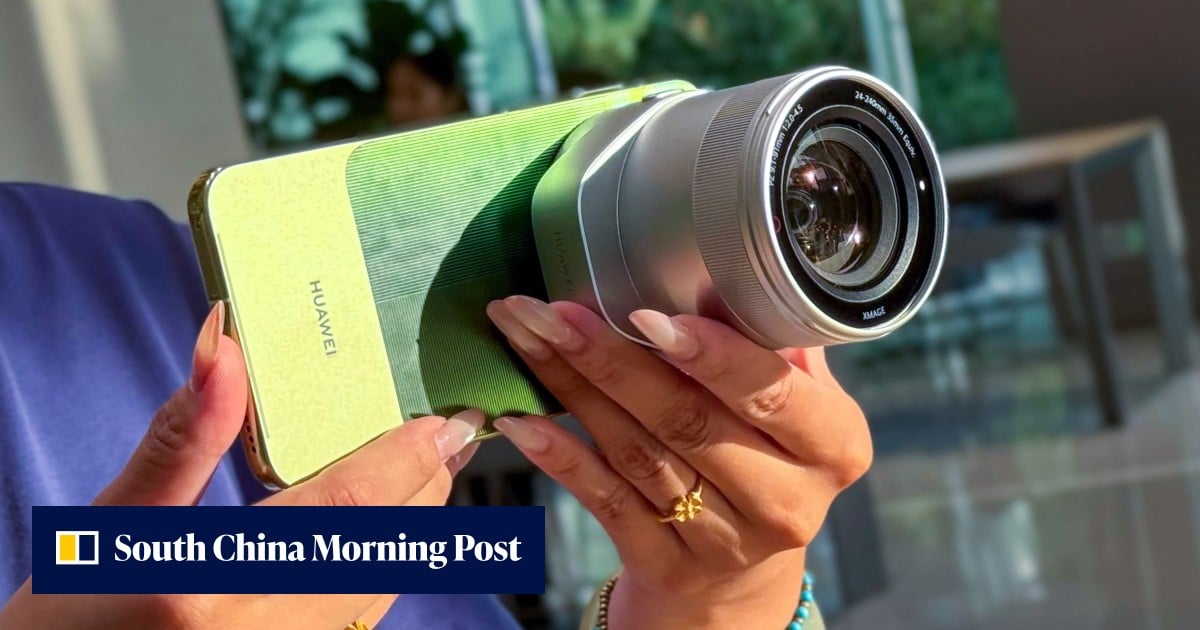
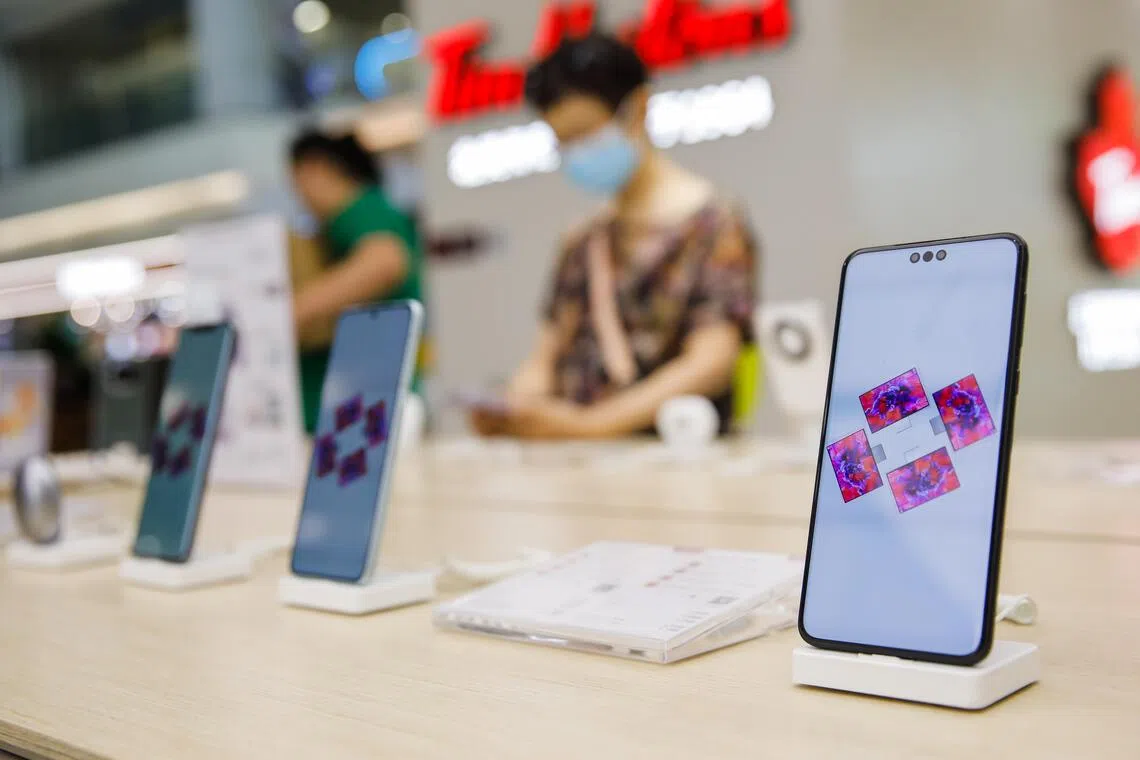
1 / 2
The story, neutrally told
Huawei unveiled its Mate 90 smartphone series on 1 October, relying on its own chip design and operating system to keep advancing despite US restrictions on advanced semiconductors. The Straits TimesRC “Huawei Technologies unveiled its Mate 90 smartphone series on Oct 1, betting on its in-house operating system and redesigned chip architecture” Read at The Straits Times ↗ South China Morning PostN “set to adopt the processors across the newly released Mate 90 smartphone series” Read at South China Morning Post ↗ The top models use the Kirin 9050 Pro, built with a technique Huawei calls LogicFolding, which restructures a chip's wiring in three dimensions. The Straits TimesRC “a system-on-chip built with a technique Huawei calls “LogicFolding”” Read at The Straits Times ↗ South China Morning PostN “Both chipsets adopt Huawei’s LogicFolding architecture.” Read at South China Morning Post ↗ The South China Morning Post says LogicFolding rests on Huawei's Tau Scaling Law, which lets it build more powerful processors without advanced lithography machines, and that Huawei claims it cuts critical path latency by 30 per cent. South China Morning PostN “The architecture boosts computing power and data transfer by reducing critical path latency by 30 per cent, according to Huawei.” Read at South China Morning Post ↗
Huawei says the top-end Mate 90 models are 31% faster overall than the previous flagship generation. The Straits TimesRC “Huawei said the top-end Mate 90 models deliver a 31% increase in overall performance over the previous flagship generation.” Read at The Straits Times ↗ South China Morning PostN “boasts a 31 per cent performance improvement over last year’s Mate 80 Pro Max” Read at South China Morning Post ↗ Consumer business chief Richard Yu said China lacks extreme ultraviolet lithography and that advanced chip capacity remains tight, though the SCMP reports he called it sufficient for Huawei's shipping needs. South China Morning PostN “Despite being tight, Huawei’s semiconductor capacity was currently sufficient to meet the company’s shipping needs, Yu said.” Read at South China Morning Post ↗ The Straits TimesRC ““Advanced semiconductor capacity remains very limited in China, and Huawei’s Ascend AI chips also draw on that same capacity,”” Read at The Straits Times ↗ Yu said rising memory prices have added about US$200 to each handset's cost, hurting profit and forcing further, smaller price rises. South China Morning PostN ““Our profitability is dropping very sharply, to be honest,”” Read at South China Morning Post ↗ The Straits TimesRC “Yu said rising memory prices had added an average of US$200 (S$255) to the cost of each handset” Read at The Straits Times ↗
Reuters, carried by the Straits Times, reports the Mate 90 Pro Max starts at 9,999 yuan, 2,000 yuan more than its predecessor, and that Huawei did not say who makes the Kirin 9050 Pro; SMIC is widely believed to. The Straits TimesRC “Huawei did not disclose who manufactures the Kirin 9050 Pro.”“will be priced at 9,999 yuan (S$1,900), 2,000 yuan more than the same version of its predecessor at launch” Read at The Straits Times ↗ The SCMP adds that Huawei has shipped about 100,000 Mate XT 2 trifold phones and expects to pass 1 million sales, and cites a Bernstein report that the Kirin 9050 Pro outperforms Apple's A17 Pro despite a 7-nanometre-equivalent process. South China Morning PostN “had already shipped about 100,000 Mate XT 2 trifold phones since the model’s release on September 12”“outperforms Apple’s 3-nanometre A17 Pro chip, despite being produced using technology equivalent to a 7-nanometre process node” Read at South China Morning Post ↗ Yu welcomed Apple's foldable iPhone Duo and said Huawei's Pura X Max sales rose 76% after its announcement, though the outlets give different cumulative sales figures. South China Morning PostN “The model has now surpassed 1.4 million in sales since its launch in April.” Read at South China Morning Post ↗ The Straits TimesRC “had topped 1.2 million units in China since its April release” Read at The Straits Times ↗
Every sentence links to the reporting it rests on.
Left0 outlets
No left outlet in our sources has covered this story yet.
Centre1 outlet
- Framing
- Frames the launch as progress in Huawei's Tau Scaling Law chip roll-out and its push to overcome US curbs, led by sales targets for the Mate XT 2.
- Emphasis
- Technical detail of Tau and LogicFolding, Bernstein's benchmark comparison with Apple, and Yu's remarks on profitability.
- Leaves out or plays down
- Omits Mate 90 launch prices, the unknown chip manufacturer and the IDC market data.
- Charged language
- “rapid progress”“another step forward”
- For example
-
“Huawei Technologies is making rapid progress in rolling out a new breed of advanced chip” — South China Morning Post
“The roll-out marks another step forward in the Chinese tech giant’s push to overcome stringent US export curbs” — South China Morning Post
Right1 outlet
- Framing
- Reuters copy framed as a test of whether Huawei can keep advancing under US restrictions, stressing supply constraints and costs.
- Emphasis
- Limited chip capacity, higher prices, uncertain manufacturer (SMIC), IDC market data and Apple competition.
- Leaves out or plays down
- Does not mention the Tau Scaling Law by name, the Mate XT 2 or the Bernstein comparison.
- Charged language
- “US curbs”
- For example
-
“The launch will test whether Huawei can keep advancing its smartphone line-up despite US restrictions” — The Straits Times
“SMIC did not respond to a request for comment.” — The Straits Times
What every side reports
- Huawei unveiled the Mate 90 series with Kirin chips based on LogicFolding, billed as a way around US chipmaking tool curbs.
- Top models claim a 31% performance gain over the previous generation.
- Richard Yu said memory costs add about US$200 per phone and further price rises will come.
- Yu welcomed Apple's iPhone Duo and said Pura X Max sales rose 76% after its announcement.
Where accounts differ
-
Pura X Max cumulative sales
- Centre
- SCMP says more than 1.4 million since April.
- Right
- Reuters via the Straits Times says more than 1.2 million units in China since April.
-
Whether chip capacity constrains Huawei
- Centre
- SCMP reports capacity is tight but sufficient for Huawei's shipping needs.
- Right
- Reuters stresses that advanced chip capacity is very limited and shared with Ascend AI chips.
Huawei organisation
Through Richard Yu, Huawei presents LogicFolding and the Tau Scaling Law as a way to narrow the gap caused by lacking EUV lithography, while admitting tight capacity and falling profitability.
““That’s why Huawei develops LogicFolding and the Tau Scaling Law to try to mitigate the gap.”” — South China Morning Post
“Huawei would use more chips built with the LogicFolding technique in future smartphones, Yu said.” — The Straits Times
Left0 articles
No coverage yet.
Centre1 article
-
Huawei steps up Tau chip roll-out, with Mate XT 2 on track for 1 million sales
Mixed Largely upbeat account of Huawei's chip progress and sales, with Yu's profit warning included.
Right1 article
-
The Straits TimesRC · · via Reuters
Huawei unveils Mate 90 phones, leans on homegrown chip design to offset US curbs
Neutral Reuters wire copy presenting the launch as a test under US curbs, with supply, price and market data context.
- 1 Oct 04:00 First South China Morning PostN Huawei steps up Tau chip roll-out, with Mate XT 2 on track for 1 million sales
- 1 Oct 05:15 +1h 15m The Straits TimesRC Huawei unveils Mate 90 phones, leans on homegrown chip design to offset US curbs via Reuters
Times are when each article was published, or when we first saw it if the outlet gave no time.