IDF rejects NAZA film's claims on Gaza civilian deaths and AI targeting
The Israeli military issued its first detailed response to the documentary NAZA, denying it used AI to select targets or set automatic civilian-casualty ratios. Anadolu Agency frames the film as documenting massacres, while two Israeli right-leaning outlets relay the IDF's rebuttal.
Updated (version 2). New coverage since the last version from Anadolu Agency. Previously: “IDF issues detailed rebuttal of NAZA film's claims on Gaza targeting and AI”.


1 / 3
The story, neutrally told
On Thursday 1 October 2026 the Israel Defense Forces issued its first detailed response to NAZA, a documentary directed by Yuval Abraham and Rachel Szor. Anadolu AgencyN “The comments marked the army’s first response to the film, directed by Israeli Oscar-winning filmmakers Yuval Abraham and Rachel Szor.” Read at Anadolu Agency ↗ The Jerusalem PostRC “The IDF on Thursday gave its first comprehensive and detailed response and rejection of the NAZA film claims” Read at The Jerusalem Post ↗ The IDF called the film's picture of its target planning and strike processes distorted and misleading, and said its narrative rests on fundamental factual errors. Anadolu AgencyN “distorted, misleading and far-from-reality picture” Read at Anadolu Agency ↗ The Jerusalem PostRC “The film's narrative is based on fundamental factual errors stemming from a skewed and manipulative portrayal.” Read at The Jerusalem Post ↗ It said artificial intelligence has never independently selected targets: intelligence officers identify them and operational commanders decide on strikes. Anadolu AgencyN “Artificial intelligence has never independently selected targets to strike.” Read at Anadolu Agency ↗ JNSR “authorized intelligence officers identify potential targets, relevant professionals plan strikes, and operational commanders make the final decision on whether to attack” Read at JNS ↗
According to the Jerusalem Post and JNS, the IDF also denied ever planning or carrying out a strike expected to kill 500 civilians, or any automatic authorisation of 20 or 200 civilian deaths per target, and said Lavender is a database assisting analysts, not a list of approved targets. The Jerusalem PostRC “The IDF has never planned, authorized, or carried out any strike in Gaza where the expected outcome was the death of 500 civilians or a number approaching that figure.” Read at The Jerusalem Post ↗ JNSR ““‘Lavender’ is not a database of targets approved to strike, but a database that assists intelligence analysts,” the IDF said.” Read at JNS ↗ The IDF argued that the film's interviewees, drawn from the Intelligence Corps, mostly describe limited, preliminary stages rather than strike planning and approval. Anadolu AgencyN “mostly refer to limited and preliminary stages of intelligence work, rather than the much broader process of planning and approving strikes” Read at Anadolu Agency ↗ JNSR “usually refer to only limited, initial stages dealing with intelligence” Read at JNS ↗ It also said the film omits the 7 October 2023 Hamas attack and Hamas's use of civilian areas, and uses manipulative editing; it acknowledged that mistakes occur in complex combat and said it remains open to genuine criticism. JNSR “It acknowledged that mistakes occurred during complex combat operations” Read at JNS ↗ The Jerusalem PostRC “the film distorts reality further through the manipulative editing of interviews” Read at The Jerusalem Post ↗
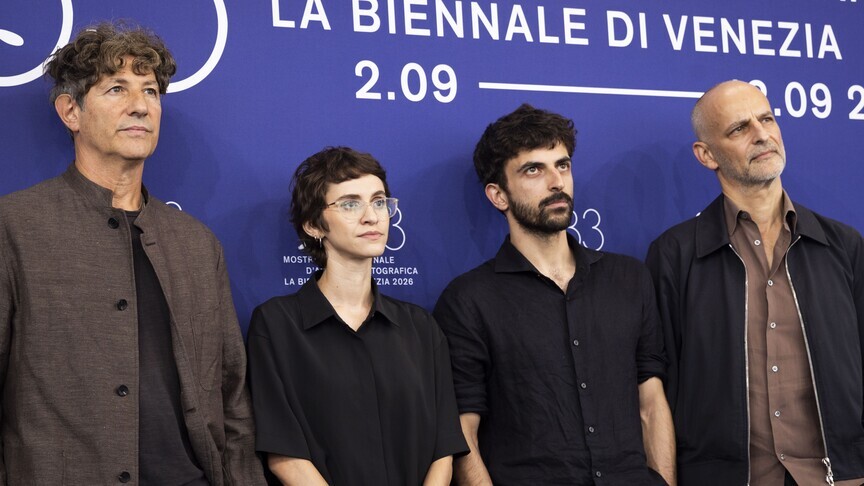
The film was produced by The Guardian and won the Special Jury Prize at the Venice Film Festival; its title is an acronym for the expected number of civilians killed in a strike, and some interviewees reportedly worked in a secret intelligence unit. Anadolu AgencyN “The film’s title, NAZA, is an abbreviation used by Israel’s military intelligence directorate, Aman, to refer to the number of civilians expected to be killed in an airstrike.” Read at Anadolu Agency ↗ JNSR “received a Special Jury Prize at the Venice Film Festival” Read at JNS ↗ Accounts differ on whether the IDF saw the film: the Jerusalem Post says it was allowed to view it only in recent days, while JNS says it was never given a copy and relied on a representative at a public screening. The Jerusalem PostRC “nor permitting them to see the movie until recent days” Read at The Jerusalem Post ↗ JNSR “had not provided the military with a copy after release, despite requests” Read at JNS ↗ Anadolu reports that Abraham, accepting the Venice prize, spoke of a smear campaign against the film in Israel; no filmmaker response to the IDF statement appears in the coverage. Anadolu AgencyN “Abraham speaking about a smear campaign against their film in Israel” Read at Anadolu Agency ↗
Every sentence links to the reporting it rests on.
Left0 outlets
No left outlet in our sources has covered this story yet.
Centre1 outlet
- Framing
- Anadolu leads with the army 'attacking' the film and distancing itself from Gaza 'crimes', setting the short IDF quotes within the film's acclaim at Venice and Netanyahu's ICC status.
- Emphasis
- The film's Venice reception, its secret filming over three years, attacks from Netanyahu government officials, and the ICC warrant against Netanyahu.
- Leaves out or plays down
- Leaves out the IDF's specific denials on the 500-to-1 ratio, Lavender, the 20/200 thresholds, evacuation warnings and its 150+ criminal and 3,000+ disciplinary probes.
- Charged language
- “Israeli massacres”“genocide against Palestinians”“distances itself from Gaza crimes”
- For example
-
“the film NAZA, which documents Israeli massacres in the Gaza Strip, and sought to distance itself from the genocide against Palestinians.” — Anadolu Agency
“It has faced repeated attacks from officials in Israeli Prime Minister Benjamin Netanyahu’s government, which has been described as the most right-wing in Israel’s history.” — Anadolu Agency
Right2 outlets
- Framing
- Both outlets lead with the IDF's point-by-point rebuttal and present the military's account of its procedures; the film's claims appear through that statement.
- Emphasis
- IDF denials on the 500-to-1 ratio, AI target selection and Lavender, and the argument that interviewees knew only early stages. The Jerusalem Post adds its own earlier talks with IDF legal officials on ratios in documents.
- Leaves out or plays down
- Neither quotes the filmmakers, The Guardian or interviewees in reply, and neither mentions Abraham's smear-campaign remarks or the ICC warrant.
- Charged language
- “distorted, misleading and disingenuous”“manipulative editing”
- For example
-
“The documentary misrepresents its targeting procedures, use of artificial intelligence and efforts to minimize civilian casualties, said the Israeli military.” — JNS
“if there are documents which mention 100 to 1 or 20 to 1 as ratios, they are basically never used” — The Jerusalem Post
What every side reports
- The IDF issued a statement on 1 October 2026 rejecting the film's portrayal of its targeting.
- The IDF says AI has never independently selected targets and that humans identify targets and commanders decide on strikes.
- The IDF says the interviewees, from the Intelligence Corps, address only preliminary stages of targeting.
- NAZA is directed by Yuval Abraham and Rachel Szor, produced by The Guardian, and won a Special Jury Prize at Venice.
Where accounts differ
-
Whether the film documents wrongdoing in Gaza
- Centre
- Anadolu describes the film in its own voice as documenting "Israeli massacres" and says the army sought to distance itself from "genocide against Palestinians".
- Right
- JNS and the Jerusalem Post present the film's claims as allegations that the IDF rejects, calling its account distorted and manipulative.
-
Whether the IDF saw the film before responding
- Centre
- Not addressed.
- Right
- The Jerusalem Post says the IDF was not allowed to see the film until recent days; JNS says it never received a copy and relied on a representative at a public screening.
-
Artificial intelligence has never independently selected targets for IDF strikes; humans identify targets and commanders decide.
Reported- Reports 3
- Anadolu Agency, JNS, The Jerusalem Post
-
The film's interviewees from the intelligence corps address only limited, preliminary stages of targeting, not strike planning and approval.
Reported- Reports 3
- Anadolu Agency, JNS, The Jerusalem Post
Israel Defense Forces organisation
Says the film misrepresents its targeting, that AI never independently picks targets, and that it works to minimise civilian harm; says it is open to genuine criticism.
“It said it remained open to “genuine criticism” and to examining substantiated allegations of misconduct.” — JNS
“It said the film’s “narrative is based on fundamental factual errors”” — Anadolu Agency
NAZA product
The film's makers, per Anadolu, say there is a smear campaign against it in Israel and efforts to stop its facts being seen; it presents testimony from 24 anonymous personnel, per JNS.
“Abraham speaking about a smear campaign against their film in Israel” — Anadolu Agency
“The documentary features anonymous testimony from 24 Israeli military and intelligence personnel” — JNS
Israel2 outlets
Israeli outlets JNS and the Jerusalem Post relay the IDF rebuttal in detail, treating the film's claims as allegations to be answered.
“The IDF rejected those allegations, saying the film’s narrative “is based on substantial factual errors stemming from manipulative misrepresentations of reality.”” — JNS
JNS, The Jerusalem Post
Middle East1 outlet
Anadolu Agency treats the film as documenting Israeli killings and reports the IDF statement briefly, as an effort to deflect blame.
“sought to distance itself from the genocide against Palestinians.” — Anadolu Agency
Anadolu Agency
Left0 articles
No coverage yet.
Centre1 article
-
Israeli army attacks NAZA film, distances itself from Gaza crimes
Critical Short report that casts the IDF response as an attack on a film documenting 'massacres', adding Venice acclaim and Netanyahu's ICC status.
Right2 articles
-
JNSR ·
IDF rejects ‘NAZA’ claims of deliberate targeting of Gaza civilians
Neutral Wire-style summary of the IDF statement, attributing each denial to the military and giving brief background on the film.
-
IDF gives rejection of NAZA film claims disputes civilian death ratios, AI targeting abuse
Mixed Relays the IDF rebuttal at length and adds the outlet's own earlier IDF legal-official briefings on ratios, with subheads presenting IDF assertions as findings.
- 1 Oct 09:20 First The Jerusalem PostRC IDF gives rejection of NAZA film claims disputes civilian death ratios, AI targeting abuse
- 1 Oct 09:47 +27m JNSR IDF rejects ‘NAZA’ claims of deliberate targeting of Gaza civilians
- 1 Oct 10:23 +1h 4m Anadolu AgencyN Israeli army attacks NAZA film, distances itself from Gaza crimes
Times are when each article was published, or when we first saw it if the outlet gave no time.