IEA warns Southeast Asia's energy security is at risk as power demand surges
A new International Energy Agency report says Southeast Asia's growing electricity demand and reliance on imported fuel leave it exposed to shocks, and urges diversification of energy sources and supply routes.
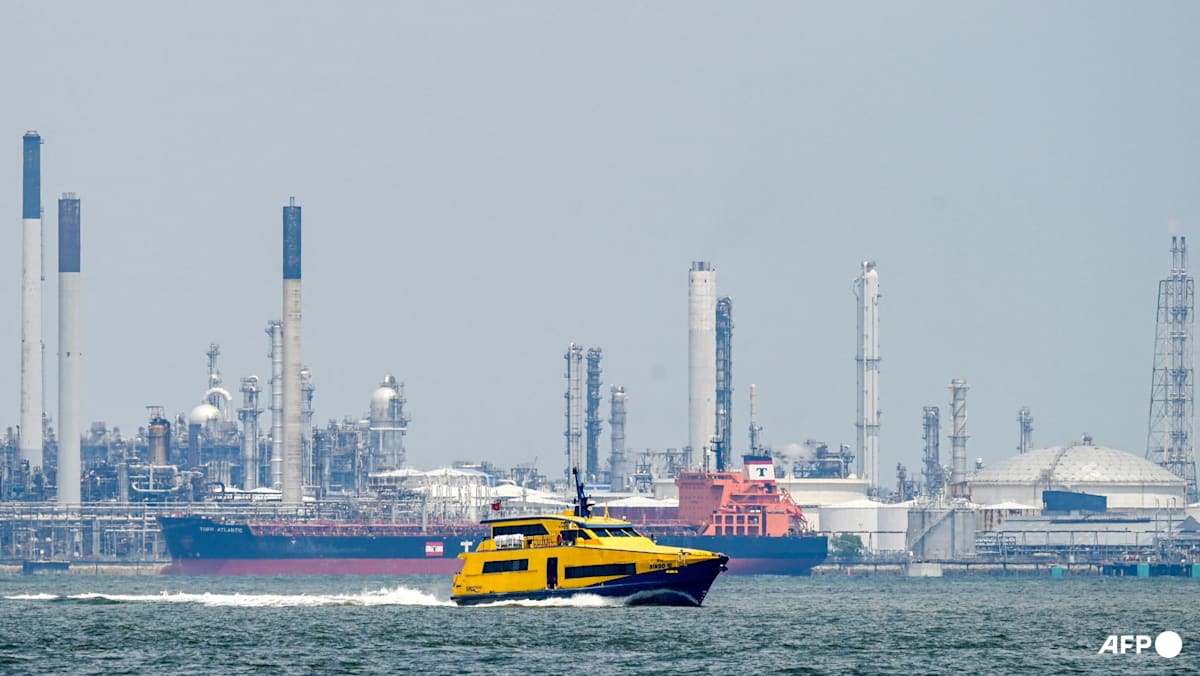
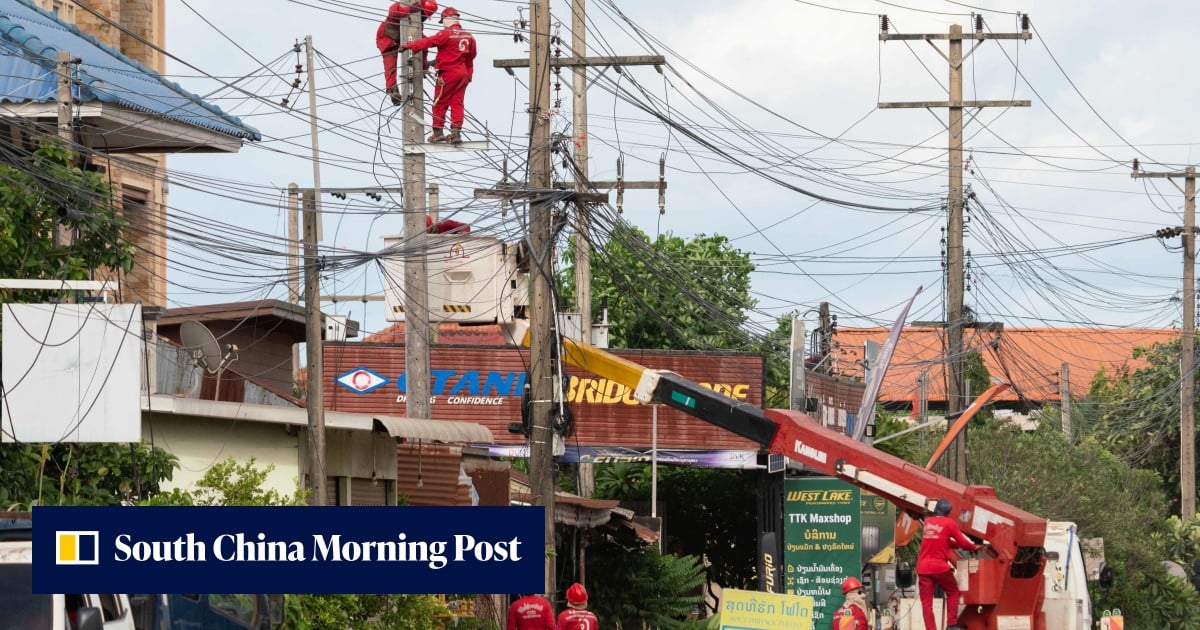
1 / 2
The story, neutrally told
Centre · 1The International Energy Agency (IEA) has published a report warning that Southeast Asia is using more energy than ever while depending increasingly on imported fuel, leaving it vulnerable to supply disruptions and price shocks. CNAN “Southeast Asian countries are using more energy than ever but becoming increasingly reliant on imported fuel, leaving the region vulnerable to supply disruptions and price shocks” Read at CNA ↗ Centre · 2CNA reports the ASEAN Energy Security Review was published on Monday, 5 October, while AP, carried by the South China Morning Post, describes it as released on Tuesday. CNAN “The report, published on Monday (Oct 5)” Read at CNA ↗ South China Morning PostN “according to an International Energy Agency report released on Tuesday” Read at South China Morning Post ↗ Centre · 2The IEA recommends that the region diversify energy sources and supply routes, make greater use of domestic resources where viable, and expand energy efficiency and electrification. CNAN “urged the region to diversify energy sources and routes of supply, make greater use of domestic resources where viable and expand energy efficiency and electrification” Read at CNA ↗ South China Morning PostN “make greater use of domestically available energy resources and accelerate electrification alongside efficiency improvements” Read at South China Morning Post ↗
Centre · 2The IEA forecasts electricity demand in the region will grow by about 5.4 per cent a year from 2026 to 2030, driven by industry, cooling needs and data centres, after energy demand per person rose by almost 30 per cent over the past decade. CNAN “electricity demand is expected to grow by about 5.4 per cent a year between 2026 and 2030” Read at CNA ↗ South China Morning PostN “which has risen almost 30 per cent per person over the last 10 years” Read at South China Morning Post ↗ Centre · 2The report comes during a fuel crisis linked to the Iran war: according to CNA, Iran effectively blocked the Strait of Hormuz after US and Israeli strikes on 28 February, and about 60 per cent of the region's crude imports and a third of its gas imports came from the Middle East before then. CNAN “Around 60 per cent of Southeast Asia's crude oil imports and one-third of its natural gas imports originated from the Middle East before Feb 28.” Read at CNA ↗ South China Morning PostN “The energy crisis stemming from the closure of the Strait of Hormuz has been a wake-up call for Southeast Asia” Read at South China Morning Post ↗ Centre · 1The IEA also says regional crude production has fallen 40 per cent from its 1990s peak, imported crude has risen 30 per cent since 2015, and about 45 per cent of refined products in the region derive from Middle Eastern crude, even though refineries meet about 89 per cent of petroleum product demand. CNAN “regional crude production has fallen by 40 per cent since its peak in the 1990s”“Around 45 per cent of refined oil products in the region are derived from Middle Eastern crude.” Read at CNA ↗
Centre · 1IEA data cited by CNA show some countries still depend heavily on coal: it supplied 71 per cent of Indonesia's electricity in 2024 and 62.5 per cent of the Philippines'. The IEA says Indonesia has an unimplemented reserve framework, the Philippines is planning a strategic petroleum reserve and Singapore has none. CNAN “coal accounted for 71 per cent of Indonesia’s electricity generation and 62.5 per cent of the Philippines’ electricity generation”“Singapore does not have a strategic petroleum reserve, according to the IEA” Read at CNA ↗ Centre · 1AP reports that, unlike Japan and South Korea, Southeast Asian countries have limited reserves; during the crisis they conserved power, burned more coal and bought Russian crude, and also adopted cleaner-power policies such as nuclear agreements, solar subsidies and electric vehicle incentives. South China Morning PostN “countries went into a state of energy triage to conserve power, while also burning more coal and buying Russian crude oil”“from nuclear energy agreements, to solar power subsidies and incentives for buying electric vehicles” Read at South China Morning Post ↗ Centre · 1Fatih Birol, the IEA's executive director, said the region is dynamic but faces challenges in an uncertain global energy landscape. The IEA says risks are multiplying faster than solutions, and AP reports analysts warning that territorial disputes and differing national energy markets could hinder sharing electricity across borders. South China Morning PostN “Southeast Asia is one of the world’s most dynamic regions, but its rising needs for energy to power its economic growth face challenges”“from territorial conflicts between neighbours to differing types of national energy markets” Read at South China Morning Post ↗
Centre · 1The IEA estimates about US$27 billion is needed between 2025 and 2040 for the current pipeline of regional interconnection projects. Analysts quoted by CNA say renewables, nuclear power and a regional grid could help, while stockpiles only buy time and fuel subsidies reduce the incentive to cut consumption. CNAN “around US$27 billion will be needed between 2025 and 2040 for the current pipeline of regional interconnection projects”“Stockpiling is therefore valuable because it buys time.” Read at CNA ↗ Centre · 1The IEA said it would present its findings at an ASEAN Energy Ministers meeting in Manila on 7 October, where ministers are expected to review regional fuel-security measures, including coordination under the ASEAN Framework Agreement on Petroleum Security. CNAN “ASEAN) Energy Ministers meeting in Manila on Oct 7 where the ministers are expected to review regional fuel-security measures”“said it would present its key findings at the ASEAN meeting” Read at CNA ↗
Every sentence links to the reporting it rests on. The pill in front of each says where its sources sit: Left, Centre or Right when one side supplies at least half of them, Mixed when they are evenly split. The number is how many outlets it cites.
Left0 outlets
No left outlet in our sources has covered this story yet.
Centre2 outlets
- Framing
- Both outlets treat the report as a warning that import dependence and surging power demand leave the region exposed, using the Iran war and Hormuz closure as the backdrop and quoting regional analysts.
- Emphasis
- CNA gives detailed oil import, refinery, stockholding and coal data plus analysts on stockpiling and subsidies and the ASEAN ministers' meeting; the AP copy stresses electricity sharing, political hurdles and the clean-energy shift.
- Leaves out or plays down
- The AP copy omits the stockholding and import figures and the Manila meeting; CNA omits Birol's statement and the AP's point on territorial disputes as a barrier.
- Charged language
- “at a crossroads”“insatiable appetite”“energy triage”“wake-up call”
- For example
-
“Southeast Asia's energy security at a crossroads as power demand surges, IEA warns” — CNA
“Southeast Asia has a seemingly insatiable appetite for energy” — South China Morning Post
Right0 outlets
No right outlet in our sources has covered this story yet.
What every side reports
- The IEA report says Southeast Asia should diversify energy sources and supply routes, use domestic resources more and improve efficiency and electrification.
- Electricity demand is forecast to grow about 5.4 per cent a year to 2030, driven by cooling, data centres and industry.
- Energy demand per person has risen almost 30 per cent in a decade.
- The Iran war and closure of the Strait of Hormuz have exposed the region's import dependence.
Where accounts differ
-
Date of the report's release
- Centre
- CNA says it was published Monday 5 October; AP via SCMP says it was released Tuesday.
International Energy Agency organisation
Says the region's energy security risks are growing and urges diversification of sources and routes, more domestic resources, efficiency, electrification and regional cooperation.
“the IEA warns energy security issues among the Association of Southeast Asian Nations will intensify” — South China Morning Post
“coordinated energy security measures “must reflect different national circumstances”” — CNA
Southeast Asia place
Presented as highly exposed to external shocks, with limited reserves and rising demand, though some governments are moving toward nuclear, solar and electric vehicles.
“Southeast Asia, which has suffered fuel shortages and soaring costs” — South China Morning Post
Left0 articles
No coverage yet.
Centre2 articles
-
CNAN ·
Southeast Asia's energy security at a crossroads as power demand surges, IEA warns
Neutral Data-heavy explainer on the IEA review, with Singapore-based analysts weighing stockpiling, subsidies and diversification ahead of the ASEAN meeting.
-
South China Morning PostN · · via AP
Rising electricity needs put Southeast Asia’s energy security at risk: report
Neutral AP copy centred on rising electricity needs and barriers to regional power sharing, with analysts calling the crisis a reality check.
Right0 articles
No coverage yet.
- 6 Oct 09:39 First CNAN Southeast Asia's energy security at a crossroads as power demand surges, IEA warns
- 6 Oct 15:00 +5h 21m South China Morning PostN Rising electricity needs put Southeast Asia’s energy security at risk: report via AP
Times are when each article was published, or when we first saw it if the outlet gave no time.