IMF's Azour: buffers limited Iran war damage to Gulf economies but are finite
IMF Middle East director Jihad Azour said prewar buffers have contained the economic hit from the Iran war and Hormuz closure, but warned they are finite and narrowing if disruption persists.

1 / 3
The story, neutrally told
Mixed · 2Jihad Azour, the IMF's director for the Middle East and Central Asia, said on Thursday 15 October that prewar buffers have helped limit the economic impact of the Iran war, but that the region's outlook remains highly uncertain. The NationalN “prewar buffers have helped limit the economic impact of the” Read at The National ↗ Arab NewsRC “Jihad Azour, director of the IMF’s Middle East and Central Asia Department” Read at Arab News ↗ Centre · 1Speaking to reporters at the IMF and World Bank annual meetings, Azour said the impact was "more contained than the scale initially suggested", but that "These buffers bought time but they are finite. Inventories are lower, spare capacity is tighter, and renewed disruption could generate much larger price adjustments." The NationalN ““The impact was more contained than the scale initially suggested,””““These buffers bought time but they are finite. Inventories are lower, spare capacity is tighter, and renewed disruption could generate much larger price adjustments,”” Read at The National ↗ Right · 1In an interview with Asharq Bloomberg, carried by Arab News, he listed six buffers: diversified oil export routes, diversified economic activity, strong financial reserves and liquidity, swift government and central bank intervention, cooperation among Gulf states, and institutional experience from earlier shocks. Arab NewsRC “the six factors included diversified oil export routes, diversified economic activity, and strong financial reserves and liquidity.”“swift government and central bank intervention, cooperation among Gulf states, and institutional experience gained from previous economic shocks” Read at Arab News ↗
Centre · 1The National reports that other mitigating factors, according to Azour, were output from non-Gulf producers and an adjustment in energy demand, while the UAE and Saudi Arabia explored alternative routes to market and International Energy Agency members agreed in March to release up to 425 million barrels of reserve stocks. The NationalN “Output from non-Gulf producers and an adjustment in energy demand have also mitigated the war's impact, Mr Azour said.”“agreed in March to release up to 425 million barrels of reserve stocks” Read at The National ↗ Mixed · 2Azour warned that a prolonged crisis could deplete some of the buffers, and that a more prolonged conflict is the most significant risk, likely to weaken activity, inflame inflation and strain public finances. Arab NewsRC “a prolonged crisis could increase uncertainty and deplete some of the buffers” Read at Arab News ↗ The NationalN “A more prolonged conflict remains the most significant risk for the region's highly uncertain outlook” Read at The National ↗ Mixed · 2The IMF projects 2026 contractions of 3.3 per cent for Saudi Arabia, 3.9 per cent for the UAE, 11.3 per cent for Bahrain, 15.6 per cent for Qatar, 16 per cent for Iraq and 16.7 per cent for Kuwait; Arab News adds that Oman is forecast to grow 4.1 per cent. The NationalN “11.3 per cent for Bahrain, 16 per cent for Iraq, 16.7 per cent for Kuwait, 15.6 per cent for” Read at The National ↗ Arab NewsRC “Oman’s economy is forecast to grow by 4.1 percent” Read at Arab News ↗
Mixed · 2Growth is expected to rebound in 2027, though output will stay below the path projected before the conflict; Arab News reports the IMF expects Saudi GDP to grow 7.9 per cent in 2027. The NationalN “Growth is expected to rebound in 2027 “but output will remain below the medium-term path projected before the conflict”” Read at The National ↗ Arab NewsRC “The IMF expects the Kingdom’s gross domestic product to grow by 7.9 percent in 2027.” Read at Arab News ↗ Right · 1Azour said Saudi Arabia has shown it can withstand shocks thanks to its reserves and infrastructure investment, which let it redirect oil exports quickly, and that the IMF sees it as better placed than Gulf peers; he said Bahrain's reserves are lower than its peers' and Iraq, reliant on oil exports with limited reserves, needs a comprehensive programme. Arab NewsRC ““Saudi Arabia has demonstrated its ability to withstand shocks during the crisis,””“Iraq is among the economies most affected by the crisis because of its reliance on oil exports and limited reserves” Read at Arab News ↗ Mixed · 2On oil importers, Azour said remittances, tourism, easier financial conditions and government support cushioned the shock, but "the room for maneuver in economic policymaking is narrowing". Arab NewsRC ““This resilience helped soften the shock, but the room for maneuver in economic policymaking is narrowing,”” Read at Arab News ↗ The NationalN “with the latter being assisted by remittances, tourism and government support” Read at The National ↗
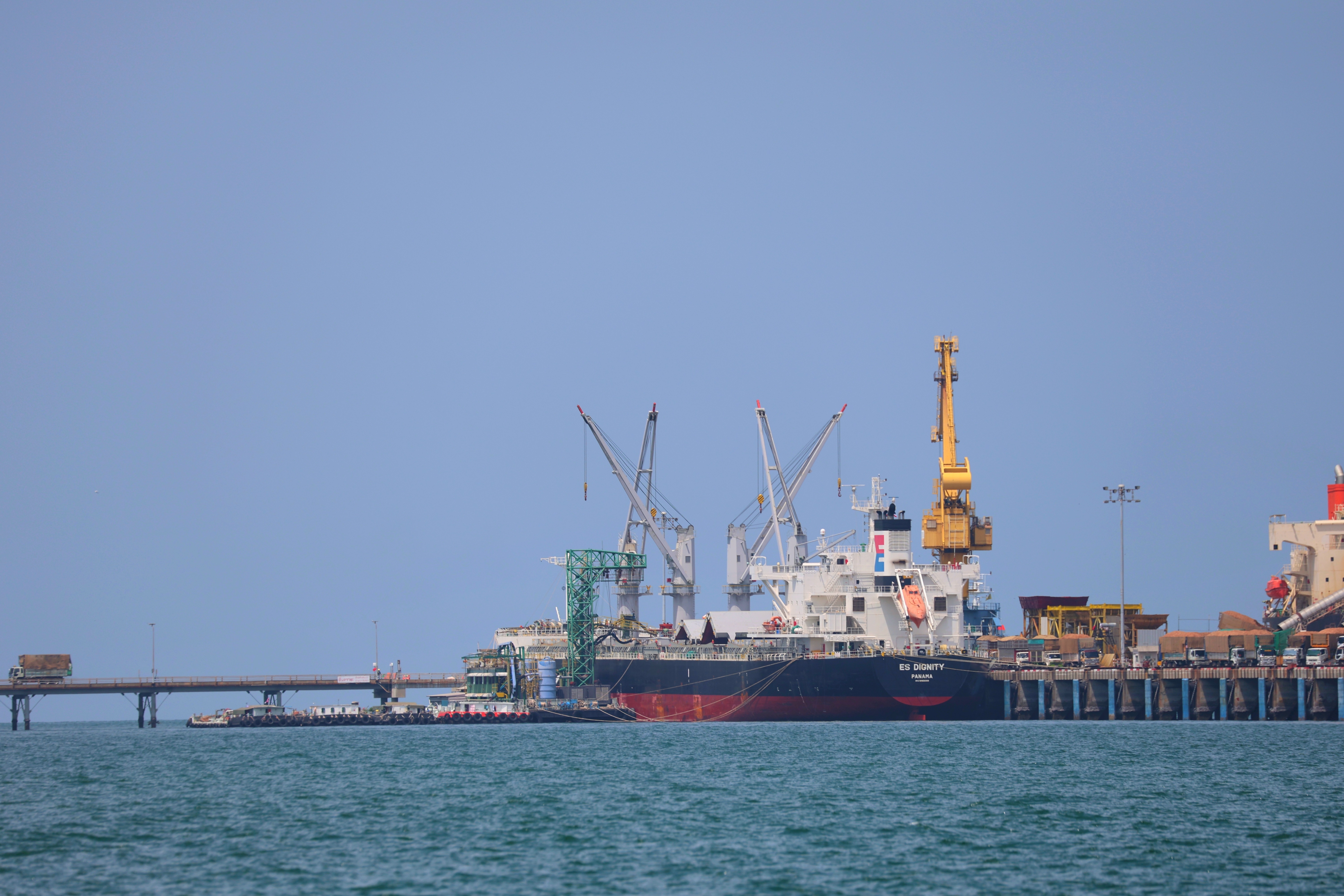
Centre · 1The National places the remarks against continuing attacks: Brent crude is 47 per cent above prewar levels (at $106.1 on Wednesday) but below the feared $200; the UK Maritime Trade Operations agency counted at least 12 tankers attacked in and around Hormuz in the past week; and Houthi rebels attacked Saudi Aramco's headquarters, with no casualties reported. The NationalN “While the price of Brent crude is 47 per cent higher than its prewar levels, it has yet to hit the $200-a-barrel mark that was previously feared.”“At least 12 tankers have been attacked in and around the waterway in the past week, according to the UK Maritime Trade Operations agency.” Read at The National ↗ Mixed · 2The IMF this week kept its 2026 global growth forecast at 3.1 per cent, nudged 2027 up to 3.4 per cent and raised its 2026 inflation forecast to 4.7 per cent, and Azour urged regional economies to prioritise price stability and rebuild fiscal buffers; he also called for deeper Gulf integration, with the IMF to study its growth effects. The NationalN “He urged the region's economies to prioritise price stability, rebuild their fiscal buffers and build capacity to withstand future shocks.” Read at The National ↗ Arab NewsRC “He said the IMF would undertake studies examining the impact of such integration on economic growth.” Read at Arab News ↗ Centre · 1The IMF will publish its Middle East outlook next week in Dubai. The NationalN “The IMF will release its outlook for the Middle East next week in Dubai.” Read at The National ↗
Every sentence links to the reporting it rests on. The pill in front of each says where its sources sit: Left, Centre or Right when one side supplies at least half of them, Mixed when they are evenly split. The number is how many outlets it cites.
Left0 outlets
No left outlet in our sources has covered this story yet.
Centre2 outlets
- Framing
- The National leads on the warning that buffers are narrowing, setting Azour's remarks within ongoing attacks on shipping and Saudi sites and oil price data.
- Emphasis
- Finite buffers, renewed-disruption risk, oil prices, tanker attacks, forecast divergence.
- Leaves out or plays down
- Does not list the six-buffer framework or Saudi's relative strength in the way Arab News does.
- Charged language
- “price shock”“escalatory attacks”
- For example
-
“These buffers bought time but they are finite.” — The National
“Iran's escalatory attacks on Saudi Arabia and tanker traffic threatens to derail those gains” — The National
Right1 outlet
- Framing
- Arab News, running an Asharq Bloomberg interview, leads on resilience: six buffers helping Gulf economies withstand the oil crisis, with Saudi Arabia highlighted as well placed.
- Emphasis
- Resilience factors, Saudi Arabia's performance, Gulf cooperation and integration, country-by-country forecasts.
- Leaves out or plays down
- Gives less on oil prices, the tanker attacks and the Aramco attack; the depletion warning comes after the buffers list.
- Charged language
- “resilient”“one of the oil sector’s biggest crises in decades”
What every side reports
- Jihad Azour spoke at the IMF and World Bank annual meetings in Thailand on 15 October 2026.
- Prewar buffers limited the economic impact of the Iran war.
- A prolonged conflict is the main risk to the outlook.
- IMF projects 2026 contractions of 3.3% (Saudi Arabia), 3.9% (UAE), 11.3% (Bahrain), 15.6% (Qatar), 16.7% (Kuwait) and 16% (Iraq).
- Output is expected to stay below the pre-conflict path despite a rebound.
Where accounts differ
-
Headline emphasis: resilience or erosion
- Centre
- Stresses that buffers "bought time but they are finite" and are narrowing.
- Right
- Stresses six buffers helping Gulf economies withstand the shock, with the depletion risk as a caveat.
International Monetary Fund organisation
Through Azour, the IMF says buffers contained the shock but are finite, and urges price stability, rebuilt fiscal buffers and deeper Gulf integration.
“These buffers bought time but they are finite.” — The National
“We recommend accelerating integration, deepening financial markets” — Arab News
Gulf states place
Gulf economies are described as resilient thanks to reserves, alternative export routes and cooperation, with varied impact: Qatar, Kuwait and Bahrain hit harder, Oman growing.
“Alternative oil export routes have helped Saudi Arabia, the UAE and Oman mitigate the crisis” — Arab News
“the UAE economy has shown resilience, supported by its robust fiscal buffers” — The National
Left0 articles
No coverage yet.
Centre2 articles
-
IMF official says buffers against Iran war price shock are narrowing
Mixed Cautionary report on narrowing buffers, set against tanker attacks, Houthi strikes and oil prices.
-
Right1 article
-
Arab NewsRC · · via Bloomberg
IMF identifies 6 buffers helping Gulf economies withstand oil shocks
Sympathetic Asharq Bloomberg interview carried by Arab News, highlighting six resilience buffers and Saudi strength, with a warning on depletion.
- 15 Oct 05:30 First The NationalN IMF official says buffers against Iran war price shock are narrowing
- 15 Oct 11:42 +6h 12m Arab NewsRC IMF identifies 6 buffers helping Gulf economies withstand oil shocks via Bloomberg
- 15 Oct 12:03 +6h 34m Anadolu AgencyN EXPLAINER - Why higher oil prices cannot shield Gulf economies from Hormuz shock
Times are when each article was published, or when we first saw it if the outlet gave no time.
Ask about this story
Loading…