IMF raises 2026 global growth forecast to 3.1% but warns of a split outlook
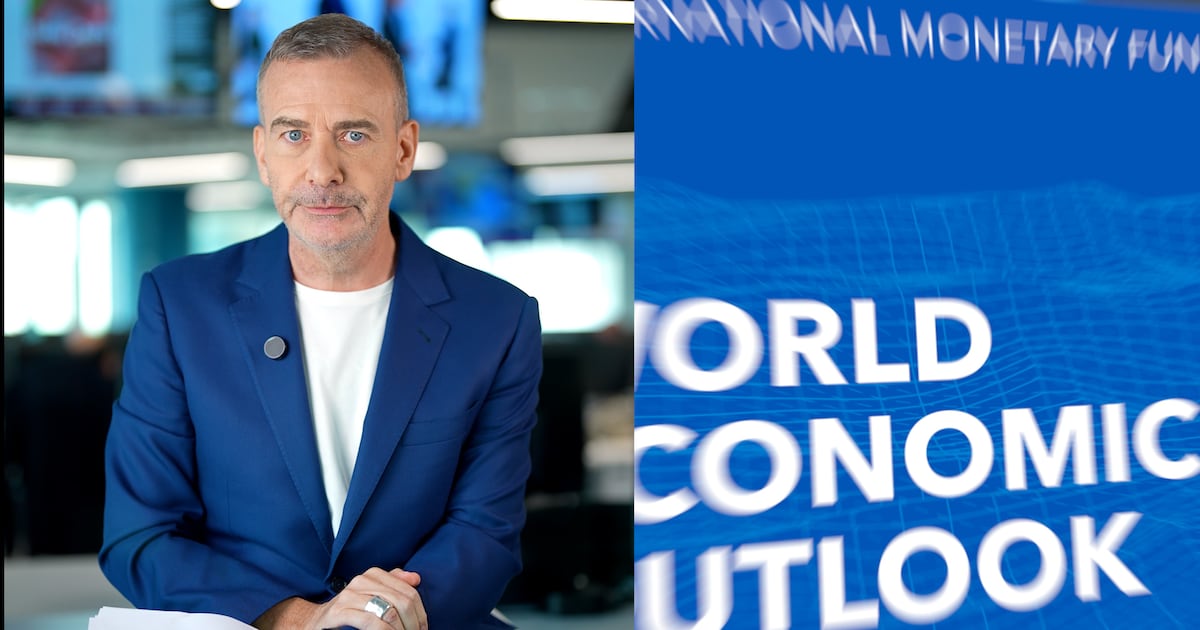
The IMF's World Economic Outlook, released in Bangkok on 13 October 2026, raised its 2026 global growth forecast by 0.1 points to 3.1%. It warned that the Iran war and an AI boom are dividing the world economy, and it raised the UK's 2026 forecast to 1.3%.
Updated (version 2). New coverage since the last version from Anadolu Agency, Arab News, Gulf News, The National.

1 / 6
The story, neutrally told
Left · 1The International Monetary Fund raised its 2026 global growth forecast by 0.1 percentage points to 3.1% in its World Economic Outlook, released on 13 October 2026 at its Annual Meetings in Bangkok. The Hindu reported this as slower growth than the 3.5% recorded in 2025. The HinduLC “the IMF raised its 2026 global growth forecast by 0.1 percentage points to 3.1%, compared with 3.5% growth in 2025.” Read at The Hindu ↗ Centre · 2Gulf News gave the report's title as "Resilience Under Strain, Urgent Choices" and dated the IMF's warning 12 October, while Anadolu Agency, The Hindu and The Guardian dated the release Tuesday 13 October. Anadolu described the headline global forecast as kept stable, and also gave 3.4% growth for 2027, unchanged from the earlier estimate. Gulf NewsN “The fund laid out its case in the October World Economic Outlook, titled “Resilience Under Strain, Urgent Choices.””“Output recovers to 3.4 per cent in 2027, unchanged from the earlier estimate.” Read at Gulf News ↗ Anadolu AgencyN “The Washington-based institution kept its near-term global forecast stable” Read at Anadolu Agency ↗ Left · 1The Fund said growth would slow less than previously expected because of the resilience of advanced economies in the face of war-fuelled energy prices. It warned that low-income countries remained vulnerable to the supply shock. The HinduLC “forecast global growth in 2026 would slow less than previously expected because of advanced economies’ “resilience”” Read at The Hindu ↗
Left · 1The IMF described a "bifurcated outlook" and a "fragmented" world economy, shaped by the US-launched war on Iran and an AI technology boom. Energy-importing countries not exposed to the AI boom are the most vulnerable. The Hindu reported that refined petroleum product prices remain 70–95% above pre-war levels. The HinduLC “Energy-importing countries not exposed to the AI boom remain the most vulnerable, creating what the IMF termed a “bifurcated outlook” in its WEO report.”“Prices of refined petroleum products remain between 70 and 95 percent above pre-war levels” Read at The Hindu ↗ Left · 2Silvana Tenreyro, the IMF's chief economist, said the global economy had been resilient but that "that resilience is under strain, with risks tilted to the downside". The Guardian reported the IMF's warning that the economy "could soon test the limits of resilience". The HinduLC ““The global economy has been resilient, but that resilience is under strain, with risks tilted to the downside,”” Read at The Hindu ↗ The GuardianLC “IMF warns global economy ‘could soon test the limits of resilience’” Read at The Guardian ↗ Left · 1Regional forecasts diverged. The Middle East and Central Asia are expected to contract by 0.3% in 2026, and Saudi Arabia's economy is projected to shrink 3.3%, a 5.0-point cut. Advanced economies are forecast to grow 2.1%, with AI supply-chain economies such as Taiwan and South Korea doing significantly better. China is expected to slow because of weak domestic demand, and global inflation is set to accelerate to 4.7% in 2026. The HinduLC “The world’s advanced economies were forecast to grow 2.1 percent in 2026”“Global inflation remained set to accelerate to 4.7 percent in 2026”“is expected to suffer a 0.3 percent contraction in 2026.” Read at The Hindu ↗
Centre · 1Anadolu Agency said about 47% of economies saw growth forecasts downgraded compared with April. It said the Middle East and Central Asia forecast fell 2.2 points, which the IMF attributed to the war in the region and a longer-than-expected closure of the Strait of Hormuz. Bahrain, Iraq, Kuwait and Qatar were projected to see double-digit contractions in 2026, and China's 2026 forecast was cut to 4.5%. Anadolu AgencyN “about 47% of economies seeing downgraded growth forecasts compared to April estimates.”“The fund attributed this sharp decline directly to the dragging war in the region and a longer-than-expected closure of the Strait of Hormuz.”“the organization downgraded China's 2026 growth forecast to 4.5%.” Read at Anadolu Agency ↗ Centre · 2Gulf News listed further country figures: euro area growth of 1.1% in 2026 and 1.2% in 2027, Japan 0.7%, Canada 1.1%, emerging and developing economies 3.7%, and India 7% on a fiscal-year basis. It said the UAE economy is projected to contract 3.9% in 2026 and rebound 7.7% in 2027, conditional on shipping routes normalising and the Strait of Hormuz reopening. It gave inflation as easing to 4.1% in 2027. Gulf News put US growth at 2.3% for 2026, while Anadolu put it at 2.1%. Gulf NewsN “The Fund projects that the UAE economy will contract 3.9 per cent in 2026 and rebound 7.7 percent in 2027, the rebound is conditional on shipping routes normalizing and the Strait of Hormuz reopening.”“The US holds at 2.3 per cent across 2025, 2026 and 2027.” Read at Gulf News ↗ Anadolu AgencyN “the US economy is forecasted to see a growth rate of 2.1%.” Read at Anadolu Agency ↗ Left · 1The IMF said risks include a prolonged war reviving inflation and straining fiscal positions. It also said the technology tailwind "could stop abruptly" if expectations about AI profits and productivity gains are reassessed. The HinduLC “the current technology tailwind could stop abruptly if expectations about AI-related profits and productivity gains are reassessed” Read at The Hindu ↗
Left · 1On policy, Tenreyro urged temporary, targeted support measures, said monetary policy should stay "firmly focused on price stability", and called for restoring fiscal space. The Fund also called on governments to cut spending and manage borrowing, which The Hindu noted is difficult for developing countries hit by the war shock. The HinduLC ““monetary policy should remain firmly focused on price stability””“the IMF has called on governments to cut spending and manage borrowing” Read at The Hindu ↗ Centre · 1Gulf News also reported that the IMF urged fiscal restraint to contain demand pressures and advised central banks to keep policy sufficiently restrictive to prevent second-round inflation effects. It said economies had absorbed the energy shock partly by drawing down oil reserves and redirecting supplies, options that are finite. Gulf NewsN “It advises central banks to keep policy sufficiently restrictive, preventing second-round inflation effects and anchoring long-term expectations.”“Economies absorbed the energy shock partly by drawing down oil reserves and redirecting supplies. Those options are finite.” Read at Gulf News ↗ Left · 1For the UK, the IMF raised its 2026 growth forecast to 1.3%, up 0.3 points from July. It cut its 2027 forecast modestly to 1.2% from 1.3%, saying growth would "edge down" as higher energy prices and long-term interest rates weigh on consumption and investment. The GuardianLC “The IMF predicted GDP growth of 1.3% for the UK this year – up 0.3 percentage points from its most recent update in July.”“It cut its UK growth forecast for next year modestly to 1.2%, from 1.3%.” Read at The Guardian ↗
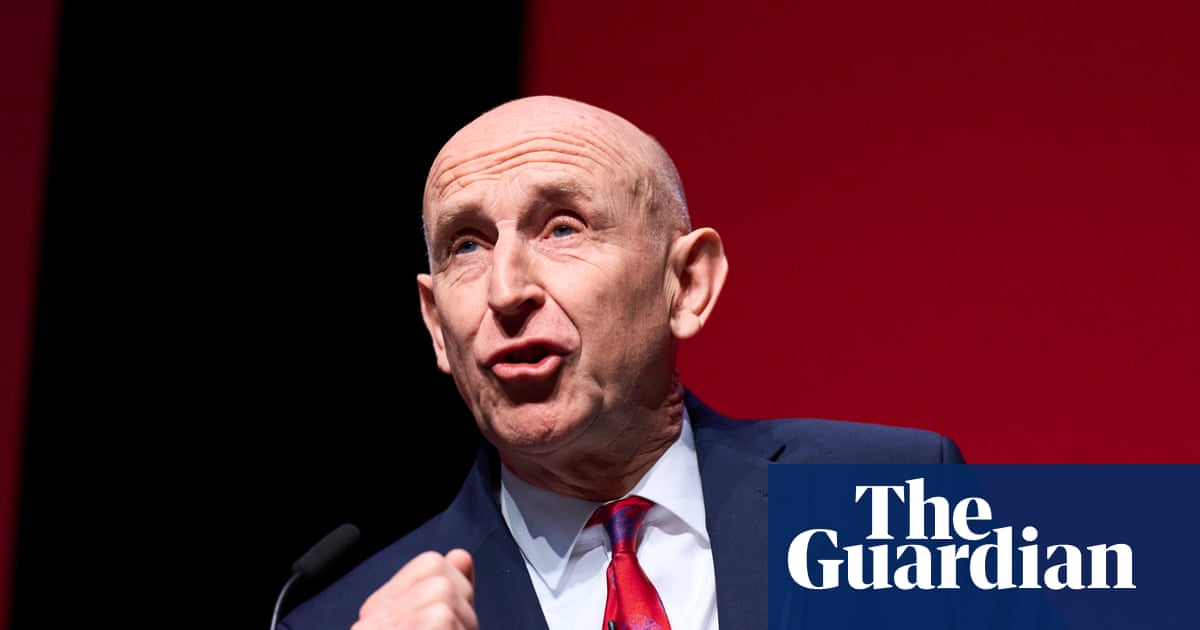
Left · 1Tenreyro told the UK chancellor, John Healey, to "stay the course" in repairing the public finances, saying the UK "stands out" among G7 countries in having a plan to narrow its deficit. Healey's first budget is due on 28 October, and he is under pressure to announce an energy support package. The IMF advises against across-the-board subsidies. The GuardianLC ““The message for the UK is simply, stay the course.””“saying any support should be “temporary, targeted and non-distortionary”.”“28 October budget” Read at The Guardian ↗ Left · 1Healey said the UK economy was "showing strong international resilience" despite conflict in the Middle East and Europe. Bank of England policymaker Megan Greene argued the upgrade showed UK interest rates should be higher. The Bank's rate-setting committee is widely expected to raise rates in November. The GuardianLC “Britain’s economy is showing strong international resilience in the face of these challenges.”“BoE policymaker Megan Greene argued on Tuesday morning that the IMF’s growth upgrade was proof that UK interest rates should be higher.” Read at The Guardian ↗ Left · 1The IMF expects UK average inflation of 3.3% this year and 2.8% in 2027, and singled out the UK and Japan as places where core inflation will not return to 2% until late next year. Separately, the Institute for Fiscal Studies warned the budget would be a "work of fiction" unless Healey explained how he would handle £35bn of future spending pressures. The GuardianLC “It expects average inflation in the UK to be 3.3% this year, and to remain at 2.8% in 2027”“a “work of fiction” unless Healey explained how he would deal with what it said were £35bn of future spending pressures.” Read at The Guardian ↗
Every sentence links to the reporting it rests on. The pill in front of each says where its sources sit: Left, Centre or Right when one side supplies at least half of them, Mixed when they are evenly split. The number is how many outlets it cites.
Left2 outlets
- Framing
- Both outlets lead with the IMF upgrade and pair it with warnings. The Hindu stresses a split world economy, with poorer energy importers hit hardest. The Guardian focuses on what the upgrade means for the UK chancellor's budget.
- Emphasis
- The Hindu stresses the vulnerability of low-income and energy-importing countries and the Iran war's effect on energy prices. The Guardian stresses UK fiscal and interest-rate pressures, and includes the IFS warning about the budget.
- Leaves out or plays down
- The Guardian gives few global figures beyond the resilience warning. The Hindu does not cover national fiscal debates beyond the IMF's general advice.
- For example
-
“Energy-importing countries not exposed to the AI boom remain the most vulnerable, creating what the IMF termed a “bifurcated outlook” in its WEO report.” — The Hindu
“John Healey should “stay the course” and continue repairing the UK’s public finances” — The Guardian
Centre3 outlets
- Framing
- Gulf and Turkish outlets lead with the Middle East: Anadolu with severe regional contractions, Gulf News with the warning that the world economy is nearing the limits of its resilience. The National's market segment ties the IMF warning to whether the Gulf recovery depends on Hormuz.
- Emphasis
- Regional and country figures (Saudi Arabia, UAE, Gulf producers), the Strait of Hormuz, inflation, and the conditional rebound once shipping normalises.
- Leaves out or plays down
- Neither Anadolu nor Gulf News covers the UK upgrade or the budget debate. Anadolu does not note the slight global upgrade that The Hindu and Gulf News report.
- Charged language
- “deeply fractured economic outlook”
- For example
-
“deeply fractured economic outlook” — Anadolu Agency
“The International Monetary Fund warned on October 12 that the global economy is nearing the limits of its resilience.” — Gulf News
“Manus on Markets: IMF warns of global economic risks as Gulf recovery hinges on Hormuz” — The National
Right1 outlet
No right outlet in our sources has covered this story yet.
What every side reports
- The IMF released its World Economic Outlook at its Annual Meetings in Bangkok on 13 October 2026.
- Chief economist Silvana Tenreyro warned that the global economy's resilience is under strain, with risks tilted to the downside.
- The IMF advises governments to use temporary, targeted support for energy costs rather than broad subsidies.
- Higher energy prices linked to the Middle East conflict are a central drag on the outlook.
Where accounts differ
-
Whether the IMF raised or held its 2026 global forecast
- Left
- The Hindu says the IMF raised the 2026 forecast by 0.1 points to 3.1%.
- Centre
- Gulf News says the figure was nudged up slightly from July; Anadolu says the near-term global forecast was kept stable.
-
US growth forecast for 2026
- Centre
- Anadolu gives 2.1%; Gulf News gives 2.3%.
-
The IMF forecasts global growth of 3.1% in 2026, a slight upgrade of 0.1 points.
Reported- Disputes 1
- Anadolu Agency
- Reports 2
- The Hindu, Gulf News
-
The IMF projects the Middle East and Central Asia economy to contract 0.3% in 2026.
Reported- Reports 3
- The Hindu, Anadolu Agency, Gulf News
-
The IMF projects global headline inflation of 4.7% in 2026.
Reported- Reports 3
- The Hindu, Anadolu Agency, Gulf News
-
The IMF projects Saudi Arabia's economy to shrink 3.3% in 2026.
Reported- Reports 3
- The Hindu, Anadolu Agency, Gulf News
International Monetary Fund organisation
The IMF presents the economy as resilient but under strain and split between AI-boom beneficiaries and energy importers. It urges targeted support, price-stability-focused monetary policy and rebuilt fiscal space.
““The task ahead is to move from coping to rebuilding, restoring fiscal space and supply-side resilience.”” — The Hindu
John Healey person
Healey welcomed the upgrade as evidence of UK resilience. He is under pressure over energy support in his 28 October budget, and the IMF urges him to stay the course on deficit reduction.
“Britain’s economy is showing strong international resilience in the face of these challenges.” — The Guardian
““The message for the UK is simply, stay the course.”” — The Guardian
South Asia1 outlet
The Hindu covers the global picture, with attention to the Iran war's energy shock and the burden on low-income countries.
“warned low-income countries remained vulnerable to the supply shock.” — The Hindu
The Hindu
UK and Ireland1 outlet
The Guardian covers the IMF outlook through UK growth, inflation, interest rates and the chancellor's coming budget.
“Little more than a fortnight before Healey’s first budget” — The Guardian
The Guardian
Left2 articles
-
IMF upgrades 2026 growth forecast but warns of ‘split’ outlook
Neutral Reports the global upgrade alongside the IMF's warnings of a divided, downside-skewed outlook, with emphasis on vulnerable energy importers.
-
Healey should ‘stay the course’ and repair UK finances, says top IMF economist
Neutral Treats the UK upgrade as a boost for the chancellor, while weighing the IMF's advice, rate-rise expectations and budget pressures.
Centre3 articles
-
Global economy to grow 3.1% in 2026 amid severe Middle East contractions, IMF forecasts
Alarmist Agency report that leads on severe downward revisions for the Middle East and China, and on the war and Hormuz closure as causes.
-
IMF warns world economy nears limits of its resilience
Mixed Leads on the resilience warning, then gives a detailed table of country forecasts, with the Gulf rebound conditional on Hormuz reopening.
-
Manus on Markets: IMF warns of global economic risks as Gulf recovery hinges on Hormuz
Neutral Market-commentary video page that links the IMF's warning to the Gulf recovery depending on the Strait of Hormuz.
- 13 Oct 05:00 First The HinduLC IMF upgrades 2026 growth forecast but warns of ‘split’ outlook
- 13 Oct 07:49 +2h 49m The GuardianLC Healey should ‘stay the course’ and repair UK finances, says top IMF economist
- 13 Oct 08:11 +3h 10m Anadolu AgencyN Global economy to grow 3.1% in 2026 amid severe Middle East contractions, IMF forecasts
- 13 Oct 08:57 +3h 57m Gulf NewsN IMF warns world economy nears limits of its resilience
- 13 Oct 09:26 +4h 25m The NationalN Manus on Markets: IMF warns of global economic risks as Gulf recovery hinges on Hormuz
- 13 Oct 09:36 +4h 35m Arab NewsRC Saudi Arabia to outpace global growth with 7.9% expansion in 2027: IMF
Times are when each article was published, or when we first saw it if the outlet gave no time.
Ask about this story
Loading…