Indonesia deploys oxygen bus in Central Kalimantan as wildfire haze sickens residents
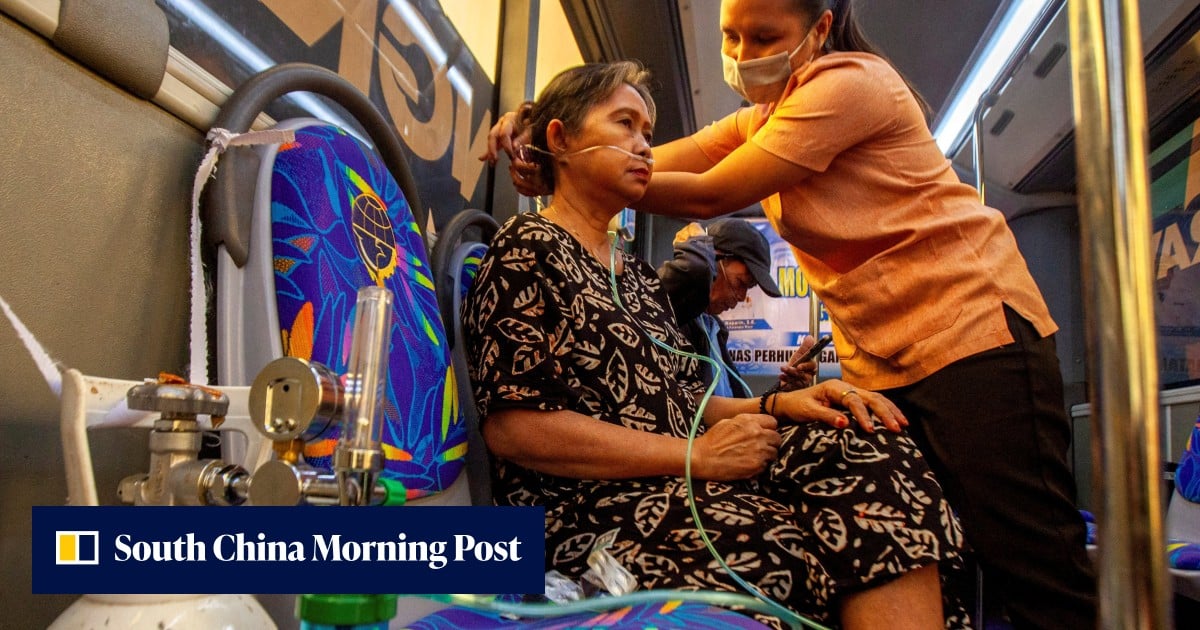
A bus carrying oxygen tanks and medical staff is serving residents of Palangka Raya, Central Kalimantan, as forest-fire haze drives up respiratory illness. Indonesia's health ministry reports about 350,000 haze-linked cases since August.

1 / 2
The story, neutrally told
Centre · 2The local government in Palangka Raya, in Indonesia's Central Kalimantan province on Borneo, has provided an "oxygen bus" fitted with oxygen tanks and staffed by medical professionals, as residents struggle with haze from forest fires that show no sign of letting up. CNAN “the local government provided an "oxygen bus" replete with oxygen tanks and medical professionals” Read at CNA ↗ South China Morning PostN “the blazes show no” Read at South China Morning Post ↗ Centre · 2Residents with breathing difficulties have their details recorded and are given oxygen through a small tube at the nose for five to 10 minutes at a time. CNAN “Medical staff on the white-and-blue bus recorded patients' details and administered oxygen to residents reporting breathing difficulties.” Read at CNA ↗ South China Morning PostN “a chance to be hooked up to a small oxygen tube around their nose for five to 10 minutes at a time” Read at South China Morning Post ↗ Centre · 1The Central Kalimantan provincial health department said on Instagram this week that the service is meant to help people access oxygen, particularly those with respiratory problems or needing oxygen support amid unhealthy air quality. CNAN “"The service is intended to help people access oxygen, particularly those experiencing respiratory problems or who need oxygen support amid unhealthy air quality conditions,"” Read at CNA ↗
Centre · 2The fires are described as the most intense in more than a decade. An intense El Nino has raised temperatures, leaving forests and peatlands more vulnerable, and the smoke has turned skies orange across Indonesia, Malaysia and Singapore. CNAN “this year the infernos are the most intense in more than a decade” Read at CNA ↗ South China Morning PostN “fires that have turned skies orange across Indonesia, Malaysia and Singapore” Read at South China Morning Post ↗ Centre · 1Indonesia's air pollution index has shown some areas of Borneo and Sumatra above 1,000, while readings of 300 or more are already categorised as hazardous. CNAN “registering pollution levels of over 1,000, with readings of 300 or more already categorised as hazardous” Read at CNA ↗ Centre · 2The health ministry reports about 350,000 fire-linked respiratory illness cases from August to Sunday (Oct 25), including about 31,000 in Central Kalimantan, and says it has set up nearly 500 facilities nationwide offering free oxygen and treatment, nearly 300 of them in Central Kalimantan. CNAN “about 350,000 cases from August to Oct 25, the health ministry said” Read at CNA ↗ South China Morning PostN “The health ministry said it has set up nearly 500 facilities countrywide where people can access free oxygen and treatment for haze-related ailments.” Read at South China Morning Post ↗
Centre · 2Patients described their symptoms: Oktawina, 44, called it "a disaster from nature"; Purnasari, 31, reported chest tightness and coughing; Siti Jumiati, who had suffered red, burning eyes, a sore throat and a cough, said she could get help breathing for free; and Alexandra Surya Habsari, 43, treated at an NGO-run shelter, said "what we're breathing is poison". South China Morning PostN ““Today, on this bus, I can get help breathing for free,” she said.”“what we’re breathing is poison” Read at South China Morning Post ↗ CNAN “"This is a disaster from nature and there is not much we can do,"” Read at CNA ↗ Centre · 1Reuters, carried by the South China Morning Post, cites deforestation monitor Nusantara Atlas as saying fires consumed more than 1.9 million hectares (4.7 million acres) in the nine months to September; the government has neither confirmed nor disputed the figure. South China Morning PostN “The government has not confirmed or disputed the figure.” Read at South China Morning Post ↗ Centre · 2Public frustration is growing: hundreds of students protested at the provincial governor's office last week demanding a greater response, according to the news site Kompas, and neighbouring countries have lodged diplomatic objections over the haze. CNAN “Hundreds of students protested at the office of the provincial governor last week demanding a greater response to the fires” Read at CNA ↗ South China Morning PostN “Amid diplomatic objections from neighbouring countries forced to breathe the foul air” Read at South China Morning Post ↗
Every sentence links to the reporting it rests on. The pill in front of each says where its sources sit: Left, Centre or Right when one side supplies at least half of them, Mixed when they are evenly split. The number is how many outlets it cites.
Left0 outlets
No left outlet in our sources has covered this story yet.
Centre3 outlets
- Framing
- Human-interest relief story built on the oxygen bus, with patients' voices and health ministry figures; both outlets run essentially the same Reuters-based text.
- Emphasis
- Patient testimony, case counts, scale of the fires and El Nino as cause.
- Leaves out or plays down
- The CNA version leaves out the Nusantara Atlas hectare estimate, the nearly 500 oxygen facilities, diplomatic objections and the NGO shelter account that the SCMP version includes. Neither gives official response plans for fire suppression.
- Charged language
- “choking”“infernos”“toxic haze”“poison”
- For example
-
“this year the infernos are the most intense in more than a decade” — CNA
“Breathing in ‘poison’” — South China Morning Post
Right0 outlets
No right outlet in our sources has covered this story yet.
What every side reports
- An oxygen bus is operating in Palangka Raya, Central Kalimantan.
- About 350,000 haze-linked respiratory cases were reported from August to Oct 25, about 31,000 in Central Kalimantan.
- The fires are the most intense in more than a decade, worsened by El Nino.
- Hundreds of students protested at the governor's office last week.
Left0 articles
No coverage yet.
Centre3 articles
-
CNAN ·
Indonesia sends oxygen bus to aid residents choking on forest fire haze
Sympathetic Leads on the oxygen bus as relief for residents, with patient quotes and health figures.
-
South China Morning PostN · · via Reuters
Indonesia’s oxygen bus offers breather to residents choking on toxic haze
Sympathetic Reuters copy carried by SCMP; same relief angle plus fire-area estimate, protests, diplomatic friction and NGO shelter.
Right0 articles
No coverage yet.
- 27 Oct 07:06 First CNAN Indonesia sends oxygen bus to aid residents choking on forest fire haze
- 27 Oct 07:32 +25m South China Morning PostN Indonesia’s oxygen bus offers breather to residents choking on toxic haze via Reuters
- 27 Oct 08:24 +1h 17m Hindustan TimesN Indonesia deploys oxygen buses as Borneo residents gasp for air amid devastating wildfire haze via AFP
Times are when each article was published, or when we first saw it if the outlet gave no time.
Ask about this story
Loading…