Report: Black and south Asian music events in London face more cancellations and licensing barriers
A two-year report, the Race Equality in Music Event Licensing (REMEL) project, finds Black and south Asian music events in London are cancelled or restricted more than white-led events. It estimates the cost at £127m to £141m a year.
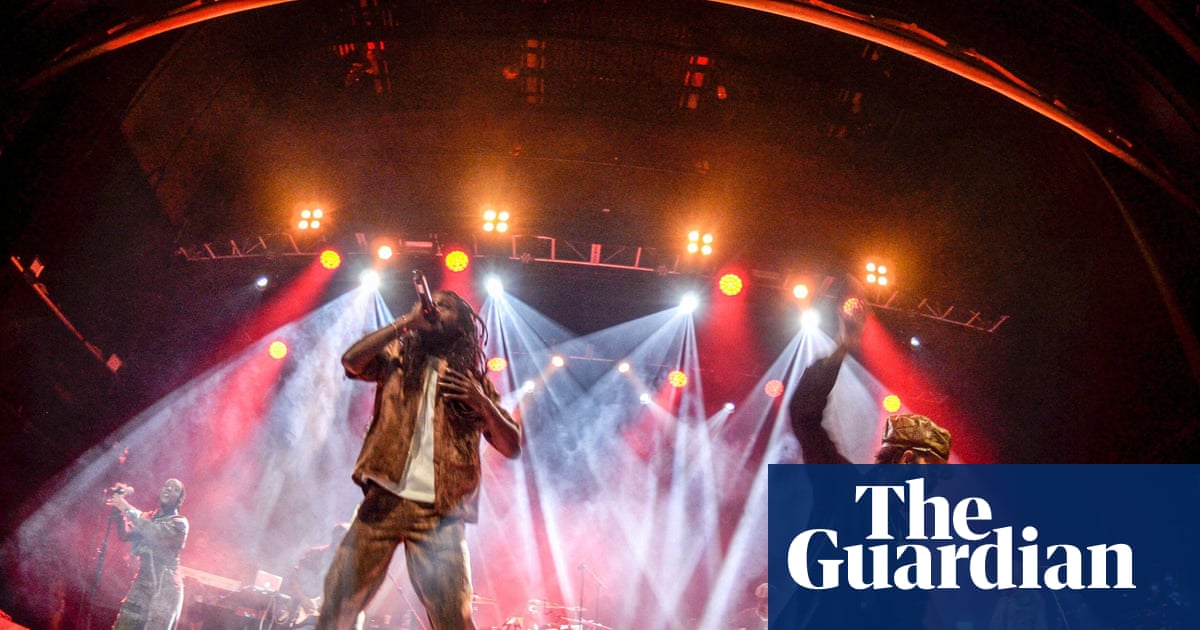

1 / 2
The story, neutrally told
Mixed · 2A two-year investigation, the Race Equality in Music Event Licensing (REMEL) report, found that Black and south Asian music events in London face disproportionate cancellations, restrictions and licensing barriers compared with white events. The GuardianLC “Black and south Asian music events in London face disproportionate cancellations, restrictions and licensing barriers compared with white events” Read at The Guardian ↗ Evening StandardN “Black music events are “cancelled, restricted or shut down” at higher rates than white-led events” Read at Evening Standard ↗ Mixed · 2It estimates that cancellations, displacement and prevented events cost London £127m to £141m a year, with more than £650m at risk over five years. The GuardianLC “cost London £127m to £141m annually, with projected losses exceeding £650m over five years” Read at The Guardian ↗ Evening StandardN “put more than £650 million at risk over five years” Read at Evening Standard ↗ Mixed · 2The report was led by Black Lives in Music and involved the Greater London Authority, the Metropolitan Police Service, UK Music, LIVE, the Musicians' Union and promoters, artists, venue operators and community representatives. The Guardian says it was commissioned by the mayor's office. The GuardianLC “The two-year study was commissioned by the mayor’s office and included collaboration by the Greater London Authority (GLA)” Read at The Guardian ↗ Evening StandardN “comprising Greater London Authority (GLA), the Metropolitan Police Service (MPS), UK Music, LIVE, the Musicians’ Union” Read at Evening Standard ↗
Mixed · 2Genres such as Afrobeats (afrobeat), drill, dancehall, R&B and hip-hop were flagged as "high risk" despite a lack of credible evidence, while pop, indie and rock faced little scrutiny. The GuardianLC “genres including Afrobeats, drill and dancehall are routinely labelled “high risk” despite a lack of credible evidence” Read at The Guardian ↗ Evening StandardN “genres such as afrobeat, dancehall, R&B and hip-hop were flagged as “high-risk”, while other genres such as pop, indie and rock faced “little scrutiny”” Read at Evening Standard ↗ Mixed · 2Promoters described events cancelled on the basis of undisclosed information, online searches or unrelated incidents, and respondents reported informal police pressure, including off-the-record briefings suggesting future licence reviews. The GuardianLC “promoters describing events being cancelled based on undisclosed information, online searches or unrelated incidents” Read at The Guardian ↗ Evening StandardN “informal pressure from the police, with off-the-record briefings suggesting future licence reviews” Read at Evening Standard ↗ Mixed · 2The report also found that Temporary Event Notices were more likely to be refused in London's most diverse boroughs, that licensing authorities were felt to misuse area-wide crime statistics, and that white-owned venues were often supported back into business after incidents while Black-owned venues were forced to close. Evening StandardN “Temporary Event Notices (TENs) were more likely to be refused in London’s most diverse boroughs”“misuse area-wide crime statistics to justify closing venues or denying licences” Read at Evening Standard ↗ The GuardianLC “many white-owned venues are supported back into business after incidents, while black-owned venues are forced to close for prolonged periods” Read at The Guardian ↗
Left · 1The Guardian links the findings to the Met's Form 696, a risk assessment form introduced in 2005 and scrapped in 2017 after criticism that it discriminated against Black music events. Lead researcher Hakeem Stevens said police scrutiny is now harder to document because it happens through phone calls and verbal conversations. It also cites the Colour Factory, a Black-owned venue whose licence was suspended after an incident reportedly unrelated to it; the owner won a challenge but suffered heavy financial losses. The GuardianLC “Introduced in 2005 as a risk assessment tool, it was scrapped in 2017 after criticism that it discriminated against black music events.”“it’s whispers, it’s phone calls, it’s conversations, verbal conversations that can’t be recorded.”“In the end, they won, but they didn’t get their money back,” Read at The Guardian ↗ Mixed · 2The report makes 19 recommendations, including an independent review of the licensing system by a panel of experts appointed by the Home Office and the GLA, embedding equality and human rights law in licensing, clearer evidence standards, and annual publication of licensing decisions monitored by an independent panel. The GuardianLC “The report sets out 19 recommendations, including calls for more transparent, evidence-based licensing decisions, alongside an independent review” Read at The Guardian ↗ Evening StandardN “the Home Office and the GLA should hire an independent panel of experts to conduct a review of the venue and event licensing system”“local authorities should publish annual data on licensing decisions” Read at Evening Standard ↗ Mixed · 2Charisse Beaumont, chief executive of Black Lives in Music, said the problems exist nationwide, that "it's about race", and that it is time to move from recommendation to action. Met commander Neerav Patel said the force would carefully consider the findings and would continue to make fair, evidence-based contributions to licensing while prioritising public safety. The GuardianLC ““It’s about race. And that’s what’s so deeply sad about it.””“The Met police commander Neerav Patel said the force would carefully consider the reports finding.” Read at The Guardian ↗ Evening StandardN “It’s now time to move from recommendation to action.” Read at Evening Standard ↗
Every sentence links to the reporting it rests on. The pill in front of each says where its sources sit: Left, Centre or Right when one side supplies at least half of them, Mixed when they are evenly split. The number is how many outlets it cites.
Left1 outlet
- Framing
- Exclusive investigation led with the economic cost and the claim of racial inequality, with detailed testimony and the Form 696 history.
- Emphasis
- Police scrutiny, personal accounts (Colour Factory, venue owners), nationwide implications, and the Met's response.
- Leaves out or plays down
- Does not report the Temporary Event Notice refusals or the misuse of area-wide crime statistics.
- Charged language
- “rife”
- For example
-
“Investigation finds racial inequality in live music industry rife and many genres labelled ‘high risk’ despite lack of evidence” — The Guardian
Centre1 outlet
- Framing
- Summarises the report's findings and recommendations, leading with higher cancellation rates for Black events.
- Emphasis
- Report's structural findings, licensing practices and policy recommendations, with a quote from Black Lives in Music.
- Leaves out or plays down
- Does not include a Met Police response or the Form 696 history.
- Charged language
- “deep systemic and institutional barriers”
- For example
-
“still faces deep systemic and institutional barriers that limit even more success” — Evening Standard
Right0 outlets
No right outlet in our sources has covered this story yet.
What every side reports
- The REMEL report estimates costs of up to £141m a year and over £650m at risk over five years.
- Genres such as Afrobeats, dancehall and hip-hop are labelled high risk while pop, indie and rock face little scrutiny.
- White-owned venues are more often supported back into business after incidents than Black-owned venues.
- The report recommends an independent review of licensing and greater transparency.
Racial inequality in London live music topic
The report's authors say racial bias and over-policing shape licensing decisions and call for evidence-based, transparent, accountable licensing; the Met says it will consider the findings while prioritising public safety.
“When licensing decisions are shaped by racial bias and over-policing in music events, it suffocates creativity” — Evening Standard
“Our focus will remain on making fair, evidence-based contributions to the licensing process” — The Guardian
Left1 article
-
Barriers facing black and south Asian music events ‘cost London up to £141m a year’
Critical Exclusive presenting the report as evidence of entrenched racial inequality in licensing, with a Met response at the end.
Centre1 article
-
Black music events ‘cancelled or shut down more’ than white-led events
Neutral Report-focused summary of findings and recommendations, largely in the report's own words.
Right0 articles
No coverage yet.
- 14 Oct 06:00 First The GuardianLC Barriers facing black and south Asian music events ‘cost London up to £141m a year’
- 14 Oct 08:03 +2h 2m Evening StandardN Black music events ‘cancelled or shut down more’ than white-led events
Times are when each article was published, or when we first saw it if the outlet gave no time.
Ask about this story
Loading…