Iranian-linked ships suspected of mapping undersea cables near Strait of Hormuz
Maritime intelligence firm Windward, cited by the Financial Times, says three sanctioned tankers and an Iranian fishing boat acted suspiciously near undersea cables in the Gulf of Oman, after Iranian threats to attack such infrastructure.
Updated (version 2). New coverage since the last version from The Jerusalem Post.

1 / 3
The story, neutrally told
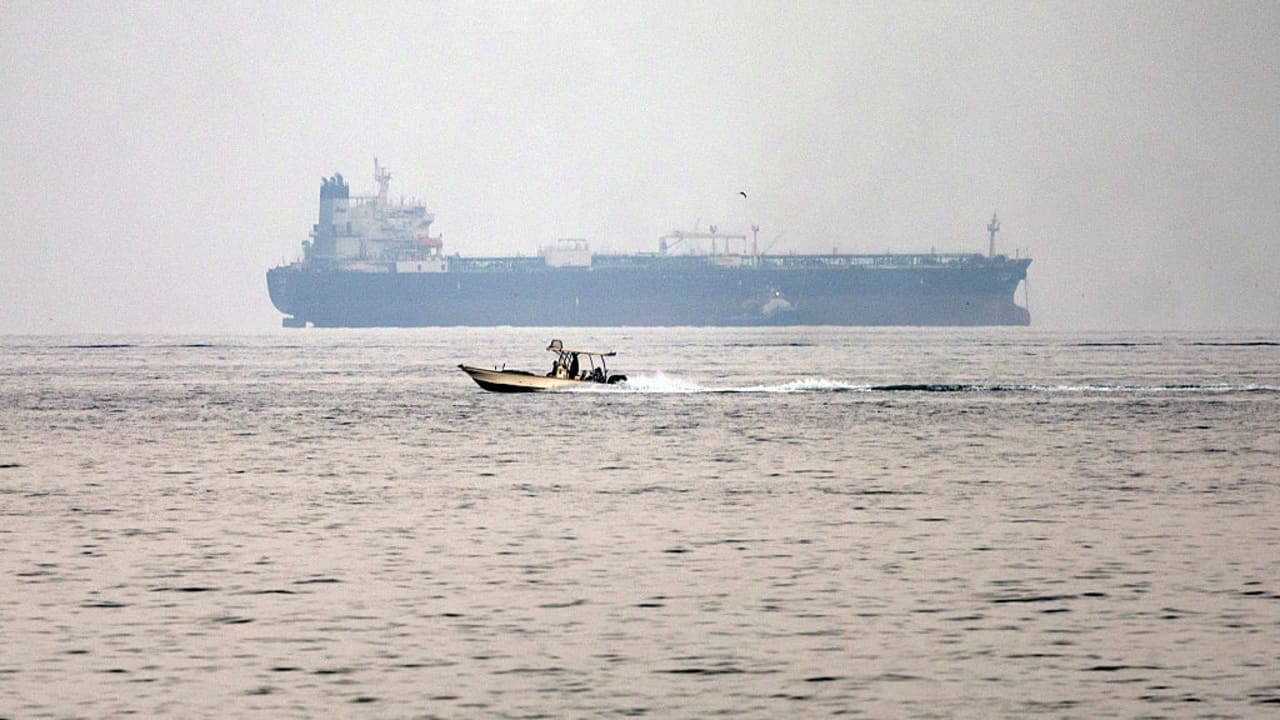
Mixed · 2Windward, an Israeli maritime intelligence company, tracked at least four Iranian-linked vessels moving unusually near undersea telecommunications cables in the Gulf of Oman, according to a Financial Times report: three oil tankers under US sanctions and a small Iranian fishing boat. The Media LineN “tracked at least four ships traveling along unusual routes near submarine cable networks, including three oil tankers under US sanctions and a small Iranian fishing vessel” Read at The Media Line ↗ Ars TechnicaLC “The movements of three sanctioned tankers and an Iranian fishing boat have been tracked near major undersea cables by the maritime intelligence firm Windward in October” Read at Ars Technica ↗ Mixed · 2Windward said the vessels travelled normally until they reached a specific cable corridor, then slowed, looped, turned back, loitered or went dark, and assessed that this "fits the profile of mapping the cable routes, or placing charges or mines on them while dark." The Media LineN “The company assessed that the behavior “fits the profile of mapping the cable routes, or placing charges or mines on them while dark.”” Read at The Media Line ↗ Ars TechnicaLC “going dark” by switching off their automatic identification system (AIS) transponders” Read at Ars Technica ↗ Centre · 1The fishing boat lingered near the Europe India Gateway and Transworld cables between October 21 and 26, and Windward said the ships behaved differently from commercial vessels waiting nearby for Gulf oil cargoes. The Media LineN “the fishing boat lingered near the Europe India Gateway and Transworld cables between October 21 and 26” Read at The Media Line ↗
Left · 1Ars Technica adds that Windward used ship-tracking data and satellite images, and that two sanctioned tankers drifted for days over cable corridors with no commercial reason to stop and no commercial cargo, according to a Windward blog post of October 26; one corridor visited was that of the 2Africa cable, whose owners include Meta. Ars TechnicaLC “Windward highlighted the examples of two sanctioned tankers linked to Iran that spent days drifting “directly over regional cable corridors… both with no commercial reason to stop” in a blog post on October 26.”“One cable under construction, the 2Africa cable, is owned by a tech consortium that includes the US company Meta.” Read at Ars Technica ↗ Mixed · 2The findings follow repeated Iranian threats over the past month to attack submarine cables and data centres around the Strait of Hormuz if the US and Israel renew military strikes; an Islamic Revolutionary Guard Corps spokesperson said on October 20 that seven major cables run through the strait and "We remind the enemy of this." The Media LineN “Iran repeatedly threatened over the past month to attack submarine cables and data centers in the Strait of Hormuz” Read at The Media Line ↗ Ars TechnicaLC ““Seven major cables run through the Strait of Hormuz, supporting global Internet operations and commercial data transmission,” one IRGC spokesperson said on October 20.” Read at Ars Technica ↗ Left · 1The threats came after President Donald Trump repeatedly threatened new strikes, including a warning at the UN on September 22 that he could "annihilate" Iran, according to Ars Technica. Ars TechnicaLC “warned he could “annihilate” the country during a speech at the United Nations in New York on September 22” Read at Ars Technica ↗
Mixed · 2Both outlets say Iraq, Kuwait, Bahrain and Qatar depend entirely on cables through the strait; TeleGeography counts six existing cables and further ones under construction, including 2Africa, Sea-Me-We 6 and Fibre in Gulf. The Media LineN “Iraq, Kuwait, Bahrain and Qatar depend entirely on cables passing through the waterway for their connectivity.” Read at The Media Line ↗ Ars TechnicaLC “Six active cables currently cross through the contested Strait of Hormuz” Read at Ars Technica ↗ Right · 1The Jerusalem Post, in a piece bylined to The Media Line staff, repeats the Financial Times account and adds that the warnings coincided with indications from the US president that military operations against Iran could resume, and that 2Africa is the project closest to completion. The Jerusalem PostRC “The warnings coincided with indications from the US president that military operations against Tehran could resume.”“with the latter closest to completion” Read at The Jerusalem Post ↗ Left · 1Ars Technica gives wider context: the US and Israel began a major war with Iran in February 2026, Iran has hit Gulf energy sites, shipping and Amazon data centres, and October saw the most ship attacks since the war began; the war has paused 2Africa's expansion and pushed efforts to build routes bypassing Hormuz, and one third of India's westbound internet traffic passes through the area. Ars TechnicaLC “with October marking the highest number of ship attacks since the war began”“forced the Meta-backed 2Africa cable to pause its planned expansion”“one third of India’s westbound Internet traffic goes through the Persian Gulf and Strait of Hormuz” Read at Ars Technica ↗
Mixed · 2The vessels' intent is not established: Windward's reading is an assessment of behaviour, and the coverage reports no confirmation of any cable damage or of Iranian involvement beyond the ships' links to Iran. Ars TechnicaLC “a possible indication that the Iranian government is preparing to attack such undersea infrastructure” Read at Ars Technica ↗ The Media LineN “Iranian-linked vessels have been observed making suspicious movements” Read at The Media Line ↗
Every sentence links to the reporting it rests on. The pill in front of each says where its sources sit: Left, Centre or Right when one side supplies at least half of them, Mixed when they are evenly split. The number is how many outlets it cites.
Left1 outlet
- Framing
- Explainer placing the ship movements within the 2026 US-Israel war with Iran and rising global threats to subsea infrastructure.
- Emphasis
- Context: Iranian strikes on Amazon data centres, Trump's UN threat, damage to cable projects, Meta's 2Africa stake, India's traffic exposure.
- Leaves out or plays down
- Does not name the specific cables the fishing boat lingered near or the dates it did so.
- For example
-
“Ships loiter near subsea cables amid Iran's warnings to Trump” — Ars Technica
“Iran threatened to attack subsea cables if US escalates military strikes again.” — Ars Technica
Centre1 outlet
- Framing
- Short, security-focused report relaying the Financial Times/Windward findings as suspected sabotage preparation following Tehran's threats.
- Emphasis
- Windward's vessel tracking, the cable names, and the Gulf states' dependence on Hormuz cables.
- Leaves out or plays down
- Less background on the wider war, Trump's threats, or the effects on cable projects.
- For example
-
“Iranian Ships Suspected of Mapping Undersea Cables for Sabotage Following Tehran’s Threats” — The Media Line
Right1 outlet
- Framing
- Short report relaying the Financial Times/Windward findings, with a headline that foregrounds possible mine placement, and a focus on the risk to Gulf internet connectivity.
- Emphasis
- Windward's 'charges or mines' assessment, Iran's threats, and the severe disruption an attack could cause in Gulf states without alternative routes.
- Leaves out or plays down
- Gives little of the wider war context, Trump's UN threat or the effect on cable projects covered by Ars Technica; does not say the ships' intent is unconfirmed.
- Charged language
- “placing mines”
- For example
-
“Iran-linked ships suspected of mapping, placing mines around undersea telecommunications cables” — The Jerusalem Post
“An attack damaging the cables could severely disrupt internet services and economic activity across neighboring Gulf states” — The Jerusalem Post
What every side reports
- Windward tracked three sanctioned tankers and an Iranian fishing boat near undersea cables in the Gulf of Oman, as reported by the Financial Times.
- Windward said the behaviour fits mapping cable routes or placing charges or mines.
- Iran has threatened to attack cables if the US and Israel renew strikes.
- Iraq, Kuwait, Bahrain and Qatar depend entirely on cables through the Strait of Hormuz.
-
Windward tracked three sanctioned tankers and an Iranian fishing boat behaving unusually near undersea cables in the Gulf of Oman.
Reported- Reports 3
- Ars Technica, The Media Line, The Jerusalem Post
-
Iran has threatened to attack undersea cables in the Strait of Hormuz if the US and Israel renew strikes.
Reported- Reports 3
- Ars Technica, The Media Line, The Jerusalem Post
Iran place
Iranian officials and IRGC commanders have warned they could attack Hormuz cables if strikes resume; the coverage carries no Iranian comment on the ship movements.
““Seven major cables run through the Strait of Hormuz, supporting global Internet operations and commercial data transmission,” one IRGC spokesperson said on October 20.” — Ars Technica
Undersea cables topic
Described as critical infrastructure whose damage could severely disrupt internet and economic activity in Gulf states.
“An attack damaging the cables could severely disrupt internet services and economic activity across neighboring Gulf states” — The Media Line
Left1 article
-
Ships loiter near subsea cables amid Iran's warnings to Trump
Neutral Reports Windward's findings with extensive war and infrastructure context, hedged as a possible indication.
Centre1 article
-
Iranian Ships Suspected of Mapping Undersea Cables for Sabotage Following Tehran’s Threats
Alarmist Presents the vessel behaviour as likely sabotage preparation tied to Iranian threats.
Right1 article
-
Iran-linked ships suspected of mapping, placing mines around undersea telecommunications cables
Alarmist Relays the FT/Windward findings and stresses mine placement and the vulnerability of Gulf internet access, in text matching The Media Line's report.
- 6 Nov 09:33 First The Media LineN Iranian Ships Suspected of Mapping Undersea Cables for Sabotage Following Tehran’s Threats
- 6 Nov 22:41 +13h 8m Ars TechnicaLC Ships loiter near subsea cables amid Iran's warnings to Trump
- 8 Nov 12:06 +50h 33m The Jerusalem PostRC Iran-linked ships suspected of mapping, placing mines around undersea telecommunications cables
Times are when each article was published, or when we first saw it if the outlet gave no time.
Ask about this story
Loading…