Iranians face rising prices and shortages after seven months of war and US blockade
Reports from Reuters (via The Straits Times) and France 24 describe ordinary Iranians struggling with higher costs, job losses and pricier medicines as a US blockade and sanctions squeeze the economy.

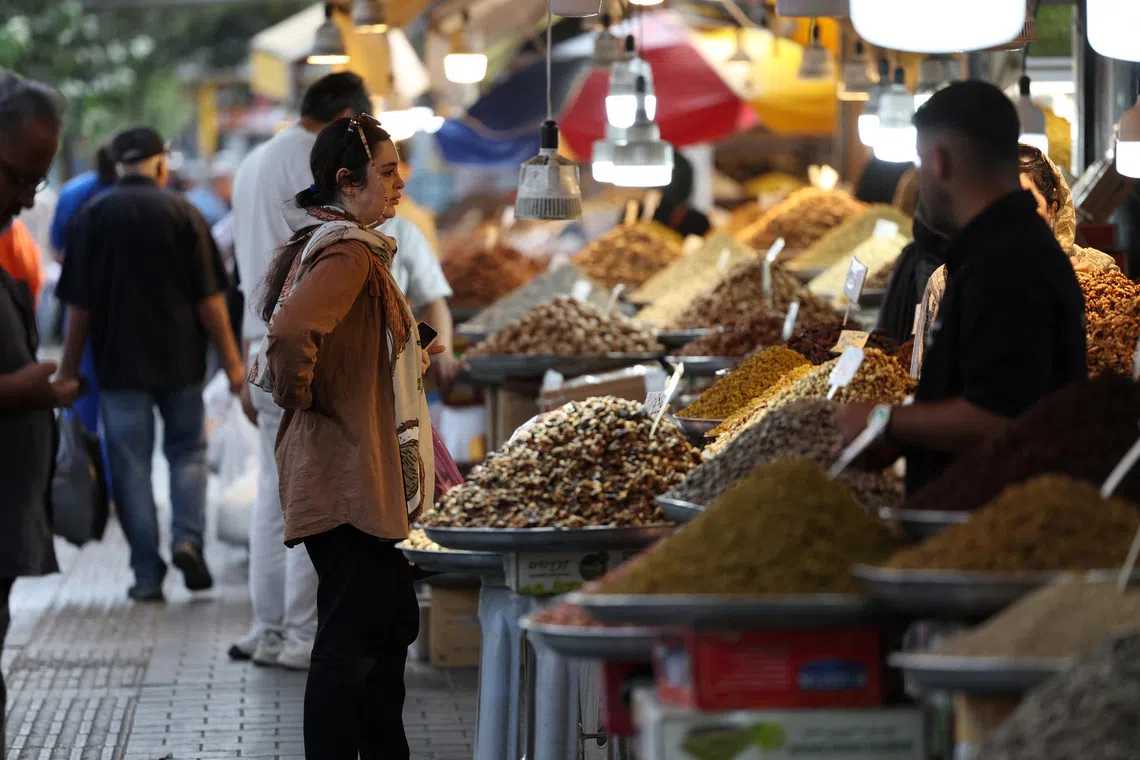
1 / 2
The story, neutrally told
Reuters, in a report carried by The Straits Times, says life is getting harder for ordinary Iranians who cannot afford basic necessities or rent as a US blockade cuts off oil exports, the state's financial lifeline. The Straits TimesRC “life is becoming ever tougher for ordinary citizens unable to afford basic necessities or rent as a US blockade cuts the state's financial lifeline - oil exports.” Read at The Straits Times ↗ France 24 reports that medicine prices are soaring and some treatments are hard to find, as the blockade and stepped-up sanctions squeeze the pharmaceuticals industry. France 24N “Medication prices are soaring in Iran and some treatments have become hard to find” Read at France 24 ↗ Reuters interviewed Iranians by phone or messaging app, and most did not want to be named for fear of punishment for speaking to foreign media. The Straits TimesRC “Like most of the Iranians Reuters interviewed by phone or messaging app, she did not want to be identified, fearing punishment for speaking to foreign media.” Read at The Straits Times ↗
Interviewees described job losses, families moving out of Tehran to cheaper areas, and shoppers buying fewer goods; a grocer said customers now buy two of items they once bought five or 10 of. The Straits TimesRC “"Something they used to buy five or 10 of, they can only buy two of now,"” Read at The Straits Times ↗ Some said they struggle to afford medicines for relatives, and Reuters reported that black-market payments and bribes have become more common and costlier. The Straits TimesRC “Another said police requests for bribes were growing more frequent” Read at The Straits Times ↗ Reuters says Iran is also tightening its hold on Gulf energy exports through the Strait of Hormuz, raising oil and gas prices in the US and elsewhere. The Straits TimesRC “as it tightens its own stranglehold on Gulf energy exports through the Strait of Hormuz, driving up oil and gas prices in the US and around the world.” Read at The Straits Times ↗
According to US, Middle Eastern and Iranian sources cited by Reuters, the latest diplomacy was partly spurred by economic strain, though how far it will push Iran to compromise is unclear. The Straits TimesRC “the latest burst of diplomacy was partly spurred by economic strains, US, Middle Eastern and Iranian sources said last week.” Read at The Straits Times ↗ Reuters adds that Iranian officials fear unrest, that authorities killed thousands of demonstrators in January, and that those interviewed said they were too preoccupied with daily worries to protest. The Straits TimesRC “all those Reuters spoke to said they had too many daily worries to think about protesting.” Read at The Straits Times ↗
Every sentence links to the reporting it rests on.
Left0 outlets
No left outlet in our sources has covered this story yet.
Centre1 outlet
- Framing
- A short video report focused on the human cost in one sector: soaring medicine prices and scarcity.
- Emphasis
- Patients and families scrambling for treatment; blockade and stepped-up sanctions as the cause.
- Leaves out or plays down
- No mention of wider living costs, job losses, Iran's Hormuz actions or the diplomatic angle.
- Charged language
- “soaring”
- For example
-
“leaving patients and their families scrambling as a US blockade and stepped-up sanctions squeeze the country's pharmaceuticals industry.” — France 24
Right1 outlet
- Framing
- A wide-ranging Reuters feature on hardship across daily life, set against Iran's leaders' defiant posture and the possibility that economic pain drives diplomacy.
- Emphasis
- Personal testimonies, black market and bribery, job losses, Iran's Hormuz stranglehold and the repression of protest.
- Leaves out or plays down
- Gives no account from Iranian officials or the US of the blockade's aims or the economic figures behind the price rises.
- Charged language
- “stagger”“radiate bullishness”“stranglehold”“cracked down ruthlessly”
- For example
-
“Iran's leaders may radiate bullishness in their war with the United States” — The Straits Times
“cracked down ruthlessly on rumblings of dissent.” — The Straits Times
What every side reports
- Iran is under a US blockade and sanctions.
- Prices are rising and ordinary Iranians, including patients, are struggling to afford essentials.
Iran place
Iran's leaders are described as projecting confidence, while citizens report hardship and officials are said to fear unrest; no direct official statement is quoted.
“Iranian officials have repeatedly expressed fears of unrest” — The Straits Times
United States place
The US blockade and sanctions are presented as the cause of the economic squeeze; no US statement is quoted.
“a US blockade and stepped-up sanctions squeeze the country's pharmaceuticals industry” — France 24
Left0 articles
No coverage yet.
Centre1 article
-
Medicine prices soar in Iran as US blockade and sanctions hit hard
Sympathetic Brief report on patients hit by medicine price rises and shortages, attributing them to the blockade and sanctions.
Right1 article
-
The Straits TimesRC · · via Reuters
Iranians stagger under soaring costs of seven months of war
Sympathetic Reuters feature built on anonymous citizen accounts of hardship, contrasting official bullishness with daily struggle.
- 29 Sep 14:47 First The Straits TimesRC Iranians stagger under soaring costs of seven months of war via Reuters
- 30 Sep 11:39 +20h 51m France 24N Medicine prices soar in Iran as US blockade and sanctions hit hard
Times are when each article was published, or when we first saw it if the outlet gave no time.