Iraq devalues dinar to 1,500 per US dollar as oil revenue falls; MPs push back
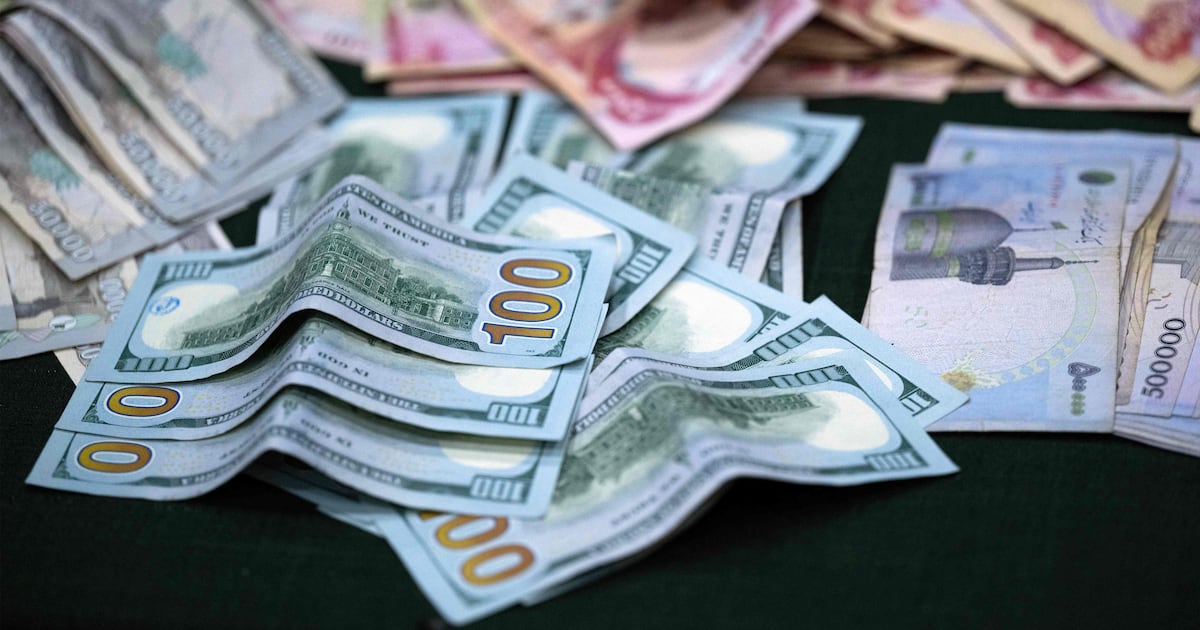
Iraq's cabinet approved a new official rate of 1,500 dinars per dollar, with the public rate at 1,520, citing a cash squeeze from the Iran war and disrupted Hormuz shipping. Dozens of MPs oppose the move over living costs.

1 / 2
The story, neutrally told
Mixed · 2Iraq's Council of Ministers approved a new official exchange rate of 1,500 Iraqi dinars per US dollar, on a recommendation from the Central Bank of Iraq, according to a directive seen by The National. The NationalN “setting a new official exchange rate of 1,500 Iraqi dinars per US dollar, according to a document seen by The National.” Read at The National ↗ Al JazeeraLC “The cabinet approved new exchange rates for the dinar on Tuesday” Read at Al Jazeera ↗ Mixed · 2Under the directive, the central bank buys from the Ministry of Finance at 1,500 dinars, sells to banks at 1,510 and to the public at 1,520; Al Jazeera put the public rate 200 dinars above the previous price. The NationalN “The sale price to banks will be at 1,510 dinars, and then to the public at 1,520 dinars.” Read at The National ↗ Al JazeeraLC “banks and exchange companies have been selling dollars to the public at 1,520 dinars each, 200 higher than the previous price.” Read at Al Jazeera ↗ Left · 1Al Jazeera said the cabinet acted on an emergency recommendation from Finance Minister Falih al-Sari and the central bank governor. Al JazeeraLC “following an emergency recommendation from Finance Minister Falih al-Sari and the governor of the Central Bank of Iraq (CBI).” Read at Al Jazeera ↗
Mixed · 2Both outlets tie the decision to the Iran war and disruption of the Strait of Hormuz, through which most Iraqi oil exports pass; oil provides more than 90 per cent of the budget. The NationalN “Iraq earns more than 90 per cent of its budget in dollars from oil exports, almost all of which must pass through Hormuz” Read at The National ↗ Al JazeeraLC “Oil revenues pay for more than 90 percent of Iraq's federal budget.” Read at Al Jazeera ↗ Left · 1Al Jazeera reported that exports at one point fell by 90 percent, stood at 2.34 million barrels a day in August against a pre-war 3.6 million, that Prime Minister Ali al-Zaidi said about $60bn in oil revenue had been lost, and that central bank reserves fell from about $106bn to roughly $80bn by late August. Al JazeeraLC “In August, they were at 2.34 million barrels a day, far lower than their pre-war average of 3.6 million.”“the CBI's foreign currency reserves fell from about $106bn before the war to roughly $80bn by late August.” Read at Al Jazeera ↗ Centre · 1The National reported that salaries have been delayed in several provinces, payments to wheat farmers and construction firms deferred, and short-term borrowing from state banks used, and that the finance ministry warned parliament it could not fund the budget without an adjustment. The NationalN “has delayed salary payments in several provinces, deferred payments to wheat farmers and construction firms, and relied on short-term borrowing from state banks”“without adjustment, it could not fund the 2026 budget” Read at The National ↗
Mixed · 2The change gives the government about 13 per cent more dinars per dollar of oil sold, but makes imports such as food and medicine more expensive; analyst Mohammed al-Saffar told Reuters it raises import costs and reduces households' purchasing power. The NationalN “the government gets about 13 per cent more dinars for every dollar of oil it sells” Read at The National ↗ Al JazeeraLC “raises import costs and reduces households' purchasing power” Read at Al Jazeera ↗ Left · 1Dozens of MPs issued a joint statement saying they had not been told how or why the decision was made; MP Aziz Nasser al-Shammari said "Waging war on the poor like this is wrong", and Hassan al-Asadi of the al-Nahj National Alliance urged cutting unnecessary spending instead. Al JazeeraLC “dozens of MPs opposed to the move said they had not been told how or why the decision came about”“Hassan al-Asadi, leader of the al-Nahj National Alliance bloc, rejected the measure and suggested alternative methods to balance the budget, such as cutting unnecessary spending.” Read at Al Jazeera ↗ Left · 1Opposing MPs had Wednesday's parliamentary agenda cancelled to debate the move, and the finance minister and central bank governor were due to appear before parliament on Thursday; the central bank called the decision a "strategic step". Al JazeeraLC “MPs who opposed the move had the agenda for Wednesday's session of parliament cancelled in order to debate it instead.”“Iraq's Central Bank described the decision as a "strategic step" to steady the country's finances.” Read at Al Jazeera ↗
Left · 1Al Jazeera reported that the parallel-market dollar rate rose after the new official rate took effect, widening the gap, and that most Iraqis cannot get dollars at the official rate. Al JazeeraLC “In practice, most Iraqis cannot get dollars at the official rate and pay the parallel market price instead.” Read at Al Jazeera ↗ Mixed · 2It is Iraq's second major devaluation in six years: in December 2020 the rate went from 1,182 to 1,450 per dollar, and The National says inflation then jumped and triggered protests in southern provinces. A later rate of 1,320 was set under the previous government, which Al Jazeera says is now being undone. The NationalN “jumped and triggered protests in southern provinces” Read at The National ↗ Al JazeeraLC “undoing the previous government's move to strengthen the Iraqi dinar” Read at Al Jazeera ↗
Every sentence links to the reporting it rests on. The pill in front of each says where its sources sit: Left, Centre or Right when one side supplies at least half of them, Mixed when they are evenly split. The number is how many outlets it cites.
Left1 outlet
- Framing
- Explainer on the political backlash: why the devaluation happened and why MPs want it reversed, centred on living costs for the poor.
- Emphasis
- Named MPs' objections, lack of consultation, the widening parallel-market gap and the effect on vulnerable households.
- Leaves out or plays down
- Does not give the central bank's purchase and bank sale rates (1,500 and 1,510) or the delayed salaries and deferred payments detailed by The National.
- Charged language
- “Waging war on the poor”
- For example
-
“Waging war on the poor like this is wrong” — Al Jazeera
“prompting calls in parliament to reverse the decision.” — Al Jazeera
Centre1 outlet
- Framing
- Business report on a fiscal fix forced by war and the Hormuz closure, based on a central bank directive.
- Emphasis
- Directive mechanics, the cash crunch, delayed payments and arithmetic of the 13 per cent gain, with a note on the cost passed to Iraqis.
- Leaves out or plays down
- Does not cover the parliamentary opposition or the parallel-market gap.
- Charged language
- “Devaluation is the fastest fix”
- For example
-
“Devaluation is the fastest fix.” — The National
“But the cost is passed to Iraqis.” — The National
Right0 outlets
No right outlet in our sources has covered this story yet.
What every side reports
- The cabinet approved the new rate on Tuesday, with a public rate of 1,520 dinars per dollar.
- The move follows disruption to Hormuz shipping and falling oil revenue during the Iran war.
- Oil provides more than 90 per cent of Iraq's budget.
- A weaker dinar makes imports more expensive.
- Iraq devalued the dinar to 1,450 in December 2020.
Where accounts differ
-
When the new rate took effect
- Left
- Banks and exchange companies sell at 1,520 dinars from Wednesday.
- Centre
- The directive ordered institutions to adopt the new price from the start of business on Tuesday.
-
Which budget the shortfall affects
- Left
- The government adopted its 2027 budget just before the devaluation, with a deficit above 40 trillion dinars.
- Centre
- The finance ministry warned it could not fund the 2026 budget.
-
Description of the war
- Left
- Refers to the US war on Iran, with fighting beginning in late February.
- Centre
- Refers to the Iran-Israel war from June 2025 and an Iran war that broke out on February 28.
Iraq place
The government and central bank present the devaluation as a necessary, 'strategic' step to fund salaries and the budget amid lost oil revenue, while many MPs say it will raise living costs and should be reversed.
“Iraq's Central Bank described the decision as a "strategic step" to steady the country's finances.” — Al Jazeera
“many MPs have urged the government to reverse the change, saying it will raise the cost of living for Iraqis.” — Al Jazeera
Left1 article
-
Why has Iraq devalued its currency, and why are some MPs against it?
Sympathetic Explainer foregrounding MPs' opposition and the burden on poor households, with context on the budget and oil losses.
Centre1 article
-
Iraq devalues currency as war and Hormuz closure squeeze cash
Neutral Directive-based business report presenting devaluation as the fastest fix for a war-driven cash shortage, noting costs to Iraqis.
Right0 articles
No coverage yet.
- 7 Oct 10:27 First The NationalN Iraq devalues currency as war and Hormuz closure squeeze cash
- 8 Oct 12:59 +26h 32m Al JazeeraLC Why has Iraq devalued its currency, and why are some MPs against it?
Times are when each article was published, or when we first saw it if the outlet gave no time.