IRGC Navy commander threatens US warships; CENTCOM rejects Iran's Hormuz control claim
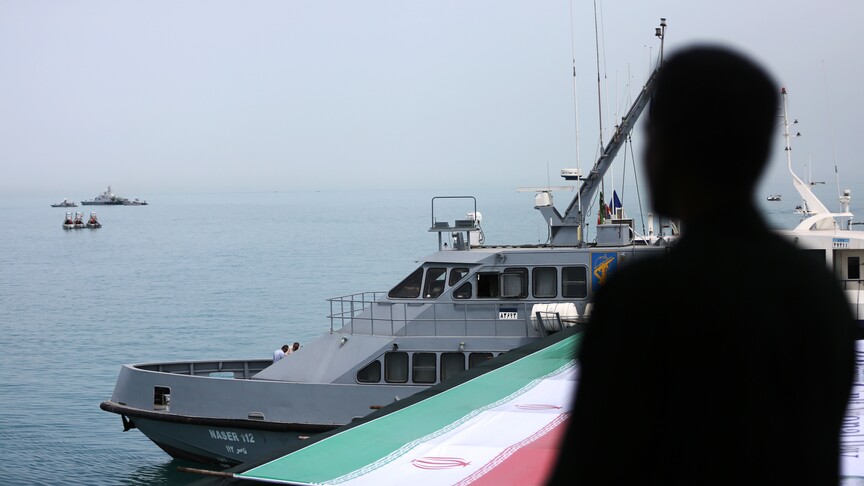
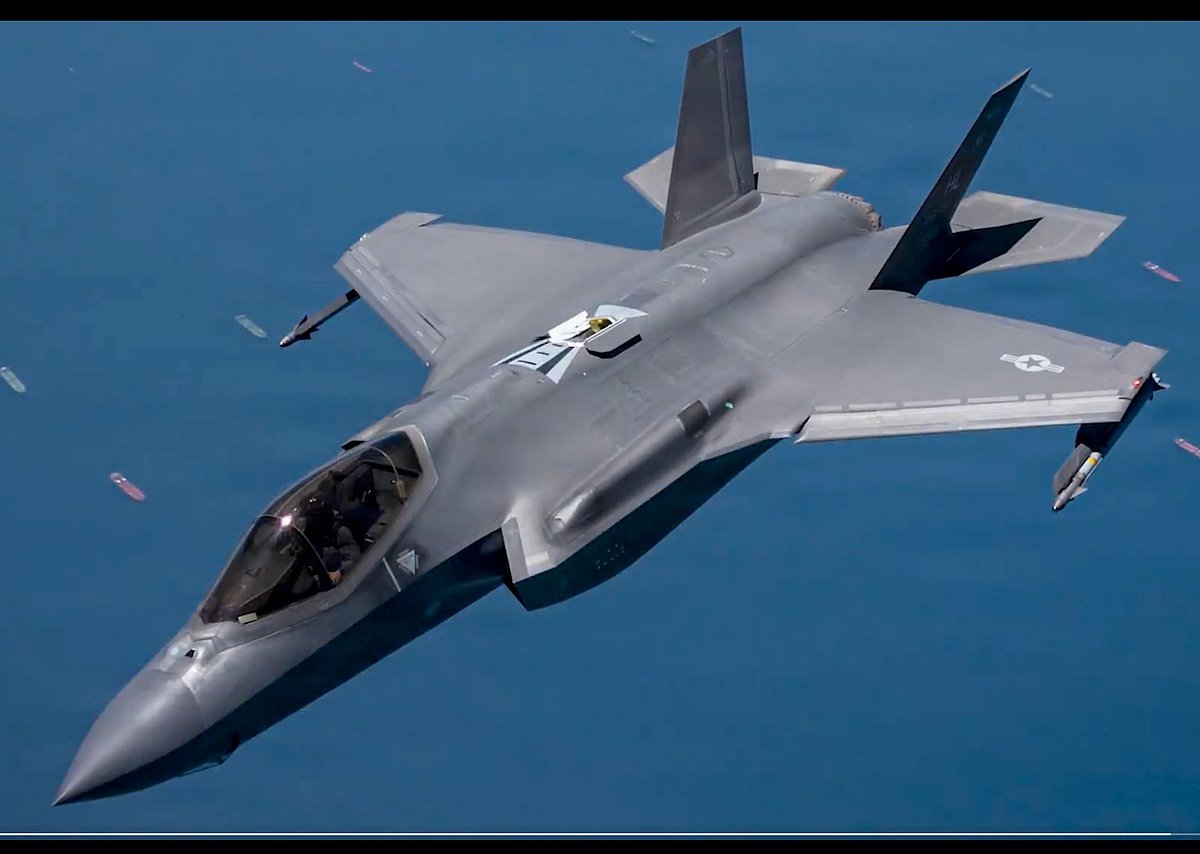
Rear Adm. Ali Azmaei of Iran's IRGC Navy said on 13 October that his forces are waiting to sink US warships approaching the Strait of Hormuz. US Central Command replied on X that American forces and partners control the strait.
1 / 2
The story, neutrally told
Centre · 1On Tuesday 13 October, Rear Adm. Ali Azmaei, a senior commander of the Islamic Revolutionary Guard Corps (IRGC) Navy, threatened to sink US warships if they approach the Strait of Hormuz, according to Iran's state news agency IRNA. Anadolu AgencyN “threatened to sink US warships on Tuesday if they approach the Strait of Hormuz, according to Iran’s state news agency IRNA.” Read at Anadolu Agency ↗ Centre · 1In televised remarks he said, "We are waiting for American warships to approach the entrance to the Strait of Hormuz so that we can sink them," and that Iranian forces are "counting down" for the encounter. Anadolu AgencyN ““We are waiting for American warships to approach the entrance to the Strait of Hormuz so that we can sink them,”” Read at Anadolu Agency ↗ Centre · 1Azmaei claimed US warships "do not dare" approach because of their vulnerability, saying a US aircraft carrier worth $13 billion had moved 700 kilometres (435 miles) from the strait. Anadolu AgencyN “a US aircraft carrier worth $13 billion had moved 700 kilometers (435 miles) from the strait.” Read at Anadolu Agency ↗
Centre · 1He said the IRGC Navy controls the Strait of Hormuz and the Gulf while Iran's regular navy controls the Gulf of Oman, and that the IRGC exercises "smart control", issuing permits for vessels travelling to and from Iran to use Iranian waterways. Anadolu AgencyN “Azmaei said the IRGC exercises “smart control” over the Strait of Hormuz, issuing permits for vessels traveling to and from Iran to use Iranian waterways.” Read at Anadolu Agency ↗ Centre · 1He also said Iran had released information on two cases in which "violating vessels" were punished, accusing the US and its regional partners of a media blackout on them, and said Iranian forces are better prepared than at the start of the war. Anadolu AgencyN “Azmaei also said Iranian forces released information about two cases in which “violating vessels” were punished” Read at Anadolu Agency ↗ Centre · 2US Central Command (CENTCOM) responded on X the same day: "IRGC's navy commander has no navy. American forces and regional partners clearly control the Strait of Hormuz." Anadolu AgencyN “"IRGC's navy commander has no navy. American forces and regional partners clearly control the Strait of Hormuz," CENTCOM said on US social media company X.” Read at Anadolu Agency ↗ Gulf NewsN ““American forces and regional partners clearly control the Strait of Hormuz,” CentCom said” Read at Gulf News ↗
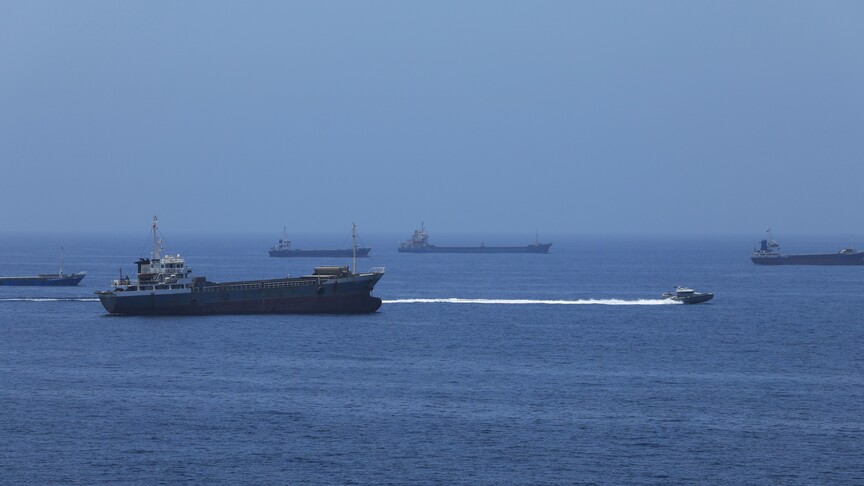
Centre · 2CENTCOM said US forces had helped Gulf partners move more than 19 million barrels of crude oil through the strait on Monday; Gulf News said the post carried a fact-check graphic labelling the Iranian assertion a "claim" and Washington's position a "fact". Anadolu AgencyN “US forces had helped Gulf partners transport more than 19 million barrels of crude oil through the strait on Monday.” Read at Anadolu Agency ↗ Gulf NewsN “The statement was accompanied by a fact-check graphic labelling the Iranian commander’s assertion a claim and Washington’s position a fact.” Read at Gulf News ↗ Centre · 1Gulf News cautioned that the figure is CENTCOM's own and should not be taken as independent evidence that all shipping can pass safely, noting that Reuters reported on 8 October that only seven commodity vessels crossed the strait on 6 October and crude flows had fallen to about 10.1 million barrels a day, around 74% of the pre-war level, per Kpler data. Gulf NewsN “It is a significant claim, but it should not be confused with independently verified evidence that all shipping can pass safely or without disruption.”“only seven commodity vessels crossed the strait on October 6, while crude oil movements had fallen to about 10.1 million barrels a day” Read at Gulf News ↗ Centre · 2The exchange comes amid the Iran-US war and disputes over navigation: Tehran says it controls passage through Iranian waters and has warned vessels off routes it considers unauthorised, Washington insists on freedom of navigation, and recent attacks on commercial vessels have heightened tensions. Anadolu AgencyN “Tehran maintains that it controls passage through Iranian waters in the strait and has warned vessels against using routes it considers unauthorized” Read at Anadolu Agency ↗ Gulf NewsN “The immediate exchange remains a contest of claims” Read at Gulf News ↗
Every sentence links to the reporting it rests on. The pill in front of each says where its sources sit: Left, Centre or Right when one side supplies at least half of them, Mixed when they are evenly split. The number is how many outlets it cites.
Left0 outlets
No left outlet in our sources has covered this story yet.
Centre2 outlets
- Framing
- Anadolu leads with the Iranian threat, then reports the US rebuttal in a short follow-up; Gulf News presents the exchange as a war of words and adds context on oil flows and shipping risk.
- Emphasis
- The dueling claims of control, CENTCOM's 19 million barrel figure, and (Gulf News) the gap between rhetoric and actual vessel traffic.
- Leaves out or plays down
- Neither outlet gives independent confirmation of the two vessel 'punishment' cases or of the carrier's position; Anadolu's follow-up gives no independent data on traffic.
- Charged language
- “threatens to sink”“war of words”“no navy”
- For example
-
“Iran’s IRGC Navy threatens to sink US warships approaching Strait of Hormuz” — Anadolu Agency
“escalating the war of words over one of the world’s most important routes for oil shipments” — Gulf News
Right0 outlets
No right outlet in our sources has covered this story yet.
What every side reports
- Azmaei, an IRGC Navy commander, said Iran controls the Strait of Hormuz and threatened US warships.
- CENTCOM rejected the claim on X on Tuesday, saying US forces and regional partners control the strait.
- CENTCOM said more than 19 million barrels of crude moved through the strait on Monday with US help.
Where accounts differ
-
Who controls the Strait of Hormuz
- Centre
- Anadolu relays Azmaei's claim of IRGC control and CENTCOM's rebuttal; Gulf News calls it a contest of claims and says actual vessel movements are the test.
-
Whether CENTCOM's oil figure shows normal passage
- Centre
- Gulf News says the 19 million barrel figure is not independently verified and cites Reuters/Kpler data showing flows around 74% of pre-war levels.
Ali Azmaei person
Says IRGC Navy controls the strait, is waiting to sink approaching US warships, and that Iran is better prepared than at the war's start.
““If the Americans want to see whether the Strait of Hormuz is open or closed, let them enter the field and see who controls it,”” — Anadolu Agency
US Central Command organisation
Rejects the IRGC claim, saying US forces and regional partners control the strait and helped move over 19 million barrels of crude on Monday.
“"IRGC's navy commander has no navy. American forces and regional partners clearly control the Strait of Hormuz,"” — Anadolu Agency
Islamic Revolutionary Guard Corps organisation
Its Navy asserts control over the strait and Gulf, issuing permits to vessels and punishing 'violating vessels'.
“He claimed the Strait of Hormuz and the Gulf are under the control of the IRGC Navy” — Anadolu Agency
Left0 articles
No coverage yet.
Centre3 articles
-
Iran’s IRGC Navy threatens to sink US warships approaching Strait of Hormuz
Neutral Reports Azmaei's threats and claims with attribution to IRNA, adding brief context on the war.
-
US rejects Iran’s claim of control over Strait of Hormuz
Neutral Short report of CENTCOM's rebuttal and oil-volume claim.
-
Neutral Explainer-style piece treating the exchange as a contest of claims and cautioning that CENTCOM's figure is unverified.
Right0 articles
No coverage yet.
- 13 Oct 20:04 First Anadolu AgencyN Iran’s IRGC Navy threatens to sink US warships approaching Strait of Hormuz
- 13 Oct 22:00 +1h 56m Anadolu AgencyN US rejects Iran’s claim of control over Strait of Hormuz
- 14 Oct 00:13 +4h 8m Gulf NewsN US military counters Iran's claim of control over Hormuz, says 19 million barrels of crude oil transited the strait on Monday
Times are when each article was published, or when we first saw it if the outlet gave no time.
Ask about this story
Loading…