Israel closes southern hiking sites ahead of storms and flash-flood risk on Election Day
Israeli police closed hiking and nature sites between Beersheva and Eilat as a Red Sea trough brought a risk of flash floods and road closures to the south on the day of the Knesset election.
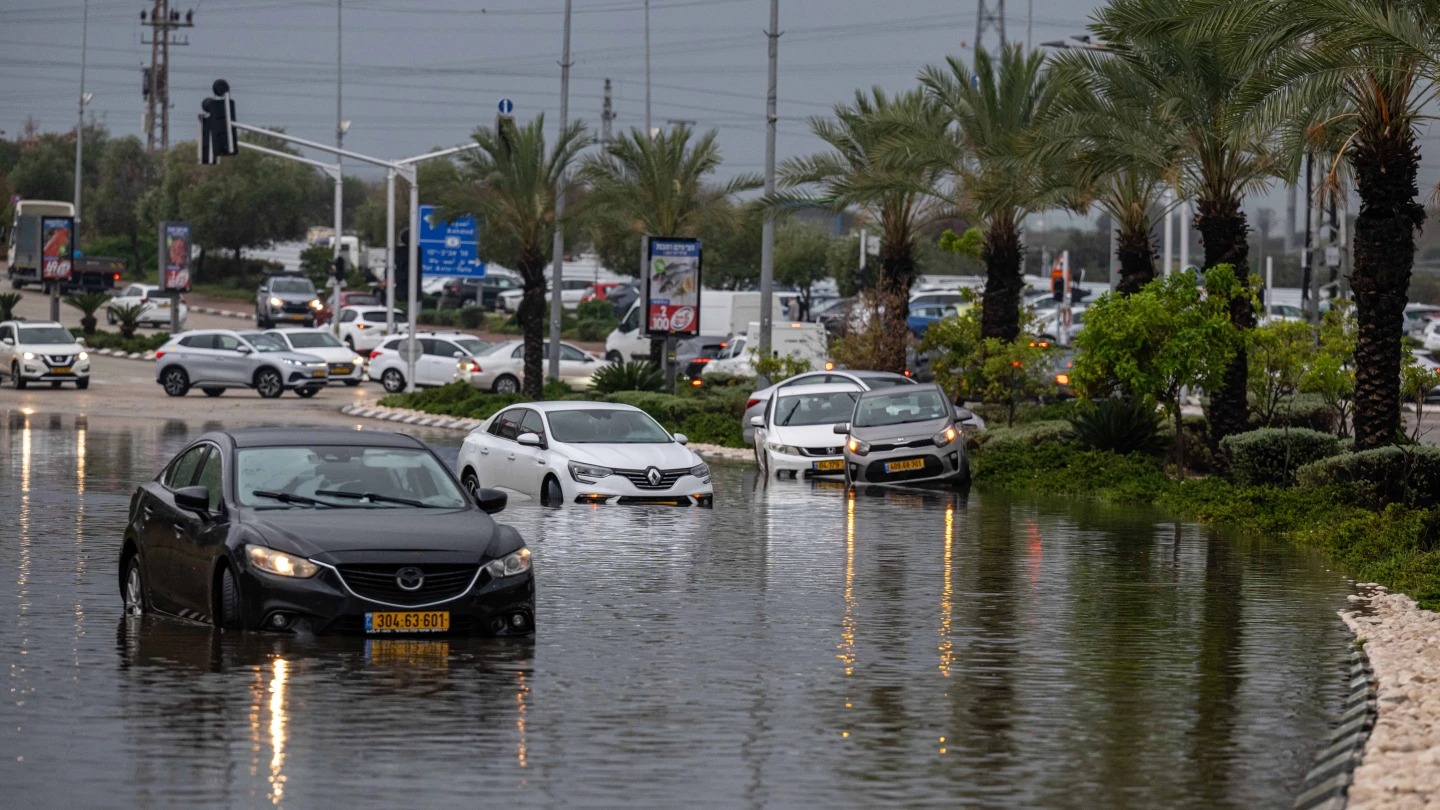

1 / 2
The story, neutrally told
Right · 1Israeli police announced on Monday 26 October that all hiking and nature sites from Beersheva to Eilat would be closed on Tuesday and Wednesday because of forecasts of severe storms and dangerous flash flooding. JNSR “all hiking and nature sites from Beersheva to Eilat will be closed on Tuesday and Wednesday due to forecasts of severe storms and dangerous flash flooding” Read at JNS ↗ Right · 1The storm coincides with Tuesday's Knesset election, a national day off when many Israelis traditionally go hiking. JNSR “The storm coincides with Tuesday's Knesset election, a national day off when many Israelis traditionally go hiking.” Read at JNS ↗ Right · 1According to the Israel Meteorological Service, heavy rain, strong winds, thunderstorms and hail are expected to begin on Tuesday afternoon around Eilat, the southern Negev and Arava, then spread north toward the Dead Sea; after a brief overnight break, heavy rain and flash flooding are expected to resume on Wednesday afternoon. JNSR “After a brief overnight break, heavy rain and flash flooding are expected to resume on Wednesday afternoon.” Read at JNS ↗
Right · 1The Jerusalem Post described the system as moisture from a Red Sea trough, a low-pressure system extending north from the Red Sea, moving into the south by Tuesday afternoon. The Jerusalem PostRC “Moisture from a Red Sea trough, a low-pressure system that extends north from the Red Sea, will move into the south by Tuesday afternoon.” Read at The Jerusalem Post ↗ Right · 1It said rain would start in the southern Negev and spread across the Negev Highlands, the Arava and the Dead Sea area, while northern and central Israel have a good chance of localized rain but no major disruptions are expected. The Jerusalem PostRC “Northern and central Israel have a good chance of localized rain under partly cloudy to cloudy skies, but no major disruptions are expected.” Read at The Jerusalem Post ↗ Right · 1Flooding is possible in streams in the southern Negev, the Arava, the Judean Desert and the Dead Sea area, and the public was told to stay away from streambeds because conditions could be life-threatening. The Jerusalem PostRC “The public has been warned to stay away from streambeds, as conditions could be life-threatening.” Read at The Jerusalem Post ↗
Right · 1Police warned of possible closures on roads to and from Eilat, with significant rain expected in the Arava between 2 p.m. and 8 p.m. on Tuesday, and said they would decide on closures based on conditions on the ground. The Jerusalem PostRC “Police said they would decide on road closures based on on-the-ground weather conditions and urged the public to prepare for possible traffic disruptions.” Read at The Jerusalem Post ↗ Right · 1Police urged the public to avoid hiking trails, desert streambeds and nonessential travel in the affected areas. JNSR “Police urged the public to avoid hiking trails, desert streambeds and nonessential travel in the affected areas” Read at JNS ↗
Every sentence links to the reporting it rests on. The pill in front of each says where its sources sit: Left, Centre or Right when one side supplies at least half of them, Mixed when they are evenly split. The number is how many outlets it cites.
Left0 outlets
No left outlet in our sources has covered this story yet.
Centre0 outlets
No centre outlet in our sources has covered this story yet.
Right2 outlets
- Framing
- Both outlets run the story as a practical public-safety and travel advisory, linking the weather to Election Day.
- Emphasis
- Police closures, the Election Day timing, forecast timings and streambed warnings.
- Leaves out or plays down
- Neither article reports casualties or damage, as the storm had not yet arrived.
- Charged language
- “life-threatening”“dangerous flash flooding”
- For example
-
“The storm coincides with Tuesday's Knesset election, a national day off when many Israelis traditionally go hiking.” — JNS
“Storm threatens flash floods, road closures in south as Israelis head to polls” — The Jerusalem Post
What every side reports
- Police closed hiking sites between Beersheba/Beersheva and Eilat because of the storm.
- The storm was forecast to hit the south on Election Day, Tuesday 27 October.
- The public was warned to avoid streambeds because of flash-flood risk.
- Police warned of possible road closures and traffic disruption toward Eilat.
Israel Police organisation
Israel Police closed hiking and nature sites between Beersheva and Eilat, warned of possible Eilat road closures, and urged the public to avoid streambeds and nonessential travel.
“Police urged the public to avoid hiking trails, desert streambeds and nonessential travel in the affected areas” — JNS
“Police said they would decide on road closures based on on-the-ground weather conditions” — The Jerusalem Post
Left0 articles
No coverage yet.
Centre0 articles
No coverage yet.
Right2 articles
-
JNSR ·
Israel to close southern hiking sites as severe storms threaten flash floods
Neutral Straight advisory report on the police closure order and meteorological forecast, noting the election-day hiking tradition.
-
Storm threatens flash floods, road closures in south as Israelis head to polls
Neutral Weather explainer tying the storm to Election Day, with regional forecast and police road warnings.
- 26 Oct 13:00 First JNSR Israel to close southern hiking sites as severe storms threaten flash floods
- 27 Oct 06:22 +17h 22m The Jerusalem PostRC Storm threatens flash floods, road closures in south as Israelis head to polls
Times are when each article was published, or when we first saw it if the outlet gave no time.
Ask about this story
Loading…