Israeli polls show Netanyahu and Eisenkot blocs both near 52 seats, short of a majority
With the 27 October election about two weeks away, a Maariv-published polling average puts Netanyahu's bloc and the opposition each at about 52.3 of 120 seats. Neither reaches the 61 needed, and Arab parties and small parties near the threshold could decide the outcome.

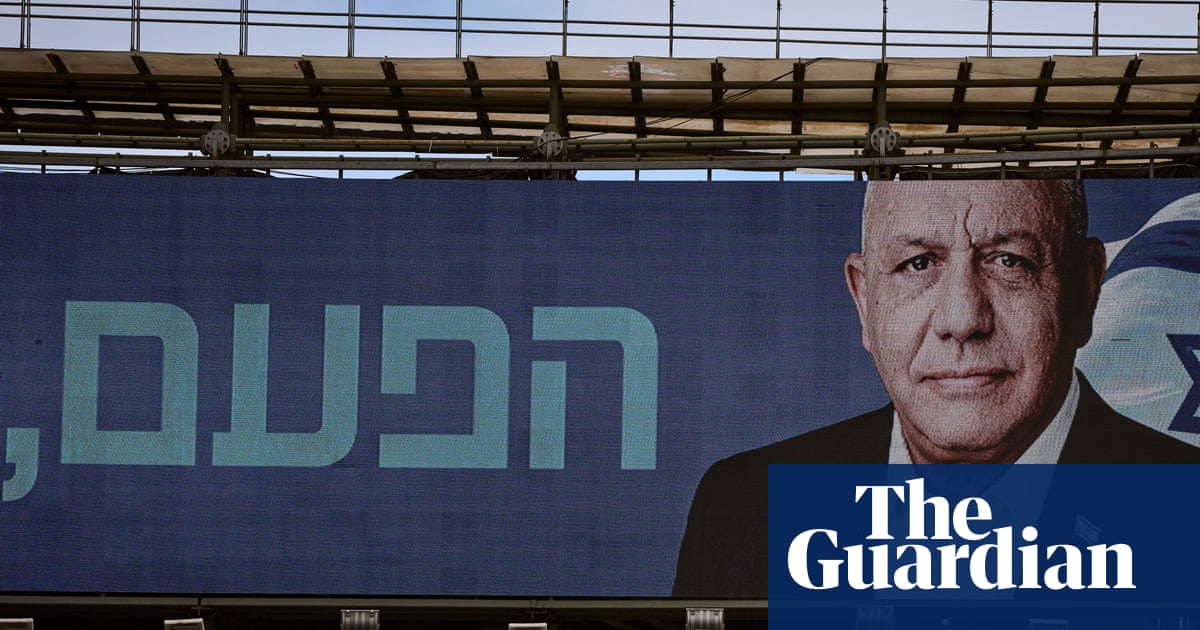
1 / 2
The story, neutrally told
Right · 1Nearly two weeks before Israel's election, polls by Maariv, Channel 13 and KAN News showed an inconclusive race: Gadi Eisenkot's Yashar party led all three surveys, but neither bloc reached the 61 Knesset seats needed for a majority. The Jerusalem PostRC “polls by Maariv, Channel 13, and KAN News show an inconclusive race, with Gadi Eisenkot's Yashar party leading all three surveys, but neither bloc reaching the 61 seats needed for a Knesset majority” Read at The Jerusalem Post ↗ Right · 1The polling average, published by The Jerusalem Post under a Maariv byline, put Prime Minister Benjamin Netanyahu's bloc (including Ofer Winter's People of Israel party) and the Zionist opposition at about 52.3 seats each. The average is based on four polls and is not a new survey or a forecast. The Jerusalem PostRC “The average is based on the seat distribution in four separate polls and does not constitute a new survey or a forecast of the election results.”“at approximately 52.3 seats each” Read at The Jerusalem Post ↗ Right · 1The individual polls differed. Maariv had the two blocs level at 52 seats each after Likud gained a seat. Channel 13 had Yashar and Likud tied at 20 seats each, with Netanyahu's bloc at 55 and Eisenkot's at 50. KAN had Yashar at 23 and Likud at 21, with Eisenkot's bloc at 52 and Netanyahu's at 51. Channel 12 had the opposition at 54 and the coalition at 49. The Jerusalem PostRC “bringing the coalition bloc level with the Zionist opposition parties at 52 seats each”“Netanyahu's bloc receives 55 seats, while Eisenkot's bloc receives 50.”“Eisenkot's bloc stands at 52 seats, compared with 51 for Netanyahu's bloc.” Read at The Jerusalem Post ↗
Right · 1Parties near the 3.25% electoral threshold, roughly four seats, could shape the result. In the polls cited, Winter's People of Israel crossed the threshold in Channel 13's poll with five seats but fell below it in KAN's and Channel 12's. The Hendel–Zelekha Reservists-Economic list polled four seats in KAN and Channel 12, and was below the threshold in Channel 13's poll. The Jerusalem PostRC “People of Israel, led by Winter, crossed the electoral threshold and received five seats.”“for the first time since Winter announced the establishment of People of Israel, his party fails to cross the electoral threshold” Read at The Jerusalem Post ↗ The Jerusalem PostRC “the percentage of the total vote that a party needs to clear to gain any seats in the Knesset” Read at The Jerusalem Post ↗ Right · 1A JTA analysis by Tomer Almagor, carried by The Jerusalem Post on 14 October, said Netanyahu failed to unite smaller right-wing parties. Religious Zionism (Bezalel Smotrich), Otzma Yehudit (Itamar Ben-Gvir) and Ofer Winter's party are running separately, so one or more could fall below the threshold and waste votes that would help his bloc. The article calls his bloc's position the weakest in a decade, quoting political scientist Gayil Talshir. The Jerusalem PostRC “Netanyahu is entering this election in the weakest position we have seen him in over the past decade in terms of the parties running.”“did not join forces with National Security Minister Itamar Ben-Gvir's Otzma Yehudit” Read at The Jerusalem Post ↗ Right · 1The same article said the opposition-aligned bloc had also fallen sharply in recent weeks, from roughly 58–59 seats to around 52–53, while most polls put Netanyahu's bloc at 52–53. The remaining seats go to Arab-led parties, with the Joint List and Ra'am projected at about 14. Talshir linked the opposition's decline to the merger of three Arab parties into a Joint List rather than to lost support for the bloc. The Jerusalem PostRC “In recent weeks, its numbers have fallen sharply, from roughly 58-59 seats to around 52-53.”“Most polls put his bloc at around 52-53 seats.”“Joint List and Ra'am are projected to win roughly 14 seats.” Read at The Jerusalem Post ↗
Right · 1Both camps have pledged not to include Arab parties in a government, but Talshir suggested that could be tested after a deadlock. She floated a scenario in which Ra'am backs an Eisenkot-led minority government from outside the coalition. Pollster Shmuel Rosner said there was "a very small chance that either bloc will be able to reach 61 seats". If neither can form a coalition, Israel could face another election, with Netanyahu staying on as caretaker prime minister. The Jerusalem PostRC ““Looking at the scenarios and the polls we are seeing right now, we see a very small chance that either bloc will be able to reach 61 seats,” Rosner said.”“Netanyahu would remain in office as caretaker prime minister.” Read at The Jerusalem Post ↗ Left · 1The Guardian's profile, published on 15 October, describes Eisenkot as a former military chief of staff and the main opposition candidate who contrasts with Netanyahu in style. It says he is pushing for a full investigation of the intelligence failures behind the 7 October 2023 Hamas attack and for an end to the ultra-Orthodox draft exemption. The GuardianLC “Gadi Eisenkot, a former general and the main opposition candidate in Israel's elections this month, is unpolished where Netanyahu is slick.”“he is pushing for a full investigation of the intelligence failures that allowed Hamas’s deadly 7 October 2023 attack” Read at The Guardian ↗ Left · 1The Guardian also says Eisenkot is non-committal on a two-state solution, saying "I've never said that the solution is two states for two peoples". He opposes the planned E1 settlement block but supports settlement in general, and would put the army back in charge of the West Bank in place of Smotrich. Analysts quoted say a government under him would be one of "containment" and better management rather than a change of direction. The GuardianLC ““I’ve never said that the solution is two states for two peoples,” Eisenkot said on the campaign trail.”“He opposes the planned E1 settlement block that is seen as a potential obstacle to any future Palestinian state, but he supports settlement in general.”“I see it potentially as a government of containment” Read at The Guardian ↗
Every sentence links to the reporting it rests on. The pill in front of each says where its sources sit: Left, Centre or Right when one side supplies at least half of them, Mixed when they are evenly split. The number is how many outlets it cites.
Left1 outlet
- Framing
- The Guardian does not discuss the polling average. It profiles Eisenkot as the main opposition candidate, an unpolished, honest-seeming 'anti-Bibi' whose policies on peace and settlements are ambiguous.
- Emphasis
- Eisenkot's character, background and appeal, set against Netanyahu. It also stresses his ambiguity on a two-state solution and settlements, his hawkish record including the Dahiya doctrine, and sceptics' view that he offers management rather than change.
- Leaves out or plays down
- It gives no seat counts or bloc totals, and does not mention the deadlock scenario or the threshold risks to the parties on the right.
- Charged language
- “anti-Bibi”“studied ambiguity”“wanna-Bibis”“notorious Dahiya doctrine”
- For example
-
“Unpolished, anti-Bibi, but evasive on peace: who is the Israeli opposition candidate Gadi Eisenkot?” — The Guardian
“he was the architect of the notorious Dahiya doctrine” — The Guardian
Centre0 outlets
No centre outlet in our sources has covered this story yet.
Right1 outlet
- Framing
- The Jerusalem Post treats the story as an electoral-arithmetic and deadlock question. One piece is a poll roundup and the other an analysis of Netanyahu's difficulties and the wider bloc picture.
- Emphasis
- Seat counts by poll and bloc, the electoral threshold, divisions among right-wing parties, the role of Arab parties, and the risk of another election. It also notes the opposition's own decline and its lack of a path to 61.
- Leaves out or plays down
- The coverage does not examine Eisenkot's policy positions on the Palestinian issue or settlements, which the Guardian profile covers.
- Charged language
- “political chessboard”“Netanyahu's political magic”“kingmakers”
- For example
-
“Eisenkot leads, but results still inconclusive as blocs struggle to reach Knesset majority - poll” — The Jerusalem Post
“Netanyahu, Eisenkot blocs struggle to secure majority, raising fears of another election deadlock” — The Jerusalem Post
What every side reports
- Eisenkot is the leading opposition figure and heads the Yashar party.
- Neither Netanyahu's bloc nor the opposition bloc is polling at the 61 seats needed for a majority.
- The election takes place on 27 October.
Where accounts differ
-
Which bloc leads in individual polls
- Right
- Results differ by poll: Channel 13 puts Netanyahu's bloc ahead at 55 to 50, Maariv has the blocs level at 52 each, KAN has Eisenkot's bloc ahead at 52 to 51, and Channel 12 has it ahead at 54 to 49.
Gadi Eisenkot person
Presented by the Jerusalem Post as leading the polls with the largest party, Yashar, while his bloc remains short of 61. He has ruled out including Arab parties in a coalition. The Guardian presents him as honest, a military realist and deliberately ambiguous on the two-state solution and settlements.
“Those ruling out another partnership with Arab parties include Gadi Eisenkot” — The Jerusalem Post
“On the biggest issues, not least a two-state solution that would create a Palestinian state – he is ambiguous.” — The Guardian
Benjamin Netanyahu person
Shown as heading a bloc at about 52–53 seats, short of a majority. The Jerusalem Post analysis says he failed to merge right-wing parties and faces threshold risks to allies. The Guardian presents him as slick and controlling in contrast with Eisenkot.
“Unfortunately for Netanyahu, several right-wing parties didn't merge as he had hoped.” — The Jerusalem Post
“unpolished where Netanyahu is slick” — The Guardian
Left1 article
-
Unpolished, anti-Bibi, but evasive on peace: who is the Israeli opposition candidate Gadi Eisenkot?
Mixed Sympathetic on Eisenkot's character and decency, but critical of his evasiveness on peace and settlements, and of his past military doctrine.
Centre0 articles
No coverage yet.
Right2 articles
-
Eisenkot leads, but results still inconclusive as blocs struggle to reach Knesset majority - poll
Neutral Poll roundup with seat counts by survey, presenting an inconclusive race and noting the average is not a forecast.
-
Netanyahu, Eisenkot blocs struggle to secure majority, raising fears of another election deadlock
Mixed Analysis stressing Netanyahu's weak position from divided right-wing parties and threshold risk, while noting the opposition also lacks a majority.

- 11 Oct 07:18 First The Jerusalem PostRC Eisenkot leads, but results still inconclusive as blocs struggle to reach Knesset majority - poll
- 14 Oct 02:20 +67h 2m The Jerusalem PostRC Netanyahu, Eisenkot blocs struggle to secure majority, raising fears of another election deadlock
- 15 Oct 05:00 +93h 42m The GuardianLC Unpolished, anti-Bibi, but evasive on peace: who is the Israeli opposition candidate Gadi Eisenkot?
Times are when each article was published, or when we first saw it if the outlet gave no time.
Ask about this story
Loading…