Japan PM Takaichi says competitiveness push will support yen confidence
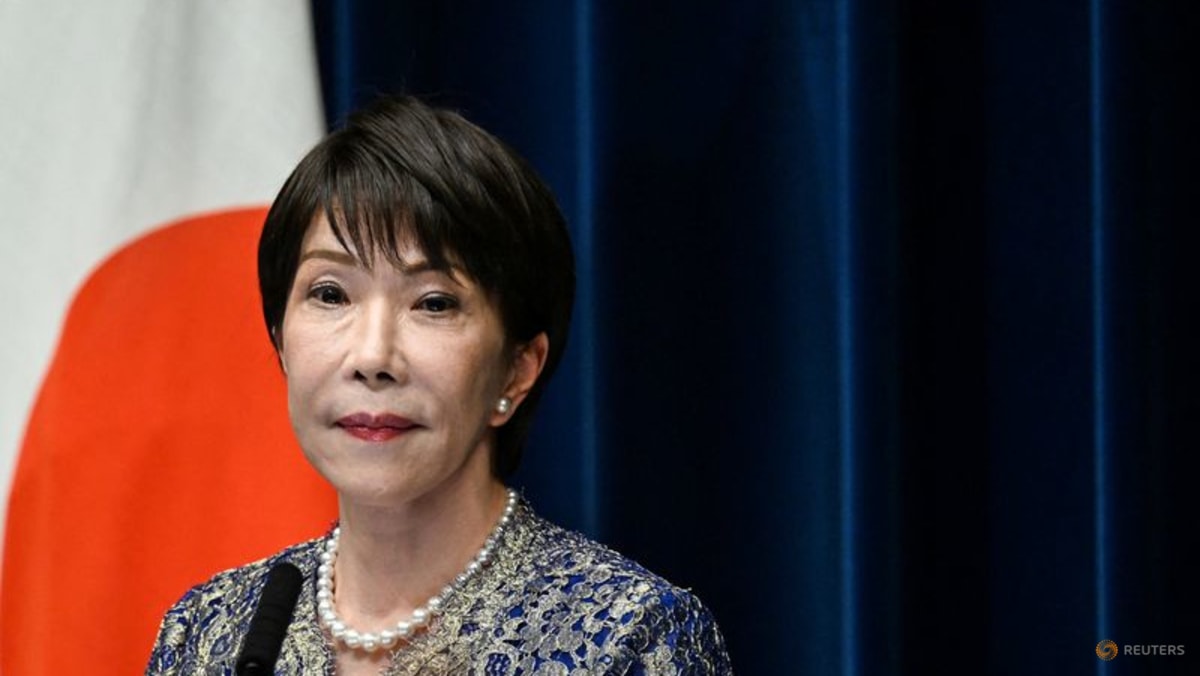
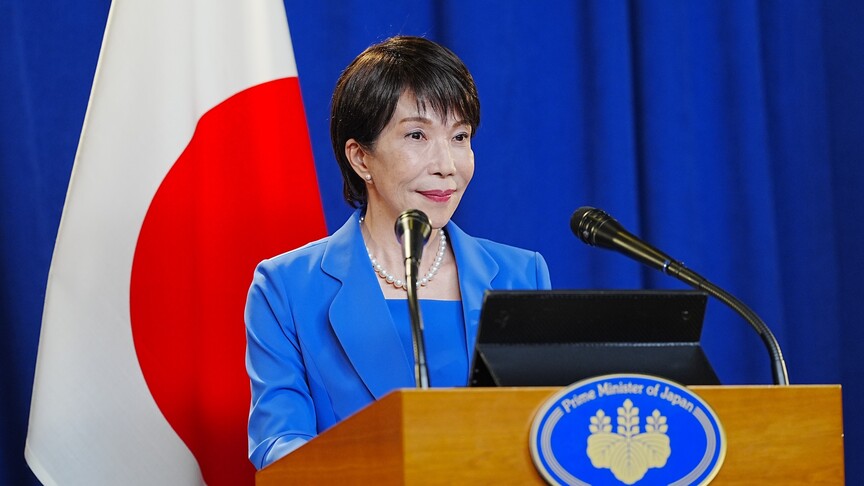
In a Nippon Television interview aired 1 October, Prime Minister Sanae Takaichi said boosting economic competitiveness would help sustain market confidence in the yen and denied that policy aims to steer exchange rates. Takaichi also described discussions with US President Donald Trump on the yen's weakness.
1 / 2
The story, neutrally told
Centre · 2Japanese Prime Minister Sanae Takaichi said on 1 October that the administration's efforts to boost economic competitiveness would help ensure market confidence in the yen, in a recorded interview aired by Nippon Television. CNAN “will help ensure market confidence in the yen, according to a recorded interview aired by Nippon Television on Thursday” Read at CNA ↗ Anadolu AgencyN “would help maintain confidence in the yen following coordinated Japanese-US intervention to support the currency” Read at Anadolu Agency ↗ Centre · 2Takaichi rejected the idea that policy targets the currency, saying the economic policy is not aimed at manipulating exchange rates; Anadolu rendered the quote as policy not being conducted to steer exchange rates. CNAN “"Our economic policy is not aimed at manipulating exchange rates," Takaichi said.” Read at CNA ↗ Anadolu AgencyN ““Economic and fiscal policy is not conducted for the purpose of steering exchange rates,” she said.” Read at Anadolu Agency ↗ Centre · 2She said the government aims to raise growth potential by increasing supply capacity through investment, including in crisis management and growth areas, which she said would strengthen Japan's global competitiveness. CNAN “increasing the economy's supply capacity through bold investment in crisis management and growth areas” Read at CNA ↗ Anadolu AgencyN “her government would expand domestic investment to strengthen supply capacity and raise potential growth” Read at Anadolu Agency ↗
Centre · 2Takaichi said she told US President Donald Trump that the yen's undervaluation was a problem; Anadolu dates their meeting to 22 September in New York and quotes her as saying Trump raised the weak yen's effect on US trade and that her remark was strictly a general observation. CNAN “She also said she told US President Donald Trump that the yen's undervaluation was a problem” Read at CNA ↗ Anadolu AgencyN “The other side said that the weak yen was making trade difficult for the United States.” Read at Anadolu Agency ↗ Centre · 1CNA reported Takaichi as saying US Treasury Secretary Scott Bessent endorsed Japan's economic policy and made no specific demands when Finance Minister Satsuki Katayama met him on 31 August, and that there is no change to pursuing both a strong economy and sustainable fiscal policy. CNAN “made no specific demands when Finance Minister Satsuki Katayama met him for bilateral talks on August 31” Read at CNA ↗ Centre · 1Anadolu added context on intervention: Japan's Finance Ministry bought yen in coordination with the US Treasury on 31 July, spent 15.4 trillion yen ($97.45 billion) on intervention between 30 July and 26 August, and recorded none between 27 August and 28 September; Katayama and Bessent also reaffirmed in a 25 September call that the yen's undervaluation was a concern. Anadolu AgencyN “Japan spent 15.4 trillion yen ($97.45 billion) on foreign exchange intervention between July 30 and Aug. 26, ministry data showed.”“reaffirmed during a Sept. 25 call that the yen’s undervaluation was a concern and pledged closer cooperation” Read at Anadolu Agency ↗
Centre · 1On fiscal policy, Takaichi pledged to control annual government bond issuance and pursue spending consistent with steadily lowering the debt-to-GDP ratio, and said ministries' budget requests would not automatically become next year's budget, with a review of spending and revenue before year-end. Anadolu AgencyN “Takaichi pledged to control annual government bond issuance and secure funding”“ministries’ budget requests would not automatically become next year’s budget” Read at Anadolu Agency ↗
Every sentence links to the reporting it rests on. The pill in front of each says where its sources sit: Left, Centre or Right when one side supplies at least half of them, Mixed when they are evenly split. The number is how many outlets it cites.
Left0 outlets
No left outlet in our sources has covered this story yet.
Centre2 outlets
- Framing
- Both outlets lead with Takaichi's assurance that competitiveness-building will underpin yen confidence and that policy is not meant to manipulate exchange rates. CNA stresses US endorsement; Anadolu adds intervention data and fiscal pledges.
- Emphasis
- CNA: Bessent's endorsement and absence of specific US demands. Anadolu: Trump's complaint about the weak yen, intervention figures and bond-issuance and budget discipline.
- Leaves out or plays down
- CNA omits the intervention figures and fiscal pledges; Anadolu omits the claim that Bessent made no specific demands.
- For example
-
“"Our economic policy is not aimed at manipulating exchange rates," Takaichi said.” — CNA
“Takaichi pledged to control annual government bond issuance and secure funding” — Anadolu Agency
Right0 outlets
No right outlet in our sources has covered this story yet.
What every side reports
- Takaichi spoke to Nippon Television on 1 October.
- She said stronger competitiveness would support confidence in the yen.
- She said economic policy is not aimed at manipulating or steering exchange rates.
- She told Trump the yen's undervaluation is a problem.
Where accounts differ
-
Timing of the US contacts described
- Centre
- CNA says Takaichi met Trump 'last month' and cites Katayama–Bessent bilateral talks on 31 August; Anadolu gives 22 September for the Trump meeting in New York and a 25 September Katayama–Bessent call, and dates the coordinated intervention to 31 July.
Sanae Takaichi person
Takaichi presents her growth-oriented policy as supporting the yen indirectly, denies targeting exchange rates, and says fiscal sustainability remains a goal.
“There's no change to our stance of pursuing both a strong economy and sustainable fiscal policy,” — CNA
“I said, strictly as a general observation, that the yen’s undervaluation is a problem” — Anadolu Agency
Japan place
Japan's Finance Ministry intervened in coordination with the US Treasury to counter excessive volatility, according to a ministry statement cited by Anadolu.
“to counter excessive volatility and disorderly currency movements, according to a ministry statement” — Anadolu Agency
East and Southeast Asia1 outlet
CNA focuses on the policy message and US reassurance.
“US Treasury Secretary Scott Bessent also endorsed Japan's economic policy” — CNA
CNA
Middle East1 outlet
Anadolu places the remarks in the context of joint Japan-US intervention and budget discipline.
“No intervention was recorded between Aug. 27 and Sept. 28.” — Anadolu Agency
Anadolu Agency
Left0 articles
No coverage yet.
Centre2 articles
-
CNAN ·
Japan PM vows to underpin yen by boosting economic competitiveness
Neutral Short report relaying the interview, highlighting the denial of currency manipulation and US backing.
-
Japan's premier says stronger economy to help maintain confidence in yen
Neutral Interview report with added intervention data and fiscal pledges for context.
Right0 articles
No coverage yet.
- 1 Oct 09:05 First CNAN Japan PM vows to underpin yen by boosting economic competitiveness
- 1 Oct 15:06 +6h 1m Anadolu AgencyN Japan's premier says stronger economy to help maintain confidence in yen
Times are when each article was published, or when we first saw it if the outlet gave no time.
Ask about this story
Loading…