Japan says Chinese survey ship Kexue left its EEZ after repeated orders to stop
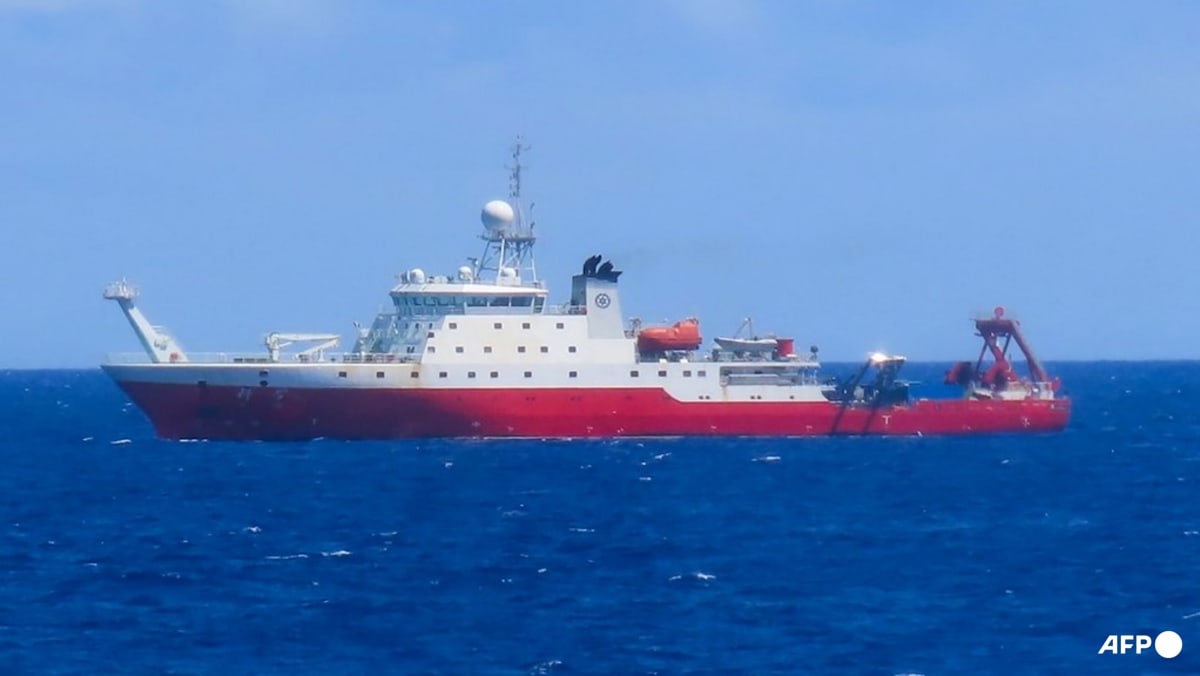
Japan's coast guard says the Chinese vessel Kexue, seen running unapproved research north of Ishigaki island, left Japan's exclusive economic zone after repeated radio demands. Japan says such unapproved surveys have more than doubled this year.

1 / 2
The story, neutrally told
Centre · 2Japan's coast guard said on Tuesday 6 October that a Chinese survey ship had left Japan's exclusive economic zone (EEZ) after being ordered repeatedly to stop research operations that Japan said were unauthorised. Gulf NewsN “The Japanese coast guard said on Tuesday a Chinese survey ship had left Tokyo's exclusive economic zone after being ordered repeatedly to stop research operations that Japan said were unauthorised.” Read at Gulf News ↗ CNAN “The Japanese coast guard said on Tuesday (Oct 6) a Chinese survey ship had left Tokyo's exclusive economic zone” Read at CNA ↗ Centre · 2The vessel, named Kexue, was first seen on 27 September in waters about 70 kilometres north of Ishigaki island in Okinawa prefecture, Japan's southernmost, "intermittently extending wire-like objects into the sea from her side and stern", coast guard spokesman Masashi Asano told AFP. Gulf NewsN “The Chinese vessel Kexue was first seen on September 27 in waters around 70 kilometres (45 miles) north of Ishigaki island” Read at Gulf News ↗ CNAN “intermittently extending wire-like objects into the sea from her side and stern” Read at CNA ↗ Centre · 2According to Asano, the ship left on Friday after the coast guard sent radio messages demanding the survey be halted and stating that scientific research in Japan's maritime zone without consent "will not be tolerated". Gulf NewsN “The vessel eventually left on Friday after the coast guard sent "radio messages demanding the survey be halted” Read at Gulf News ↗ CNAN “will not be tolerated", Asano said.” Read at CNA ↗
Centre · 2Asano said there have been 14 unapproved Chinese surveys in Japan's EEZ so far this year, against six last year and one or two a year in the three years before, so the number has already more than doubled. Gulf NewsN “There have been 14 cases so far this year, compared to six last year, and one or two cases in the three years prior, he said.” Read at Gulf News ↗ CNAN “The number of unapproved surveys by Chinese ships in Japan's EEZ has already more than doubled compared to last year, he said.” Read at CNA ↗ Centre · 2He said the frequency had "surged" since around the time Japan and the Philippines announced they would begin maritime border negotiations; Prime Minister Sanae Takaichi and Philippine President Ferdinand Marcos agreed on 28 May to start formal talks to delimit the EEZ and continental shelf boundary between their countries. Gulf NewsN “Asano said the frequency of unapproved surveys in Japan's EEZ had "surged" since around the time Japan and the Philippines announced they would start maritime border negotiations.” Read at Gulf News ↗ CNAN “agreed on May 28 to start formal negotiations to "delimit the maritime boundary of the exclusive economic zone and the continental shelf between the two countries” Read at CNA ↗ Centre · 2The UN Convention on the Law of the Sea says scientific research in an EEZ, which extends up to 200 nautical miles (370 km) offshore, requires the agreement of the coastal nation that holds exclusive rights to explore and use its natural resources. Gulf NewsN “requires an agreement from the nation that holds exclusive rights to the exploration and use of natural resources.” Read at Gulf News ↗ CNAN “an area of up to 370km offshore from a country's land” Read at CNA ↗
Centre · 2The incident comes amid poor relations: ties have been at rock bottom since Takaichi suggested in November that Tokyo might intervene in any attack on Taiwan, which Beijing claims, although she called China an "important neighbour" in a policy address on Monday and pledged a stable relationship. Gulf NewsN “Takaichi called China an "important neighbour" in a policy address on Monday and pledged to build a stable relationship between the rival nations.” Read at Gulf News ↗ CNAN “Diplomatic relations between the Asian economic giants have been at rock bottom since Takaichi suggested in November that Tokyo might intervene in any attack on Taiwan” Read at CNA ↗ Centre · 2The reports add that Japanese and Chinese coast guard vessels routinely face off around the Japan-controlled Senkaku islands, which Beijing claims and calls the Diaoyu, and that China's coast guard has repeatedly clashed with the Philippines', while Beijing claims most of the South China Sea despite an international ruling that its claim has no legal basis. Gulf NewsN “coast guard vessels from both Japan and China routinely engage in standoffs around the Tokyo-controlled Senkaku islands in the East China Sea” Read at Gulf News ↗ CNAN “Beijing claims most of the South China Sea, a vital global trade route, despite an international ruling that its assertion has no legal basis.” Read at CNA ↗
Every sentence links to the reporting it rests on. The pill in front of each says where its sources sit: Left, Centre or Right when one side supplies at least half of them, Mixed when they are evenly split. The number is how many outlets it cites.
Left0 outlets
No left outlet in our sources has covered this story yet.
Centre2 outlets
- Framing
- Both outlets carry the same AFP-sourced account built on the Japanese coast guard spokesman's statements, framed as a Japan-China maritime friction story with regional context on the Philippines, Senkakus and Taiwan.
- Emphasis
- The rise in unapproved surveys (14 this year vs six last year), the UNCLOS rule and the link to Japan-Philippines boundary talks.
- Leaves out or plays down
- No Chinese government or ship-side response or explanation of the Kexue's activity is given; the account rests on Japanese coast guard statements.
- Charged language
- “rock bottom”“unapproved”
Right0 outlets
No right outlet in our sources has covered this story yet.
What every side reports
- The Kexue was first seen on 27 September about 70 km north of Ishigaki island and left on Friday, per Japan's coast guard.
- The coast guard says there have been 14 unapproved Chinese surveys in Japan's EEZ this year versus six last year.
- UNCLOS requires the coastal state's consent for scientific research in its EEZ.
Japan place
Japan's coast guard says the research was unauthorised and will not be tolerated, and that such surveys have surged; Prime Minister Takaichi separately called China an "important neighbour" and pledged a stable relationship.
“scientific research in our maritime zone without... consent will not be tolerated” — Gulf News
“Takaichi called China an "important neighbour" in a policy address on Monday” — Gulf News
Left0 articles
No coverage yet.
Centre2 articles
-
Gulf NewsN · · via AFP
Japan says it told China survey ship to leave Tokyo's economic waters
Neutral AFP copy run by Gulf News, reporting the Japanese coast guard's account with background on regional maritime disputes.
-
CNAN ·
Japan says it told China survey ship to leave Tokyo's economic waters
Neutral CNA runs the same AFP-sourced text, leading with the coast guard's description of the ship's wire-like objects.
Right0 articles
No coverage yet.
- 6 Oct 07:46 First Gulf NewsN Japan says it told China survey ship to leave Tokyo's economic waters via AFP
- 6 Oct 08:51 +1h 5m CNAN Japan says it told China survey ship to leave Tokyo's economic waters
Times are when each article was published, or when we first saw it if the outlet gave no time.