JPR study: British Jewish attachment to Israel and Zionist identification up since 7 October
A longitudinal Institute for Jewish Policy Research study of 2,500 British Jews found more identify as Zionists and feel very attached to Israel than before 7 October 2023. Concern about antisemitism also rose sharply, while broader measures of Jewish identity and religious practice stayed stable.
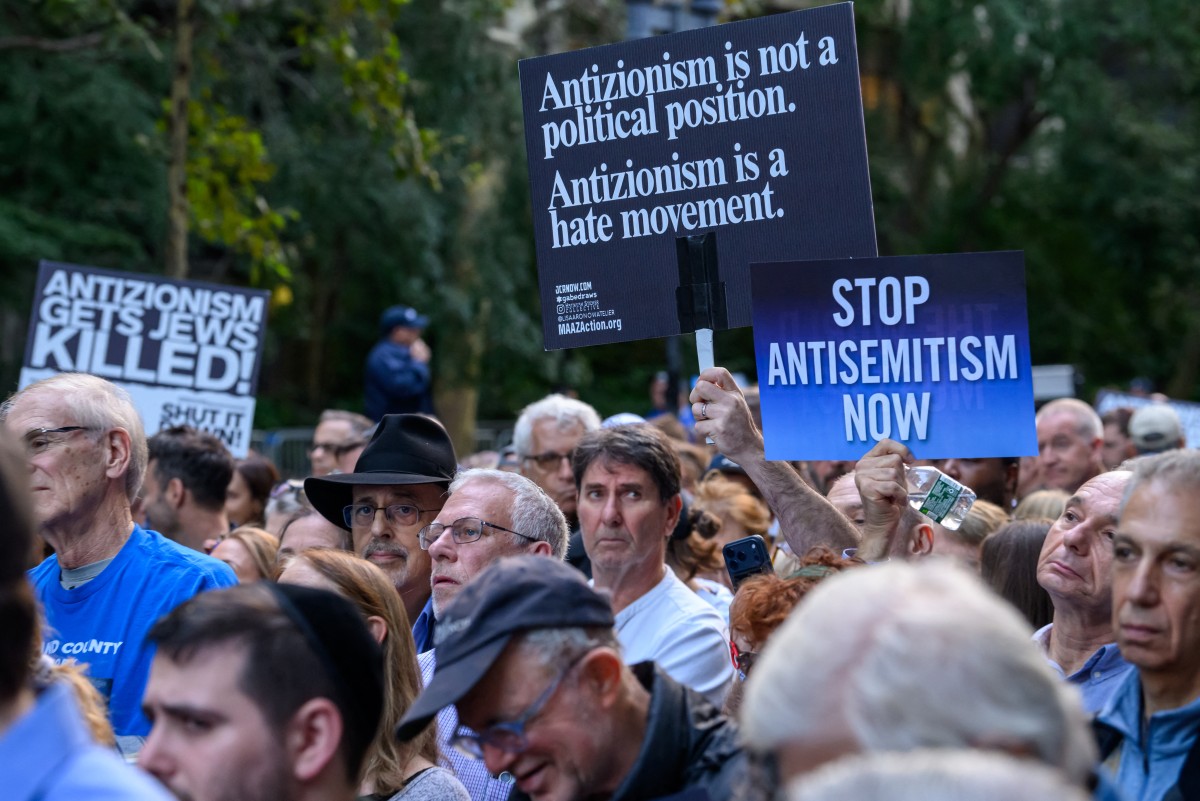

1 / 2
The story, neutrally told
Right · 2The Institute for Jewish Policy Research (JPR) published a study, "October 8 Jews: The impact of October 7", showing that British Jews' attachment to Israel and self-identification as Zionists rose after the Hamas attack of 7 October 2023. The Jerusalem PostRC “The study, called “October 8 Jews: The impact of October 7” on British Jewish identity, was conducted by Dr David Graham, a Senior Research Fellow at JPR.” Read at The Jerusalem Post ↗ Arab NewsRC “Two-thirds of British Jews identified as Zionists as of June 2025, up 7 percent from before the Hamas attack of Oct. 7, 2023” Read at Arab News ↗ Right · 1The study used JPR's longitudinal panel, tracking the same 2,500 British Jews across several survey waves from July 2020 to June 2025, so it could measure individual changes rather than rely on recollection or one-off polls. The Jerusalem PostRC “the study tracked the exact same group of 2,500 British Jews across multiple survey waves spanning a six-year period from July 2020 to June 2025” Read at The Jerusalem Post ↗ Right · 1Self-identification as a Zionist rose from 59% in November 2022 to 65% in June 2024 and 66% in June 2025, while anti-Zionist identification stayed at 9–10% and non-Zionist identification fell from 17% to 14%. The Jerusalem PostRC “self-identification as a Zionist saw a statistically significant rise, climbing from 59% in November 2022 to 65% in June 2024, and holding at 66% in June 2025.”“the proportion identifying as non-Zionist declined from 17% down to 14%” Read at The Jerusalem Post ↗
Right · 2The share of British Jews who feel very emotionally attached to Israel rose from 38% before the attacks to 50% in June 2024 and 51% in June 2025, and overall emotional attachment rose from 72% to 78%. The Jerusalem PostRC “the proportion of those identifying as very attached surging from 38% prior to the attacks to 50% in June 2024 and holding steady at 51% in June 2025.” Read at The Jerusalem Post ↗ Arab NewsRC “The number of British Jews “very emotionally attached to Israel” climbed 13 percent to 51 percent” Read at Arab News ↗ Right · 1Arab News reported that 45% now say support for Israel is very important to their Jewish identity, up 10 points, and that those under 30 are less likely than other age groups to say so (27%). Arab NewsRC “those who said support for Israel was “very important” to their identity rose 10 points to 45 percent.”“British Jews aged below 30 less likely than other cohorts to say Israel was “very important” to Jewish identity, at 27 percent.” Read at Arab News ↗ Right · 1Concern about antisemitism rose sharply: the share calling it a very big problem in the UK went from 17% in May 2023 to 47% in June 2024 and 50% in June 2025, and the share reporting a personal antisemitic incident rose from 17–20% in 2020–22 to 29% over 2023 to mid-2024. The Jerusalem PostRC “the proportion of respondents who viewed antisemitism as a very major problem in the UK nearly tripled from 17% in May 2023 to 47% in June 2024, reaching 50% by June 2025.”“up to 29% in an 18-month tracking period spanning 2023 and the first half of 2024” Read at The Jerusalem Post ↗
Right · 1Average feelings of safety on a 0–10 scale fell from 7.4 to 5.8 and an anxiety index rose from 2.99 to 3.76; the report suggests the anxiety stems mainly from concern about antisemitism in the UK rather than about Israel's security. The Jerusalem PostRC “falling from 7.4 in May 2023 down to 6.2 in June 2024 and 5.8 by June 2025”“anxiety increased uniformly across respondents regardless of their emotional attachment to Israel” Read at The Jerusalem Post ↗ Right · 1Other changes included a rise in the mean score for likelihood of making aliyah within five years from 1.38 to 1.95, still below the 2.29 recorded in July 2020, and an increase in the share prioritising Israel charities from 6% to 16%. The Jerusalem PostRC “increased from 1.38 in November 2022 to 1.95 in June 2024”“nearly tripling from 6% before October 7 to 16% by June 2025” Read at The Jerusalem Post ↗ Right · 1Broader markers of Jewish identity and practice barely moved: mean strength of Jewish identity stayed around 8.3 out of 10, and synagogue attendance and self-described religiosity were flat, leading the report to conclude that 7 October was a watershed mainly for emotional ties to Israel and Jewish peoplehood. The Jerusalem PostRC “with mean scores holding exceptionally steady at 8.29 in November 2022, 8.31 in June 2024, and 8.32 in June 2025.”“October 7 acted as a profound watershed primarily regarding emotional connections to Israel and Jewish peoplehood rather than a total structural reinvention of British Jewish life.” Read at The Jerusalem Post ↗
Right · 1JPR director Jonathan Boyd said the rise in affiliation with Israel was directly associated with concern about antisemitism in Britain and with associations of Israel as a Jewish homeland, and that younger Jews' views of Israel have more to do with Gaza and Hamas than older generations' do. Arab NewsRC ““directly associated with concern about antisemitism in Britain” and “associations with Israel as a Jewish homeland.””“their perception of Israel had significantly more to do with “Gaza and Hamas” than older generations.” Read at Arab News ↗ Right · 1Boyd added that a higher birth rate among Orthodox Jews, who tend to be more closely tied to communities in Israel, would reinforce the trend. Arab NewsRC “a higher birth rate among Orthodox Jews in the UK, who tend to be more closely tied to communities in Israel, would add to this general trend.” Read at Arab News ↗ Right · 2The fieldwork predates the Manchester synagogue attack of October 2025 and the Iran war that began on 28 February 2026, and the report asks how Jewish leaders and educators can turn these modest changes into deeper participation and engagement. Arab NewsRC “predated the Manchester synagogue attack in October 2025 and the Iran war that started on Feb. 28 this year.” Read at Arab News ↗ The Jerusalem PostRC “how to translate these modest changes into deeper forms of participation, engagement and Jewish flourishing in the years ahead.” Read at The Jerusalem Post ↗
Every sentence links to the reporting it rests on. The pill in front of each says where its sources sit: Left, Centre or Right when one side supplies at least half of them, Mixed when they are evenly split. The number is how many outlets it cites.
Left0 outlets
No left outlet in our sources has covered this story yet.
Centre0 outlets
No centre outlet in our sources has covered this story yet.
Right2 outlets
- Framing
- Both outlets present the study as evidence of a post-7 October shift towards Israel and Zionism among British Jews, alongside rising concern about antisemitism. Arab News gives a short summary with Jonathan Boyd's explanations; the Jerusalem Post gives a detailed walk-through of the report.
- Emphasis
- Arab News stresses the generational divide and Boyd's explanations (antisemitism concern, Orthodox birth rate). The Jerusalem Post stresses the panel methodology, emotional attachment, antisemitism and safety figures, and the stability of religious practice.
- Leaves out or plays down
- Arab News omits the stability of religious practice and identity strength, the safety and anxiety figures and the anti-Zionist share. The Jerusalem Post omits the generational divide and Boyd's comments on Orthodox birth rates. Neither includes reactions from outside JPR.
- Charged language
- “October 8 Jews”“Surge”“profound watershed”
- For example
-
“There is a growing generational divide, with British Jews aged below 30 less likely than other cohorts to say Israel was “very important” to Jewish identity, at 27 percent.” — Arab News
“Half of British Jews now feel very emotionally attached to Israel, marking a sharp increase following the events of October 7” — The Jerusalem Post
What every side reports
- JPR's study tracked 2,500 British Jews and ran to June 2025.
- About two-thirds of British Jews identified as Zionists in June 2025, up from before 7 October 2023.
- The share feeling very emotionally attached to Israel reached 51% in June 2025.
- The share calling antisemitism a very big problem in the UK reached 50% in June 2025.
Where accounts differ
-
How the increases are expressed
- Right
- Arab News gives them as "7 percent" and "13 percent" rises, while the Jerusalem Post gives the underlying percentages (59% to 66%, 38% to 51%), which are percentage-point changes.
Institute for Jewish Policy Research organisation
JPR presents the findings as a lasting change in emotional ties to Israel and concern about antisemitism, with little change in religious practice or identity strength. Director Jonathan Boyd links the rise in Israel affiliation to antisemitism concerns and to Israel as a Jewish homeland.
“the general uptick in British Jewish affiliation with Israel was “directly associated with concern about antisemitism in Britain”” — Arab News
“this represents an enduring change rather than a temporary spike” — The Jerusalem Post
Left0 articles
No coverage yet.
Centre0 articles
No coverage yet.
Right2 articles
-
British Jewish support for Zionism up since Oct. 7 attack: Study
Neutral Brief news summary of the JPR figures with Boyd's explanations and the generational divide.
-
JPR study finds 50% of British Jews emotionally attached to Israel, up sharply since Oct. 7
Neutral Detailed report-style account of the study's methodology and findings, stressing the rise in attachment to Israel and antisemitism concerns alongside stable religious practice.
- 5 Oct 12:16 First Arab NewsRC British Jewish support for Zionism up since Oct. 7 attack: Study
- 6 Oct 15:54 +27h 38m The Jerusalem PostRC JPR study finds 50% of British Jews emotionally attached to Israel, up sharply since Oct. 7
Times are when each article was published, or when we first saw it if the outlet gave no time.