Judge blocks Trump's firing of Seattle U.S. attorney Roger Rogoff
A federal judge ruled from the bench that President Trump cannot unilaterally fire a U.S. attorney appointed by a district court, reinstating Roger Rogoff in Seattle. The Justice Department said it will appeal.
Updated (version 2). New coverage since the last version from ABC News, Washington Examiner.
1 / 4
The story, neutrally told
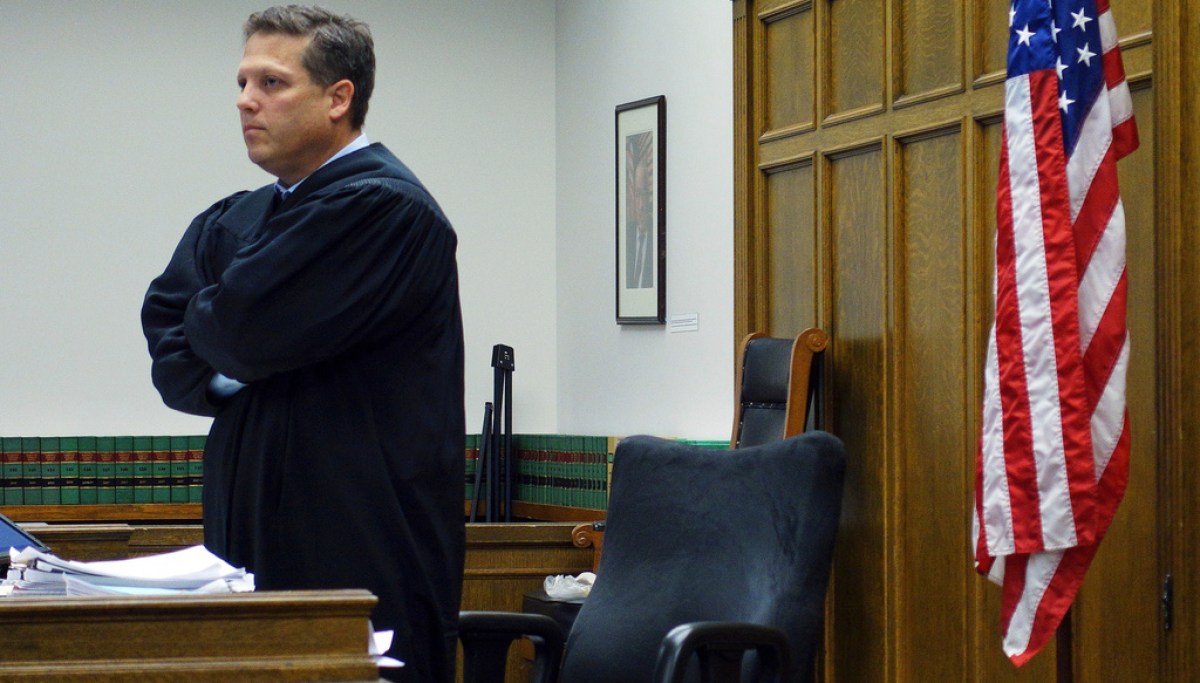
On Thursday 1 October, U.S. District Judge Stanley Bastian blocked President Trump's firing of Roger Rogoff as U.S. attorney for the Western District of Washington (Seattle), ruling from the bench at the end of a hearing. CBS NewsLC “A federal judge on Thursday blocked President Trump's firing of Roger Rogoff from his post as the top federal prosecutor in Seattle” Read at CBS News ↗ Raw StoryL “A federal judge ordered the Trump administration to reinstate Seattle's court-appointed U.S. attorney Thursday” Read at Raw Story ↗ Bastian said the question was one of first impression and answered it plainly: "The president cannot unilaterally fire a United States attorney appointed by the district court." CBS NewsLC “The president cannot unilaterally fire a United States attorney appointed by the district court.” Read at CBS News ↗ Rogoff was installed by the district's federal judges and took his oath on 15 July; Attorney General Todd Blanche announced that Trump had fired him less than an hour after he was sworn in. CBS NewsLC “Attorney General Todd Blanche announced in July that President Trump had fired Roger Rogoff as the U.S. attorney in Seattle, less than an hour after he was sworn into the post.”“since July 15, when the federal district judges in the region installed him to the role and he took his oath of office” Read at CBS News ↗
Bastian ruled that Rogoff has been the "rightful holder of that office" since 15 July and granted his request to be reinstated until the Senate confirms a replacement; Trump nominated Simon Peter Serrano (called Pete Serrano by Raw Story) for the post last month. CBS NewsLC “he agreed to grant Rogoff's request to reinstate him until the Senate confirms a replacement. Mr. Trump nominated Simon Peter Serrano to the position of U.S. attorney in Seattle last month.” Read at CBS News ↗ Raw StoryL “with Trump having already nominated Pete Serrano for the job” Read at Raw Story ↗ The judge also said Charles Neil Floyd, the first assistant who has been leading the office, "is not the United States attorney", and that authority for him to perform the role was "improperly granted"; Trump had signed an order the previous week directing Floyd to perform the office's functions. CBS NewsLC “Charles Neil Floyd, the first assistant who has been leading the office, "is not the United States attorney"”“Mr. Trump signed an order last week that directed Floyd "to perform the functions and duties of the office of United States Attorney."” Read at CBS News ↗ The oral order bars the administration from putting the firing into effect until a Senate-confirmed candidate fills the post, from removing Rogoff, denying him the office's benefits or resources, or obstructing his duties, and from treating anyone else as U.S. attorney. CBS NewsLC “the judge prohibited the Trump administration from putting Rogoff's firing into effect until the U.S. attorney spot is filled by a Senate-confirmed candidate.” Read at CBS News ↗
Bastian granted Rogoff's request for a preliminary injunction and enjoined Blanche and the Executive Office of the President from taking further steps to effectuate his termination; ABC says Trump fired Rogoff by email. ABC NewsLC “granting Rogoff's request for a preliminary injunction -- and further enjoined Attorney General Todd Blanche and the Executive Office of the President from taking any further moves to effectuate his termination.”“he was fired by President Trump through an email roughly an hour later.” Read at ABC News ↗ Bastian warned that allowing such firings would "upend the framework created by the Constitution and the statutes" balancing the president's power to appoint and the Senate's to confirm, and at the hearing asked DOJ's attorney what the point of the statute is "if the president can just within an hour terminate the person appointed". CBS NewsLC “would upend the framework created by the Constitution and the statutes, which together balance the president's right to appoint and the Senate's right to confirm” Read at CBS News ↗ Raw StoryL “if the president can just within an hour terminate the person appointed? Why have the statute?” Read at Raw Story ↗ Rogoff's attorney, Hailyn Chen, argued the Appointments Clause was meant as a "Guardrail against executive cronyism"; Rogoff's lawsuit had argued that otherwise the executive could evade the Senate's advice-and-consent role indefinitely. Raw StoryL “Guardrail against executive cronyism.” Read at Raw Story ↗ CBS NewsLC “actions will permit the Executive Branch to evade the Senate's advice-and-consent role indefinitely.” Read at CBS News ↗
The Justice Department said it intends to appeal and will immediately seek to halt the ruling. CBS NewsLC “The Justice Department said it intends to appeal and will immediately seek to halt the ruling.” Read at CBS News ↗ Raw StoryL “A DOJ spokesperson confirmed the department plans to fight the ruling.” Read at Raw Story ↗ The Justice Department's rapid response account on X said, "We disagree with the decision and intend to seek an immediate stay and will appeal"; the Washington Examiner reports Bastian declined to pause his ruling pending appeal, and that Trump fired Rogoff 54 minutes after the oath. Washington ExaminerR “Bastian declined to pause his ruling while the Trump administration appeals.”“Trump fired him 54 minutes after he took the oath.” Read at Washington Examiner ↗ Rogoff said he was gratified the court required compliance with the Constitution and federal law, adding, "Now I need to get to work." Washington ExaminerR ““Now I need to get to work,” he said.” Read at Washington Examiner ↗
The Seattle office has had no Senate-confirmed leader since mid-2023; Floyd began as interim U.S. attorney in October, his 120-day term expired in February, and he stayed on as first assistant, after which the district judges used their statutory authority to appoint Rogoff. CBS NewsLC “The U.S. attorney's office in Seattle has not had a Senate-confirmed leader since mid-2023.”“his appointment was subject to a 120-day clock, which expired in February.” Read at CBS News ↗ Trump has tried to install preferred U.S. attorneys in Nevada, New York, Virginia and New Jersey, and courts have found those appointments unlawful; CBS says Rogoff appears to be the first ousted prosecutor to challenge his firing in court. CBS NewsLC “Federal courts have in those instances, some of which involve a slightly different mechanism, found the appointments unlawful.”“Rogoff, however, appears to be the first ousted prosecutor to challenge his firing in court.” Read at CBS News ↗ Raw Story, citing Bloomberg News, noted the ruling leaves Rogoff serving under an attorney general who publicly opposed his appointment, and linked it to the Eastern District of Virginia, where Lindsey Halligan's appointment was held illegal and the prosecutions of James Comey and Letitia James were thrown out. Raw StoryL “Rogoff will now serve under an attorney general who's publicly opposed his appointment and controls the office's day-to-day operations.”“a judge's determination Lindsey Halligan was illegally appointed resulted in the Justice Department's prosecutions of former FBI Director James Comey and New York Attorney General Letitia James being thrown out” Read at Raw Story ↗
The Washington Examiner quoted former Justice Department lawyer Abhishek Kambli saying the dispute could reach the Supreme Court, and that Rogoff's position would be difficult if an appeals court reaches Article II removal powers; former prosecutor Bill Shipley noted the attorney general could still reassign Seattle staff elsewhere, leaving Rogoff working alone. Washington ExaminerR “Abhishek Kambli, a former Justice Department lawyer, said the dispute could reach the Supreme Court.”““But the AG has the power to empty the office and have Mr. Rogoff working alone.” Read at Washington Examiner ↗
Every sentence links to the reporting it rests on.
Left3 outlets
- Framing
- CBS gives a detailed, procedural account of the ruling and the vacancy statute; ABC briefly calls it the latest escalation in the administration's battle with the judiciary; Raw Story casts it as another defeat for a Trump 'scheme' to bypass Senate confirmation.
- Emphasis
- The judge's reasoning and quotes; the pattern of court losses over U.S. attorney appointments, including the Halligan case.
- Leaves out or plays down
- None quotes a Justice Department argument beyond the plan to appeal; none reports outside legal commentary on the practical limits of the ruling.
Centre0 outlets
No centre outlet in our sources has covered this story yet.
Right1 outlet
- Framing
- The Washington Examiner reports the ruling straightforwardly, noting the judge is an Obama appointee, and adds legal experts on the appeal prospects and the limits of the ruling.
- Emphasis
- Bastian's Obama appointment; the 54-minute firing; Supreme Court prospects and the attorney general's power to reassign staff.
- Leaves out or plays down
- Does not mention Floyd, the Senate nominee Serrano, or the Halligan/Comey cases.
- For example
-
“U.S. District Judge Stanley Bastian, an appointee of former President Barack Obama, granted Rogoff a preliminary injunction” — Washington Examiner
“making Rogoff’s position difficult if an appeals court reaches the president’s Article II powers.” — Washington Examiner
What every side reports
- Judge Stanley Bastian ruled from the bench on 1 October that Trump could not fire Rogoff.
- Rogoff was appointed by the district's judges and fired less than an hour after being sworn in.
- Trump has nominated Serrano for the post, and the Justice Department plans to appeal.
-
The president cannot unilaterally fire a U.S. attorney appointed by a district court.
Reported- Supports 1
- CBS News
- Reports 3
- ABC News, Raw Story, Washington Examiner
-
The Justice Department intends to appeal and seek an immediate stay of the ruling.
Reported- Reports 4
- ABC News, CBS News, Raw Story, Washington Examiner
-
Trump fired Rogoff within about an hour of his swearing-in on 15 July.
Reported- Reports 4
- ABC News, CBS News, Raw Story, Washington Examiner
Roger Rogoff person
Rogoff sued, arguing his firing was unlawful and would let the executive evade Senate advice and consent; the judge granted reinstatement.
“Rogoff filed a lawsuit against the Trump administration and argued that his removal was unlawful.” — CBS News
Stanley Bastian person
Bastian held the president cannot fire a court-appointed U.S. attorney and that the public interest requires the law be followed.
“The court finds it is in the public interest that the law be followed” — CBS News
Donald Trump person
Trump fired Rogoff within an hour of his swearing-in and ordered Floyd to run the office; his administration will appeal.
“Mr. Trump signed an order last week that directed Floyd” — CBS News
Todd Blanche person
Blanche announced the firing in July; Raw Story says he publicly opposed Rogoff's appointment.
“an attorney general who's publicly opposed his appointment” — Raw Story
Left3 articles
-
Judge blocks Trump's firing of top federal prosecutor in Seattle
Neutral Straight news report centred on the judge's ruling, quotes and the statutory background.
-
Yet another judge blows up Trump's scheme to get around DOJ prosecutor rules
Critical Presents the ruling as another rebuke of the administration's workaround, citing Bloomberg and the Halligan precedent.
-
Judge reinstates Washington state US attorney fired by Trump
Neutral Short wire-style report presenting the ruling as the latest escalation in the administration's fight with judges over U.S. attorneys.
Centre0 articles
No coverage yet.
Right1 article
-
Judge restores Seattle US attorney who Trump fired after court appointment
Mixed Reports the ruling plainly but highlights the judge's Obama appointment and expert doubts about the ruling's durability and practical effect.
- 1 Oct 21:41 First CBS NewsLC Judge blocks Trump's firing of top federal prosecutor in Seattle
- 1 Oct 23:08 +1h 27m Raw StoryL Yet another judge blows up Trump's scheme to get around DOJ prosecutor rules
- 1 Oct 23:27 +1h 46m ABC NewsLC Judge reinstates Washington state US attorney fired by Trump
- 2 Oct 00:16 +2h 35m Washington ExaminerR Judge restores Seattle US attorney who Trump fired after court appointment
Times are when each article was published, or when we first saw it if the outlet gave no time.