Ken Russell's The Devils restored and re-released uncut in UK cinemas
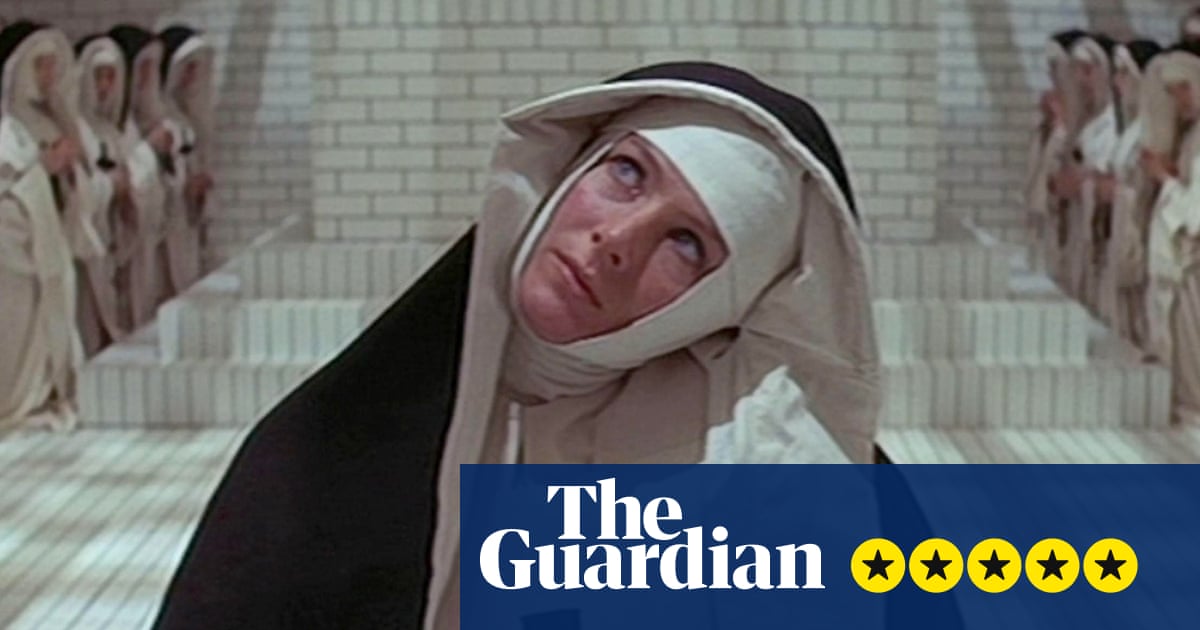
Ken Russell's 1971 film The Devils, long censored and banned, has been restored and re-released in its complete form in 2026. Reviews in The Guardian and Collider praise it as a landmark, with different emphases.

1 / 2
The story, neutrally told
Mixed · 2Ken Russell's 1971 film The Devils has been restored and re-released in its complete form after years of censorship. The GuardianLC “it is now restored and rereleased in its complete form after years of censorship” Read at The Guardian ↗ ColliderN “the first time an uncut version has ever been made officially available” Read at Collider ↗ Left · 1The Guardian's Peter Bradshaw describes it as a film originally banned for obscenity, and says Oliver Reed and Vanessa Redgrave give the performances of their lives. The GuardianLC “Oliver Reed and Vanessa Redgrave put in the performances of their lives in this film originally banned for obscenity” Read at The Guardian ↗ Mixed · 2The film is based on the true story of mass hysteria in 17th-century Loudun, western France, and was adapted by Russell from Aldous Huxley's The Devils of Loudun and John Whiting's stage play The Devils. Reed plays the priest Urbain Grandier, accused of witchcraft, and Redgrave plays the abbess Sister Jeanne des Anges. The GuardianLC “adapted by Russell from two literary works: Aldous Huxley’s The Devils of Loudun and John Whiting’s stage play The Devils” Read at The Guardian ↗ ColliderN “Oliver Reed plays Father Urbain Grandier” Read at Collider ↗
Centre · 1Collider's Samuel R. Murrian says the restoration was made by Warner Clockwork, an arthouse label founded in late 2025 for which this is the first theatrical release. It used elements from Russell's personal copy of the film as well as the original negative. ColliderN “Spectacularly restored using elements from Russell's personal copy of the film as well as the original negative”“the first theatrical release from the arthouse label founded in late 2025” Read at Collider ↗ Centre · 1Collider reports that the theatrical run was extended beyond its original one-week window. It also says several previously censored scenes had been considered lost until critic Mark Kermode reportedly found them, mislabelled and decomposing, in a Warner Bros. vault in 2002. ColliderN “extended beyond the original intended one-week window”“before film critic Mark Kermode discovered them, reportedly mislabeled and nearing total decomposition, in a Warner Bros. vault in 2002” Read at Collider ↗ Left · 1Bradshaw reads the film as being about the violence of authority rather than sexual imagery, and as a work about fascism and the cynicism of religious and state power. He also praises Derek Jarman's set designs and Peter Maxwell Davies's music. The GuardianLC “it is the violence of authority that is shown to be obscene”“The amazing, anachronistic set designs of the young Derek Jarman” Read at The Guardian ↗
Centre · 1Murrian calls it a masterpiece and says the restored scenes, including a long-lost orgy set atop a crucifix, are essential to its meaning. The reviewer says they once dismissed the film after seeing a censored bootleg, and compares it with The Exorcist and Bad Lieutenant as a drama about Catholic faith. ColliderN “the most controversial, long-censored moments of The Devils are, in fact, indispensable to its impact”“a spectacularly unsettling orgy set atop a crucifix” Read at Collider ↗
Every sentence links to the reporting it rests on. The pill in front of each says where its sources sit: Left, Centre or Right when one side supplies at least half of them, Mixed when they are evenly split. The number is how many outlets it cites.
Left1 outlet
- Framing
- The Guardian's review treats the film as a classic of provocation and reads it as a critique of state and church power, placing it among European art-house shockers.
- Emphasis
- Themes of authority, hysteria, fascism and misogyny; performances, design and music.
- Leaves out or plays down
- Says little about the restoration process, the distributor, or the theatrical run.
- Charged language
- “scabrous 1971 classic”“frenzied aria of confrontation and hysteria”
- For example
-
“it is the violence of authority that is shown to be obscene” — The Guardian
“Russell's aria of angry pessimism” — The Guardian
Centre1 outlet
- Framing
- Collider's review is a personal story of changing one's mind, and celebrates the uncut restoration as a major cinema event of 2026.
- Emphasis
- The restoration work, the restored censored scenes, the film's reappraisal, and its Christian themes.
- Leaves out or plays down
- Gives little detail on the UK release itself, which is the main focus of the Guardian piece.
- Charged language
- “Most Visionary Masterpiece”“subversive, shocking masterpiece”
Right0 outlets
No right outlet in our sources has covered this story yet.
What every side reports
- The Devils (1971) has been restored and re-released in complete form.
- Oliver Reed plays Father Urbain Grandier and Vanessa Redgrave plays Sister Jeanne des Anges.
- The film is based on Aldous Huxley's book and John Whiting's play about events in Loudun.
The Devils (1971 film) other
Both reviews present the film as a restored landmark, shocking in 1971 and still so, now seen more favourably.
“it is now restored and rereleased in its complete form after years of censorship” — The Guardian
“receiving universal critical acclaim that once eluded it” — Collider
Ken Russell person
Collider says Russell was a practising Catholic who made the film to protest those who abuse faith and power. The Guardian describes the film as Russell's 'aria of angry pessimism'.
“Russell was a practicing Catholic since young adulthood” — Collider
“Ken Russell's aria of angry pessimism” — The Guardian
Oliver Reed person
Both reviewers single out Oliver Reed's Grandier as a career-best performance.
“Reed is a revelation” — The Guardian
“In the performance of his career, Oliver Reed” — Collider
UK and Ireland1 outlet
The Guardian places the film in the history of British censorship and film culture.
“It comes from an era when movies, playing in high-street cinemas, still had the power to shock” — The Guardian
The Guardian
North America1 outlet
Collider stresses the restoration and its worldwide screenings, including 35mm prints.
“one of many 35mm prints playing internationally” — Collider
Collider
Left1 article
-
The GuardianLC · · Opinion
Sympathetic Admiring review that reads the film as a study of the violence of power and treats its obscenity as deliberate.
Centre1 article
-
ColliderN · · Opinion
2026's Most Visionary Masterpiece Is a 55-Year-Old Uncensored Re-Release | Review
Celebratory Enthusiastic, personal review that hails the uncut restoration as a masterpiece and a major event of 2026.
Right0 articles
No coverage yet.
- 28 Oct 11:00 First The GuardianLC The Devils review – Ken Russell’s 1971 possessed-nuns tale is a frenzied aria of confrontation and hysteria Opinion
- 28 Oct 19:34 +8h 34m ColliderN 2026's Most Visionary Masterpiece Is a 55-Year-Old Uncensored Re-Release | Review Opinion
Times are when each article was published, or when we first saw it if the outlet gave no time.
Ask about this story
Loading…