King and Queen open the Senedd's seventh term amid protests and a poem row
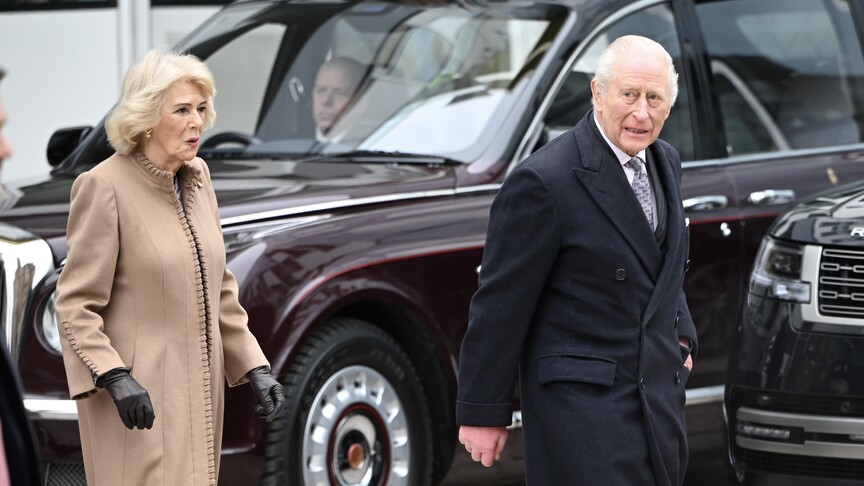
King Charles III and Queen Camilla attended the ceremonial opening of the Senedd's seventh term in Cardiff on 15 October. The King praised Wales's identity and his connection to it, while anti-monarchy protesters gathered outside and a dispute over a rejected poem emerged.


1 / 3
The story, neutrally told
Centre · 2King Charles III and Queen Camilla attended the ceremonial opening of the Welsh Parliament (Senedd) on Thursday 15 October, marking the start of its seventh term after the May election. Evening StandardN “The King and Queen will attend the ceremonial opening of the Welsh Parliament on Thursday.” Read at Evening Standard ↗ BBC NewsN “The monarch and Queen Camilla officially open the Senedd's seventh term.” Read at BBC News ↗ Centre · 2It was the first time Charles had attended the ceremony as King; he and Camilla last attended in 2021, alongside Queen Elizabeth II, who had opened every post-election session from 1999 until 2022. Evening StandardN “This will be the first time Charles attends a ceremonial opening of the Welsh Parliament as King.” Read at Evening Standard ↗ BBC NewsN “The late queen opened the first National Assembly for Wales - the previous incarnation of the Senedd - in 1999, and every post-election session until 2022.” Read at BBC News ↗ Centre · 2The King was welcomed on the Senedd steps by First Minister Rhun ap Iorwerth of Plaid Cymru, Presiding Officer (Llywydd) Huw Irranca-Davies and Welsh Secretary Stephen Kinnock, who represented the UK government; a 21-gun salute was fired in Cardiff Bay, and a Royal Navy Guard of Honour was planned to give a Royal Salute. BBC NewsN “A 21-gun salute in Cardiff Bay marked the King's arrival in the city, and Plaid leader ap Iorwerth greeted the King on the Senedd steps” Read at BBC News ↗ Evening StandardN “Charles and Camilla will be welcomed to the Senedd by the Royal Navy Guard of Honour, who will give a Royal Salute.” Read at Evening Standard ↗
Centre · 2Addressing the chamber, the King said he had "always felt immensely privileged, and proud, to have had such a special connection with Wales – with its language, its culture and its landscape", urged members to "bear always in mind" those shared strengths as they take forward their task of government, and ended with a sentence in Welsh. Evening StandardN ““I have always felt immensely privileged, and proud, to have had such a special connection with Wales – with its language, its culture and its landscape – for so much of my life.” Read at Evening Standard ↗ BBC NewsN “He urged Senedd members to "bear always in mind" those shared strengths” Read at BBC News ↗ Centre · 1The BBC reported that he also spoke of a "distinctively Welsh idea of connection, the profound connection between place, people, culture and belonging". BBC NewsN “that distinctively Welsh idea of connection, the profound connection between place, people, culture and belonging," he said.” Read at BBC News ↗ Centre · 2Ap Iorwerth called the occasion a "new chapter" for national democracy, and said the Senedd, expanded from 60 to 96 members for the May election, was "strengthened in its capacity to scrutinise"; Irranca-Davies said disagreement "need not mean division". BBC NewsN “Ap Iorwerth said the ceremony marked a "new chapter" for national democracy”“the "institution is at its best when we recognise that disagreement need not mean division"” Read at BBC News ↗ Evening StandardN “It is a larger parliament, elected through a new electoral system designed to better reflect the diversity of views and experiences across our country.” Read at Evening Standard ↗
Centre · 1The visit was the King's first official meeting with ap Iorwerth since Plaid Cymru, a party the BBC describes as rooted in a strong republican tradition, won the election and replaced Labour, which had led every Welsh government since devolution in 1999; Buckingham Palace said the King also held an audience with the first minister at the Millennium Centre. BBC NewsN “The visit marked the King's first official meeting with First Minister Rhun ap Iorwerth following the Senedd election victory of Plaid Cymru - a party rooted in a strong republican tradition.”“Buckingham Palace said the King also held an audience with the first minister at the nearby Millennium Centre.” Read at BBC News ↗ Centre · 1Ap Iorwerth told Politics Home last year that he did not believe in "kings and princes" but that the issue was not a "political priority for him", and that there was a "clear argument" for consigning the Prince of Wales title to history. BBC NewsN “he did not believe in "kings and princes", but said the issue was not a "political priority for him"” Read at BBC News ↗ Centre · 2Protesters were present: the Evening Standard reported chants of "not my King" and "down, down, down with the Crown" as the royal couple arrived, and the BBC said about 30 anti-monarchy protesters were vocal throughout the visit, with one removed from the area and led away by police. Evening StandardN “Chants of “not my King” and “down, down, down with the Crown” could be heard as Charles and Camilla greeted First Minister Rhun ap Iorwerth” Read at Evening Standard ↗ BBC NewsN “About 30 anti-monarchy protesters by the steps of the Senedd were vocal throughout the royal visit, and one protester was removed from the area and led away by police.” Read at BBC News ↗
Centre · 1National Poet of Wales Hanan Issa did not perform as had been planned: Issa said the poem To Grow, which referred to Gaza and trans healthcare, was rejected because the ceremony was "apolitical", and a more abstract second version was also rejected. The Senedd commission said the poem was "not the right fit for this occasion" and that it respected Issa's artistic independence. BBC NewsN “Wales' national poet did not take part in ceremony as had been planned, after Senedd officials rejected the poem she had written for the event and cancelled her performance.”“Among other issues, the poem referred to Gaza and trans healthcare, and Issa said a second version that used "more abstract language" was also rejected.”“After a development process, we concluded that the poem was not the right fit for this occasion.” Read at BBC News ↗ Centre · 1The programme also included the King's Harpist Mared Pugh Evans and the Merched Plastaf Choir singing O Gymru, and meetings with party leaders, Welsh Youth Parliament members and Senedd officials. Evening StandardN “Alongside the speeches, the King's Harpist, Mared Pugh Evans, will perform, and the Merched Plastaf Choir will sing O Gymru.”“Charles and Camilla will meet party leaders, members of the Welsh Youth Parliament, the chief executive and clerk of the Senedd, and the deputy presiding officer.” Read at Evening Standard ↗ Centre · 1The King said he would return to Wales next week to visit Aberfan; he, the Queen and the Prince of Wales are due at the memorial garden on the 60th anniversary of the 21 October 1966 coal tip disaster, and he met a survivor pulled from the rubble aged six. BBC NewsN “The King used his visit to the Senedd to say he would return to Wales next week to visit Aberfan, scene of the 1966 coal tip disaster, and met a survivor who had been pulled from the rubble aged six.”“The King and Queen, along with the Prince of Wales, will return to south Wales next week to pay their respects at the Aberfan memorial garden exactly 60 years since the disaster.” Read at BBC News ↗
Every sentence links to the reporting it rests on. The pill in front of each says where its sources sit: Left, Centre or Right when one side supplies at least half of them, Mixed when they are evenly split. The number is how many outlets it cites.
Left0 outlets
No left outlet in our sources has covered this story yet.
Centre3 outlets
- Framing
- Both outlets present a ceremonial occasion centred on the King's address and the new Senedd term. The Evening Standard gives a preview and a short report with the protest chants; the BBC adds political context, the protest, the poem row and Aberfan.
- Emphasis
- The King's words on his connection with Wales, the Senedd's expansion to 96 members, and the symbolism of a Plaid Cymru first minister meeting the King.
- Leaves out or plays down
- The Evening Standard does not mention the rejected poem, ap Iorwerth's republican-leaning background or the number of protesters.
- Charged language
- “not my King”“down, down, down with the Crown”
- For example
-
“The King has hailed his “special connection” with Wales during an address to the Welsh Parliament.” — Evening Standard
“The meeting with the leader of Plaid Cymru - a pro-independence party rooted in a strong republican tradition - marked a significant and symbolic moment.” — BBC News
Right0 outlets
No right outlet in our sources has covered this story yet.
What every side reports
- The King and Queen attended the ceremonial opening of the Senedd on 15 October 2026.
- It was the King's first such opening as monarch; the couple last attended in 2021.
- The King spoke of his 'special connection' with Wales, its language, culture and landscape.
- First Minister Rhun ap Iorwerth and Presiding Officer Huw Irranca-Davies received the King.
Where accounts differ
-
Whether the poem row and protests are part of the story
- Centre
- The Evening Standard's reports mention the protest chants but not the poem; the BBC covers the protest, the rejected poem and the Senedd commission's explanation.
King Charles III person
The King presented the occasion as an expression of his long affinity with Wales and urged members to draw on its shared strengths in government.
“As you take forward your task of government, we know you will bear always in mind, and draw inspiration from, those shared strengths” — Evening Standard
Senedd organisation
Senedd leaders framed the ceremony as a new chapter for a larger parliament; the Senedd commission said the National Poet's poem was not the right fit for the occasion.
“This ceremony marks the start of a new chapter in the Senedd’s history.” — Evening Standard
“After a development process, we concluded that the poem was not the right fit for this occasion.” — BBC News
Left0 articles
No coverage yet.
Centre4 articles
-
King and Queen to attend ceremonial opening of Welsh Parliament
Neutral Preview of the programme and who the King will meet, with the presiding officer's quote on a new chapter.
-
King hails ‘special connection’ with Wales in Senedd address
Neutral Short report of the King's address, noting the protest chants on arrival.

-
King Charles praises Welsh 'sense of belonging' as he opens Senedd
Neutral Detailed account combining the address, Plaid's republican background, protests, the poem controversy and Aberfan.
-
Right0 articles
No coverage yet.
- 15 Oct 00:01 First Evening StandardN King and Queen to attend ceremonial opening of Welsh Parliament
- 15 Oct 12:54 +12h 53m Evening StandardN King hails ‘special connection’ with Wales in Senedd address
- 15 Oct 14:21 +14h 20m BBC NewsN King Charles praises Welsh 'sense of belonging' as he opens Senedd
- 15 Oct 15:39 +15h 39m Anadolu AgencyN Britain’s King Charles formally opens new term of Welsh parliament
Times are when each article was published, or when we first saw it if the outlet gave no time.
Ask about this story
Loading…