KOSPI falls 8%, triggering circuit breaker, as Asian tech stocks slide on US inflation
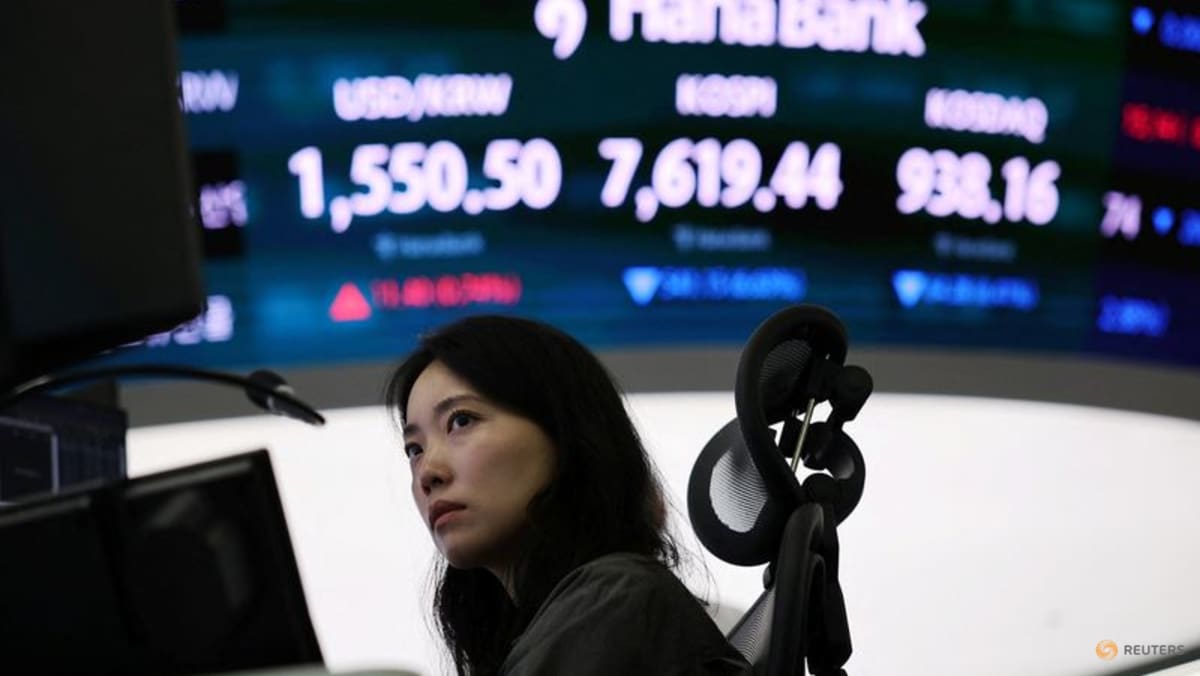
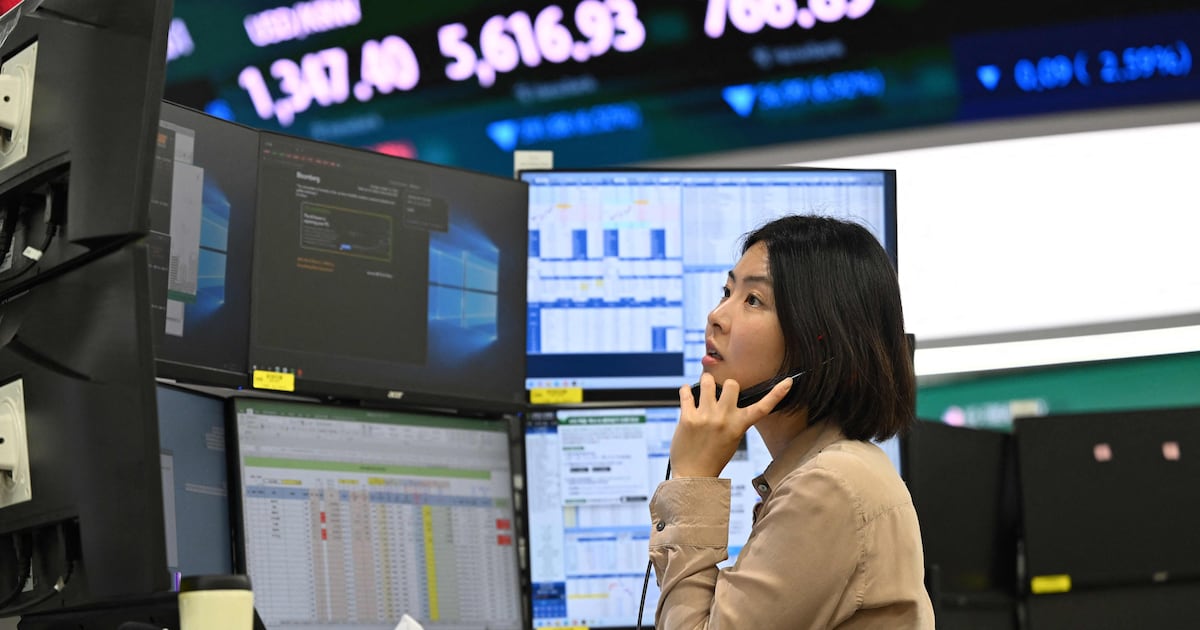
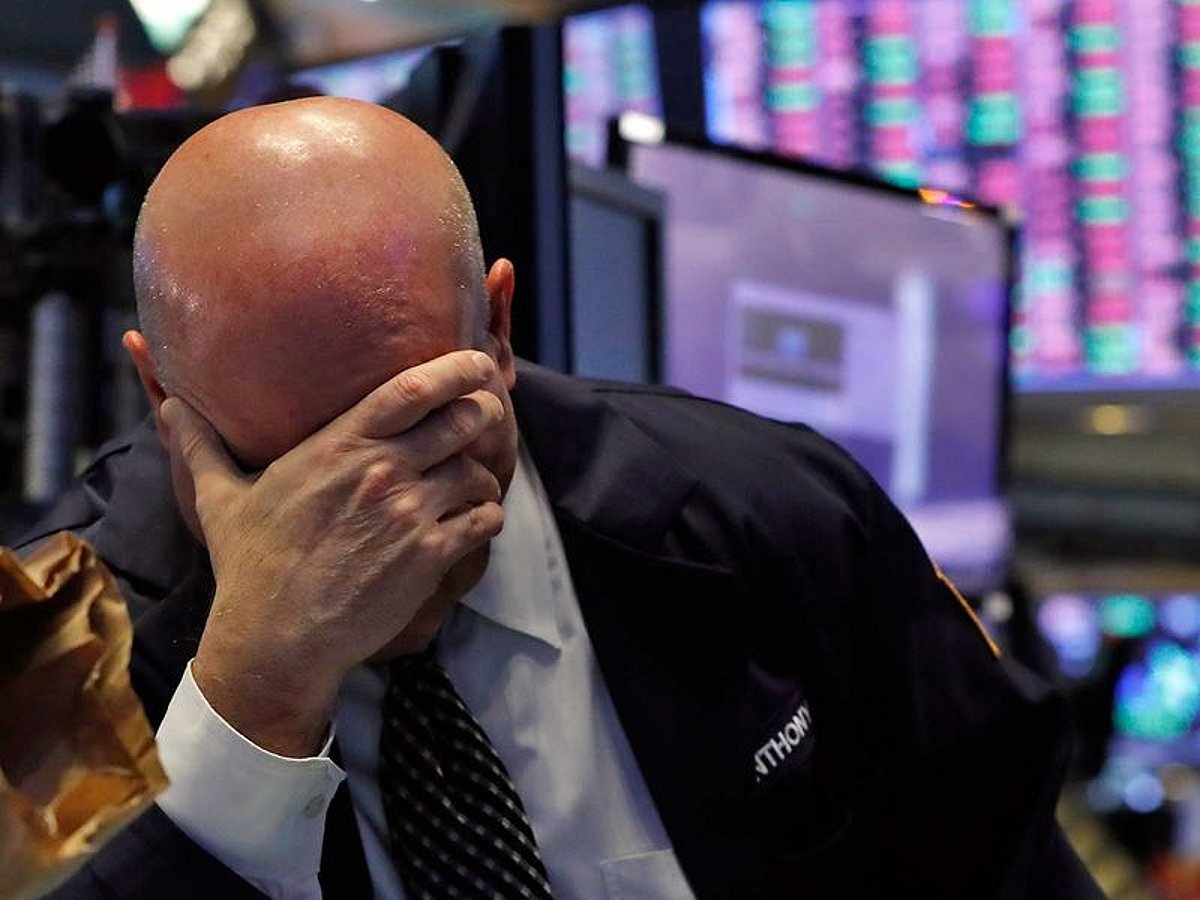
South Korea's KOSPI fell 8% on Thursday 15 October, triggering a trading halt, as Asian chip and AI stocks followed a Wall Street drop after US inflation came in above forecasts.
1 / 3
The story, neutrally told
Centre · 1South Korea's benchmark KOSPI index fell 8 per cent on Thursday 15 October, triggering a circuit breaker for the first time in 2-1/2 months, as chipmakers tracked a technology-led Wall Street selloff. CNAN “South Korea's benchmark stock index KOSPI fell 8 per cent on Thursday, triggering a circuit breaker for the first time in 2-1/2 months” Read at CNA ↗ Centre · 1As of 0338 GMT the index was down 480.76 points at 5,528.05, its lowest since 29 July, when trading was last halted for 20 minutes. CNA said the halt was the 10th circuit-breaker activation on the KOSPI this year and the 16th in its history. CNAN “The KOSPI was down 480.76 points at 5,528.05, as of 0338 GMT, hitting its lowest since July 29”“The halt marked the 10th activation of a circuit breaker on the KOSPI this year and the 16th in its history.” Read at CNA ↗ Centre · 1Samsung Electronics fell 9.70 per cent and SK Hynix lost 11.35 per cent after the Philadelphia Semiconductor Index dropped 4.3 per cent overnight. LG Energy Solution fell 5.45 per cent and Hyundai Motor 6.38 per cent. Of 916 traded issues, 855 declined and 52 advanced, and foreigners were net sellers of 2.9 trillion won ($2.15 billion). CNAN “Chipmaker Samsung Electronics fell 9.70 per cent and peer SK Hynix lost 11.35 per cent”“Foreigners were net sellers of shares worth 2.9 trillion won ($2.15 billion).” Read at CNA ↗
Centre · 1The trigger was US data: consumer price inflation rose to 3.7 per cent annually in September, above August's 3.4 per cent and the 3.6 per cent forecast, with core inflation at 2.6 per cent, also above expectations. Analysts quoted said this raised the chance of a US Federal Reserve rate hike. The NationalN “US inflation rose to 3.7 per cent annually in September, above both August’s 3.4 per cent and the 3.6 per cent forecast for this month.”“The US inflation data now points to a higher chance of a rate hike by the US Federal Reserve, Mr Rodda said.” Read at The National ↗ Centre · 1Elsewhere in Asia, The National reported Tokyo's Nikkei 225 down 5.12 per cent at midday, Hong Kong's Hang Seng down 1 per cent and the Shanghai Composite down 1.75 per cent. Its earlier figure for the KOSPI was a slump of more than 7 per cent. The NationalN “South Korea's Kospi slumped more than 7 per cent, while Tokyo’s Nikkei 225 index was down 5.12 per cent at midday local time on Thursday.”“Hong Kong's Hang Seng index dropped by 1 per cent, while China's Shanghai Composite Index fell 1.75 per cent.” Read at The National ↗ Centre · 2Analysts offered different explanations. Capital.com's Kyle Rodda pointed to the AI-stock selloff and tighter financial conditions from higher yields and a stronger US dollar, plus fears about chip competition and peak profit growth. Mirae Asset Securities' Seo Sang-young said the market was reacting to whether capital raising and massive AI infrastructure investment will turn into real income. J.P.Morgan's Mixo Das said the market was struggling to find a new buyer after Samsung and SK Hynix buybacks ran their course. The NationalN “not just the deeper sell-off in AI-related stocks but also the tightening of financial conditions that comes from higher yields and a higher US dollar” Read at The National ↗ CNAN “whether massive infrastructure investment will lead to real income”“is struggling to find a new buyer" after buyback programmes at Samsung and SK Hynix have run their course” Read at CNA ↗
Centre · 1Das said the most volatile part of the process was likely behind, and that J.P.Morgan expects AI stocks to be substantially higher on a six- to 12-month view. CNAN “we think the most volatile part of this flow discovery is likely behind us” Read at CNA ↗ Centre · 1The KOSPI was headed for a seventh straight losing session, its longest streak since September 2024, and has risen 31 per cent this year. CNA said volatility had been stabilising since authorities tightened rules in July on leveraged single-stock ETFs, introduced in May. CNAN “The KOSPI was headed for a seventh straight session of losses, its longest losing streak since September 2024”“The KOSPI has risen 31 per cent so far this year” Read at CNA ↗ Centre · 2The International Monetary Fund, in a Thursday report, warned that a correction in AI-related investment or asset valuations could weigh disproportionately on Asia, and that uncertainty over US monetary policy could keep its markets volatile. In Seoul, the won was quoted at 1,348.2 per dollar, 0.44 per cent weaker, while the three-year and 10-year bond yields fell to 3.841 and 4.188 per cent. The NationalN “A correction in AI-related investment or asset valuations could weigh disproportionately on Asia given its central role in global technology supply chains” Read at The National ↗ CNAN “The won was quoted at 1,348.2 per dollar on the onshore settlement platform, 0.44 per cent lower than its previous close at 1,342.3.” Read at CNA ↗
Every sentence links to the reporting it rests on. The pill in front of each says where its sources sit: Left, Centre or Right when one side supplies at least half of them, Mixed when they are evenly split. The number is how many outlets it cites.
Left0 outlets
No left outlet in our sources has covered this story yet.
Centre3 outlets
- Framing
- Both centre outlets treat it as a market-wire style report of an AI/chip-led selloff driven by sticky US inflation and rate-hike bets. CNA focuses on the KOSPI circuit breaker; The National widens to regional markets and the IMF warning.
- Emphasis
- CNA: Korean market detail, circuit-breaker history, stock moves, analyst views. The National: US inflation figures, regional indices, IMF warning on Asia's AI reliance.
- Leaves out or plays down
- The National does not mention the circuit breaker or the 8% fall (it reports more than 7%); CNA gives little on other Asian markets or the IMF.
- Charged language
- “rout”“plunged”“slumped”
- For example
-
“South Korea's benchmark stock index KOSPI fell 8 per cent on Thursday, triggering a circuit breaker for the first time in 2-1/2 months” — CNA
“Asian markets fell on Thursday, as AI-related stocks plunged following a drop in Wall Street” — The National
Right0 outlets
No right outlet in our sources has covered this story yet.
What every side reports
- KOSPI fell sharply on Thursday 15 October in an AI/chip-led selloff.
- The selloff followed a Wall Street drop after US inflation data raised rate-hike expectations.
- Japan's Nikkei and other Asian markets also fell.
Where accounts differ
-
Size of the KOSPI fall
- Centre
- CNA reported an 8% fall triggering a circuit breaker; The National reported a slump of more than 7% at the time of writing.
Left0 articles
No coverage yet.
Centre3 articles
-
CNAN ·
South Korea's KOSPI triggers circuit breaker in tech-led selloff
Neutral Factual market report centred on the KOSPI halt, with analyst quotes and a measured JPMorgan outlook.
-
Asian markets fall on tech stock rout as high US inflation weighs on Wall Street
Neutral Regional markets roundup linking the selloff to US inflation data and an IMF warning on Asia's AI exposure.
-
Right0 articles
No coverage yet.
- 15 Oct 05:54 First CNAN South Korea's KOSPI triggers circuit breaker in tech-led selloff
- 15 Oct 05:59 +5m The NationalN Asian markets fall on tech stock rout as high US inflation weighs on Wall Street
- 15 Oct 06:05 +11m Gulf NewsN Korean market crash: Kospi plunges 8%, trading halted
Times are when each article was published, or when we first saw it if the outlet gave no time.
Ask about this story
Loading…