Lab study: microplastic surfaces generate reactive molecules in water and blood serum
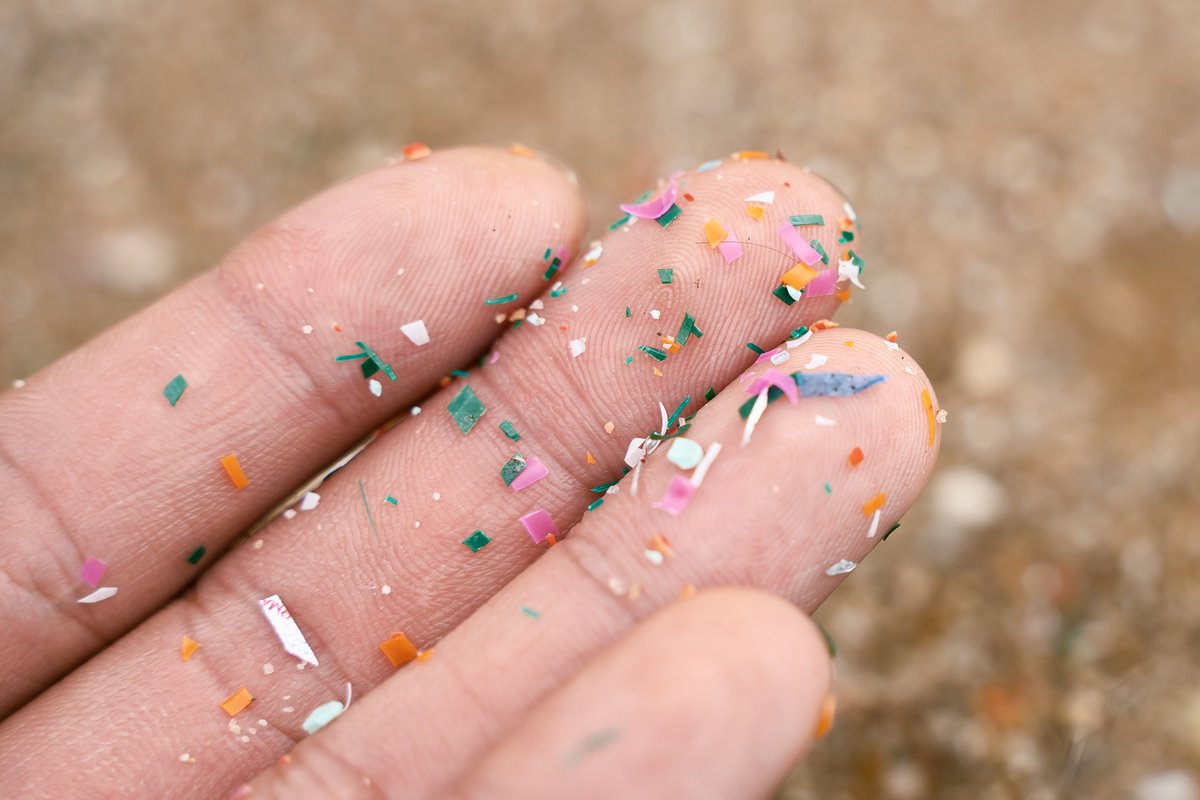
A study led by Wei Min of Columbia University found that common microplastics generate reactive hydroxyl radicals where they meet water, a possible explanation for links to inflammation. The effect was weaker but detectable in blood serum, and researchers say the health impact is unclear.

1 / 3
The story, neutrally told
Mixed · 2A new laboratory study led by Wei Min, a chemist at Columbia University, reports that microplastics generate highly reactive molecules when they contact water. Scientific AmericanLC “Now a study published in Nature offers a tantalizing clue: microplastics interact with water, generating highly reactive molecules.” Read at Scientific American ↗ New ScientistN “In a lab experiment, microplastics generated harmful molecules when exposed to blood, which may damage cells” Read at New Scientist ↗ Mixed · 2The team tested particles of common plastics, including polystyrene, polyethylene and polypropylene; Scientific American also lists polyvinyl chloride and polyethylene terephthalate (PET). New ScientistN “studied the microparticles of a range of commonly used plastics – including polystyrene, polyethylene and polypropylene” Read at New Scientist ↗ Scientific AmericanLC “including polystyrene, polyethylene, polyvinyl chloride, polypropylene and polyethylene terephthalate” Read at Scientific American ↗ Centre · 1Using techniques including fluorescence microscopy and electron spin resonance spectroscopy, they showed that hydroxyl radicals, a type of reactive oxygen species, form spontaneously at the plastic-water interface. Min links this to electric charges forming there, which may help strip electrons from OH- ions in water. New ScientistN “a type of reactive oxygen species called hydroxyl radicals spontaneously forms at the surface between plastic and water”“These charges may help strip electrons from OH- ions in water, generating volatile hydroxyl radicals” Read at New Scientist ↗
Left · 1Min explained that plastic surfaces repel water, so water molecules there cannot form the hydrogen bonds they keep in liquid form, which changes the local electrical environment and chemical reactivity. Scientific AmericanLC “Plastic surfaces are hydrophobic, meaning they repel water, Min says. Thus, water molecules cannot form the hydrogen bonds they maintain in liquid form.” Read at Scientific American ↗ Mixed · 2Surface area is central to the proposed effect: as plastics fragment, surface-to-volume ratio rises sharply. Min said a credit card broken into 10-micron particles gains more than 200 times its surface area, and Matthew Campen of the University of New Mexico said a half-centimetre plastic ball could degrade into a quadrillion 50-nanometre particles, raising surface area 100,000-fold. Scientific AmericanLC “when a credit card is fragmented into particles some 10 microns in diameter, there is a more than 200-fold increase in its surface area” Read at Scientific American ↗ New ScientistN “a half-centimetre ball of plastic could degrade into a quadrillion 50-nanometre microparticles, increasing its surface area 100,000 times” Read at New Scientist ↗ Centre · 1In New Scientist's account, the charge attracted biological molecules such as DNA to the particle surface in water, and this appeared to damage proteins and red blood cells. When particles were suspended in blood serum, radical generation was weaker but "still detectable", Min said. New ScientistN “this electric charge attracted biological molecules such as DNA to the surface of microplastics when suspended in water, which appeared to damage both proteins and red blood cells”“The effect was weaker, but “still detectable”, says Min.” Read at New Scientist ↗
Centre · 1The most water-repelling plastics tested, such as polyethylene and polypropylene, showed stronger radical-generating activity than more hydrophilic ones such as PET. Adding a surfactant, a chemical that weakens the forces holding water molecules together, dampened radical generation. New ScientistN “showed stronger radical-generating activity than more hydrophilic ones, such as PET (polyethylene terephthalate)”“radical generation was dampened” Read at New Scientist ↗ Mixed · 2The work is framed as a possible mechanism for earlier findings that microplastics cause inflammation, oxidative stress and reduced mitochondrial activity, and for associations with conditions such as cardiovascular disease and dementia. Scientific AmericanLC “In past research, microplastics have been shown to cause inflammation, oxidative stress and decreased mitochondrial activity.” Read at Scientific American ↗ New ScientistN “linked microplastics, which form when plastics degrade in the environment, to issues such as poor cognition and cardiovascular disease” Read at New Scientist ↗ Mixed · 2Researchers stress the limits of the findings. Min said how this contributes to damage in human tissue is unclear, the potential size of the effect is unknown, other mechanisms could be involved, and "We have no idea right now" how much plastic is in a person. Scientific AmericanLC “How this might contribute to damage in living tissues in humans is still unclear, Min says.” Read at Scientific American ↗ New ScientistN ““How much plastic is in a regular human being?” he says. “We have no idea right now.”” Read at New Scientist ↗
Mixed · 2Independent researchers welcomed the work. Martin Wagner, a toxicologist at the Norwegian University of Science and Technology, said it implies microplastics are themselves a source of oxidative species. Hao Chen of the New Jersey Institute of Technology called the results "very important" but a "starting point", and Campen called them a "critical building block". Scientific AmericanLC ““It implies microplastics themselves are a source of oxidative species... and oxidative stress is not a secondary effect of exposure.”” Read at Scientific American ↗ New ScientistN ““provide a starting point” to help us understand the interaction between microplastics and cells” Read at New Scientist ↗ Centre · 1Campen urged calm, noting that in the body microplastics will usually be surrounded by lipids that act as surfactants. He said the main concern is whether exposure is worsening and that health effects need to be understood to avoid exposure. New Scientist also cautions that reports of microplastics in blood may reflect contamination and false positives. New ScientistN ““I encourage people to take a deep breath,” Campen says.”“signals of their presence throughout our bodies may be the result of contamination and false positive results” Read at New Scientist ↗ Centre · 1Min suggested the findings could help design safer materials, though Campen noted the least active plastics are probably also those that break down more slowly in the environment, posing a trade-off. New ScientistN “The findings could also help scientists design safer materials, says Min.”“the plastics with the lowest activity are also probably the ones that break down more slowly in the environment” Read at New Scientist ↗
Every sentence links to the reporting it rests on. The pill in front of each says where its sources sit: Left, Centre or Right when one side supplies at least half of them, Mixed when they are evenly split. The number is how many outlets it cites.
Left2 outlets
- Framing
- Scientific American presents the study, published in Nature, as a possible answer to why microplastics are linked to inflammation, opening with the health concern.
- Emphasis
- The mechanism (water at hydrophobic surfaces), the links to serious diseases, and an outside toxicologist's praise.
- Leaves out or plays down
- Does not report the blood-serum experiment, the weaker effect there, the surfactant dampening, or Campen's caution.
- Charged language
- “a source of extreme concern for health”“tantalizing clue”
- For example
-
“Microplastics are a source of extreme concern for health: the presence of these tiny pieces of plastic has been linked to heart attacks, stroke, dementia and brain tumors.” — Scientific American
“Now a study published in Nature offers a tantalizing clue” — Scientific American
Centre1 outlet
- Framing
- New Scientist leads with the blood experiment and a conditional ("may produce"), and balances the findings with caveats from outside experts.
- Emphasis
- Blood serum results, surfactants in the body, uncertainty about size of effect, contamination doubts and the safer-materials trade-off.
- Leaves out or plays down
- Does not name the journal or list PVC among the plastics tested.
- Charged language
- “harmful molecules”
- For example
-
““I encourage people to take a deep breath,” Campen says.” — New Scientist
“although he adds that the potential size of the effect is unclear and other mechanisms could be involved” — New Scientist
Right0 outlets
No right outlet in our sources has covered this story yet.
What every side reports
- The study is led by Wei Min of Columbia University and finds microplastics generate reactive molecules at the plastic-water interface.
- Surface area growth as plastics fragment is key to the proposed effect.
- The study tested several common plastics, including polystyrene, polyethylene and polypropylene.
- How much this matters for human health remains unclear.
Microplastics topic
Microplastics are presented as chemically active at their surfaces when in contact with water, which may explain links to inflammation, though human health effects remain unproven.
“The presumed chemical inertness of bulk plastics overlooks the toxicity of their fragmented microscale forms.” — Scientific American
“it could explain why they have been linked to cell damage and other health concerns” — New Scientist
Left2 articles
-
Microplastics are linked to inflammation—scientists might have finally worked out why
Alarmist Opens with the health alarm and presents the study as a likely explanation of inflammation links, with fewer caveats.
-
Centre1 article
-
Microplastics may produce harmful molecules if they enter our blood
Mixed Cautious, conditional report on the blood-serum findings, balanced with expert caveats and calls for calm.
Right0 articles
No coverage yet.
- 14 Oct 16:11 First New ScientistN Microplastics may produce harmful molecules if they enter our blood
- 14 Oct 18:30 +2h 19m Scientific AmericanLC Microplastics are linked to inflammation—scientists might have finally worked out why
- 15 Oct 19:39 +27h 28m Ars TechnicaLC Microplastics in water aren’t inert and make damaging chemicals on their own
Times are when each article was published, or when we first saw it if the outlet gave no time.
Ask about this story
Loading…