Libya's parliament replaces speaker Agila Saleh with Al-Obeidi after 12 years
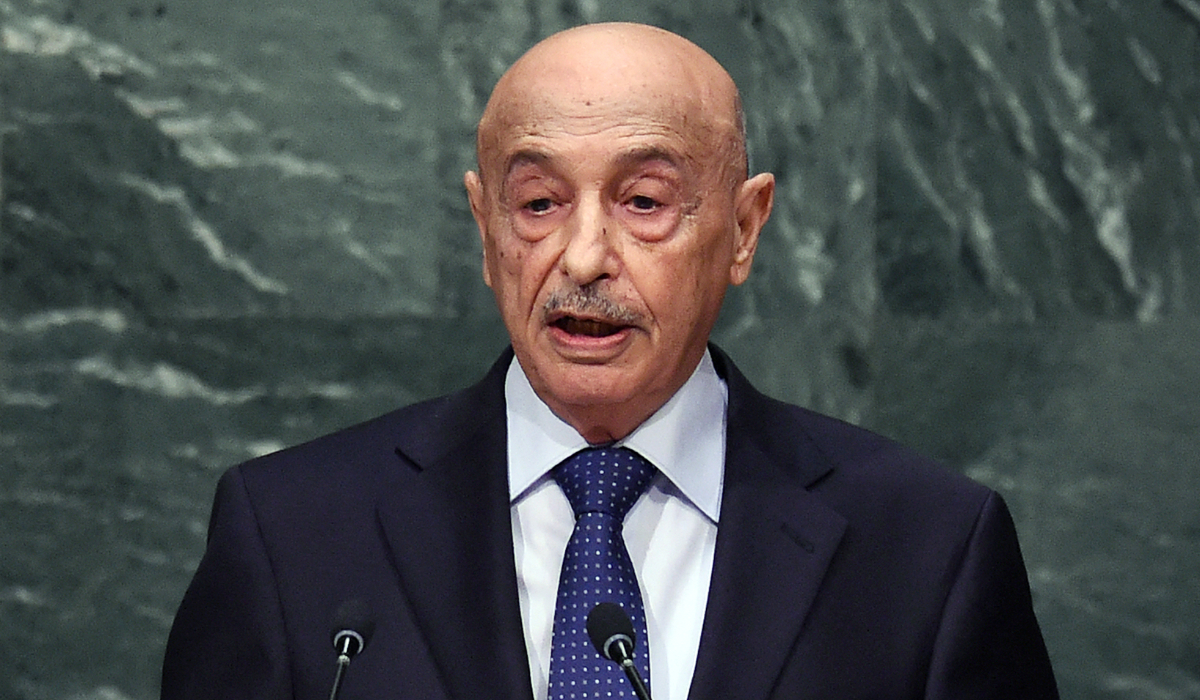
Libya's House of Representatives, sitting in Benghazi, elected Al-Salihin Abdul Nabi al-Obeidi as speaker, replacing Agila Saleh. Saleh had held the post for 12 years and rejected the preceding vote on rule changes as unofficial.
1 / 2
The story, neutrally told
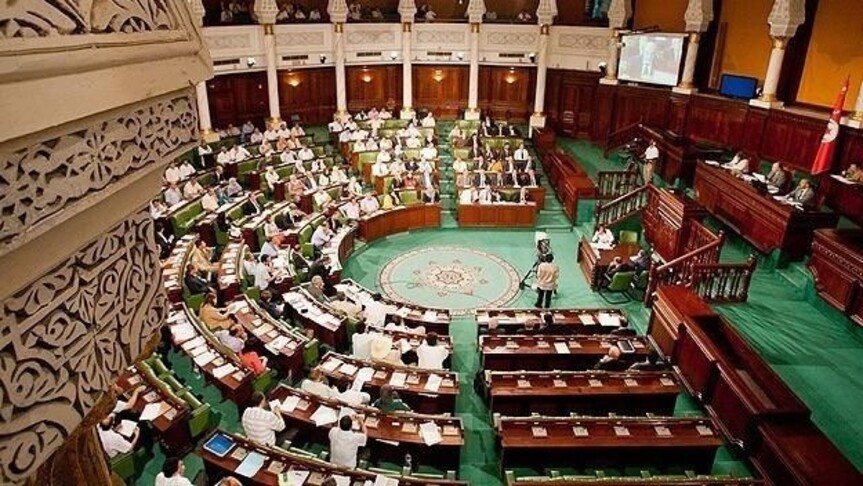
Mixed · 2Libya's House of Representatives voted on Tuesday 6 October 2026 to replace its speaker of 12 years, Agila Saleh, with Al-Salhin Abdelnabi Al-Obeidi, according to an announcement by the parliament's spokesman. Arab NewsRC “MPs voted to replace Agila Saleh with Al-Salhin Abdelnabi Al-Obeidi, the parliament's spokesman announced on X.” Read at Arab News ↗ Anadolu AgencyN “elected lawmaker Al-Salihin Abdul Nabi al-Obeidi as speaker, replacing Aguila Saleh, parliament spokesman Abdullah Blihaq announced Tuesday.” Read at Anadolu Agency ↗ Centre · 1The election took place in a session at parliament's headquarters in Benghazi, chaired by Second Deputy Speaker Misbah Doma and devoted to electing the presidency, according to the spokesman's statement. Anadolu AgencyN “The election took place during a session at parliament's official headquarters in Benghazi, chaired by Second Deputy Speaker Misbah Doma and devoted to electing the presidency” Read at Anadolu Agency ↗ Centre · 1It followed a session the day before in which 98 lawmakers voted to amend parliament's internal rules and form a new presidency, ending the tenure of the presidency led by Saleh. Lawmaker Mohammed Tamer told Anadolu that 102 members attended and that the amendment introduced a parliamentary term. Anadolu AgencyN “His election came a day after 98 lawmakers voted to amend parliament's internal rules and form a new presidency, ending the tenure of the existing presidency led by Saleh.”“He said 98 lawmakers approved an amendment introducing a parliamentary term.” Read at Anadolu Agency ↗
Centre · 1Saleh rejected Monday's session as "unofficial" with "no legal effect", saying the procedures required by the law governing parliament and its internal rules, particularly on amending and adopting laws, had not been followed. Anadolu AgencyN “Saleh rejected Monday's session, describing it in a statement as “unofficial” and saying it had “no legal effect.”” Read at Anadolu Agency ↗ Centre · 1Two weeks earlier, 86 lawmakers had accused Saleh in a joint statement of preventing them from entering parliament's headquarters and holding a quorate session on reform and changes to the internal rules, centred on Law No. 4 of 2014. That law sets no fixed term for the speaker, and some lawmakers want annual internal elections. Anadolu AgencyN “Two weeks earlier, 86 lawmakers accused Saleh in a joint statement of preventing them from entering parliament's headquarters and holding a session with the required quorum”“The law does not set a fixed term for the speaker or require a new election after a specified period.” Read at Anadolu Agency ↗ Centre · 1Al-Obeidi represents the first electoral district in Tobruk, sits on the Foreign Affairs Committee, and chaired the Libyan-Turkish Parliamentary Friendship Committee set up in April 2024, according to Anadolu. Anadolu AgencyN “Al-Obeidi represents the first electoral district in Tobruk, in Libya's far east, and serves on parliament's Foreign Affairs Committee.”“he chaired the Libyan-Turkish Parliamentary Friendship Committee, established by the House of Representatives in April 2024.” Read at Anadolu Agency ↗
Right · 1AFP, carried by Arab News, described Saleh, 82, as a long-standing ally of the Haftar clan who appeared weakened as Khalifa Haftar's sons, notably Saddam Haftar, consolidated their positions. Chatham House analyst Emadeddin Badi called him "the latest casualty of Saddam Haftar's drive to centralize decision-making in eastern Libya", and experts said the move may signal a shifting political balance. Arab NewsRC “Saleh, 82, has long been considered a staunch ally of the Haftar clan, but he appeared to be weakened as Haftar's sons, in particular Saddam Haftar, consolidated their positions.”“Agila Saleh appears to be the latest casualty of Saddam Haftar's drive to centralize decision-making in eastern Libya and bulldoze his way into a political role.” Read at Arab News ↗ Mixed · 2Libya has been unstable since the 2011 overthrow of Muammar Qaddafi and is divided between the UN-recognised Government of National Unity in Tripoli under Abdulhamid Dbeibah and an eastern administration, headed by Osama Hammad per Anadolu, backed by Haftar. The removal comes as a US initiative to revive the political process and unify institutions is under discussion, while the UN mission pursues efforts toward elections. Arab NewsRC “His removal comes as a US initiative aimed at reviving the political process and unifying Libya's institutions is under discussion.” Read at Arab News ↗ Anadolu AgencyN “the government of Osama Hammad, which was appointed by the House of Representatives in early 2022 and based in Benghazi” Read at Anadolu Agency ↗
Every sentence links to the reporting it rests on. The pill in front of each says where its sources sit: Left, Centre or Right when one side supplies at least half of them, Mixed when they are evenly split. The number is how many outlets it cites.
Left0 outlets
No left outlet in our sources has covered this story yet.
Centre1 outlet
- Framing
- Procedural account: lawmakers amended internal rules, then elected a new speaker; includes Saleh's legal objection and the earlier complaint by 86 lawmakers.
- Emphasis
- Vote counts, parliamentary rules (Law No. 4 of 2014), Al-Obeidi's profile and Turkish ties.
- Leaves out or plays down
- Does not mention Haftar family influence or the US initiative.
- For example
-
“Saleh rejected Monday's session, describing it in a statement as “unofficial” and saying it had “no legal effect.”” — Anadolu Agency
Right1 outlet
- Framing
- AFP wire copy run by Arab News frames the ouster as a power shift in eastern Libya linked to the Haftar family.
- Emphasis
- Saleh's age and ties to Haftar, Saddam Haftar's consolidation, expert analysis, US initiative.
- Leaves out or plays down
- Omits vote counts, Saleh's rejection of the session, and the rule-change dispute.
- Charged language
- “eastern strongman”“bulldoze his way”
- For example
-
“Agila Saleh appears to be the latest casualty of Saddam Haftar's drive to centralize decision-making in eastern Libya and bulldoze his way into a political role.” — Arab News
What every side reports
- Parliament replaced Agila Saleh with Al-Obeidi as speaker, announced by the parliament spokesman on Tuesday.
- The parliament sits in Benghazi in eastern Libya.
- Libya remains divided between a Tripoli government under Dbeibah and an eastern administration.
Where accounts differ
-
Legitimacy of the vote that ended Saleh's presidency
- Centre
- Anadolu reports Saleh called Monday's session unofficial and legally baseless, while 98 lawmakers approved the rule change.
- Right
- AFP/Arab News reports the ousting without mention of any legal challenge.
Agila Saleh person
Rejected the Monday session as unofficial and without legal effect, citing unfollowed procedures.
“Saleh rejected Monday's session, describing it in a statement as “unofficial” and saying it had “no legal effect.”” — Anadolu Agency
Al-Salhin Abdelnabi Al-Obeidi person
Elected speaker; described as a Tobruk lawmaker with ties to Türkiye through parliamentary diplomacy.
“He has worked to develop ties with Türkiye through parliamentary diplomacy and economic and cultural cooperation.” — Anadolu Agency
Khalifa Haftar person
Per AFP, Haftar's camp relies on the Benghazi parliament; analysts link the change to his son Saddam's consolidation of power. No statement from Haftar is reported.
“Haftar's camp relies in particular on the parliament, which sits in the eastern city of Benghazi under their control.” — Arab News
Left0 articles
No coverage yet.
Centre1 article
-
Libyan parliament elects new speaker after lawmakers amend internal rules
Neutral Detailed procedural report on the rule change, election and Saleh's legal objection, with a profile of Al-Obeidi.
Right1 article
-
Arab NewsRC · · via AFP
Libya’s parliament speaker ousted after 12 years
Neutral AFP wire: brief report presenting the ouster as a possible sign of shifting power balance in Haftar-led eastern Libya.
- 6 Oct 23:02 First Arab NewsRC Libya’s parliament speaker ousted after 12 years via AFP
- 7 Oct 01:18 +2h 16m Anadolu AgencyN Libyan parliament elects new speaker after lawmakers amend internal rules
Times are when each article was published, or when we first saw it if the outlet gave no time.