Libyan teachers launch open-ended nationwide strike over pay and conditions
Teachers in Libya began protesting on 13 September, when schools were due to reopen, and later escalated to an open-ended nationwide strike at public schools over salaries and working conditions, delaying the school year.

1 / 2
The story, neutrally told
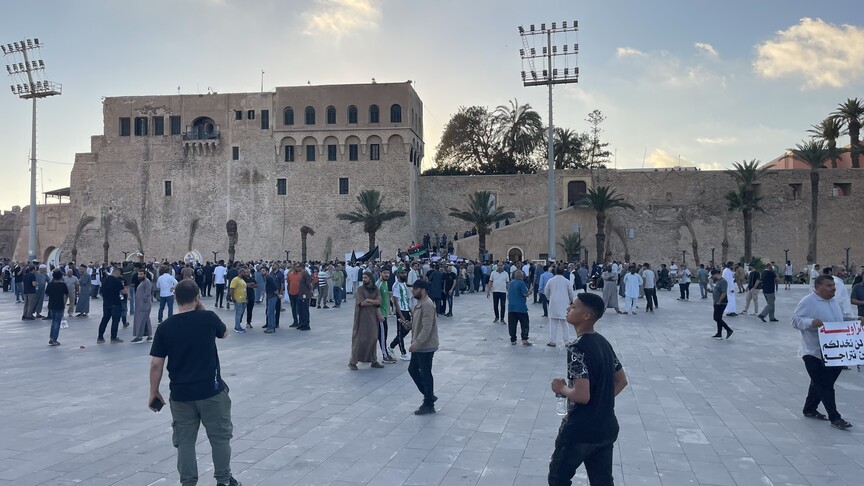
Teachers in Libya began sit-ins on 13 September, the day the new academic year was due to start. The Straits TimesRC “Teachers began protesting on September 13, the day schools were due to reopen” Read at The Straits Times ↗ Anadolu AgencyN “Teachers began sit-ins Sept. 13, when the new academic year was due to start” Read at Anadolu Agency ↗ The campaign later escalated into an open-ended, nationwide strike at public schools, which is disrupting the start of the school year; Reuters says the teachers union escalated it two weeks after the protests began. The Straits TimesRC “Two weeks later, the teachers union escalated the campaign into an open-ended, nationwide strike across public schools.” Read at The Straits Times ↗ Anadolu AgencyN “before the campaign later escalated into an open-ended nationwide strike at public schools, disrupting the start of the school year” Read at Anadolu Agency ↗ On Thursday 1 October, a large number of teachers protested outside the prime minister's headquarters in Tripoli, according to Libya's official WAL news agency as reported by Anadolu. Anadolu AgencyN “gathered outside the prime minister’s headquarters, carrying banners demanding a unified and improved salary scale” Read at Anadolu Agency ↗
Protesters demanded a unified and improved salary scale, payment of overdue entitlements, legislation protecting their rights and health insurance, and urged the government to move from promises to concrete decisions; organisers warned that union action could escalate if authorities took no practical steps. Anadolu AgencyN “They urged the government to move from discussions and promises to concrete decisions and implementation.”“Organizers warned that union action could be escalated if authorities failed to take practical steps to address demands.” Read at Anadolu Agency ↗ Reuters quoted Mustafa Al-Bahilil, head of the teachers union in Ain Zara, Tripoli, as saying "These are not demands, but rather rights – and rights have to be taken"; Anadolu reported organisers saying they were not seeking "privileges" but the rights of teachers and other education workers. The Straits TimesRC “"These are not demands, but rather rights – and rights have to be taken," said Mustafa Al-Bahilil” Read at The Straits Times ↗ Anadolu AgencyN “organizers said they were not seeking “privileges,” but demanding the rights of teachers and other education workers” Read at Anadolu Agency ↗ Reuters reported that teachers cite low salaries and deteriorating schools, including a lack of computer labs and unusable desks, with staff and parents often paying for equipment; Tripoli teacher Hamza al-Firjani said many teachers need second jobs and get only "fake promises". The Straits TimesRC “Teachers face difficulties ranging from a lack of computer labs to desks so worn out that they are unusable”“Many teachers have to work second jobs because their salaries are so low” Read at The Straits Times ↗
Teachers have also joined the strike in Benghazi, in the east, where union head Mohammed Al-Jahawi said surging food and other costs had left many teachers unable to meet basic needs. The Straits TimesRC “Mohammed Al-Jahawi, head of the teachers union in Benghazi, said the strikes were driven by surging food and other costs” Read at The Straits Times ↗ Parents are anxious: Salah Awad, a Benghazi father of three, said he hoped teachers' needs were met but that "This is not the right time for a strike". The Ministry of Education did not immediately respond to a Reuters interview request. The Straits TimesRC “"This is not the right time for a strike," he said.”“The Ministry of Education did not immediately respond to a Reuters request for an interview.” Read at The Straits Times ↗ Reuters set the strike against Libya's wider instability since the 2011 uprising that toppled Muammar Gaddafi, the east-west division between rival administrations since 2014, summer power cuts and recent labour unrest that disrupted output at its largest oilfield. The Straits TimesRC “Libya has also faced widespread power cuts this summer and labour unrest that recently disrupted output at its largest oilfield.”“The country has been divided between rival administrations in the east and west since a 2014 civil war.” Read at The Straits Times ↗
Every sentence links to the reporting it rests on.
Left0 outlets
No left outlet in our sources has covered this story yet.
Centre1 outlet
- Framing
- Anadolu, citing Libya's official WAL agency, reports the Tripoli protest outside the prime minister's headquarters and lists the teachers' demands and the organisers' warning of escalation.
- Emphasis
- The specific demands (salary scale, overdue payments, health insurance, protective legislation) and the call for government action.
- Leaves out or plays down
- No parent or teacher voices, no Benghazi or eastern Libya, no wider political or economic context, and no government or ministry response.
- For example
-
“They urged the government to move from discussions and promises to concrete decisions and implementation.” — Anadolu Agency
Right1 outlet
- Framing
- The Straits Times carries Reuters copy presenting the strike as the latest upheaval in an unstable country, with ground-level testimony from teachers, union heads and a parent. This is agency wording, not the outlet's own framing.
- Emphasis
- Poor school conditions, low pay, second jobs, rising living costs, parental worry, and the national backdrop of instability, power cuts and oilfield unrest.
- Leaves out or plays down
- Does not list the specific demands such as health insurance or the unified salary scale, or the 1 October protest at the prime minister's headquarters; the ministry had not responded.
- Charged language
- “upheaval”
- For example
-
“The walkout is the latest upheaval in a country still grappling with instability years after the 2011 NATO-backed uprising that toppled Muammar Gaddafi.” — The Straits Times
What every side reports
- Teachers began protesting on 13 September, when the school year was due to start.
- The action escalated into an open-ended nationwide strike at public schools over pay and working conditions.
- The strike is disrupting the start of the school year.
Teachers' strike in Libya topic
Teachers and union leaders present pay, benefits and school conditions as rights rather than favours and say promises have gone unfulfilled; organisers warn of escalation.
“"They get promises, but all of them are fake promises," he said.” — The Straits Times
“saying their demands had remained unfulfilled despite repeated promises and meetings” — Anadolu Agency
Libya place
No Libyan government or Ministry of Education position is reported; the ministry did not immediately respond to Reuters.
“The Ministry of Education did not immediately respond to a Reuters request for an interview.” — The Straits Times
Left0 articles
No coverage yet.
Centre1 article
-
Libyan teachers protest in Tripoli amid nationwide strike over pay
Neutral Anadolu gives a concise account of the Tripoli protest, relaying demands and organisers' statements via the official WAL agency.
Right1 article
-
The Straits TimesRC · · via Reuters
Teachers' strike brings new upheaval for Libyans as school year stalls
Sympathetic Reuters copy run by the Straits Times centres on teachers' hardship and parental anxiety against a backdrop of national instability.
- 1 Oct 14:02 First The Straits TimesRC Teachers' strike brings new upheaval for Libyans as school year stalls via Reuters
- 1 Oct 18:35 +4h 33m Anadolu AgencyN Libyan teachers protest in Tripoli amid nationwide strike over pay
Times are when each article was published, or when we first saw it if the outlet gave no time.