Machine learning finds elephants' deep rumbles grow more alike in group choruses
A Scientific Reports study using machine learning on recordings of wild African elephants in Kenya found that rumbles can become progressively more similar when elephants call together. Researchers link this convergence to coordinating group behaviour, though what it means is still being tested.

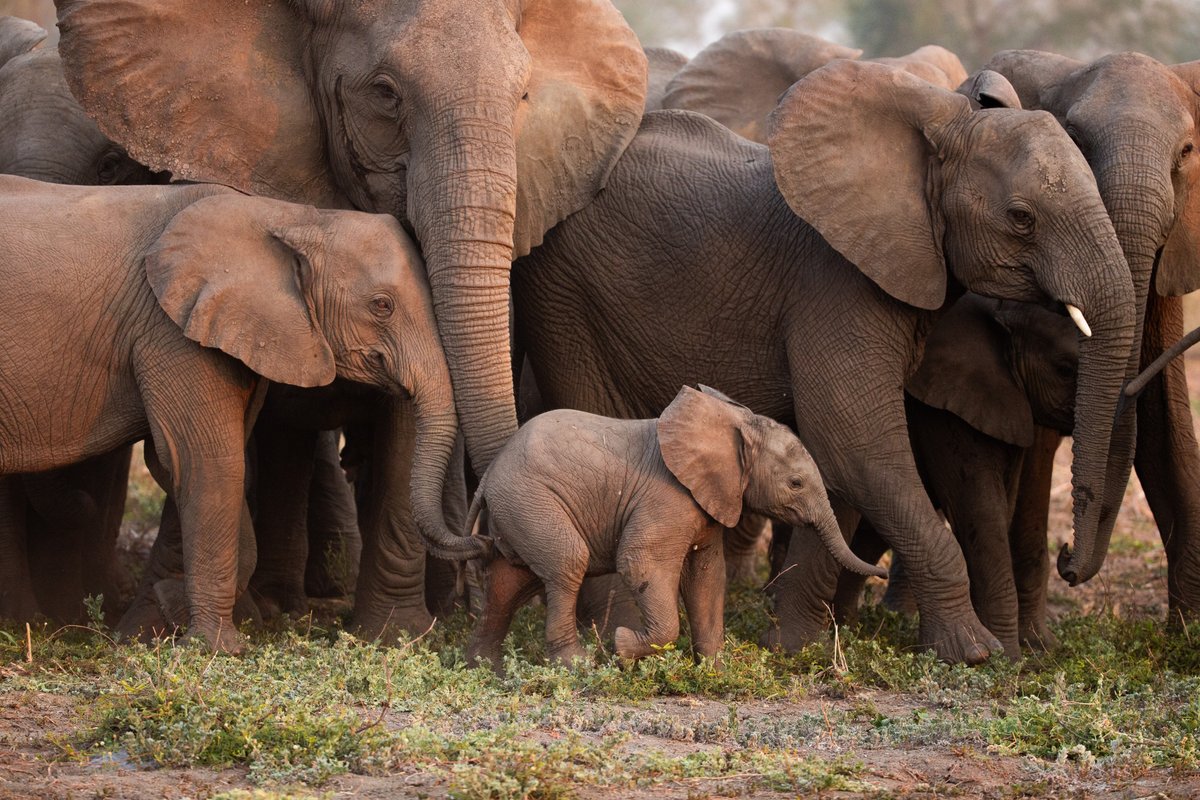
1 / 2
The story, neutrally told
A study published on Thursday in Scientific Reports used machine learning to analyse recordings of rumbles from wild African elephants in Amboseli National Park, Kenya. Scientific AmericanLC “a new study published on Thursday in Scientific Reports helps to shed some light.” Read at Scientific American ↗ New ScientistN “The findings come from a machine learning study” Read at New Scientist ↗ New Scientist says the dataset was 902 recordings collected over four decades from wild female African savannah elephants from dozens of family groups; Scientific American describes it as hundreds of recordings. New ScientistN “They used a collection of 902 recordings of rumbles collected across four decades” Read at New Scientist ↗ Scientific AmericanLC “used machine learning to analyze hundreds of rumble recordings” Read at Scientific American ↗ The recordings were grouped by social situation, such as contact calls from a distance, calls before moving, calls to calves, greetings and family reunions, and many captured overlapping calls the researchers call choruses. Scientific AmericanLC “the recordings captured overlapping calls, a jumble of rumbles the researchers refer to as “choruses.”” Read at Scientific American ↗ New ScientistN “The calls were grouped according to six distinct social situations” Read at New Scientist ↗
The algorithm predicted the elephants' behaviour from a recording better than chance, though not entirely accurately, suggesting calls in similar situations share acoustic properties. Scientific AmericanLC “It wasn’t entirely accurate, but it did predict behaviors better than chance” Read at Scientific American ↗ New ScientistN “the calls themselves may contain information about what the animals are doing” Read at New Scientist ↗ In some cases the rumbles of different elephants became more acoustically alike as a chorus went on, a pattern called vocal convergence; Sara Keen of the Earth Species Project compared it to people adopting each other's speaking patterns or accents in conversation. Scientific AmericanLC “In some cases, different rumbles became progressively similar, a pattern the researchers describe as “vocal convergence.”” Read at Scientific American ↗ New ScientistN “you almost start to adopt the speaking patterns or accents of whoever you’re interacting with” Read at New Scientist ↗ New Scientist reports that convergence occurred when elephants were staying in contact while separated, coordinating what to do next and greeting after a separation, while Scientific American quotes Keen saying it appeared only where elephants seemed to be coordinating group action. New ScientistN “this convergence occurred when elephants were staying in contact while separated, coordinating what to do next, and greeting after a separation” Read at New Scientist ↗ Scientific AmericanLC “only in the situations where they [the elephants] seem to be coordinating group behavior action” Read at Scientific American ↗
Keen said convergence might indicate agreement but that this needs further testing, and Joyce Poole of ElephantVoices said elephants appear able to negotiate, agree, disagree and make a plan of action; New Scientist adds that Poole's 2005 research showed elephants can imitate each other's voices more generally, and this work extends that to rumbles. Scientific AmericanLC “it’s possible that this convergence could indicate agreement, but that theory needs further testing to confirm” Read at Scientific American ↗ New ScientistN ““They appear able to negotiate, agree and disagree – and make a plan of action,” says Poole.”“showed that elephants can learn to imitate each other’s voices when they are calling more generally” Read at New Scientist ↗ Outside researchers welcomed the work: Arik Kershenbaum of the University of Cambridge, who was not involved, stressed pairing computational analysis with behavioural observation in the wild, and Andrew McLean of the IUCN's Asian Elephant Specialist Group called it fascinating but not surprising given how social elephants are. Scientific AmericanLC “This study emphasizes how vital it is to pair new computational analyses with real behavioral observations in the wild” Read at Scientific American ↗ New ScientistN “This is a fascinating finding – although it’s not really surprising, given how intensely social elephants are.” Read at New Scientist ↗ The researchers hope similar methods can be applied to other species such as orcas and crows, and New Scientist says the findings could eventually help conservation by letting researchers track elephant behaviour and movements remotely. Scientific AmericanLC “Keen hopes scientists may be able to use similar methods to analyze other animal calls, too, such as for orcas and crows.” Read at Scientific American ↗ New ScientistN “they could also eventually aid conservation by helping researchers track their behaviour and movements remotely” Read at New Scientist ↗
Every sentence links to the reporting it rests on.
Left1 outlet
- Framing
- A narrative feature that opens with a researcher's field observation of an elephant birth and presents the study as progress in decoding rumble 'greetings' and 'coos'.
- Emphasis
- Call types and their meanings, caution that convergence as agreement is untested, and the need to combine machine learning with field observation.
- Leaves out or plays down
- Does not give the 902-recording dataset size or four-decade span, the 2005 imitation research, or the conservation applications.
- Charged language
- “decoding”
- For example
-
“Scientists are piecing together why elephants make these low calls and what they might mean” — Scientific American
“It’s possible that this convergence could indicate agreement, but that theory needs further testing to confirm” — Scientific American
Centre1 outlet
- Framing
- A findings-led report presenting the result as elephants imitating each other, with the human-conversation comparison and expert endorsement.
- Emphasis
- The imitation finding, dataset details, Poole's earlier 2005 research, social planning, and conservation potential.
- Leaves out or plays down
- Does not mention that the model's predictions were imperfect or that the agreement interpretation needs further testing.
- Charged language
- “imitate”
- For example
-
“Elephants appear to harmonise their vocal rumbles when they join together to form choruses” — New Scientist
“They appear able to negotiate, agree and disagree – and make a plan of action” — New Scientist
Right0 outlets
No right outlet in our sources has covered this story yet.
What every side reports
- The study used machine learning on rumble recordings from wild African elephants in Amboseli National Park, Kenya.
- Rumbles from different elephants in a chorus sometimes became more alike, called vocal convergence.
- Sara Keen of the Earth Species Project is a co-author and is quoted in both articles.
- The model predicted behaviour or context from calls, suggesting calls carry information about what the elephants are doing.
Where accounts differ
-
In which situations convergence occurred
- Left
- Scientific American quotes Keen saying converging appeared only in situations where elephants seem to be coordinating group behaviour.
- Centre
- New Scientist lists three situations: staying in contact while separated, coordinating what to do next, and greeting after a separation.
Earth Species Project organisation
Through co-author Sara Keen, it presents the work as showing a model can interpret whole choruses, and hopes the methods extend to other species.
“It is pretty exciting that we’re able to train a model to look at an entire chorus and have some interpretation of exactly what’s going on” — Scientific American
“a US non-profit organisation that uses artificial intelligence and machine learning to attempt to decode non-human animal communication” — New Scientist
Left1 article
-
Scientists are decoding elephant rumble calls, including ‘greetings’ and ‘coos’
Neutral Explanatory feature on the call types, with caution about interpreting convergence as agreement.
Centre1 article
-
Elephants imitate each other when they produce deep rumbling sounds
Neutral Findings-led report stressing imitation and planning in elephant choruses, with outside expert comment.
Right0 articles
No coverage yet.
- 1 Oct 16:00 First New ScientistN Elephants imitate each other when they produce deep rumbling sounds
- 1 Oct 16:00 First Scientific AmericanLC Scientists are decoding elephant rumble calls, including ‘greetings’ and ‘coos’
Times are when each article was published, or when we first saw it if the outlet gave no time.