High-speed footage shows detached honeybee stinger pumps venom with double-piston valves
Researchers at Macquarie University filmed detached honeybee stingers pumping venom into gel and found a double-piston valve mechanism. The study was published in PNAS.
1 / 2
The story, neutrally told
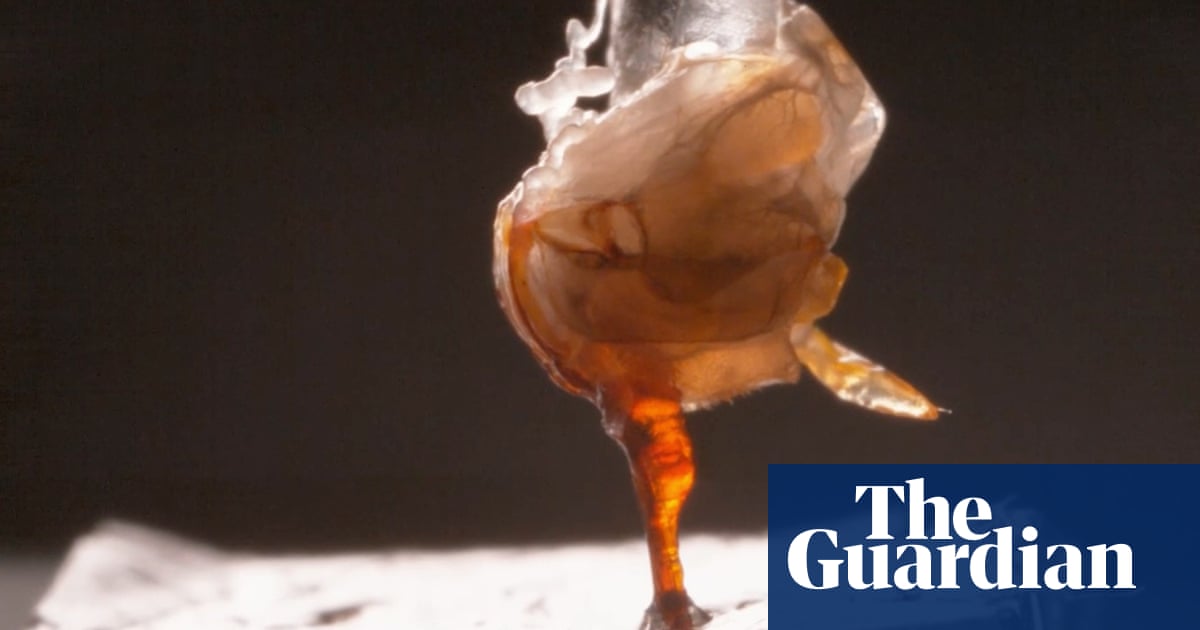
Left · 1High-speed video has captured how a honeybee's roughly two-millimetre stinger keeps pumping venom after it detaches from the insect's body, a process the Guardian described as previously unknown. The GuardianLC “High-speed video captures a previously unknown process that lets a honeybee’s two-millimetre stinger pump venom even after detaching from the insect’s body.” Read at The Guardian ↗ Left · 1Researchers from Macquarie University detached the stingers and filmed them pumping venom into a clear gel that mimics human skin. The GuardianLC “Using a clear gel that mimics human skin as a target, researchers from Macquarie University detached the stingers and then filmed them in action pumping venom” Read at The Guardian ↗ Left · 1According to Ars Technica, the work appears in a new paper in the Proceedings of the National Academy of Sciences (PNAS, DOI 10.1073/pnas.2603916123). Ars TechnicaLC “according to a new paper published in the Proceedings of the National Academy of Sciences.”“DOI: PNAS, 2026. 10.1073/pnas.2603916123” Read at Ars Technica ↗
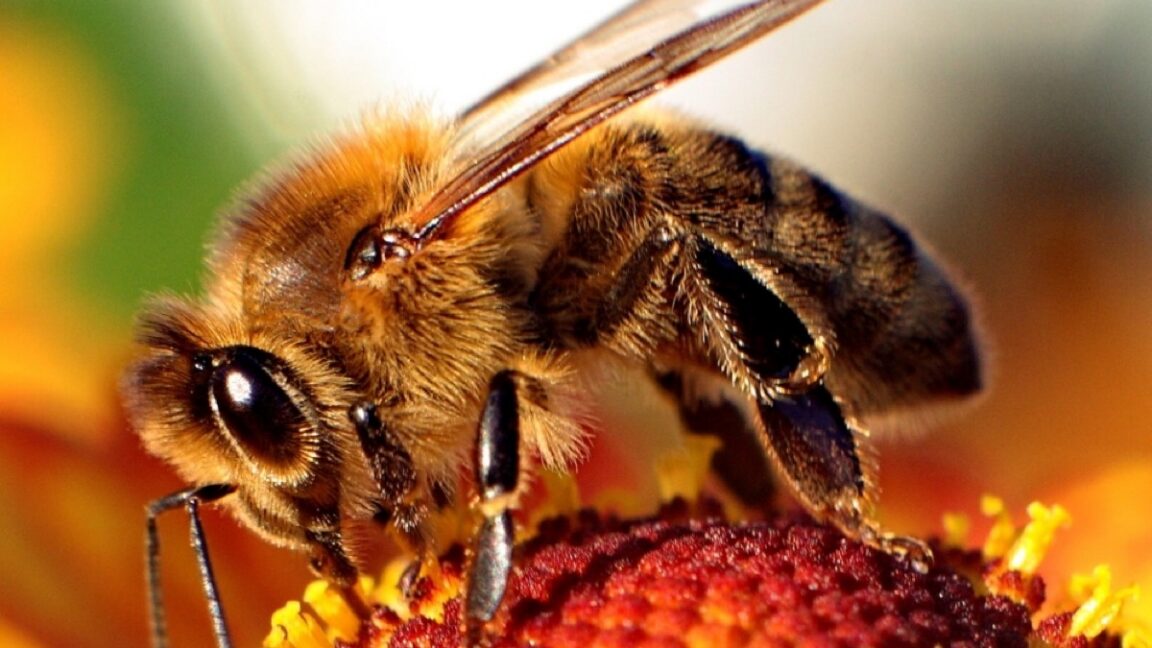
Left · 1Worker honey bees (Apis mellifera) leave the stinger in the target and fly away. The stinger keeps penetrating tissue and pumping venom on its own, a phenomenon known as autotomy, but the exact pumping mechanism had never been directly observed. Ars TechnicaLC “The stinger continues to penetrate the tissue and pump venom on its own, a rare phenomenon known as autotomy.”“But the precise mechanism by which the pumping action is achieved has never been directly observed.” Read at Ars Technica ↗ Left · 1The stinger has three interlocking elements forming the venom canal: a stylet that widens into the main pumping chamber, and two sharp-tipped lancets that slide back and forth. Ars TechnicaLC “a stylet that widens to form the main pumping chamber and two sharp-tipped lancets that slide back and forth” Read at Ars Technica ↗ Left · 1The team removed stingers from live worker bees with forceps just before filming, partly inserted them into blocks of artificial gel, and recorded them with stereomicroscopy and high-speed colour video, followed by frame-by-frame analysis. The structures are semi-translucent, so their movement is visible. Ars TechnicaLC “They collected live worker bees and removed the stingers with forceps just prior to filming.”“which is visible because the structures are semi-translucent” Read at Ars Technica ↗
Left · 1The footage showed that valves attached to each lancet change shape as they slide. They inflate like a parachute on the downstroke, sealing the chamber and pushing venom out, deflate on the upstroke, and change shape again to slip past each other in the middle. Ars TechnicaLC “They inflate like a parachute on the downstroke, creating a seal via a piston-like action that applies downward pressure in the chamber to push out the venom.” Read at Ars Technica ↗ Left · 1Co-author Fiorella Ramirez-Esquivel of Macquarie University said the valves act as collapsible pistons that, by pumping in opposite directions, deliver a continuous flow of venom. She said the double-piston design lets the stinger work as a compact, autonomous unit, and the dual motion also minimizes backflow. Ars TechnicaLC ““The unique geometry of the valves is the key; they act as collapsible pistons and—by pumping in opposite directions—they’re able to deliver a continuous flow of venom,””“The dual motion also minimizes backflow.” Read at Ars Technica ↗ Left · 1To check the findings, the team used micro-CT scans to build a 3D-printed scaled model, which showed the same pumping kinematics as the biological stingers. Ars TechnicaLC “The artificial pumping model showed the same pumping kinematics as the biological stingers.” Read at Ars Technica ↗
Left · 1Future work may examine the valves' material properties, since high elasticity and low friction appear key to replicating the motion, and whether capillary action plays a role. The authors expect eventual medical and microfluidic uses, such as artificial pumps. Ars TechnicaLC “The authors believe their own work will eventually find similar medical and microfluidic application, such as for artificial pumps.” Read at Ars Technica ↗
Every sentence links to the reporting it rests on. The pill in front of each says where its sources sit: Left, Centre or Right when one side supplies at least half of them, Mixed when they are evenly split. The number is how many outlets it cites.
Left2 outlets
- Framing
- Both outlets treat it as a science discovery: the Guardian as a short video item, Ars Technica as a detailed explainer of the mechanism and its possible applications.
- Emphasis
- The Guardian stresses the previously unknown process and the footage. Ars Technica stresses the double-piston valve biomechanics, the methods and future medical uses.
- Leaves out or plays down
- The Guardian item gives no mechanism, method detail or paper reference. Ars Technica doesn't mention the two-millimetre size.
- Charged language
- “unfortunate victim”
- For example
-
“High-speed video captures a previously unknown process” — The Guardian
“thanks to a unique double-piston pump-like mechanism” — Ars Technica
Centre0 outlets
No centre outlet in our sources has covered this story yet.
Right0 outlets
No right outlet in our sources has covered this story yet.
What every side reports
- Macquarie University researchers filmed detached honeybee stingers pumping venom into gel.
- The footage is high-speed video of a stinger about two millimetres long, as the Guardian reports.
UK and Ireland1 outlet
The Guardian runs a brief video item on the footage.
“High-speed video captures a previously unknown process” — The Guardian
The Guardian
North America1 outlet
Ars Technica gives a longer technical account of the paper.
“thanks to a unique double-piston pump-like mechanism” — Ars Technica
Ars Technica
Left2 articles
-
Honeybee's stinger continues to pump venom once detached from body, new footage shows – video
Neutral Short video blurb presenting the footage as revealing a previously unknown process.
-
High-speed video reveals how honey bee stingers pump venom
Neutral Detailed explainer of the PNAS paper's valve mechanism, methods and potential applications.
Centre0 articles
No coverage yet.
Right0 articles
No coverage yet.
- 13 Oct 08:10 First The GuardianLC Honeybee's stinger continues to pump venom once detached from body, new footage shows – video
- 13 Oct 14:03 +5h 53m Ars TechnicaLC High-speed video reveals how honey bee stingers pump venom
Times are when each article was published, or when we first saw it if the outlet gave no time.
Ask about this story
Loading…