Manga artist Tetsuya Chiba, creator of Ashita no Joe, dies at 87
Tetsuya Chiba, the manga artist behind the boxing series Ashita no Joe, died at a Tokyo hospital last Thursday aged 87, his publisher Kodansha said on Tuesday. No cause of death was given.
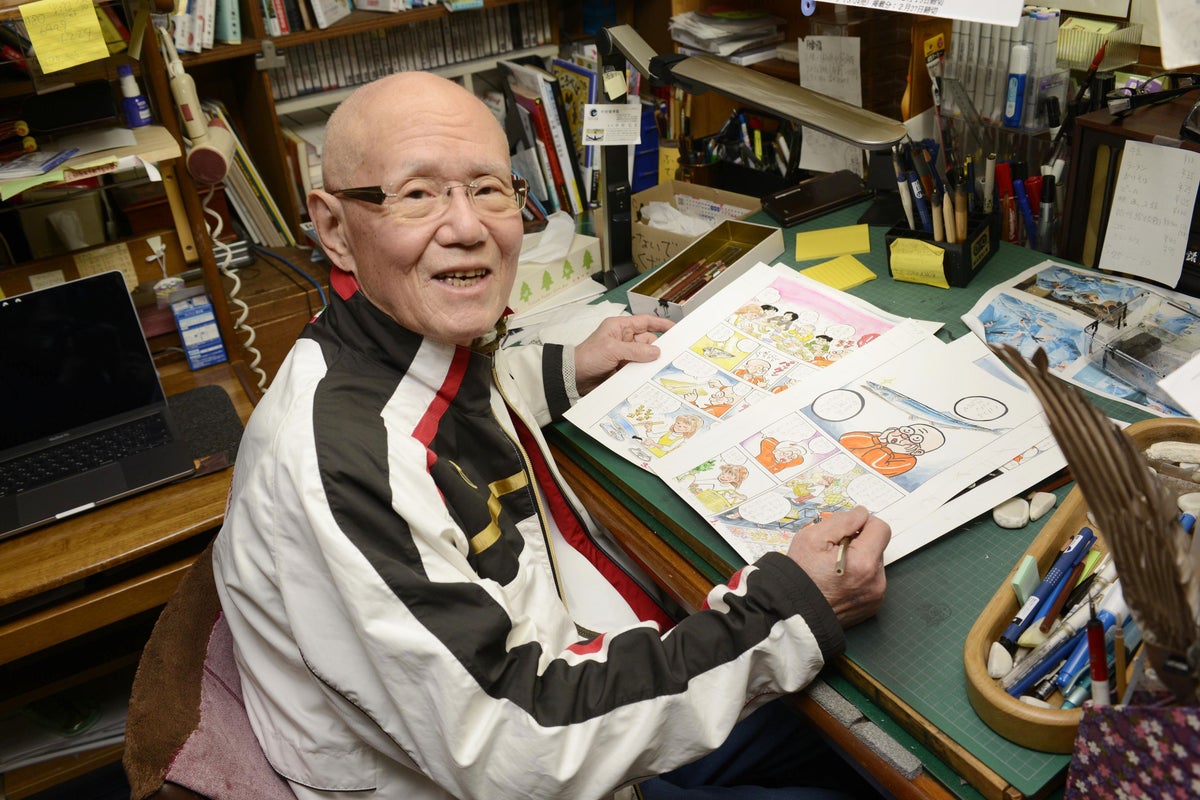

1 / 2
The story, neutrally told
Mixed · 2Tetsuya Chiba, the manga artist behind the boxing series Ashita no Joe (Fighting for Tomorrow), has died aged 87. The IndependentLC “Tetsuya Chiba, the manga artist behind the boxing series Ashita no Joe: Fighting for Tomorrow, has died at the age of 87.” Read at The Independent ↗ New York PostR “has died. He was 87.” Read at New York Post ↗ Mixed · 2His publisher, Kodansha Ltd., said on Tuesday that Chiba died at a Tokyo hospital last Thursday, and did not specify a cause of death. New York PostR “Chiba died at a Tokyo hospital last Thursday, his publisher Kodansha Ltd. said Tuesday, without specifying the cause of his death.” Read at New York Post ↗ The IndependentLC “No cause of death was given.” Read at The Independent ↗ Mixed · 2Ashita no Joe follows an orphan who becomes a professional boxer. It became a national sensation in Japan in the late 1960s and early 1970s, and fans even attended a mock funeral for the protagonist Joe Yabuki's rival. The IndependentLC “became a national sensation in Japan in the late 1960s and early 1970s” Read at The Independent ↗ New York PostR “fans even attended a mock funeral for the protagonist Joe Yabuki’s rival” Read at New York Post ↗
Mixed · 2Chiba was born in Tokyo in January 1939. Months later his family moved to northeastern China, where he spent his early childhood under Japan's occupation of the region while his father worked at a printing factory. The IndependentLC “Months after he was born in Tokyo in January 1939, his family moved to northeastern China” Read at The Independent ↗ New York PostR “his father worked at a printing factory” Read at New York Post ↗ Mixed · 2At age 6 he and his family marked Japan's surrender on 15 August 1945 while still in China, where they faced danger and hunger amid anti-Japanese riots. They survived with the help of his father's Chinese translator, who hid them in an attic where Chiba drew pictures for his three younger brothers. New York PostR “At age 6, Chiba and his family marked Japan’s surrender on Aug. 15, 1945, while they were still in China.” Read at New York Post ↗ The IndependentLC “The family survived with the help of his father's Chinese translator, who hid them in an attic, where Chiba drew pictures for his three younger brothers.” Read at The Independent ↗ Mixed · 2The family fled to the Chinese port city of Huludao and returned to Japan in 1946. Those memories later shaped his anti-war work, and he was a vocal supporter of peace and freedom of expression, recounting his wartime childhood in autobiographical stories and manga. The IndependentLC “They eventually fled to the Chinese port city of Huludao and returned to Japan in 1946.” Read at The Independent ↗ New York PostR “Chiba was a vocal supporter of peace and freedom of expression” Read at New York Post ↗
Mixed · 2Chiba began working as a manga artist in 1956, first drawing comics for girls before moving to works for boys in the early 1960s. In 1961 he debuted in a boys' comic magazine with the baseball manga Chikai no Makyu (The Magic Ball), which paved the way for a new genre of sports-themed manga in Japan. The IndependentLC “In 1961, he debuted in a boys' comic magazine with a baseball manga Chikai no Makyu (The Magic Ball)” Read at The Independent ↗ New York PostR “paving the way for a new genre of sports-themed manga in Japan” Read at New York Post ↗ Mixed · 2His other sports manga included Ore wa Teppei (I'm Teppei), about a high school student training in kendo; Notari Matsutaro, about sumo wrestling; and Ashita Tenki ni Naare (Let's hope the weather's fine tomorrow), about a teenage golfer. The IndependentLC “Ore wa Teppei (I'm Teppei), a story of a high school student training in the martial art of kendo” Read at The Independent ↗ New York PostR ““Notari Matsutaro” about sumo wrestling” Read at New York Post ↗
Every sentence links to the reporting it rests on. The pill in front of each says where its sources sit: Left, Centre or Right when one side supplies at least half of them, Mixed when they are evenly split. The number is how many outlets it cites.
Left1 outlet
- Framing
- The Independent runs a straightforward obituary, calling Chiba a 'legendary' and 'highly influential' figure and stressing how his harrowing childhood memories of war shaped his work.
- Emphasis
- Childhood wartime experience, anti-war and free-expression advocacy, and his influence on sports manga.
- Leaves out or plays down
- Does not mention that he was six when Japan surrendered on 15 August 1945 or the anti-Japanese riots his family faced.
- Charged language
- “Legendary”“harrowing childhood memories”“masterpiece series”
- For example
-
“Tetsuya Chiba was a highly influential figure in Japanese manga who drew on his harrowing childhood memories for his work” — The Independent
Centre0 outlets
No centre outlet in our sources has covered this story yet.
Right1 outlet
- Framing
- The New York Post carries the Associated Press obituary, leading with Chiba's fame for the boxing series and the announcement by his publisher.
- Emphasis
- The series' national popularity, with added detail on his family's 1945 experience in China.
- Leaves out or plays down
- Offers no additional reporting or reaction beyond the agency copy.
- Charged language
- “boxing masterpiece”“Legendary”“national sensation”
- For example
-
“Legendary Japanese manga artist Tetsuya Chiba, who caused a national sensation with his boxing series “Ashita no Joe” or “Fighting for Tomorrow,”” — New York Post
What every side reports
- Chiba died aged 87 at a Tokyo hospital last Thursday, as announced by Kodansha on Tuesday.
- No cause of death was given.
- Ashita no Joe was a national sensation in Japan, with a mock funeral held for Joe Yabuki's rival.
- Chiba's childhood in occupied northeastern China shaped his anti-war work.
- He debuted in 1956 and launched sports manga with Chikai no Makyu in 1961.
Tetsuya Chiba person
Chiba is described as a vocal supporter of peace and freedom of expression who drew on his childhood memories of war in autobiographical stories and anti-war work.
“Chiba was a vocal supporter of peace and freedom of expression, telling stories of his harrowing memories of war as a child in autobiographical stories and manga.” — New York Post
Left1 article
-
Legendary Japanese manga artist Tetsuya Chiba creator of 'Ashita no Joe' dies at 87
Sympathetic Obituary presenting Chiba as a legendary, influential artist whose wartime childhood informed his anti-war outlook.
Centre0 articles
No coverage yet.
Right1 article
-
New York PostR · · via AP
Japanese manga artist Tetsuya Chiba, known for his boxing masterpiece ‘Ashita no Joe,’ dead at 87
Sympathetic Associated Press obituary run by the New York Post, leading with the boxing series and adding detail on his family's 1945 experience in China.
- 27 Oct 11:50 First The IndependentLC Legendary Japanese manga artist Tetsuya Chiba creator of 'Ashita no Joe' dies at 87
- 27 Oct 17:25 +5h 35m New York PostR Japanese manga artist Tetsuya Chiba, known for his boxing masterpiece ‘Ashita no Joe,’ dead at 87 via AP
Times are when each article was published, or when we first saw it if the outlet gave no time.
Ask about this story
Loading…