McDonald's expands AI-guided menu pricing, Reuters reports, as franchisees cite pressure
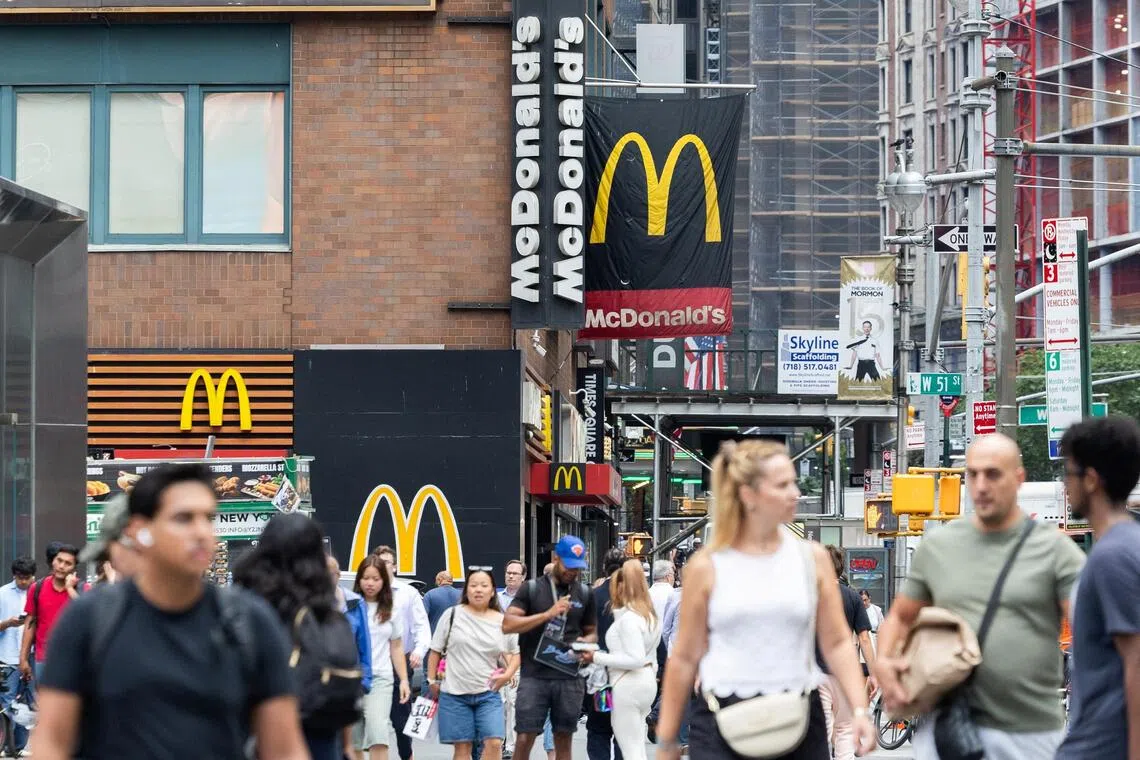
A Reuters investigation says McDonald's uses AI to recommend restaurant-level prices across nearly 14,000 US stores. Franchisees describe pressure to follow the guidance; McDonald's calls it a tool, not a mandate.
1 / 2
The story, neutrally told
Reuters reported that McDonald's is increasingly using artificial intelligence to guide menu prices across the US and some global markets. The Straits TimesRC “McDonald’s is increasingly using artificial intelligence to guide menu prices across the US and some global markets” Read at The Straits Times ↗ The pricing engine analyses transaction data from nearly 14,000 restaurants, and one input is an estimate of how much each store's customers will pay. The Straits TimesRC “McDonald’s nearly 14,000 restaurants” Read at The Straits Times ↗ IJRRC “An AI pricing tool run by Tiger Analytics is used across roughly 14,000 U.S. McDonald’s restaurants.” Read at IJR ↗ In Fresno, California, Reuters found a Big Mac at $5.69 in one company-run store and $6.89 in another a few kilometres away, a 21% gap; Reuters could not confirm the engine caused the difference. The Straits TimesRC “Reuters could not confirm if the price difference is the result of the price engine’s recommendations or other factors.” Read at The Straits Times ↗ IJRRC “One charged $5.69. The other charged $6.89. That is a 21 percent difference.” Read at IJR ↗
McDonald's says franchisees set their own prices, but five owners told Reuters the company pressured them to use the tools. The Straits TimesRC “five store owners told Reuters the company pressured them to use the AI-pricing tools.” Read at The Straits Times ↗ IJRRC “Five of them told Reuters they felt pressured to use the AI pricing tools the company was pushing.” Read at IJR ↗ Since January, franchisees have been required to be "constructively engaging with McDonald's approved Pricing Consultant and Tools." The Straits TimesRC “constructively engaging with McDonald’s approved Pricing Consultant and Tools” Read at The Straits Times ↗ CEO Chris Kempczinski told investors in August that pricing non-compliance is in certain cases part of franchisee business reviews, which affect growth and eligibility. IJRRC “pricing and pricing non-compliance in certain cases is part of those conversations.” Read at IJR ↗ The Straits TimesRC “pricing non-compliance in certain cases is part of those conversations.” Read at The Straits Times ↗
McDonald's called the reporting "speculative and uninformed" and described the portal as "a tool, not a mandate." The Straits TimesRC “The company also described Reuters reporting as “speculative and uninformed”” Read at The Straits Times ↗ IJRRC “McDonald’s answered the Reuters account by calling the reporting “speculative and uninformed.”” Read at IJR ↗ The portal's terms warn that franchisees "may be competitors of each other" and should follow antitrust law, which former FCC commissioner William Kovacic called an acknowledgment of a potential problem. IJRRC ““an acknowledgment there’s a potential problem.”” Read at IJR ↗ The Straits TimesRC “may be competitors of each other” Read at The Straits Times ↗ Connecticut franchisee George Michell's lawsuit says tools recommended about $18 for a Big Mac meal; Reuters could not establish what the tool recommended, and McDonald's disputes the suit. The Straits TimesRC “Reuters could not independently establish what the tool recommended to Michell.” Read at The Straits Times ↗
US foot traffic has fallen year over year in every full month since March, per Placer.ai, and Yum Brands also uses AI for pricing. The Straits TimesRC “US foot traffic at McDonald’s has declined year-over-year” Read at The Straits Times ↗ IJRRC “its Byte platform lets restaurants manage menus, pricing and promotions with AI” Read at IJR ↗
Every sentence links to the reporting it rests on.
Left0 outlets
No left outlet in our sources has covered this story yet.
Centre0 outlets
No centre outlet in our sources has covered this story yet.
Right2 outlets
- Framing
- Both outlets relay Reuters' investigation: IJR leads with the Fresno price gap, and The Straits Times (Reuters copy) leads with profit motives and antitrust and customer risk.
- Emphasis
- Franchisee pressure, corporate leverage over renewals, antitrust language in the portal terms, and the Fresno price gap.
- Leaves out or plays down
- IJR omits Reuters' caveat that the Fresno gap could not be tied to the engine, McDonald's explanation of differing markets, and Wendy's and Burger King's denials of using AI pricing. It also omits Michell case caveats.
- Charged language
- “speculative and uninformed”“constructively engaging”
- For example
-
“The right to set a different number still existed on paper. Exercising it meant answering for the choice.” — IJR
“a plan that aims to boost headquarters’ profit but risks alienating customers and attracting antitrust scrutiny.” — The Straits Times
What every side reports
- Reuters found a $5.69 vs $6.89 Big Mac price gap between two company-run Fresno stores.
- Five franchisees told Reuters they felt pressured to use the AI pricing tools.
- McDonald's calls the system "a tool, not a mandate" and the reporting "speculative and uninformed".
- Kempczinski said pricing non-compliance is sometimes part of franchisee business reviews.
Where accounts differ
-
Whether franchisees are free to set prices
- Right
- McDonald's says owners are free to set prices; five franchisees say they are pressured, and IJR writes the freedom exists 'on paper'.
-
Cause of Fresno price gap
- Right
- The Straits Times (Reuters) says the cause could not be confirmed and McDonald's cites differing costs and markets; IJR presents the gap as the app making it public, tied to AI pricing.
McDonald's organisation
Says the portal is a recommendation tool, that franchisees set final prices, that costs and markets differ between nearby stores, and that Reuters' reporting is speculative.
“restaurants even a few miles apart can belong to distinct markets.” — The Straits Times
“McDonald’s holds that franchisees remain free to set their own prices.” — IJR
AI pricing topic
Presented as spreading across fast food, with Yum Brands using it too, while drawing antitrust and consumer-backlash risk.
“Other fast food companies are turning to AI to help with pricing and other operations” — The Straits Times
Left0 articles
No coverage yet.
Centre0 articles
No coverage yet.
Right2 articles
-
IJRRC ·
McDonald’s AI tool suggests varying Big Mac prices by location
Critical Condensed Reuters account centred on the Fresno price gap and on franchisee pressure, with a sceptical view of McDonald's claim of pricing freedom.
-
The Straits TimesRC · · via Reuters
Inside McDonald’s push to have AI price your Big Mac
Mixed Reuters copy carried by The Straits Times: detailed investigation with caveats and McDonald's responses, weighing corporate profit incentives against customer and legal risks.
- 29 Sep 12:14 First IJRRC McDonald’s AI tool suggests varying Big Mac prices by location
- 30 Sep 02:00 +13h 46m The Straits TimesRC Inside McDonald’s push to have AI price your Big Mac via Reuters
Times are when each article was published, or when we first saw it if the outlet gave no time.