Merz says Russia refuses talks on Ukraine and warns of more hybrid attacks on Germany
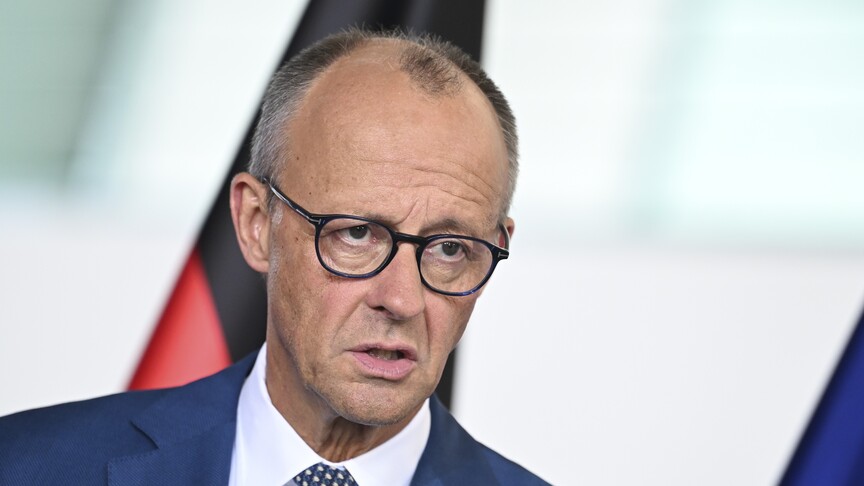
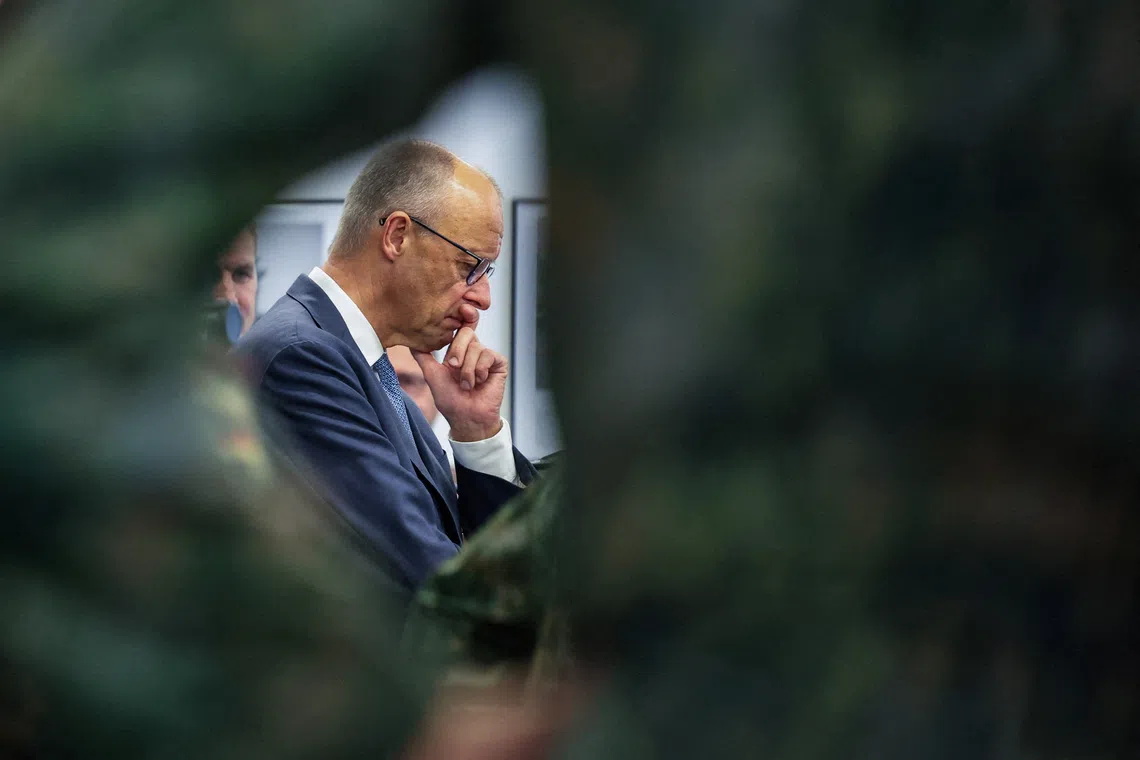
On 1 October German Chancellor Friedrich Merz said Moscow has refused to negotiate an end to the Ukraine war and that Germany is preparing for further, possibly serious, Russian hybrid attacks. He reaffirmed support for Ukraine in two public appearances.
1 / 2
The story, neutrally told
German Chancellor Friedrich Merz accused Russia on Thursday 1 October of refusing to engage in negotiations to end the war in Ukraine. Anadolu AgencyN “German Chancellor Friedrich Merz on Thursday accused Russia of refusing to engage in negotiations to end the war in Ukraine” Read at Anadolu Agency ↗ Speaking at a news conference in Munster with NATO Secretary General Mark Rutte and Dutch Prime Minister Rob Jetten, he said Germany is seeking a diplomatic solution even though Moscow has so far refused to come to the negotiating table. Anadolu AgencyN ““We are therefore striving for a diplomatic solution, even though Moscow has so far refused to come to the negotiating table,” Merz said” Read at Anadolu Agency ↗ In a speech marking the award of the 2026 Westphalian Peace Prize to NATO, Merz said Germany is preparing for further hybrid attacks from Russia, including serious ones. The Straits TimesRC “"We are preparing for further hybrid attacks, including serious ones," Merz said in a speech marking the award of the 2026 Westphalian Peace Prize to the NATO alliance.” Read at The Straits Times ↗
Reuters noted that German authorities have repeatedly warned of a Russian hybrid campaign of drone and cyber attacks and blame Moscow for an attempted drone attack at Leipzig airport in August; Moscow has rejected such accusations. The Straits TimesRC “accusing Moscow of being behind an attempted drone attack at Leipzig airport in August.”“Moscow has rejected the accusations from Western governments and intelligence services.” Read at The Straits Times ↗ Reuters also reported that President Vladimir Putin, speaking to a forum of Russia experts the same day, said Moscow was not about to attack foreign factories producing weapons for Ukraine, though Russian intelligence services needed to track them closely. The Straits TimesRC “Putin said Moscow was not about to attack foreign factories that produce weapons for Ukraine but that this was something Russian intelligence services needed to track closely.” Read at The Straits Times ↗ Merz pledged that Germany and other European countries would support Ukraine "with all their strength", and said Ukraine probably faces its harshest winter since the 2022 invasion. Anadolu AgencyN “Germany and other European countries would continue to support Ukraine “with all their strength.”” Read at Anadolu Agency ↗ The Straits TimesRC “Ukraine was probably facing its harshest winter since the Russian invasion four years ago” Read at The Straits Times ↗
He said Germany wants to re-establish stable, predictable relations with Russia at an appropriate time, but saw no sign Moscow was ready to end the war, and that Germany does not wish to humiliate the Russian people or destabilise the Russian state. The Straits TimesRC “Merz said Germany wanted to re-establish "stable, predictable relations with Russia" at an appropriate time”“"We do not wish to humiliate the Russian people or destabilise the Russian state.” Read at The Straits Times ↗ Merz said NATO allies and EU states are working "under high pressure" to deter Russia credibly, and pointed to the German-Dutch Corps, responsible since July for securing NATO's eastern flank in Estonia and Latvia. Anadolu AgencyN “NATO allies and EU member states are working “under high pressure” to ensure they can credibly deter Russia”“The corps has been responsible since July for securing NATO's eastern flank in Estonia and Latvia” Read at Anadolu Agency ↗ Jetten said Russia poses a rapidly growing threat to NATO and that the corps stands beside Latvian and Estonian forces along their 700-kilometre border with Russia. Anadolu AgencyN ““Russia poses a rapidly growing threat to the NATO alliance,” Jetten said.” Read at Anadolu Agency ↗
Reuters set the remarks against Merz's domestic weakness: his conservatives were badly hurt by last month's elections in two eastern states, where the far-right AfD triumphed; the AfD criticises military aid to Ukraine and wants to repair ties with Moscow. Merz said Germany cannot be divided by hybrid attacks, social media campaigns or "the slogans of the AfD and its Russian backers". The Straits TimesRC “Merz and his conservatives have been badly weakened by elections in two eastern German states last month in which the far-right Alternative for Germany (AfD) triumphed.”“"the slogans of the AfD and its Russian backers"” Read at The Straits Times ↗
Every sentence links to the reporting it rests on.
Left0 outlets
No left outlet in our sources has covered this story yet.
Centre1 outlet
- Framing
- Leads on Merz accusing Russia of refusing negotiations, with a news-conference account that adds NATO and Dutch voices on eastern-flank deterrence.
- Emphasis
- Diplomacy, deterrence and the German-Dutch Corps on NATO's eastern flank.
- Leaves out or plays down
- No mention of hybrid attacks, the Leipzig drone incident, Putin's remarks or the AfD's electoral gains.
- For example
-
“German Chancellor Friedrich Merz on Thursday accused Russia of refusing to engage in negotiations to end the war in Ukraine” — Anadolu Agency
Right1 outlet
- Framing
- Reuters copy, carried by the Straits Times, leads on the hybrid-attack warning and places it in German domestic politics after AfD election gains.
- Emphasis
- Hybrid threat, Russian denials, Putin's comments, the harsh winter and the AfD.
- Leaves out or plays down
- Does not mention the Munster press conference, Rutte, Jetten or the German-Dutch Corps.
- Charged language
- “far-right”
- For example
-
“Chancellor Friedrich Merz warned on Thursday that Germany faced more hybrid attacks from Russia” — The Straits Times
What every side reports
- Merz said on 1 October that Russia shows no readiness to end the war in Ukraine.
- Merz reaffirmed German and European support for Ukraine.
- Merz described Russia as a security threat to Europe.
Where accounts differ
-
Russian responsibility for hybrid attacks on Germany
- Centre
- Anadolu does not address hybrid attacks.
- Right
- Reuters, carried by the Straits Times, reports German authorities accuse Moscow of a hybrid drone and cyber campaign; Moscow rejects the accusations.
Friedrich Merz person
Says Russia refuses talks and that Germany is preparing for more hybrid attacks, while backing Ukraine and wanting eventual stable relations with Russia.
“"We are not mediators; we stand on the side of freedom, and that is why we stand on the side of Ukraine."” — The Straits Times
“Moscow has so far refused to come to the negotiating table” — Anadolu Agency
Russia place
Moscow rejects Western accusations of hybrid attacks; Putin said Russia was not about to attack foreign weapons factories, though intelligence services should track them.
“Moscow has rejected the accusations from Western governments and intelligence services.” — The Straits Times
Left0 articles
No coverage yet.
Centre1 article
-
German chancellor accuses Russia of refusing negotiations over Ukraine war
Neutral Straightforward report of Merz's press-conference remarks on Russia's refusal to negotiate and on NATO deterrence.
Right1 article
-
The Straits TimesRC · · via Reuters
Merz warns of more Russian hybrid attacks as he reaffirms support for Ukraine
Neutral Reuters wire report on Merz's hybrid-attack warning, with Russian denials and German domestic political context.
- 1 Oct 17:52 First Anadolu AgencyN German chancellor accuses Russia of refusing negotiations over Ukraine war
- 1 Oct 17:53 +1m The Straits TimesRC Merz warns of more Russian hybrid attacks as he reaffirms support for Ukraine via Reuters
Times are when each article was published, or when we first saw it if the outlet gave no time.