Mont Blanc measured at 4,807.47 m: 1.29 m below 2025, 1.88 m above 2023
Surveyors said on Wednesday that Mont Blanc stands 4,807.47 metres high after a September measurement. That is lower than in 2025 but higher than in 2023. Experts say year-to-year changes in summit height should not be read as a sign of glacier health.
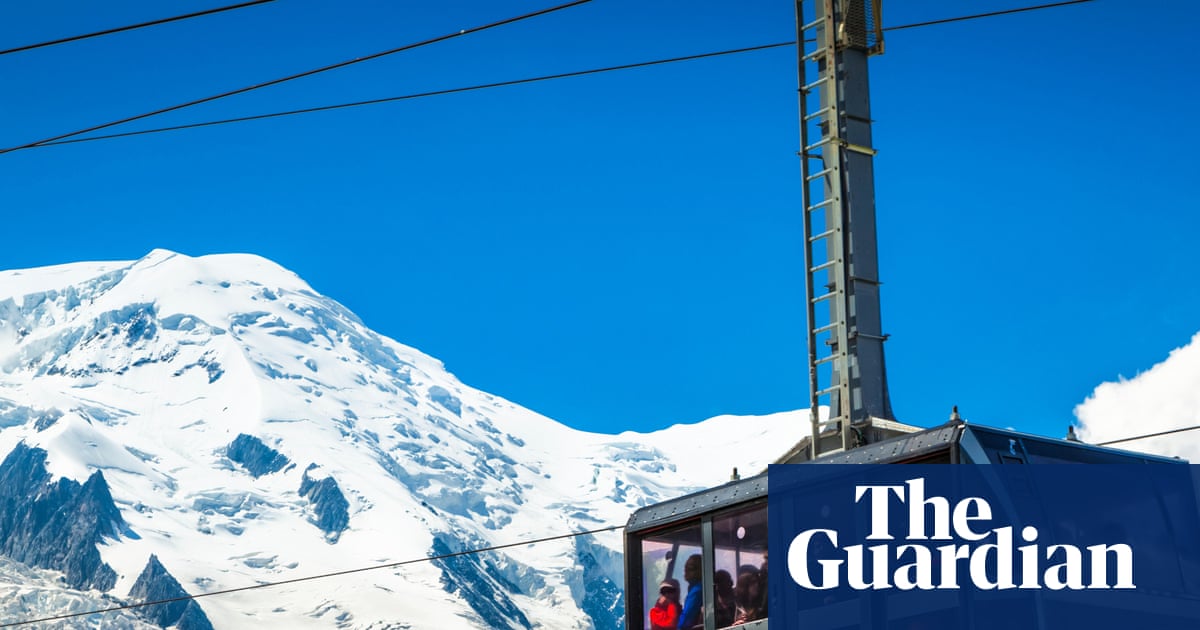

1 / 2
The story, neutrally told
Mixed · 2Surveyors said on Wednesday 14 October 2026 that Mont Blanc, the highest peak in the Alps, stands 4,807.47 metres (15,772.5 feet) above sea level. The GuardianLC “Mont Blanc in France now stands 4,807.47 metres above sea level, a team of surveyors from the Haute-Savoie regional department said on Wednesday” Read at The Guardian ↗ France 24N “putting the Alpine peak at 4,807.47 metres (15,772.5 feet)” Read at France 24 ↗ Left · 1The Guardian reports this is 1.29 metres lower than the 2025 figure. It is also 1.88 metres higher than in 2023, when the summit reached its lowest level in recent memory. The GuardianLC “putting “the roof of Europe” 1.29 metres lower than in 2025”“The height scientists recorded during an expedition last month is 1.88 metres greater than it was in 2023” Read at The Guardian ↗ Centre · 1France 24 leads with the comparison to 2023 and says the peak was nearly two metres higher last month than at its last reported measurement that year. France 24N “France's tallest mountain was nearly two metres higher last month than its last reported measurement in 2023” Read at France 24 ↗
Left · 1Chartered surveyors from the Union Nationale des Géomètres-Experts (UNGE) and the Ordre des Géomètres-Experts, who have monitored the peak regularly since 2001, used precise satellite technology for the measurement. They also used drones to build a detailed model of the snow and ice cap. The GuardianLC “used precise satellite technology to measure the mountain, and drones to create a detailed model of the snow and ice cap” Read at The Guardian ↗ Centre · 1France 24 says researchers have measured the mountain every two to three years since 2001, hoping to learn about the impact of climate change on the Alps. France 24N “Researchers have been measuring the mountain every two years to three years since 2001, hoping to garner information about the impact of climate change on the Alps.” Read at France 24 ↗ Left · 1The underlying rock is about 4,792 metres tall. The summit height moves with the thickness of snow and ice on top, which heat, wind and precipitation change. The Guardian says the summit is 3.43 metres below its 2007 high of 4,810.90 metres. The GuardianLC “The mountain rock is about 4,792 metres tall but the summit constantly shifts as heat, wind and precipitation change the thickness of snow and ice on top.”“The summit has shrunk by 3.43 metres since a high of 4,810.90 metres in 2007” Read at The Guardian ↗
Left · 1The experts cautioned against linking year-to-year changes in height to the rapid loss of Alpine ice. A UNGE spokesperson said a higher summit does not necessarily mean the mountain has gained ice mass, and does not contradict the documented retreat of Alpine glaciers. The GuardianLC “An increase in summit altitude does not necessarily mean that the mountain has gained ice mass, nor does it contradict the documented retreat of Alpine glaciers.” Read at The Guardian ↗ Left · 1Expedition leader Jean des Garets, president of the Haute-Savoie departmental chamber of surveyors, said the warming trend is visible in the rest of the Alpine massif. He added that "for the moment, climate change doesn't seem to have the same impact above 4,000 metres". He said the Tête-Rousse glacier has visibly retreated, and in places climbers now cross a stream instead of a glacier. The GuardianLC ““for the moment, climate change doesn't seem to have the same impact above 4,000 metres””“It has literally melted before our very eyes and now in some places we’re crossing a stream instead of a glacier.” Read at The Guardian ↗ Left · 1The Guardian places the result against a backdrop of western Europe's hottest summer on record this year. It also cites Swiss glaciologists who warned of an "explosion of melt rates" after finding that one-fifth of Switzerland's ice was lost in five years. The GuardianLC “Climate breakdown was a factor in western Europe’s hottest summer on record this year”“one-fifth of the country’s ice had been lost in the past five years, and 5.5% of volume was lost between 2025 and 2026” Read at The Guardian ↗
Every sentence links to the reporting it rests on. The pill in front of each says where its sources sit: Left, Centre or Right when one side supplies at least half of them, Mixed when they are evenly split. The number is how many outlets it cites.
Left1 outlet
- Framing
- Frames the result as a loss of height in a year, then places it within Alpine climate change and record heat and glacier melt. It stresses that summit height fluctuates and is not a direct climate indicator.
- Emphasis
- The 1.29 metre drop since 2025, the surveyors' caution against linking annual height changes to ice loss, and Swiss glacier loss and the hottest summer on record.
- Leaves out or plays down
- Does not explain why the report says the peak shrank "last year" although the measurement was taken last month.
- Charged language
- “roof of Europe”“explosion of melt rates”
- For example
-
“Europe’s highest peak shrank by more than a metre last year, data has shown.” — The Guardian
“The experts cautioned against linking fluctuations in height from year to year” — The Guardian
Centre1 outlet
- Framing
- Short report that leads with the peak being nearly two metres taller than in 2023, and notes the aim of the long-running measurements to learn about climate change impacts.
- Emphasis
- The rise since 2023, the exact height in metres and feet, and the measurement schedule since 2001.
- Leaves out or plays down
- In the text available it does not mention the 1.29 metre fall from 2025, the surveyors' caveats on interpreting the change, or the glacier context.
- For example
-
“Mont Blanc nearly two metres taller than in 2023” — France 24
Right0 outlets
No right outlet in our sources has covered this story yet.
What every side reports
- Surveyors announced on Wednesday that Mont Blanc is 4,807.47 metres high.
- The measurement was taken last month (September 2026).
- The peak has been monitored regularly since 2001.
- The 2026 figure is higher than the 2023 figure.
Where accounts differ
-
Which comparison best describes the result
- Left
- The Guardian leads with the loss of 1.29 metres since 2025 ("shrank by more than a metre"). It also reports the 1.88 metre rise since 2023 and says the height fluctuates.
- Centre
- France 24 leads with the gain of nearly two metres over the 2023 measurement and does not mention the fall from 2025 in the text available.
Left1 article
-
Mont Blanc, the ‘roof of Europe’, loses more than a metre of height in a year
Mixed Leads on the drop in height and ties it to Alpine melt and record heat, while carrying the surveyors' warning that the annual height change is not a measure of ice loss.
Centre1 article
-
Mont Blanc nearly two metres taller than in 2023
Neutral Brief factual report that stresses the rise since 2023 and the purpose of the long-running measurements.
Right0 articles
No coverage yet.
- 14 Oct 16:33 First The GuardianLC Mont Blanc, the ‘roof of Europe’, loses more than a metre of height in a year
- 15 Oct 10:58 +18h 25m France 24N Mont Blanc nearly two metres taller than in 2023
Times are when each article was published, or when we first saw it if the outlet gave no time.
Ask about this story
Loading…