Moon and Pleiades conjunction "Qiran 19" marks start of Al-Wasm season in Saudi Arabia
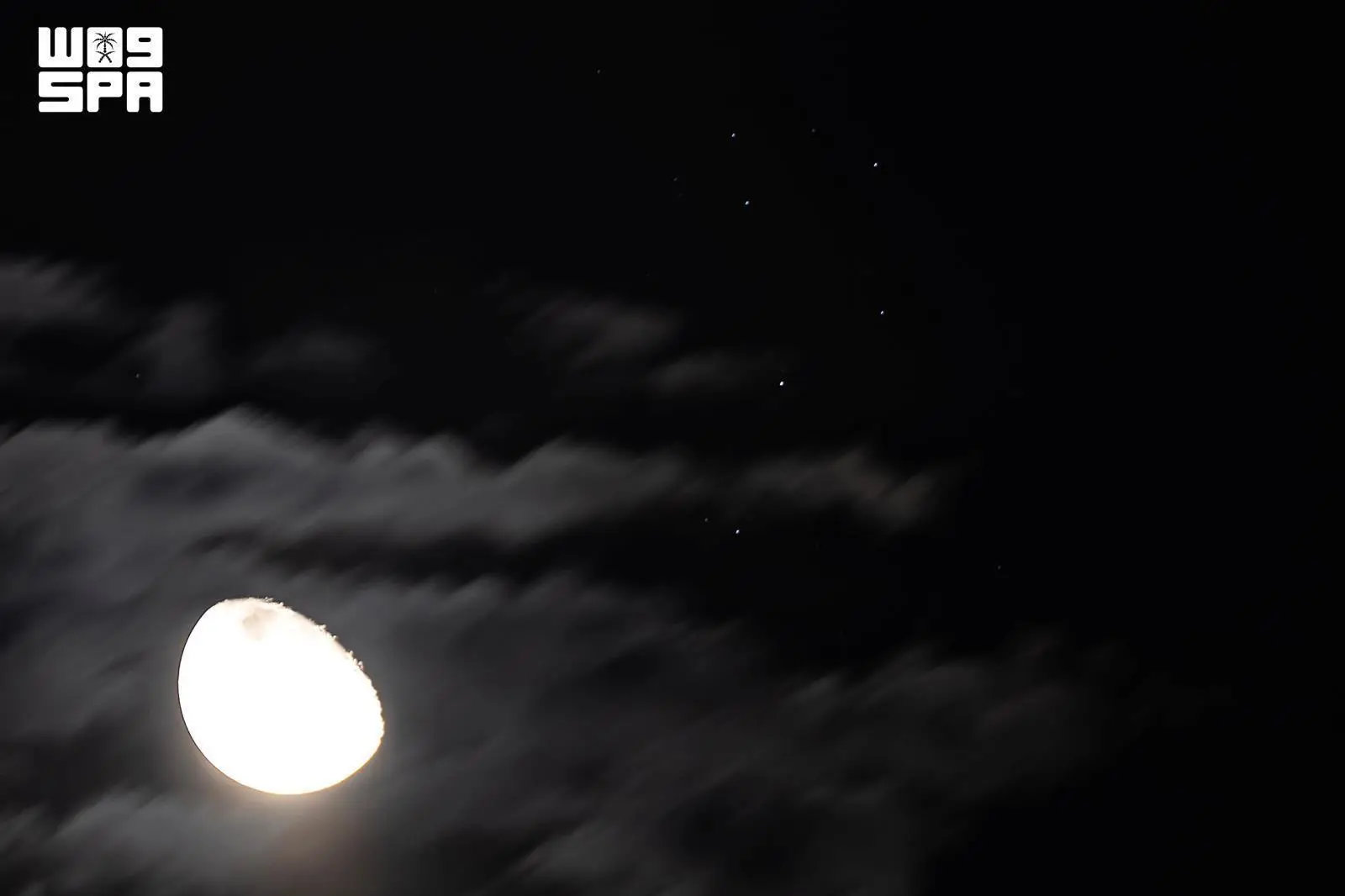
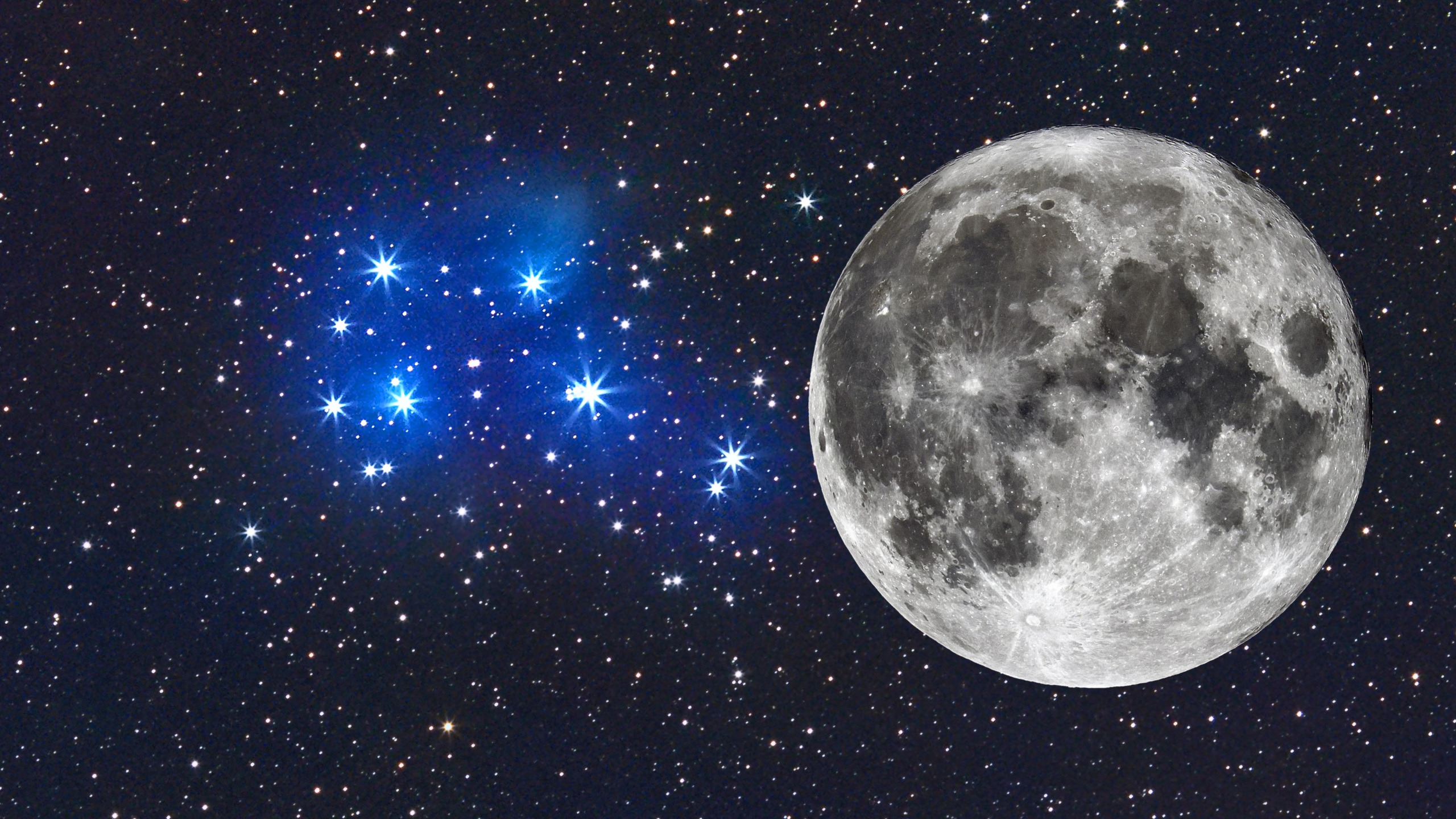
The moon appeared close to the Pleiades over Saudi Arabia on Wednesday, a conjunction traditionally linked to the start of the cooler, rain-associated Al-Wasm season.
1 / 2
The story, neutrally told
The moon appeared close to the Pleiades star cluster in Saudi skies on Wednesday 30 September. Arab NewsRC “The skies of Saudi Arabia witnessed a close apparent conjunction of the moon and the Pleiades star cluster on Wednesday” Read at Arab News ↗ The Media LineN “Saudi skywatchers saw the moon draw close to the Pleiades on Wednesday night” Read at The Media Line ↗ The conjunction is traditionally known as Qiran 19 and is associated with the start of Al-Wasm, a season of about 81 days linked to cooler temperatures and rain. Arab NewsRC “The full season extends for approximately 81 days and is traditionally divided into several periods.” Read at Arab News ↗ The Media LineN “the 81-day season associated with cooler temperatures, rain and renewed desert growth” Read at The Media Line ↗ Its first phase, Wasm Al-Harif, lasts about 27 days. Arab NewsRC “known as Wasm Al-Harif, lasts about 27 days” Read at Arab News ↗ The Media LineN “Its first stage, Wasm Al-Harif, lasts about 27 days” Read at The Media Line ↗
Arab News, citing Saudi Press Agency reports, said such alignments have long served as seasonal markers for Bedouins and farmers across the Arabian Peninsula, and quoted Astronomy Club member Mohammed Al-Hazimi. Arab NewsRC “According to SPA reports, the celestial alignment has long served as a seasonal marker for Bedouins and farmers”“Astronomy Club member Mohammed Al-Hazimi said the Moon’s conjunction with the Pleiades” Read at Arab News ↗ Rain in this period is traditionally seen as helping spring vegetation germinate and desert truffles (faq’a) emerge. Arab NewsRC “helps germinate spring vegetation and prepare the soil for the emergence of desert truffles, locally known as faq’a” Read at Arab News ↗ The Media LineN “germination of spring vegetation, improved pasture and conditions favorable for desert truffles” Read at The Media Line ↗ The Media Line clarified that the two objects are not physically approaching; the alignment is an effect of viewing from Earth, and the Pleiades lie roughly 440 light-years away in Taurus. The Media LineN “The two are not physically approaching each other; the conjunction is an alignment as seen from Earth.” Read at The Media Line ↗
Arab News noted earlier Moon-Pleiades conjunctions this year, in spring, August and September, that SPA also tied to seasonal changes. Arab NewsRC “A September conjunction was similarly described as signaling the waning of summer heat” Read at Arab News ↗
Every sentence links to the reporting it rests on.
Left0 outlets
No left outlet in our sources has covered this story yet.
Centre1 outlet
- Framing
- The Media Line tells a more explanatory, human-interest story, adding astronomical context and ending on the relief of cooler days after summer heat.
- Emphasis
- Night sky as calendar, the distinction between apparent and physical closeness, and the end of the heat.
- Leaves out or plays down
- Does not cite SPA or a named expert, and omits the earlier conjunctions this year.
- Charged language
- “punishing heat”
- For example
-
“After months of punishing heat, the stars are saying what many people across the kingdom have been waiting to hear: cooler days are on the way.” — The Media Line
Right1 outlet
- Framing
- Arab News presents a heritage-focused report relying on Saudi Press Agency and an Astronomy Club member, stressing the cultural and agricultural meaning of the conjunction.
- Emphasis
- Traditional seasonal calendar, agricultural cycles, and earlier SPA-reported conjunctions this year.
- Leaves out or plays down
- Does not explain that the conjunction is only an apparent alignment, or give the Pleiades' distance.
- For example
-
“these celestial markers remain part of the region’s cultural heritage, reflecting generations of close observation of the skies” — Arab News
What every side reports
- The moon appeared close to the Pleiades over Saudi Arabia on Wednesday.
- The conjunction is called Qiran 19 and tradition links it to the start of the roughly 81-day Al-Wasm season.
- Wasm Al-Harif, the first phase, lasts about 27 days.
- Tradition associates the season with cooler weather, rain and vegetation growth including desert truffles.
Saudi Arabia place
Saudi Arabia is where the conjunction was seen. Arab News, citing Saudi Press Agency, presents the alignment as part of the kingdom's cultural heritage, and The Media Line frames it as a sign of cooler weather.
“The skies of Saudi Arabia witnessed a close apparent conjunction of the moon and the Pleiades star cluster on Wednesday” — Arab News
“cooler days are on the way” — The Media Line
Left0 articles
No coverage yet.
Centre1 article
-
Moon and Pleiades Signal Saudi Arabia’s Turn Toward Cooler Days
Sympathetic Explanatory feature with astronomical context and a hopeful close about cooler days.
Right1 article
-
In Saudi skies, moon-Pleiades alignment marks Qiran 19 and onset of cooler Al-Wasm season
Neutral Heritage and agriculture report sourced to SPA and an Astronomy Club member.
- 1 Oct 03:55 First Arab NewsRC In Saudi skies, moon-Pleiades alignment marks Qiran 19 and onset of cooler Al-Wasm season
- 1 Oct 08:15 +4h 20m The Media LineN Moon and Pleiades Signal Saudi Arabia’s Turn Toward Cooler Days
Times are when each article was published, or when we first saw it if the outlet gave no time.