NASA releases Curiosity rover image of dawn on Mars
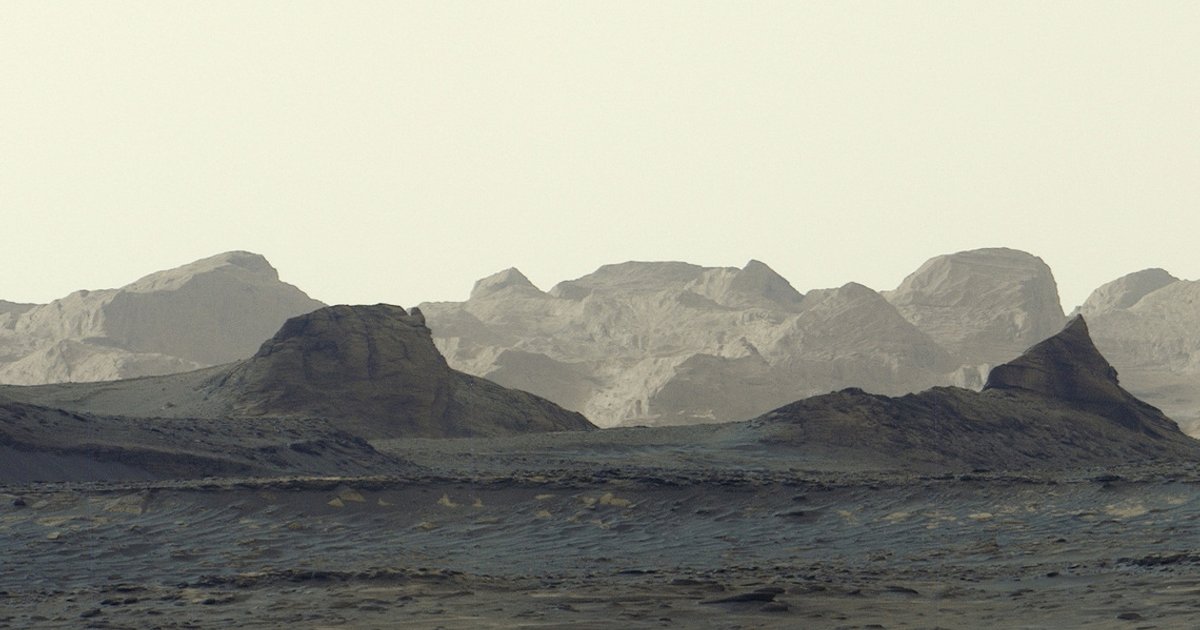
NASA has released an image of dawn on Mars taken by its Curiosity rover, showing wind-carved crags called yardangs on Mount Sharp in Gale Crater. Project scientist Ashwin Vasavada explained the geology and said the rover hopes to reach the layer in 2027 or 2028.
1 / 2
The story, neutrally told
Mixed · 2NASA has released an image of dawn on the Martian surface taken by its Curiosity rover, showing sunlight on jagged crags formed billions of years ago. The Straits TimesRC “NASA has released a striking image of dawn on the Martian surface taken by its Curiosity rover, showing sunlight bathing jagged crags formed billions of years ago” Read at The Straits Times ↗ South China Morning PostN “Nasa has released a striking image of dawn on the Martian surface taken by its Curiosity rover, showing sunlight bathing jagged crags formed billions of years ago” Read at South China Morning Post ↗ Right · 1The image was taken by the rover's Mastcam camera about an hour after sunrise, and shows wind-carved cliffs in the distance. According to the Reuters caption, it is a zoomed-in crop of a broader panorama captured on August 11, 2026. The Straits TimesRC “The image was taken by the six-wheeled rover's Mastcam camera about an hour after the sun rose above a landscape featuring wind-carved cliffs in the distance.”“The photograph is a zoomed-in crop of a broader panorama captured by the rover.” Read at The Straits Times ↗ Mixed · 2Curiosity landed in 2012 in Gale Crater near the Martian equator and has been climbing Mount Sharp, a mountain about 5 km (3 miles) tall rising from the crater floor, since 2014. The Straits TimesRC “Curiosity landed in 2012 in Gale Crater near the Martian equator, and since 2014 has been climbing Mount Sharp” Read at The Straits Times ↗ South China Morning PostN “a 5km-tall (3-mile-tall) mountain rising from the crater floor” Read at South China Morning Post ↗
Mixed · 2Ashwin Vasavada, Curiosity project scientist at NASA's Jet Propulsion Laboratory, said the bright peaks are a rock layer unlike those the rover has driven through so far, probably once wind-blown sand or volcanic ash that hardened into rock and was later carved by wind into ridges called yardangs. The Straits TimesRC “We think it once was wind-blown sediment, maybe sand or maybe even ash that blew into the crater from nearby volcanic activity.” Read at The Straits Times ↗ South China Morning PostN “ridges called yardangs” Read at South China Morning Post ↗ Mixed · 2According to Vasavada, the yardang layer most likely formed about 3 billion years ago, around the same time as the rest of the mountain, and spans about 16 km (10 miles) across the northwestern reaches of Mount Sharp. He said it appears to have been added later, above an unconformity, a gap in time during which earlier layers eroded before new ones were deposited. South China Morning PostN “This layer spans about 16km across the northwestern reaches of Mount Sharp.” Read at South China Morning Post ↗ The Straits TimesRC “It's above what geologists call an unconformity: a gap in time where previous layers eroded down before new layers were deposited on top” Read at The Straits Times ↗ Mixed · 2NASA says the rover has gained upwards of 1 km (0.6 miles) in elevation, the most ever climbed on Mars. The Straits TimesRC “has gained upwards of 0.6 miles (1 km) in elevation, the most ever climbed on Mars, according to NASA.” Read at The Straits Times ↗ South China Morning PostN “has gained upwards of 1km in elevation, the most ever climbed on” Read at South China Morning Post ↗
Mixed · 2Mount Sharp's layers record Mars' past, and scientists studying them have learned more about lakes and streams that long ago covered the region, when Mars was wetter and warmer than today. The Straits TimesRC “Mount Sharp is built of layers, each recording a period of the planet's geological past.” Read at The Straits Times ↗ South China Morning PostN “at a time when Mars was wetter and warmer” Read at South China Morning Post ↗ Mixed · 2Vasavada said NASA hopes Curiosity will reach the yardang layer in 2027 or 2028 and study its geology with the rover's instruments. The Straits TimesRC “Vasavada said NASA hopes Curiosity will reach the yardang layer in 2027 or 2028” Read at The Straits Times ↗ South China Morning PostN “Vasavada said Nasa hopes Curiosity will reach the yardang layer in 2027 or 2028” Read at South China Morning Post ↗ Mixed · 2Curiosity is one of two NASA rovers operating on Mars; Perseverance is currently traversing the margins of Jezero Crater in the northern hemisphere. The Straits TimesRC “It is one of two NASA rovers operating on Mars.” Read at The Straits Times ↗ South China Morning PostN “The Perseverance rover is currently traversing the margins of Jezero Crater in the northern hemisphere.” Read at South China Morning Post ↗
Mixed · 2Vasavada compared the scene to Monument Valley, Arizona, saying the sky is orange and the sunrise has shades of blue: "It's like Earth, but it's definitely Mars." The Straits TimesRC “It's like Earth, but it's definitely Mars,” Read at The Straits Times ↗ South China Morning PostN “the sky is orange and the sunrise has shades of blue” Read at South China Morning Post ↗
Every sentence links to the reporting it rests on. The pill in front of each says where its sources sit: Left, Centre or Right when one side supplies at least half of them, Mixed when they are evenly split. The number is how many outlets it cites.
Left0 outlets
No left outlet in our sources has covered this story yet.
Centre1 outlet
- Framing
- Carries the Reuters story unchanged in substance, leading with the striking dawn image and Vasavada's geological explanation, using metric units first and British spelling.
- Emphasis
- The scientific explanation of the yardang layer and the elevation record.
- Leaves out or plays down
- Does not include the photo caption's detail that the image is a crop of a broader panorama taken August 11, 2026.
- Charged language
- “striking”“otherworldly”
- For example
-
“Curiosity’s new image of Martian dawn is certainly otherworldly.” — South China Morning Post
Right1 outlet
- Framing
- Carries the Reuters story with the same lead and content, using US spelling and miles first, and includes the image caption.
- Emphasis
- The image and Vasavada's explanation and Monument Valley comparison.
- Leaves out or plays down
- No notable omissions compared with the centre copy.
- Charged language
- “striking”“otherworldly”
- For example
-
“Curiosity's new image of Martian dawn is certainly otherworldly.” — The Straits Times
What every side reports
- NASA released an image of dawn on Mars taken by Curiosity's Mastcam.
- Curiosity landed in Gale Crater in 2012 and has climbed Mount Sharp since 2014.
- The yardang layer likely formed about 3 billion years ago, and NASA hopes Curiosity reaches it in 2027 or 2028.
NASA organisation
NASA, via project scientist Ashwin Vasavada, describes the layer as wind-carved sediment about 3 billion years old, which the rover hopes to reach in 2027 or 2028.
“Vasavada said NASA hopes Curiosity will reach the yardang layer in 2027 or 2028” — The Straits Times
Curiosity rover product
Curiosity continues its climb of Mount Sharp, having gained over 1 km in elevation, the most ever climbed on Mars according to NASA.
“has gained upwards of 1km in elevation, the most ever climbed on” — South China Morning Post
Left0 articles
No coverage yet.
Centre1 article
-
South China Morning PostN · · via Reuters
Nasa releases striking image of dawn on Mars
Celebratory Reuters wire copy run by the South China Morning Post with the same striking-image framing and metric-first units.
Right1 article
-
The Straits TimesRC · · via Reuters
NASA rover takes striking image of dawn's early light on Mars
Celebratory Reuters wire copy run by the Straits Times presenting the dawn image as striking and explaining its geology.
- 7 Oct 10:09 First The Straits TimesRC NASA rover takes striking image of dawn's early light on Mars via Reuters
- 7 Oct 10:17 +8m South China Morning PostN Nasa releases striking image of dawn on Mars via Reuters
Times are when each article was published, or when we first saw it if the outlet gave no time.