Netanyahu says Arab parties are trying to steal election after three arrested over Raam vote-buying
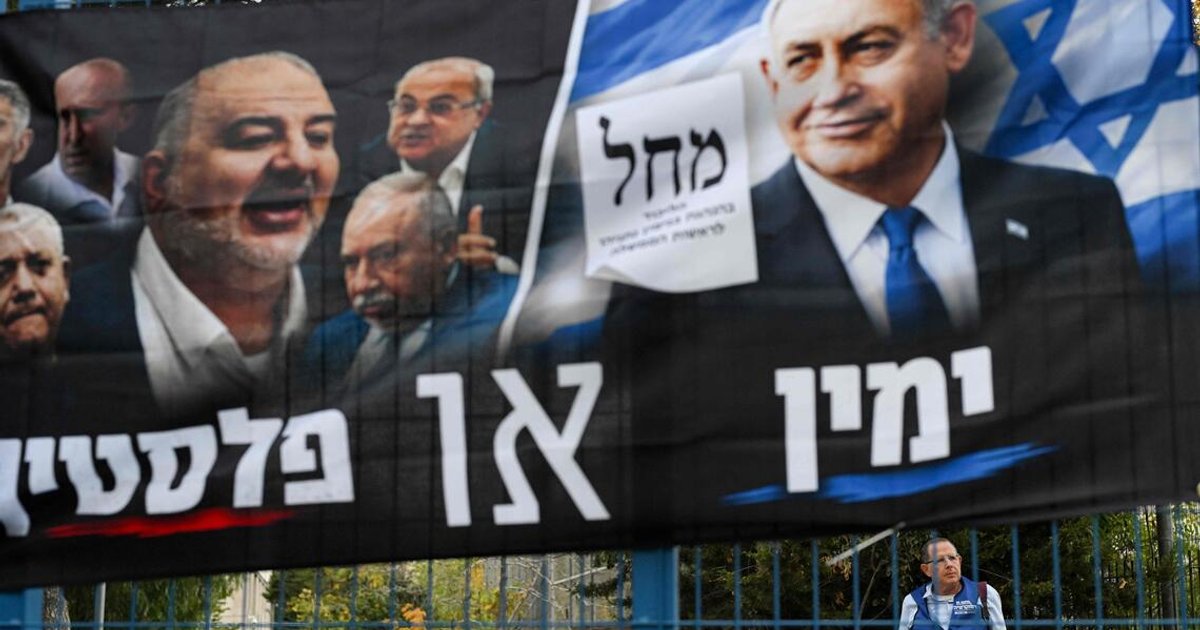
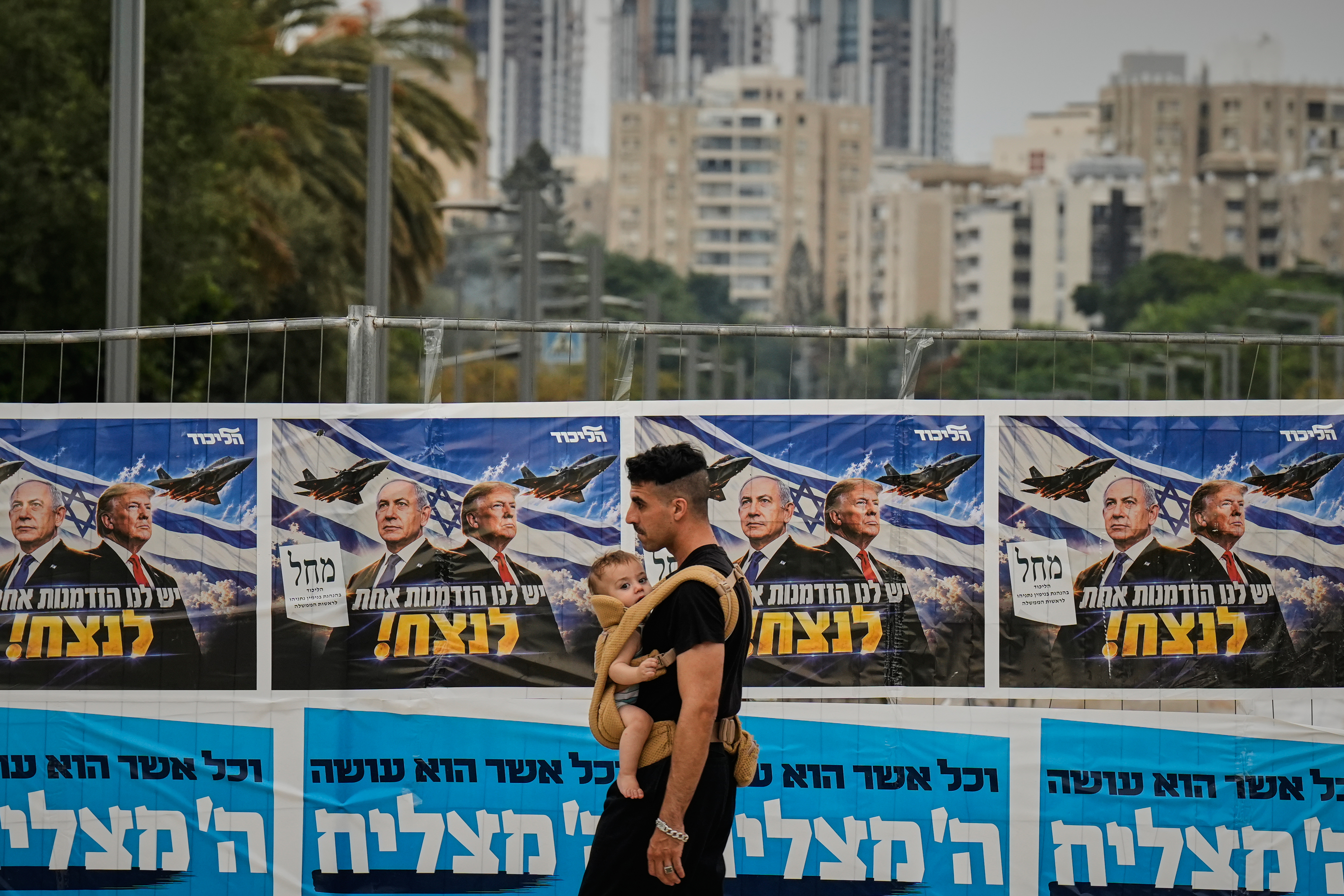
On election day, 27 October, Netanyahu said "they're trying to steal the election" after three people were arrested on suspicion of buying votes for the Arab-Israeli party Raam. Election officials called the case localised, and the opposition accused Netanyahu of laying groundwork to challenge the results.
1 / 2
The story, neutrally told
Mixed · 2Prime Minister Benjamin Netanyahu said on 27 October, after casting his ballot, that Arab parties were "trying to steal the election", following reports that individuals had been arrested with envelopes of cash. Hindustan TimesN “warning after casting his ballot that "they're trying to steal the election" after reports that individuals were arrested with envelopes of cash” Read at Hindustan Times ↗ The Straits TimesRC “warning after casting his ballot that “they’re trying to steal the election” after reports that individuals were arrested with envelopes of cash” Read at The Straits Times ↗ Right · 1Netanyahu said three senior officials of the Raam party had been arrested with envelopes full of cash in the south. The Straits TimesRC “said three senior officials of the Raam party had been arrested with envelopes full of cash in the south” Read at The Straits Times ↗ Right · 1Police confirmed that three people were arrested overnight on suspicion of trying to buy votes for Raam. Southern District detectives said they seized over NIS 24,000 in cash, including pre-prepared envelopes containing money, and notes during searches of the suspects' homes. The Straits TimesRC “Police confirmed three people had been arrested overnight on suspicion of trying to buy votes for Raam.”“Southern District detectives seized over NIS 24,000 (S$10,100) in cash, including pre-prepared envelopes containing money, and notes during searches of the suspects’ homes,”” Read at The Straits Times ↗
Right · 1Police attached a photo of envelopes, at least one marked with a name and others with the phrase "a gift from the Islamic movement". Raam did not immediately respond to an AFP request for comment. The Straits TimesRC “others with the phrase “a gift from the Islamic movement””“The party did not immediately respond to an AFP request for comment.” Read at The Straits Times ↗ Centre · 1Acting Central Elections Committee director general Dean Livne called the incident "unusual" and said police caught people who tried to bribe voters before they reached polling stations. He said the unidentified suspects were caught near their homes, not at polling stations, and that the matter was under investigation. Hindustan TimesN “police, even before people arrived at the polling stations, caught individuals who tried to bribe voters”“He said the unidentified suspects were not at polling stations and were caught near their homes, adding the matter was under investigation.” Read at Hindustan Times ↗ Centre · 1Livne said there were no similar incidents across the country and that this was a localised case. Hindustan TimesN “There are no similar incidents of this kind across the country; this was a localised case,” Read at Hindustan Times ↗
Centre · 1Netanyahu urged supporters to turn out, saying, "We cannot leave this battle here in the hands of the left and the Arab parties that want to bring an end to the Jewish state... So no barbecues, don't go to the beach -- go to the polling station and vote Likud." Hindustan TimesN “"We cannot leave this battle here in the hands of the left and the Arab parties that want to bring an end to the Jewish state," Netanyahu said.”“go to the polling station and vote Likud.” Read at Hindustan Times ↗ Right · 1The party of Netanyahu's main challenger, Gadi Eisenkot, named in the Straits Times copy as Yashar, accused the premier of "laying the groundwork to challenge the results" and said it needed a huge margin over Likud so there would be no room to sow doubt. The Straits TimesRC “accused the premier of “laying the groundwork to challenge the results”.”“We have to be ahead of Likud by a huge margin; only then will there be no room to sow doubt,”” Read at The Straits Times ↗ Centre · 1Opposition parties, including Eisenkot's, complained as voting began that their ballot papers were being defaced and stolen at polling places. The Central Elections Committee, as quoted by the Times of Israel, said there were currently no indications of systematic tampering with ballot slips and that reports were being addressed immediately. Hindustan TimesN “their ballot papers were being defaced and stolen at polling places”“there are currently no indications of systematic tampering with ballot slips” Read at Hindustan Times ↗
Mixed · 2AFP describes Netanyahu as having used Arab-Israeli parties throughout the campaign to stoke fears of a Palestinian state. It notes that Raam, though relatively small, could play a decisive role in forming an opposition-led coalition if the result is as close as expected. Hindustan TimesN “Despite being a relatively small party, Raam could play a decisive role in forming an opposition-led coalition if election results are as close as expected.” Read at Hindustan Times ↗ The Straits TimesRC “who has used Arab-Israeli parties throughout the election to stoke fears of a Palestinian state” Read at The Straits Times ↗
Every sentence links to the reporting it rests on. The pill in front of each says where its sources sit: Left, Centre or Right when one side supplies at least half of them, Mixed when they are evenly split. The number is how many outlets it cites.
Left0 outlets
No left outlet in our sources has covered this story yet.
Centre1 outlet
- Framing
- AFP copy carried by Hindustan Times leads with Netanyahu's quote and the reports of arrests, then gives the elections official's statement that the case was localised.
- Emphasis
- Netanyahu's rhetoric, Raam's potential kingmaker role, the elections committee's rejection of systematic tampering.
- Leaves out or plays down
- Does not include police details on the cash seized or envelope labels, or the opposition accusation that Netanyahu was preparing to challenge the results.
- Charged language
- “they're trying to steal the election”
- For example
-
“Netanyahu, who has used Arab-Israeli parties throughout the election to stoke fears of a Palestinian state” — Hindustan Times
Right2 outlets
- Framing
- AFP copy carried by the Straits Times leads with the arrests on suspicion of buying votes for Raam, and adds police evidence and the opposition's response.
- Emphasis
- Police findings (NIS 24,000, labelled envelopes), the Yashar party's accusation, and that Raam had not responded.
- Leaves out or plays down
- Does not include the Raam party's response, which was not available at publication.
- Charged language
- “a gift from the Islamic movement”“they’re trying to steal the election”
- For example
-
“Three people had been arrested overnight on suspicion of trying to buy votes for Arab-Israeli party Raam.” — The Straits Times
“accused the premier of “laying the groundwork to challenge the results”.” — The Straits Times
What every side reports
- Netanyahu said on election day, 27 October, that Arab parties were "trying to steal the election".
- Three people were arrested on suspicion of vote-buying linked to Raam in the south.
- The Central Elections Committee's acting director general called the incident localised and said there were no similar cases nationwide.
- The committee said there were no indications of systematic ballot tampering, after opposition complaints of defaced and stolen ballot papers.
Where accounts differ
-
Whether Netanyahu's "steal the election" charge is justified
- Centre
- AFP copy in Hindustan Times reports the charge alongside the elections official's statement that the case was localised.
- Right
- AFP copy in the Straits Times adds that Eisenkot's party accused Netanyahu of "laying the groundwork to challenge the results".
Benjamin Netanyahu person
Says Arab parties are trying to steal the election, cites arrests of Raam officials, and urges Likud voters to turn out.
““We cannot leave this battle here in the hands of the left and the Arab parties that want to bring an end to the Jewish state,”” — The Straits Times
Raam party
Did not immediately respond to AFP's request for comment; police link the three arrested suspects to vote-buying for the party.
“The party did not immediately respond to an AFP request for comment.” — The Straits Times
2026 Israeli legislative election event
On election day the elections committee called the arrests a localised case and said there were no signs of systematic ballot tampering; opposition parties reported defaced and stolen ballot slips.
“this was a localised case” — Hindustan Times
Left0 articles
No coverage yet.
Centre1 article
-
Hindustan TimesN · · via AFP
'They're trying to steal the election': Netanyahu attacks Arab parties
Neutral AFP wire in Hindustan Times reports Netanyahu's accusation, then the election committee's statements that the incident was localised.
Right2 articles
-
The Straits TimesRC · · via AFP
Netanyahu says ‘they’re trying to steal the election’, attacks Arab parties
Neutral AFP wire in the Straits Times reports the arrests and police evidence in more detail and includes the opposition's reaction.
-
- 27 Oct 14:10 First Hindustan TimesN 'They're trying to steal the election': Netanyahu attacks Arab parties via AFP
- 27 Oct 14:45 +34m The Straits TimesRC Netanyahu says ‘they’re trying to steal the election’, attacks Arab parties via AFP
- 27 Oct 16:12 +2h 1m Arab NewsRC Netanyahu says Arab parties ‘trying to steal election’
Times are when each article was published, or when we first saw it if the outlet gave no time.
Ask about this story
Loading…