New Covid variant PJ.2.1 spreads across continents; no sign of greater severity
Covid-19 variant PJ.2.1, first identified in Ontario, Canada in May 2026, has spread to several continents. Doctors and the WHO cited in coverage say there is no sign it is more severe than recent variants, though it is accounting for a growing share of cases.

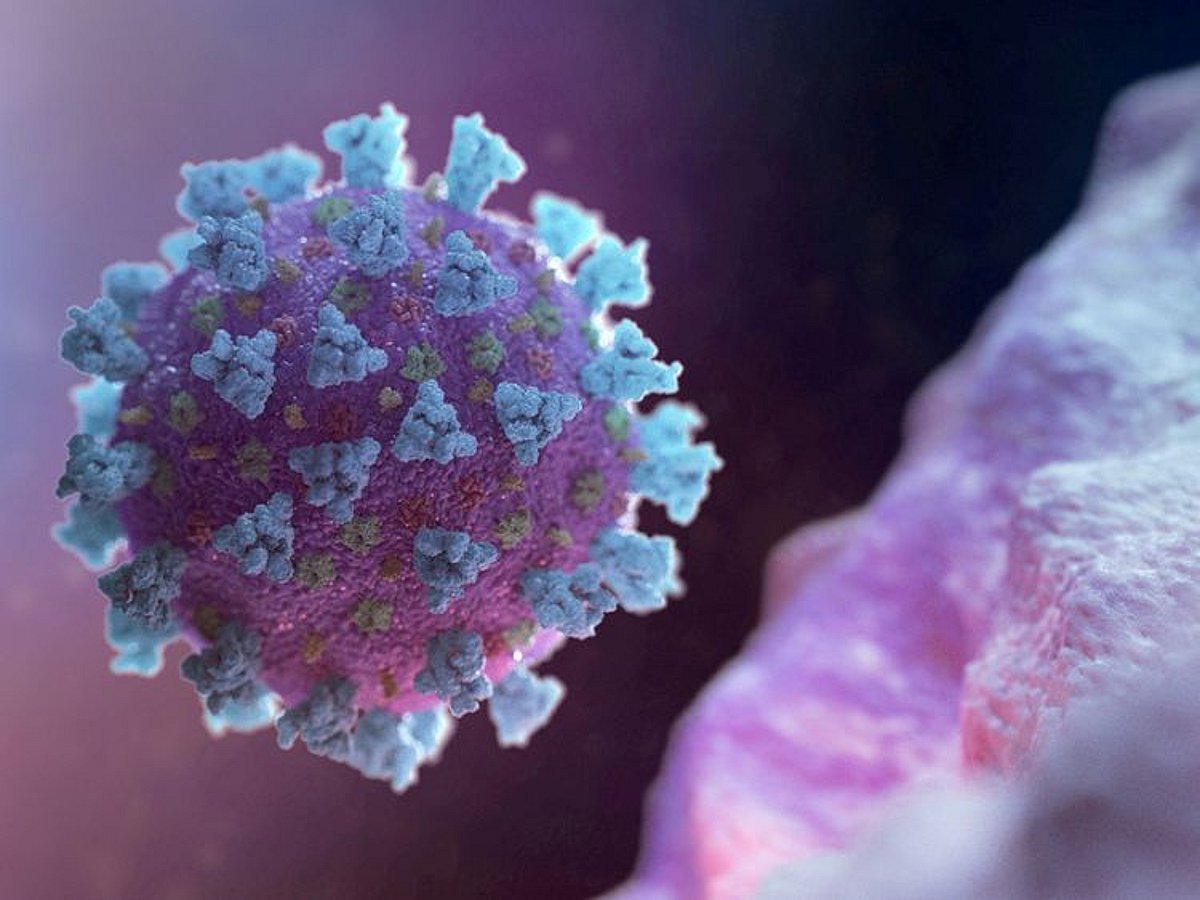
1 / 2
The story, neutrally told
Centre · 2A new Covid-19 variant, PJ.2.1, has spread to several continents since it was first identified in Ontario, Canada, in early May 2026. The NationalN “PJ. 2.1 was identified in Ontario, Canada, at the beginning of May this year” Read at The National ↗ Gulf NewsN “The first confirmed sample was collected on May 2, 2026, in Ontario, Canada.” Read at Gulf News ↗ Centre · 2It was first detected in the US in New York at the end of June (30 June, per Gulf News) and has since reached other US states, where The National says it is thought to be the fastest-growing variant. It has also been detected in Australia, Singapore and Spain. The NationalN “was first detected in the US in New York at the end of June. It has since spread to numerous other states in the US” Read at The National ↗ Gulf NewsN “It has also been found in Australia, Singapore and Spain.” Read at Gulf News ↗ Centre · 2The World Health Organization says it is closely monitoring the variant because of its growing geographical spread, and that its symptoms resemble those of a common cold or influenza, so infection cannot be identified by symptoms alone. Gulf NewsN “The World Health Organization (WHO) says it is closely monitoring the variant because of its growing geographical spread.” Read at Gulf News ↗ The NationalN “The World Health Organisation has said that PJ. 2.1, like previous variants, causes symptoms similar to the common cold or influenza.” Read at The National ↗
Centre · 1A study in the Journal of Infection in October 2026 describes PJ.2.1 as a "novel saltation variant" descended from the JN.1 lineage, with a heavily mutated spike protein. Gulf NewsN “describes PJ.2.1 as a “novel saltation variant”. It evolved from an older variant that circulated until May 2025 and descends from the JN.1 lineage.” Read at Gulf News ↗ Centre · 1A study by Chinese scientists released in September reported "rapid intercontinental spread" and better binding to the ACE2 receptor than other variants, and a further study last month suggested this could explain the spread. The variant is not thought to be better at evading immunity. The NationalN “achieved “rapid intercontinental spread”, according to a study by Chinese scientists released in September.”“the variant is not thought to be better at evading the human immune system” Read at The National ↗ Centre · 2Doctors cited by both outlets say there is no evidence of more severe illness. Dr Asher Jamal of NMC Royal Hospital Sharjah warned against "unnecessary alarm", and Prof Paul Hunter of the University of East Anglia said it appears "on the up" as a share of infections but without evidence of higher hospitalisation or mortality. The NationalN “I don’t think there’s a reason for unnecessary alarm.””““There doesn’t seem to be evidence it causes more severe disease, higher hospitalisation rates or greater mortality than other circulating variants,”” Read at The National ↗ Gulf NewsN “So far, there are no signs that PJ.2.1 causes more severe illness than earlier variants.” Read at Gulf News ↗
Centre · 1Gulf News adds that it is too early to say how serious the impact could be, because its symptoms are similar to a cold. Gulf NewsN “it is too early to say how serious its impact could be” Read at Gulf News ↗ Centre · 1Citing WAM, The National reports Prof Elena Malinnikova of the Russian Medical Academy of Continuing Professional Education as saying PJ.2.1 may cause a more severe throat infection and more prolonged fatigue than other variants. The NationalN “PJ. 2.1 may cause patients to have a more severe throat infection, when compared to other variants.” Read at The National ↗ Centre · 2Globally, about 780 million Covid-19 cases and seven million deaths have been reported, though new cases have fallen significantly; The National says 56,471 new infections were recorded in the 28 days to 18 October, down more than 35,000 on the previous month. The NationalN “A total of 56,471 new infections were recorded in the 28-day period to October 18” Read at The National ↗ Gulf NewsN “about 780 million COVID-19 cases and seven million deaths have been reported to date” Read at Gulf News ↗
Centre · 2Prof Eskild Petersen of Roskilde University said most people are well protected by vaccination, that cross-immunity between lines is extensive, and that home rapid tests will most probably detect the variant. Gulf News advises testing when symptomatic, staying up to date with vaccinations and avoiding close contact while unwell. The NationalN ““There’s extensive cross-immunity between the different Covid lines,”” Read at The National ↗ Gulf NewsN “Health experts advise getting tested if you have symptoms, staying up to date with vaccinations” Read at Gulf News ↗
Every sentence links to the reporting it rests on. The pill in front of each says where its sources sit: Left, Centre or Right when one side supplies at least half of them, Mixed when they are evenly split. The number is how many outlets it cites.
Left0 outlets
No left outlet in our sources has covered this story yet.
Centre2 outlets
- Framing
- Both Gulf-based outlets present a reassuring, explanatory account: the variant is spreading, but there is no evidence of greater severity. The National frames it as a reminder of the lingering threat of Covid; Gulf News gives a Q&A-style explainer.
- Emphasis
- The National stresses expert voices (UAE and European doctors) and the long-term healthcare burden; Gulf News stresses origin, symptoms and practical advice.
- Leaves out or plays down
- Gulf News omits the new-case figures and the cross-immunity and rapid-test points; The National gives no practical advice for readers.
- Charged language
- “lingering danger of deadly virus”“novel saltation variant”
- For example
-
“A new strain of Covid-19 spreading around the world has served to highlight the lingering and evolving threat posed by the virus” — The National
“Its arrival has raised familiar questions about how dangerous it is and whether another wave is coming.” — Gulf News
Right0 outlets
No right outlet in our sources has covered this story yet.
What every side reports
- PJ.2.1 was first identified in Ontario, Canada, in May 2026.
- It has been detected in the US, Australia, Singapore and Spain.
- There is no sign it causes more severe illness than earlier variants.
- The WHO says its symptoms resemble a cold or influenza.
- About 780 million cases and seven million deaths have been reported globally, with new cases falling.
Where accounts differ
-
Whether PJ.2.1 causes different or worse symptoms
- Centre
- The National relays a Russian professor, via WAM, saying it may cause more severe throat infection and prolonged fatigue, alongside doctors saying there is no evidence of greater severity. Gulf News says only that symptoms resemble a cold or flu and it is too early to judge impact.
Left0 articles
No coverage yet.
Centre2 articles
-
Global spread of new Covid variant highlights lingering danger of deadly virus
Mixed Presents the spread as a reminder of Covid's lingering threat while quoting several doctors urging against alarm.
-
New COVID-19 variant PJ.2.1 spreading: Symptoms, risks and what we know so far
Neutral Explainer on what the variant is, where it was found, symptoms, risk and advice.
Right0 articles
No coverage yet.
- 10 Nov 09:58 First The NationalN Global spread of new Covid variant highlights lingering danger of deadly virus
- 11 Nov 11:10 +25h 12m Gulf NewsN New COVID-19 variant PJ.2.1 spreading: Symptoms, risks and what we know so far
Times are when each article was published, or when we first saw it if the outlet gave no time.
Ask about this story
Loading…