New giant waterlily, Victoria colombiana, described from Colombia's Inírida River
Researchers led by Kew's Carlos Magdalena have described Victoria colombiana, a new giant waterlily found in Colombia after a social media photo. Outlets differ on how many giant waterlily species are now known.
Updated (version 2). New coverage since the last version from GB News.


1 / 3
The story, neutrally told
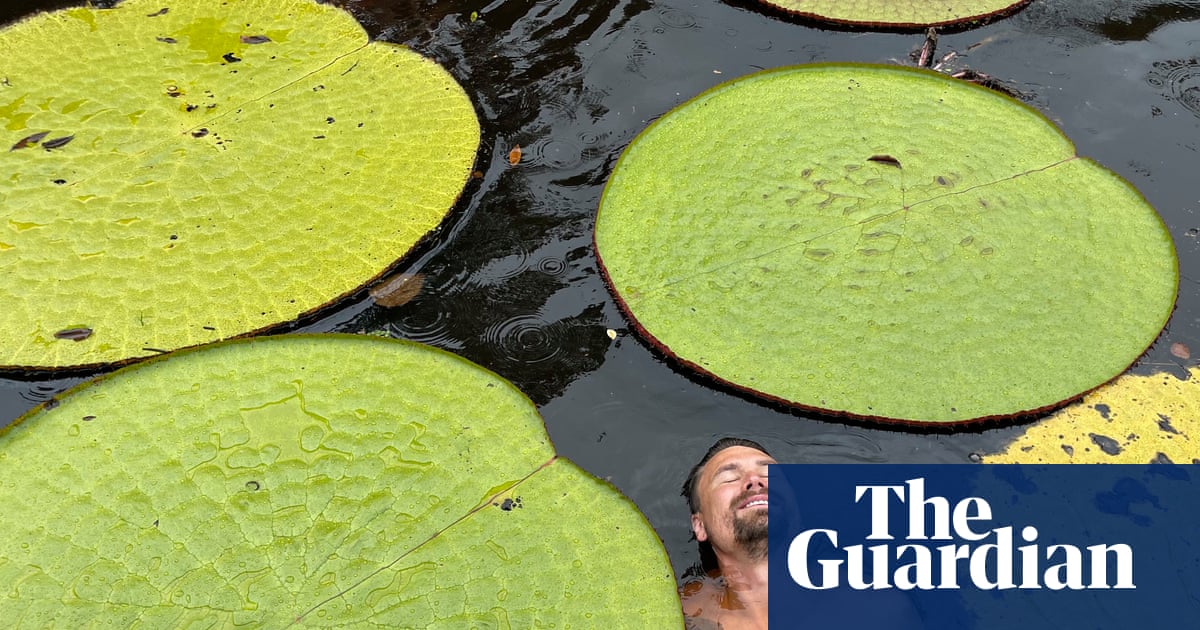
Mixed · 2Researchers have formally described a new species of giant waterlily, Victoria colombiana, found in the Inírida River region of Colombia. New ScientistN “which they have named Victoria colombiana” Read at New Scientist ↗ The GuardianLC “The waterlily has been given the official name Victoria colombiana.” Read at The Guardian ↗ Mixed · 2The Guardian reports that the paper was published on Friday in the journal Phytotaxa; GB News also names Phytotaxa as the journal. The GuardianLC “with a paper published on Friday in the journal Phytotaxa confirming it as a new species to science” Read at The Guardian ↗ GB NewsR “who assisted with the formal species description published in the journal Phytotaxa” Read at GB News ↗ Mixed · 2The lead came from social media: Jeremiah Harris, who runs a carnivorous plant business in the US, posted photos of himself swimming beside what he took to be Victoria amazonica. Carlos Magdalena of the Royal Botanic Gardens, Kew, noticed that the species' range was not thought to reach this river. New ScientistN “Jeremiah Harris, who runs a carnivorous plant business in the US, posted pictures online” Read at New Scientist ↗ The GuardianLC “the natural range of the Victoria amazonica does not extend to the Inírida River” Read at The Guardian ↗
Mixed · 2Magdalena and colleagues examined satellite images, which showed green dots indicating giant waterlilies. The Guardian says he spent several years on this analysis and on securing funding and permits. New ScientistN “examined satellite photos and found telltale green dots” Read at New Scientist ↗ The GuardianLC “spent several years analysing satellite imagery and securing the funds and necessary permits” Read at The Guardian ↗ Mixed · 2An expedition found two plants, but neither was flowering, and flowers are essential for establishing a new species. A local guide then led the team by boat in the dark to a small lake, where they found five plants, some in flower. New Scientist names the guide as Gustavo Melo of the Indigenous Tucano community and says it was 11pm on the last night, with the plane due at 9am. The Guardian calls him a driver and says about 10 hours remained before the return flight. New ScientistN “The team found two plants but neither was flowering”“Gustavo Melo from the Indigenous Tucano community” Read at New Scientist ↗ The GuardianLC “With only 10 hours left until their return flight” Read at The Guardian ↗ Centre · 1According to New Scientist, V. colombiana differs from V. amazonica in the orientation of the spines under its leaves and in the shape of its flowers and fruits. Maarten Christenhusz says the spines defend against manatees and plant-eating fish. New ScientistN “It differs from V. amazonica in the orientation of the spines beneath the leaves, and in the shape of its flowers and fruits.” Read at New Scientist ↗
Mixed · 3Giant waterlily leaves grow up to 3 metres across, according to New Scientist and the Guardian, while GB News puts the new species' pads at up to two metres. The Guardian and GB News both say the plant can be seen from space. New ScientistN “which grow up to 3 metres wide” Read at New Scientist ↗ GB NewsR “boasts lily pads stretching up to two metres in diameter” Read at GB News ↗ The GuardianLC “which can measure up to three metres across” Read at The Guardian ↗ Mixed · 2The team estimates there are 30 to 50 plants in the wild, and the Guardian describes the species as critically endangered. New Scientist says it is known from only one small area and could be wiped out by a single event such as a pollution spill. The GuardianLC “The team estimates there are between 30 and 50 of the Victoria colombiana waterlilies in the wild” Read at The Guardian ↗ New ScientistN “A single event, such as a pollution spill, could wipe out the entire species” Read at New Scientist ↗ Mixed · 2The team plans to collect seed to safeguard the species. The Guardian adds that it is working towards an IUCN Red List designation, is considering a naturalised population in a more accessible lake within indigenous territory, and hopes to cultivate the plant in Bogotá and possibly at Kew. New ScientistN “the team is planning to try to collect seeds to help ensure the species survives” Read at New Scientist ↗ The GuardianLC “The team is working towards an official International Union for Conservation of Nature (IUCN) Red List designation.” Read at The Guardian ↗
Mixed · 2New Scientist places the find in a wider run of discoveries. Only V. amazonica and V. cruziana were known for decades, then V. boliviana was described in 2022, and a fifth species from the Pantanal, to be named Victoria mattogrossensis, is due to be described soon, bringing the total to five. The Guardian says there are just three other known giant waterlilies, which implies four in total, so the outlets differ on the count. New ScientistN “we have discovered no fewer than three new species, taking the total to five”“will publish a paper soon to describe this fifth species, which they have decided to name Victoria mattogrossensis” Read at New Scientist ↗ The GuardianLC “There are just three other known giant waterlilies.” Read at The Guardian ↗ Mixed · 2Magdalena said the story shows indigenous and horticultural knowledge, social media and technology coming together, and that much remains to be discovered. Christenhusz said it is remarkable to find something so large and new. The GuardianLC “indigenous and horticultural knowledge with the help of social media and technology came together” Read at The Guardian ↗ New ScientistN “I think it's incredible that we find something so new, which is so large” Read at New Scientist ↗ Mixed · 3The outlets differ on when Magdalena first saw the photos: New Scientist says Harris posted them in 2021, the Guardian says Magdalena saw them three years ago, and GB News says five years ago. New ScientistN “In 2021, Jeremiah Harris, who runs a carnivorous plant business in the US, posted pictures online” Read at New Scientist ↗ The GuardianLC “Three years ago, while scrolling through Instagram” Read at The Guardian ↗ GB NewsR “first encountered the waterlily five years ago” Read at GB News ↗
Right · 1GB News adds that the expedition included Mauricio Bernal of the Jardín Botánico de Bogotá and indigenous reserve members Nilo Rodríguez, Jaime Hernández and Gustavo Melo, and that Melo, a boatman, led the team out at 1am to a lake where they found five more plants, one in flower. The research team has since identified a third lake with the waterlily. GB NewsR “The team left at 1am by boat, pushed deeper into the flooded jungle”“The research team has since identified a third lake harbouring the waterlily” Read at GB News ↗ Right · 1GB News says satellite comparisons suggest more plants may become detectable when dry-season water levels fall, though reaching sites on foot is harder than by boat in flood. It says a naturalised group in an accessible lake could support local ecotourism. GB NewsR “satellite imagery comparisons suggest further plants may become detectable when dry season conditions cause water levels to fall”“which could support local ecotourism” Read at GB News ↗
Every sentence links to the reporting it rests on. The pill in front of each says where its sources sit: Left, Centre or Right when one side supplies at least half of them, Mixed when they are evenly split. The number is how many outlets it cites.
Left1 outlet
- Framing
- Human-interest discovery story led by the social media 'plant selfie', with emphasis on the race against time and the plant's endangered status.
- Emphasis
- Magdalena's emotional reaction, the 30-50 plants left, and conservation plans including IUCN listing and growing it in Bogotá or Kew.
- Leaves out or plays down
- Does not mention the Bolivian or Pantanal species or the other recent discoveries, and gives no details of how the species differs physically.
- For example
-
“It was so emotional I shed a tear, it was one of those moments that will remain with me for life” — The Guardian
“The team is working towards an official International Union for Conservation of Nature (IUCN) Red List designation.” — The Guardian
Centre1 outlet
- Framing
- Science-news piece on the wider pattern: three new giant waterlily species in a few years, nearly doubling the known total.
- Emphasis
- Taxonomic history, how the species differs (spines, flowers, fruits), biogeographic isolation, and the Pantanal species yet to be named.
- Leaves out or plays down
- Gives no population estimate, no publication venue and no details of the IUCN or cultivation plans.
- For example
-
“in the past few years, we have discovered no fewer than three new species, taking the total to five.” — New Scientist
“It differs from V. amazonica in the orientation of the spines beneath the leaves” — New Scientist
Right1 outlet
- Framing
- Upbeat discovery story led by the Instagram post, framed as a 'science breakthrough' and an adventure with a dramatic night-time boat expedition.
- Emphasis
- The rarity of the plant, the expedition narrative, indigenous collaboration, and prospects for finding more plants and ecotourism.
- Leaves out or plays down
- Does not mention the other recent giant waterlily discoveries or the total species count, nor how the species differs physically.
- Charged language
- “Science breakthrough”“incredibly rare”“dramatic nocturnal boat expedition”
What every side reports
- The new species is Victoria colombiana, from the Inírida River region of Colombia.
- Jeremiah Harris's online photo and Carlos Magdalena's satellite analysis led to the expedition.
- A local guide led the team at night to a lake where flowering plants were found.
- The species is extremely rare and the team plans seed collection to protect it.
Where accounts differ
-
How many giant waterlily species are now known
- Left
- The Guardian: there are just three other known giant waterlilies, implying four including V. colombiana.
- Centre
- New Scientist: three new species in recent years take the total to five, counting the Pantanal species not yet formally described.
-
Role of the person who pointed the team to the lake and the time pressure
- Left
- The Guardian: the team's driver; about 10 hours before the return flight.
- Centre
- New Scientist: guide Gustavo Melo of the Tucano community; it was 11pm with a 9am flight.
-
Victoria colombiana is a newly described giant waterlily species from Colombia's Inírida River region.
Supported- Supports 3
- The Guardian, New Scientist, GB News
-
An estimated 30 to 50 Victoria colombiana plants survive in the wild.
Supported- Supports 2
- The Guardian, GB News
- Reports 1
- New Scientist
-
Five giant waterlily species are now known.
Mixed- Supports 1
- New Scientist
- Disputes 1
- The Guardian
- Reports 1
- GB News
Giant waterlilies topic
Giant waterlilies are presented as famous, enormous plants of which new species are still being found. The Guardian stresses that the new species is critically endangered and that conservation plans are under way.
“Giant waterlilies are not exactly inconspicuous plants.” — New Scientist
“is already considered critically endangered” — The Guardian
Colombia place
Colombia's Inírida River and its flooded jungle are where the species lives. The Guardian says the expedition included staff from the Jardín Botánico in Bogotá and members of local indigenous reserves.
“Along with a team from the Jardín Botánico in Bogotá and members of the local indigenous reserves” — The Guardian
Left1 article
-
How a plant selfie in Colombian jungle led to ‘jaw dropping’ giant waterlily find
Sympathetic Narrative of a chance Instagram photo leading to a rare, endangered discovery, with quotes stressing wonder and conservation.
Centre1 article
-
Number of known species of giant waterlilies almost doubles
Neutral Explanatory science report placing the Colombian find within three recent giant waterlily discoveries.
Right1 article
-
GB NewsR ·
Science breakthrough after new giant waterlily species discovered thanks to Instagram post
Celebratory Presents the find as a breakthrough and adventure, driven by the Instagram photo, with conservation and ecotourism prospects.
- 9 Oct 00:00 First New ScientistN Number of known species of giant waterlilies almost doubles
- 9 Oct 05:00 +5h 1m The GuardianLC How a plant selfie in Colombian jungle led to ‘jaw dropping’ giant waterlily find
- 9 Oct 05:52 +5h 53m GB NewsR Science breakthrough after new giant waterlily species discovered thanks to Instagram post
Times are when each article was published, or when we first saw it if the outlet gave no time.