New lizard species Liolaemus archipensis described in Peru's Andes
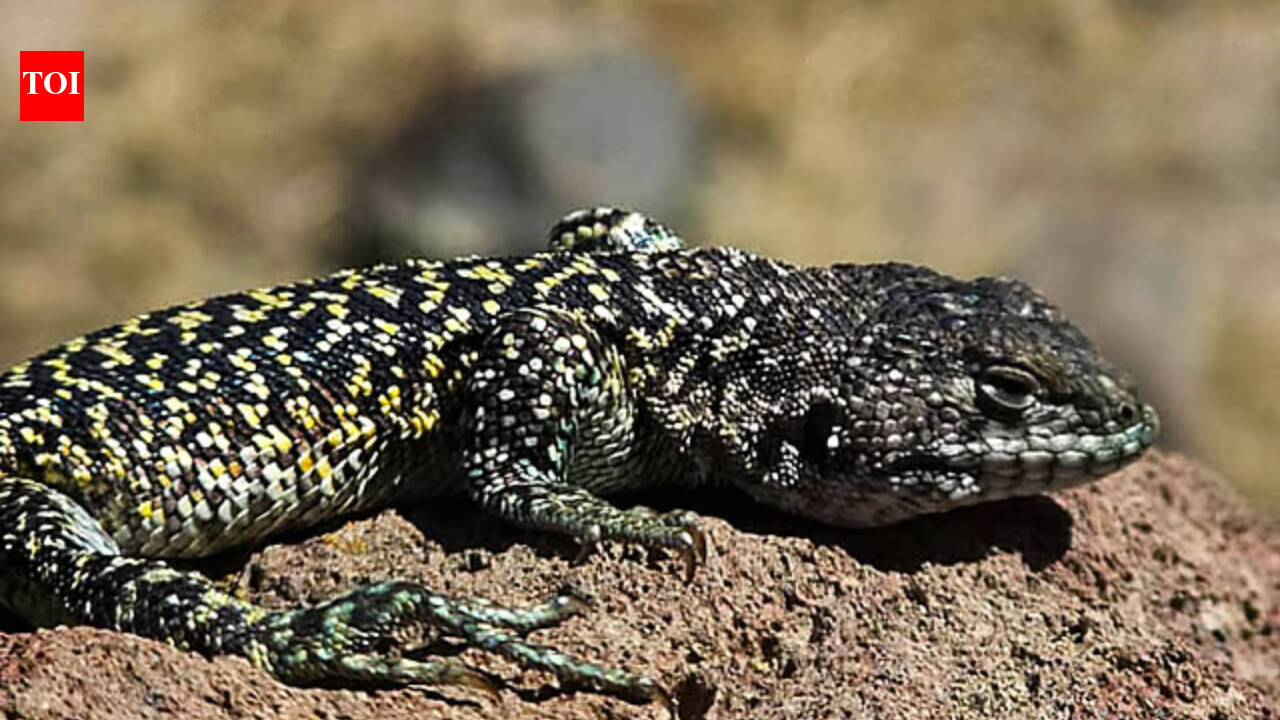
Scientists from Peru's San Marcos University Natural History Museum have described Liolaemus archipensis, a 6–8 cm lizard found above 4,800 metres in Arequipa. The description was published in the journal Diversity.

1 / 2
The story, neutrally told
Centre · 1Scientists have described a new lizard species, Liolaemus archipensis, from the Peruvian Andes, the Natural History Museum of San Marcos University said on Saturday 3 October. Gulf NewsN “Scientists have discovered a new species of lizard in the Peruvian Andes, the Natural History Museum of San Marcos University said Saturday.” Read at Gulf News ↗ Centre · 2It was found at more than 4,800 metres (15,750 feet) above sea level in the southern Andean region of Arequipa. Gulf NewsN “The new species was found at an altitude of more than 4,800 meters (15,750 feet) in the southern Andean region of Arequipa” Read at Gulf News ↗ The Times of IndiaN “was discovered at more than 4,800 metres above sea level in Peru's southern Arequipa region” Read at The Times of India ↗ Centre · 2The lizard measures between six and eight centimetres (2.4–3.2 inches) and looks different by sex: females have square-shaped spots on their backs, while males have oblique spots and white scales that help them blend into the rocky surroundings. Gulf NewsN “Females have square-shaped spots on their backs, while males have oblique spots and white scales that help them blend into their rocky surroundings.” Read at Gulf News ↗ The Times of IndiaN “Females have square-shaped markings across their backs, while males display oblique patterns along with distinctive white scales.” Read at The Times of India ↗
Centre · 2It eats plants and small arthropods, including spiders, beetles, true bugs and insect larvae. Gulf NewsN “The lizard feeds on plants and small arthropods, including spiders, beetles, true bugs and insect larvae.” Read at Gulf News ↗ The Times of IndiaN “Its animal prey includes spiders, beetles, true bugs and insect larvae.” Read at The Times of India ↗ Centre · 1Biologist Ling Huamani-Valderrama, who led the research, told AFP that describing a new species is a very important advance for biodiversity in Peru. Gulf NewsN “"The description of a new species represents a very important advance for biodiversity in our country," biologist Ling Huamani-Valderrama, who led the research, told AFP.” Read at Gulf News ↗ Centre · 2According to the biologist, Peru is home to 296 lizard species, and the discovery was published in the Swiss scientific journal Diversity. The Times of IndiaN “its description was published in the Swiss scientific journal Diversity” Read at The Times of India ↗ Gulf NewsN “Peru is home to 296 species of lizard, according to the biologist. The discovery was published in the Swiss scientific journal Diversity.” Read at Gulf News ↗
Centre · 1The Times of India's report, which says it draws on Gulf News, adds that the species belongs to the Liolaemus genus, a diverse group of lizards found across South America, and presents the find as a sign of how much remains undocumented in remote high-elevation ecosystems. The Times of IndiaN “the new species belongs to the Liolaemus genus, a diverse group of lizards found across South America”“The discovery also highlights how much remains to be documented in some of the Andes' most remote environments.” Read at The Times of India ↗
Every sentence links to the reporting it rests on. The pill in front of each says where its sources sit: Left, Centre or Right when one side supplies at least half of them, Mixed when they are evenly split. The number is how many outlets it cites.
Left0 outlets
No left outlet in our sources has covered this story yet.
Centre2 outlets
- Framing
- Both outlets report the discovery as a straightforward science item; Gulf News runs AFP copy, while the Times of India rewrites the Gulf News report with added descriptive colour about survival in a harsh habitat.
- Emphasis
- Physical traits, camouflage, diet, altitude, and the significance for Peru's biodiversity.
- Leaves out or plays down
- The Times of India does not quote the lead researcher or name her, and neither outlet gives details of the study's methods or the specimens' collection.
- Charged language
- “remarkable evolutionary feat”“harsh Andes landscape”
- For example
-
“"The description of a new species represents a very important advance for biodiversity in our country,"” — Gulf News
“For a lizard barely the length of a human palm, surviving at such heights is itself a remarkable evolutionary feat.” — The Times of India
Right0 outlets
No right outlet in our sources has covered this story yet.
What every side reports
- The species is named Liolaemus archipensis and was found above 4,800 metres in Arequipa, Peru.
- It measures 6–8 cm, with differing markings in females and males.
- It eats plants and small arthropods.
- The description was published in the journal Diversity; Peru has 296 lizard species according to the researchers.
Liolaemus archipensis other
The new species, described by San Marcos University researchers, is presented as a small high-altitude lizard camouflaged among rocks.
“males have oblique spots and white scales that help them blend into their rocky surroundings.” — Gulf News
Left0 articles
No coverage yet.
Centre2 articles
-
Gulf NewsN · · via AFP
New lizard species discovered in Peru
Neutral AFP wire copy giving the facts of the discovery with a quote from the lead biologist.
-
New lizard species found above 15,750 feet in Peru’s harsh Andes landscape
Sympathetic Rewrites the Gulf News report with an emphasis on the animal's resilience in an extreme habitat.
Right0 articles
No coverage yet.
- 3 Oct 19:28 First Gulf NewsN New lizard species discovered in Peru via AFP
- 4 Oct 12:30 +17h 1m The Times of IndiaN New lizard species found above 15,750 feet in Peru’s harsh Andes landscape
Times are when each article was published, or when we first saw it if the outlet gave no time.