Nikon disqualifies Small World in Motion winner over generative AI use
Nikon disqualified the first-place video in its Small World in Motion contest, saying it broke the rules on generative AI, after scientists questioned its authenticity. The company says it will review the contest's rules and procedures.


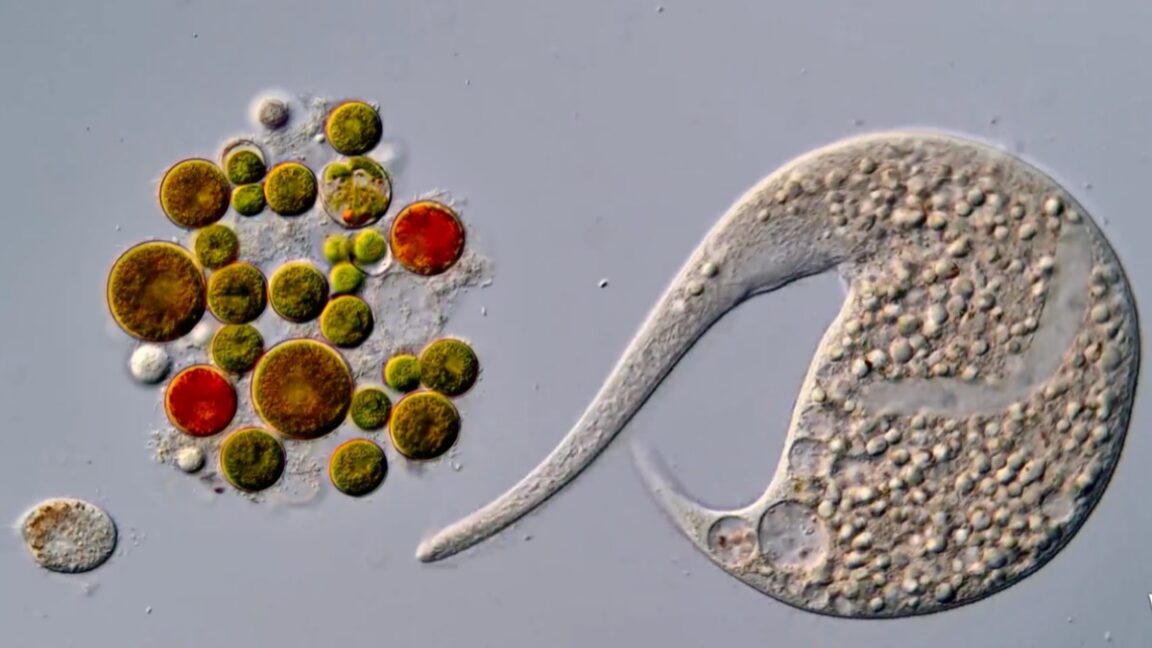
1 / 3
The story, neutrally told
Mixed · 2Nikon has disqualified the winner of its Small World in Motion contest, saying the winning video "did not comply with the competition rules regarding generative AI". BBC NewsN “The firm said the video "did not comply with the competition rules regarding generative AI"” Read at BBC News ↗ The VergeLC “Nikon says the video that originally won first place in its Small World in Motion contest “did not comply with the competition rules regarding generative AI.”” Read at The Verge ↗ Centre · 1The winning entry came from Dr Ning Xu of Tsinghua University in China. It was a short video said to show cilia, tiny hair-like structures, moving in the airway of a child with the respiratory condition PCD. BBC NewsN “The winning entry came from Dr Ning Xu, from Tsinghua University in China, who submitted a short video showing tiny, hair-like structures called cilia moving in the airway of a child with the respiratory condition PCD.” Read at BBC News ↗ Mixed · 2Scientists, including former competition judges, complained on Nikon's LinkedIn page that the video did not appear to be real. Nikon said last week that it was reviewing the video after online scepticism about its authenticity. BBC NewsN “A number of scientists, including former competition judges, complained to Nikon on its LinkedIn page that the video did not appear to be real.” Read at BBC News ↗ The VergeLC “Nikon said last week that it was reviewing the video following skepticism online about its authenticity.” Read at The Verge ↗
Centre · 1Nikon said it reached its decision after re-evaluating the video and supporting materials and consulting members of its judging panel. BBC NewsN “after thoroughly re-evaluating the video and supporting materials and consulting with members of our judging panel” Read at BBC News ↗ Mixed · 2Xu acknowledged using AI but, according to the BBC, said he believed he had acted within the rules and cooperated with Nikon's investigation. On LinkedIn he described using an unsupervised neural-network method for AI-assisted post-processing to distinguish and visualise features in reconstructed grayscale images from super-resolution optical imaging. BBC NewsN “Xu had acknowledged using AI, but said he believed he had acted within the rules, and had cooperated with Nikon's investigation.” Read at BBC News ↗ The VergeLC “An unsupervised neural-network method was subsequently used for AI-assisted post-processing to distinguish and visualize features in the reconstructed grayscale images from the super-resolution optical imaging.” Read at The Verge ↗ Centre · 1Dr Robert Hirst of the University of Leicester, lead scientist for the NHS centre for PCD diagnosis there, said he was "not surprised" and knew immediately the video was fabricated, saying the cells and cilia "look nothing like those from PCD patients". He said the controversy had affected patients, scientists, doctors and PCD support networks worldwide. BBC NewsN “University of Leicester scientist Dr Robert Hirst, who was among the first experts to voice concerns, said he was "not surprised" and he "knew immediately that the video was fabricated".”“This controversy has impacted a lot of patients, scientists, doctors and PCD support networks around the world,” Read at BBC News ↗
Mixed · 2Nikon said the disqualification was not a judgment of the entrant's professional reputation, scientific contributions or intent. It said it would revisit the rules and evaluation procedures of the contest, which has run for 15 years. BBC NewsN “added it was not a judgement of the entrant's professional reputation or scientific contributions.”“which has been running for 15 years” Read at BBC News ↗ The VergeLC “should not be interpreted as a judgment of the entrant’s professional reputation, scientific contributions, or intent.”” Read at The Verge ↗ Left · 1The Verge reported that Xu's video appears to have been removed from Nikon's website and that a video by Nguyen Nam Nhat now holds first place in the updated rankings. The VergeLC “A video from Nguyen Nam Nhat now holds first place, according to the contest’s updated rankings.” Read at The Verge ↗
Every sentence links to the reporting it rests on. The pill in front of each says where its sources sit: Left, Centre or Right when one side supplies at least half of them, Mixed when they are evenly split. The number is how many outlets it cites.
Left2 outlets
- Framing
- The Verge runs a short item on the disqualification, relying partly on BBC reporting, and focuses on the generative AI breach.
- Emphasis
- Xu's own LinkedIn explanation of his AI post-processing, and the new first-place winner.
- Leaves out or plays down
- Does not include Hirst's criticism or the concerns of the PCD community.
- For example
-
“In a comment on LinkedIn, Dr. Xu admitted to using AI for the video” — The Verge
Centre1 outlet
- Framing
- BBC leads with the scientific backlash and the disqualification, and gives the most space to an expert, Dr Robert Hirst, on why the video looked fake.
- Emphasis
- Expert objections, the impact on PCD patients and the community, and Nikon's rules review.
- Leaves out or plays down
- Does not report the updated rankings or the removal of the video from Nikon's site.
- For example
-
“The winner of a prestigious scientific photography competition has been disqualified following concerns raised by other scientists that it was fake.” — BBC News
Right0 outlets
No right outlet in our sources has covered this story yet.
What every side reports
- Nikon disqualified Dr Ning Xu's winning video for not complying with its rules on generative AI.
- Xu acknowledged using AI in the video.
- Nikon said the decision is not a judgment of Xu's professional reputation or scientific contributions.
- Nikon will review the contest's rules and procedures.
Nikon organisation
Nikon says the video broke its generative AI rules after re-evaluation and panel consultation. It stresses the ruling is not a judgment of the entrant's reputation, and it will review its rules and procedures.
“It said it would now look at the rules and procedures of the annual contest” — BBC News
“revisit rules and evaluation procedures for future competition entries.” — The Verge
Left2 articles
-
Nikon microscopic video competition winner disqualified for using generative AI
Neutral Brief report summarising the disqualification, citing the BBC, Xu's LinkedIn statement and the updated rankings.
-
Centre1 article
-
Prize-winning image which sparked backlash was AI-generated, Nikon rules
Neutral Straight news report centred on the disqualification and expert criticism, with Nikon's and Xu's positions.
Right0 articles
No coverage yet.
- 9 Oct 16:32 First BBC NewsN Prize-winning image which sparked backlash was AI-generated, Nikon rules
- 9 Oct 19:06 +2h 34m The VergeLC Nikon microscopic video competition winner disqualified for using generative AI
- 9 Oct 19:44 +3h 12m Ars TechnicaLC AI disqualification yields new Nikon Small World in Motion winner
Times are when each article was published, or when we first saw it if the outlet gave no time.